How Flight Memberships Enable More Trips in 2026

Flight memberships are subscription programs that give travelers access to curated fares, ancillary credits, and flexible booking policies at a fixed annual cost. Understanding how flight memberships enable more trips comes down to one core mechanic: when your per-trip cost drops consistently, you take more trips. The math is straightforward, but the full picture includes reduced booking friction, member-only route access, and ancillary savings that most travelers overlook entirely. This guide breaks down the financial case, the practical perks, and the strategies that turn a membership into a genuine travel multiplier.
How flight memberships enable more trips through savings
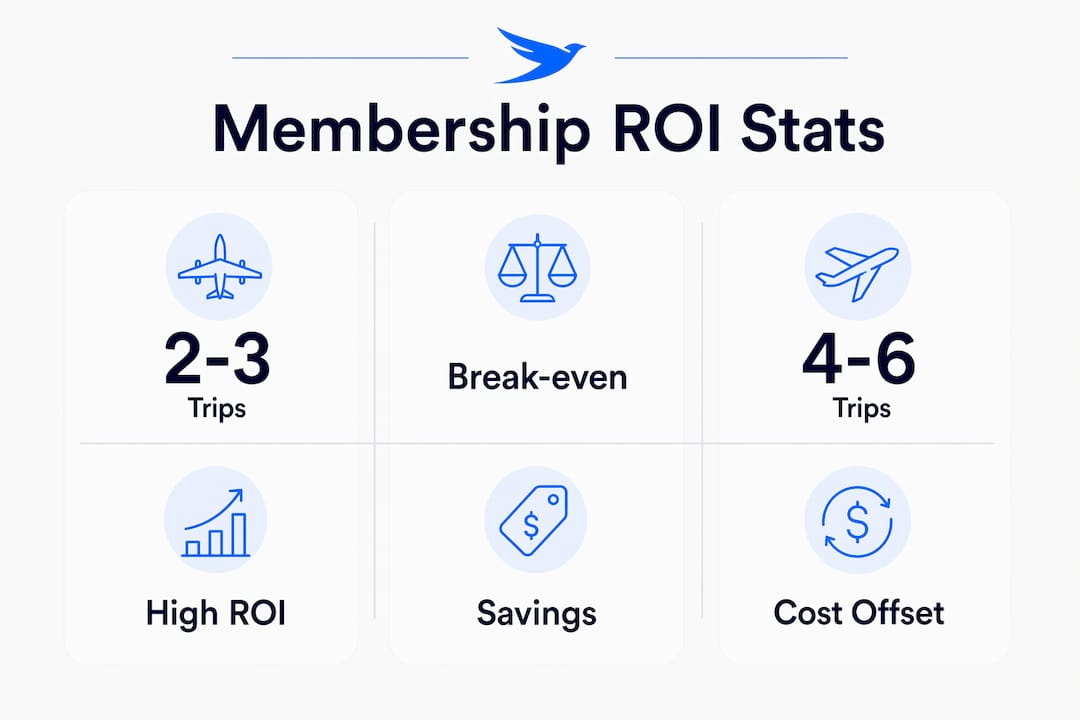
The financial case for flight memberships is built on break-even logic. Flight memberships typically pay for themselves within two to three well-matched trips, meaning the annual fee becomes irrelevant once you’ve crossed that threshold. Every trip after that is cheaper than it would have been without the membership, which directly lowers the psychological and financial barrier to booking the next one.
For travelers taking four to six trips per year, the ROI compounds quickly. Established travel memberships yield ROI over 200%, translating to roughly $200 or more in annual savings across flights, hotels, and rentals. That figure represents real money that either goes back into your travel budget or funds a trip you otherwise wouldn’t have taken.

The savings structure matters as much as the total number. Most travelers fixate on base fare discounts, but real value lies in ancillary fee reduction such as baggage, seat upgrades, and lounge access. For a traveler flying six times a year, eliminating checked bag fees alone can exceed the cost of the membership. When you stop paying for the same add-ons repeatedly, the per-trip cost drops in a way that a one-time discount never replicates.
Pro Tip: Before subscribing, add up what you spent on baggage fees, seat selection, and fare changes in the past 12 months. That number alone often justifies the annual membership fee.
Trips per year | Estimated annual savings | Membership ROI potential |
|---|---|---|
2 to 3 | Break-even or slight gain | Low to moderate |
4 to 6 | $150 to $300+ | High |
7 or more | $300 to $600+ | Very high |
What are the key benefits of flight memberships beyond ticket discounts?
Ticket price is the headline, but it’s rarely the whole story. The primary value of flight memberships is drastically reducing booking search friction rather than just delivering the lowest fare. Manual fare hunting across Google Flights, airline sites, and OTAs takes time and cognitive energy. A membership replaces that process with curated alerts and pre-vetted deals, which means you spend less mental effort deciding whether to travel and more time actually traveling.
The practical benefits stack up across several categories:
Curated deal alerts: Members receive route-specific notifications when prices drop, removing the need to monitor fares manually. This is particularly valuable for spontaneous travelers who want to act fast on short-notice deals.
Flexible booking policies: Many memberships include better cancellation and change terms than standard economy tickets. For frequent travelers, this flexibility converts tentative plans into confirmed bookings.
Ancillary credits: Memberships that prioritize flexible ancillary credits deliver 12 to 40% higher savings on recurring short-haul routes. Credits for baggage, priority boarding, and lounge access turn routine travel costs into covered expenses.
Member-only fares: Some programs surface inventory that never appears on public booking platforms, giving members access to routes and prices that general travelers simply cannot find.
Pro Tip: Treat your membership as a bundle of benefits, not just a discount card. If you’re not using the ancillary credits and alert features, you’re leaving the majority of the value on the table.
The friction reduction point deserves more attention than it typically gets. When booking a trip requires 45 minutes of comparison shopping, many travelers delay or abandon the plan. When a curated alert delivers a verified deal in under two minutes, the decision to book becomes almost automatic. That behavioral shift is how memberships directly increase trip frequency.
How route coverage and travel habits affect membership value
Route coverage is the single most important filter when evaluating any flight membership. Savings only occur where membership inventory exists, so a program with strong coverage on the East Coast delivers little value to a traveler based in Denver who primarily flies to the Pacific Northwest. Before committing to any program, map your five most frequent routes against the membership’s covered airports.
Travel habits determine whether a membership pays off or sits unused. The comparison below illustrates how different traveler profiles interact with membership value:
Traveler type | Trip frequency | Flexibility | Membership value |
|---|---|---|---|
Business commuter | 8 to 12 trips/year | Moderate | Very high |
Leisure traveler | 3 to 5 trips/year | High | High |
Fixed-date vacationer | 1 to 2 trips/year | Low | Low |
Remote worker | 6 to 10 trips/year | Very high | Very high |
Fixed-date travelers represent the weakest membership fit. If you book the same two weeks every August and have no flexibility on dates or airports, membership deals that require date flexibility won’t apply to your actual travel. The program’s value is theoretical rather than realized.
Flexibility around departure airports unlocks a disproportionate share of savings. Travelers willing to drive 60 to 90 minutes to an alternate airport often access fares that are 20 to 30% lower than those from their home airport. Memberships that cover multiple airports within a metro area amplify this effect significantly. For travelers near cities like New York (JFK, LGA, EWR), Chicago (ORD, MDW), or Los Angeles (LAX, BUR, LGB), multi-airport coverage is a concrete financial advantage.
How to maximize travel rewards with your flight membership
Getting full value from a flight membership requires active management, not passive subscription. The travelers who see the highest ROI treat their membership as a tool that requires configuration and regular use.
Audit your travel spending first. Memberships deliver maximum value for travelers who spend over $5,000 annually on travel. Pull your last 12 months of flight, hotel, and ancillary charges before subscribing. This baseline tells you exactly how much a membership needs to save to justify its cost.
Configure route-specific alerts immediately. Proactive alert configuration increases booking success and savings by ensuring you act before inventory runs out. Set alerts for your five most frequent routes on day one, not after you’ve already missed three deals.
Use a hybrid booking approach. Combining membership fare discovery with OTA price verification yields the best outcomes. When a membership alert fires, cross-check the fare on Google Flights or the airline’s direct site before booking. This takes 90 seconds and confirms you’re getting a genuine deal rather than a manufactured discount.
Stack ancillary savings deliberately. If your membership includes baggage credits, use them on every eligible trip. If it includes lounge access, build that into your airport routine. Unused credits are forfeited value.
Combine with last-minute hotel tactics. Membership flight savings free up budget for accommodation. Pairing a discounted flight with a last-minute hotel booking through platforms like Hotels.com or Hotwire compounds the total trip savings and makes shorter, more frequent trips financially viable.
Pro Tip: Review your membership’s benefit calendar quarterly. Many programs add seasonal perks, expanded route coverage, or partner credits that aren’t announced prominently. Checking in regularly means you capture benefits before they expire.
Key takeaways
Flight memberships deliver the most value when travelers combine consistent route usage, active alert management, and full utilization of ancillary credits rather than relying on fare discounts alone.
Point | Details |
|---|---|
Break-even is fast | Most memberships pay for themselves within two to three well-matched trips. |
Ancillary savings drive ROI | Baggage, seat selection, and lounge credits often exceed the value of fare discounts. |
Route coverage is non-negotiable | Verify your most-traveled routes are covered before subscribing to any program. |
Active use multiplies value | Configure route alerts immediately and use a hybrid booking approach for best results. |
Flexibility unlocks more deals | Travelers with date and airport flexibility capture significantly more membership savings. |
Why I think most travelers underuse their memberships
Most people I talk to who’ve tried a flight membership and called it “not worth it” made the same mistake: they signed up, waited for deals to appear, and booked the same way they always had. That’s not how these programs work.
The travelers who genuinely travel more with memberships treat the program like a financial instrument. They know their baseline spending, they configure alerts on day one, and they check the membership portal before they check any other booking site. The membership becomes the first step in the booking process, not an afterthought.
What I find most interesting about 2026 is how the value proposition has shifted. A few years ago, the pitch was purely about fare discounts. Now the strongest programs compete on flexibility, ancillary coverage, and the quality of their deal curation. The travelers who benefit most are those who fly frequently but not on rigid schedules. Remote workers, consultants, and people with family spread across multiple cities are the natural fit.
The one trade-off worth naming honestly: memberships reward flexibility, and not everyone has it. If your travel is locked to school holidays, fixed work travel dates, or specific routes with limited competition, a membership may deliver less than the marketing suggests. The honest evaluation starts with your own travel data, not the program’s promotional materials. Pull your actual spending, map your actual routes, and then decide. That 10-minute audit will tell you more than any comparison article.
— Nick
Unlock more trips with Bluebirdjets membership
Bluebirdjets offers a membership built specifically for frequent travelers who want to fly more without paying full price every time. The Bluebirdjets membership gives you unlimited access to empty leg flights on the platform, which are among the most underutilized and deeply discounted seats in private aviation.
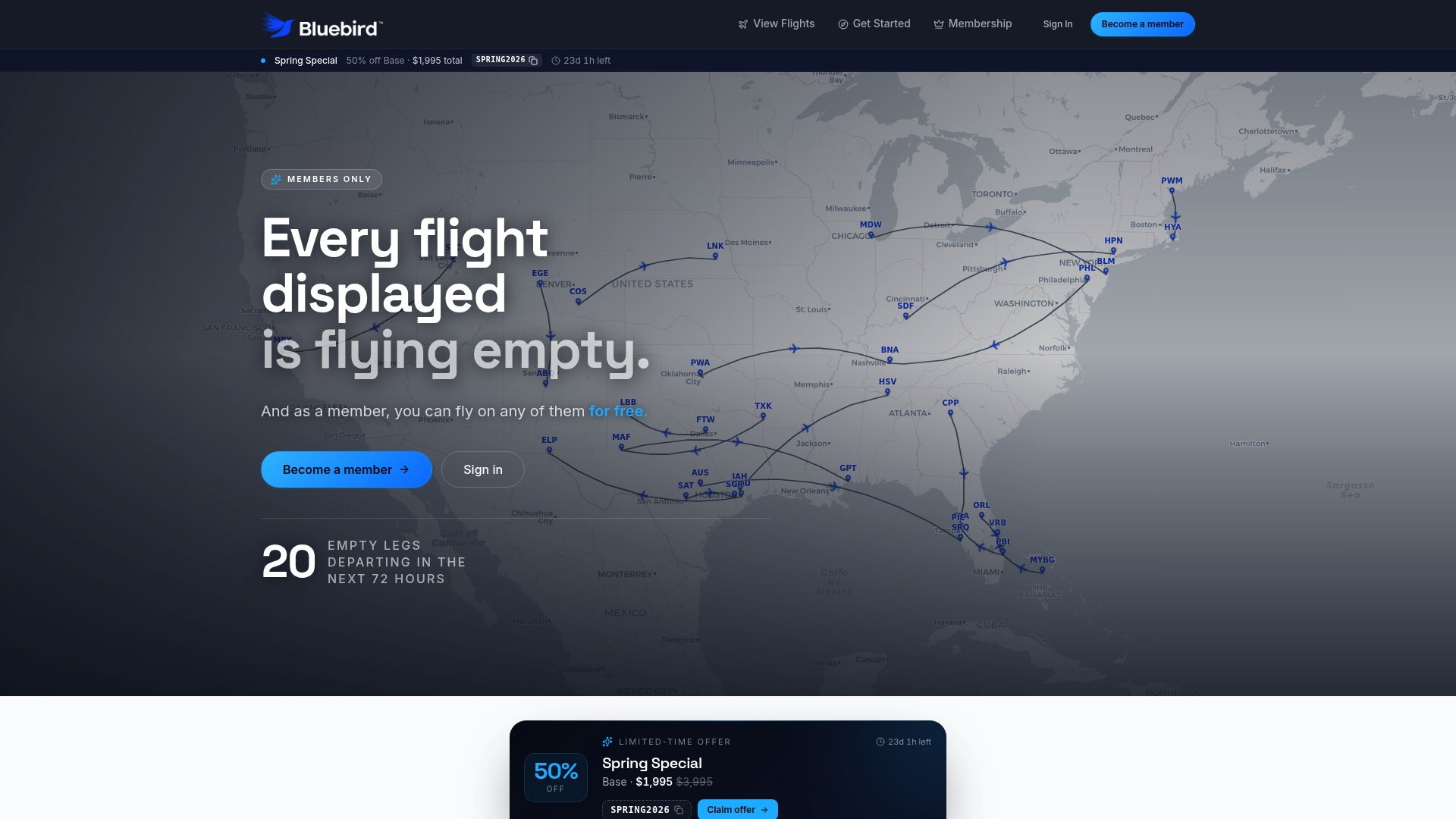
Empty legs exist because private jets need to reposition after dropping off passengers. Bluebirdjets curates these opportunities and makes them available exclusively to members, so you get access to premium Bluebirdjets flights at a fraction of standard charter rates. For frequent travelers who value flexibility and want to travel more without inflating their annual spend, this is the membership structure that actually delivers on the promise.
FAQ
How quickly does a flight membership pay for itself?
Flight memberships typically break even within two to three well-matched trips. Travelers taking four to six trips per year see the strongest ROI.
What is the biggest benefit of flight memberships beyond fare discounts?
The biggest benefit is reduced search friction. Membership programs streamline deal discovery and eliminate the time cost of manual fare comparison, making it easier to book more trips.
Are flight memberships worth it for occasional travelers?
Memberships are best suited for travelers spending over $5,000 annually on travel. Occasional travelers who take one or two fixed-date trips per year are unlikely to recover the membership fee.
How do I maximize savings with a flight membership?
Configure route-specific alerts immediately after subscribing, and use a hybrid booking approach by verifying membership fares against OTA prices. Full use of ancillary credits for baggage and seat selection adds significant savings on top of fare discounts.
What is an empty leg flight and how does it relate to memberships?
An empty leg is a repositioning flight on a private jet that would otherwise fly without passengers. Bluebirdjets members get unlimited access to these flights, making them one of the most cost-effective ways to fly privately on a membership model.