What Destinations Lack Commercial Service in 2026

What Destinations Lack Commercial Service in 2026
Destinations that lack commercial service are defined as locations with no scheduled airline routes, meaning travelers cannot book a standard ticket to reach them. These places exist on every continent and range from remote Pacific islands to small American towns quietly losing their last regional carrier. The FAA’s Essential Air Service program currently subsidizes flights to around 175 small U.S. communities, yet budget cuts are shrinking that safety net fast. Pilot shortages, airline consolidation, and geography all push certain destinations further off the commercial map. For travelers who want something genuinely different, these are the places worth knowing about.
What destinations lack commercial service right now?
The world’s most isolated places share one trait: no airline will fly there on a schedule. Some lack runways entirely. Others have airstrips but no carrier willing to use them. The reasons vary, but the result is the same. Getting there requires creativity, patience, and a willingness to travel on the destination’s terms, not your own.
Islands with no airstrips
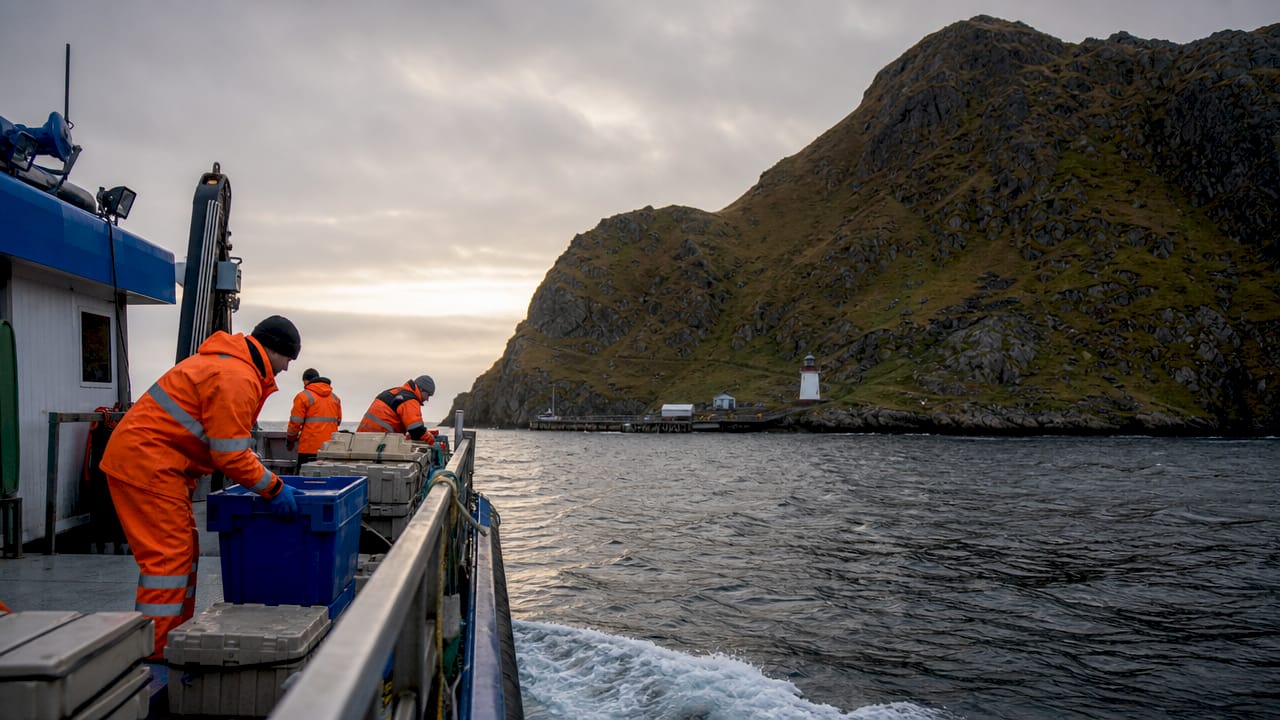
Tristan da Cunha and Palmerston Island sit at the extreme end of the accessibility spectrum. Tristan da Cunha requires a 6-day voyage from Cape Town, South Africa, while Palmerston Island takes 2–3 days by sea from Rarotonga in the Cook Islands. Neither island has an airstrip, and neither is likely to get one soon. Volcanic terrain on Tristan da Cunha makes construction nearly impossible. Palmerston’s population sits well below 100 people, making any aviation investment economically absurd by commercial standards.
Remote mainland towns losing service
Not every unserved destination is an island. Across the United States, small towns that once had regional jet service are quietly losing it. Provincetown, Massachusetts, lost year-round service because airlines deemed the route unprofitable. Residents now face a five-hour drive or a seasonal ferry to reach Boston. Australia tells a similar story at scale.
The Australian Competition and Consumer Commission found that remote routes fell to 38 in january 2026, down 27% from 52 routes in january 2019, even as travel demand rose 13.3%. Queensland absorbed the worst of those cuts, losing 9 out of 15 axed routes. That statistic reveals a troubling pattern: demand is rising while supply is shrinking.
| Destination | Location | Access method | Commercial service |
|---|---|---|---|
| Tristan da Cunha | South Atlantic | Supply vessel only | None |
| Palmerston Island | South Pacific | Irregular cargo ship | None |
| Provincetown, MA | United States | Seasonal only | No year-round service |
| Remote Queensland towns | Australia | Road or charter | Reduced or eliminated |
Seasonal versus permanent absence
Some destinations lose commercial service only in winter, when passenger numbers drop below the threshold airlines need to break even. Others have never had scheduled service at all. The distinction matters for planning. A seasonal gap can be worked around with careful timing. A permanent absence requires a completely different access strategy.
What factors cause destinations to lack commercial flights?
Commercial aviation follows money. When a route cannot generate enough revenue to cover operating costs, airlines cut it. The factors driving that calculation have shifted significantly since 2019.
Geographic isolation and missing infrastructure
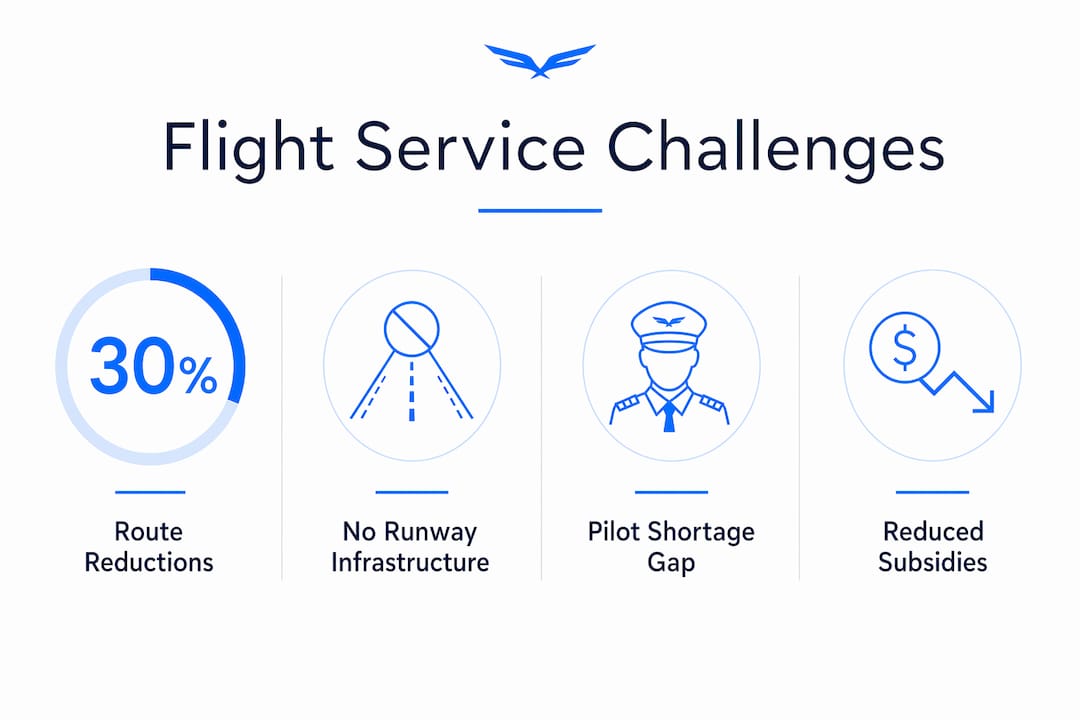
No runway means no commercial flight, full stop. Tristan da Cunha’s volcanic landscape physically prevents airstrip construction. Many remote Pacific islands face the same constraint. Even where flat land exists, building and maintaining a certified runway costs tens of millions of dollars. Without government funding or private investment, that infrastructure never gets built.
Pilot shortages accelerating route cuts
The pilot shortage is the most underreported driver of lost commercial service to small communities. More than 30 U.S. airports serving populations under 100,000 are projected to lose scheduled commercial service by 2028 if current trends hold. The shortage is expected to peak between 2029 and 2033. New pilots consistently choose mainline carriers over regional operators because the pay gap is substantial. Regional airlines, unable to staff their fleets, prioritize their most profitable routes and quietly abandon the rest.
Airline consolidation and single-carrier markets
Competition keeps routes alive. Without it, a single carrier can exit a market with no replacement waiting. About 60–70% of regional and remote routes in Australia are served by only one airline group. When that group decides a route is unprofitable, the community loses service entirely. Qantas alone dropped 11 of the 15 remote routes cut since 2019. Single-carrier dependency is a structural vulnerability that affects communities on every continent.
Shrinking government subsidies
The Essential Air Service program was designed to prevent exactly this kind of abandonment. It subsidizes flights to around 175 small U.S. communities that would otherwise lose all commercial access. Budget pressure is now threatening those subsidies. Some EAS-eligible airports have already lost carriers after regional operators declined to renew subsidy contracts. When the subsidy disappears, so does the flight.
Pro Tip: If you are researching a specific remote destination, check whether it falls under an Essential Air Service designation. EAS status signals that the route is economically marginal and may disappear with little warning, so book early or plan an alternative.
How can travelers reach destinations without commercial airline service?
Reaching places with no commercial flights requires a different planning mindset. The schedule does not revolve around you. Weather, cargo loads, and local logistics all take priority. Flexibility is not optional. It is the price of admission.
-
Book passage on supply vessels. Ships serving Tristan da Cunha and Palmerston Island carry passengers, but they run on cargo schedules. Supply vessels operate on irregular timetables based on cargo and weather, not passenger needs. Waiting weeks for the next departure is normal. Build that buffer into your itinerary.
-
Charter a private flight. Where an airstrip exists but no commercial carrier operates, a charter flight is often the fastest solution. Private aviation can reach thousands of airfields that scheduled airlines ignore. Bluebirdjets offers private charter options that can be routed to smaller, underserved airstrips that commercial carriers bypass entirely.
-
Secure permissions well in advance. Many remote destinations require formal authorization before you arrive. Travelers must secure authorization from local authorities months ahead, along with proof of self-sufficiency and medical insurance. Arriving without the right paperwork can mean being turned away at the port or airstrip.
-
Plan for extended stays. Weather can strand you. A storm that closes a harbor or makes a landing strip unusable can extend a planned two-week trip by days or weeks. Pack medications, extra supplies, and a flexible return window. Emergency evacuation infrastructure is often nonexistent in these locations.
-
Use maritime logistics networks. Some travelers combine ground and maritime logistics to reach destinations that sit beyond any aviation network. Cargo ships, fishing vessels, and expedition boats all serve routes that no airline touches.
Pro Tip: Contact the destination’s local council or government office directly, not a travel agency. For places like Tristan da Cunha or Palmerston Island, the local authority controls visitor access and can tell you exactly when the next vessel departs and what documentation you need.
What is the future outlook for commercial service to remote destinations?
The trend line points in one direction: fewer commercial flights to remote places, not more. The pilot shortage alone will reshape the map of commercial aviation over the next decade.
“Regional airlines operating 45% of U.S. departures are already cutting hundreds of routes. The pilot shortage is expected to peak between 2029 and 2033, and small airports will absorb most of that pain.” — Altitudes Magazine
Government subsidies are not keeping pace with the scale of the problem. The Essential Air Service program covers 175 communities, but the number of communities at risk of losing service is growing faster than the program can expand. Budget cuts at the federal level make expansion unlikely in the near term.
Innovation is filling some gaps in unexpected ways. Airdrop missions to Tristan da Cunha demonstrate that aerial supply is possible even without a runway. The island’s volcanic terrain and unpredictable weather complicate aerial delivery, requiring precise coordination. These missions are not a tourism solution, but they show that technology is advancing faster than infrastructure in some of the world’s most isolated places.
Private and charter aviation is the most realistic near-term alternative for travelers. As commercial carriers retreat from marginal routes, private operators are expanding their reach. The economics of charter flights have improved as aircraft utilization models like empty-leg access bring costs down significantly for flexible travelers.
Key takeaways
Destinations without commercial airline service are growing in number, and the travelers who reach them rely on private aviation, maritime routes, and careful advance planning.
| Point | Details |
|---|---|
| Remote routes are shrinking | Australia lost 27% of remote commercial routes between 2019 and 2026 despite rising demand. |
| Pilot shortages accelerate cuts | Over 30 U.S. airports may lose scheduled service by 2028 as the shortage peaks in 2029–2033. |
| Government subsidies are at risk | The Essential Air Service program covers 175 U.S. communities but faces ongoing budget pressure. |
| Private aviation fills the gap | Charter flights reach thousands of airstrips that scheduled airlines ignore, offering real alternatives. |
| Planning ahead is non-negotiable | Permissions, medical insurance, and flexible schedules are required for most unserved destinations. |
Why I think the real adventure starts where the airline map ends
Most travelers treat the absence of commercial flights as a problem to solve. I treat it as a filter. The places that require a supply vessel, a charter, or a months-long permit process are exactly the places worth the effort. They are not overrun. They are not curated for Instagram. They are genuinely themselves.
What I have found is that the logistics of reaching an unserved destination become part of the experience. A six-day crossing to Tristan da Cunha is not a delay. It is the trip. The ocean, the isolation, the gradual realization that you are genuinely far from everything familiar. That is the point.
The practical lesson I keep relearning is this: the travelers who struggle most with unserved destinations are the ones who plan for the destination but not for the journey. They book the vessel but forget to apply for the permit. They arrange the charter but pack for a weekend when a week is more realistic. Flexibility is not a personality trait here. It is a logistical requirement.
Private aviation has changed my calculus on which places are actually reachable. Charter access to a small airstrip that no airline touches turns a theoretical destination into a real one. That shift in what is possible is worth paying attention to.
— Nick
Bluebirdjets: private access to places airlines don’t fly
For travelers who want to reach destinations beyond the commercial route map, Bluebirdjets offers a direct solution. The Bluebirdjets membership program gives you unlimited access to empty-leg flights, meaning you fly private at a fraction of the standard charter cost. That access opens up thousands of smaller airstrips that scheduled airlines never touch.
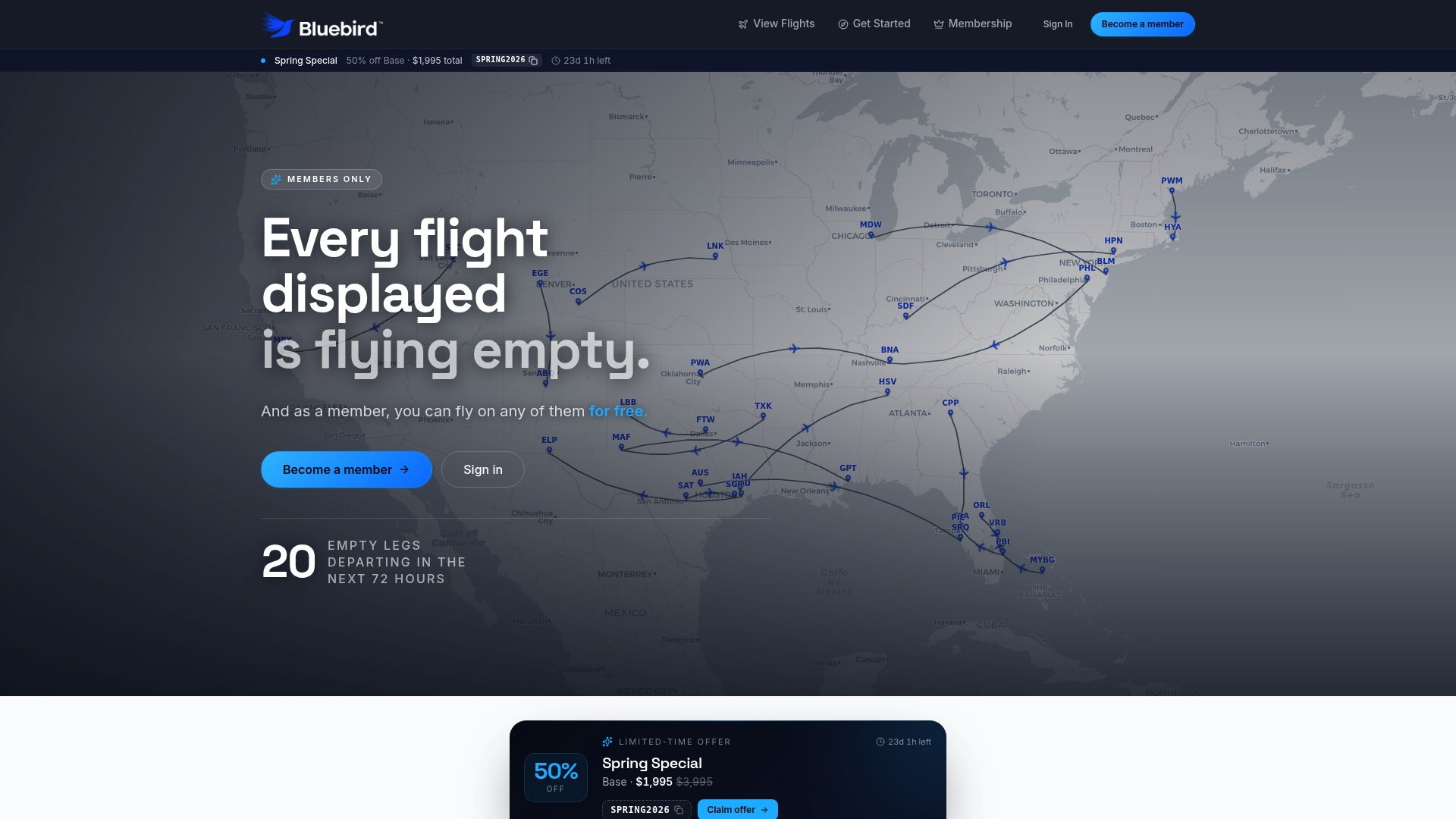
When a specific destination requires a tailored route, Bluebirdjets charter service lets you design the flight around your itinerary, not around a commercial schedule. For travelers serious about reaching off-grid places in 2026, private aviation is no longer a luxury. It is the most practical tool available. Check available private flights and see what is within reach.
FAQ
What destinations lack commercial service entirely?
Tristan da Cunha and Palmerston Island have no airstrips and are reachable only by sea. Many small U.S. and Australian towns have lost scheduled service due to pilot shortages and airline consolidation.
Why do some areas have no airlines serving them?
Geographic isolation, lack of runway infrastructure, low passenger demand, and shrinking government subsidies all cause airlines to exit or never enter certain markets.
How can I travel to remote locations with no commercial flights?
Supply vessels, private charter flights, and expedition boats are the primary options. Most unserved destinations also require advance permits and proof of self-sufficiency before arrival.
Will commercial service return to unserved destinations?
The near-term outlook is negative. Pilot shortages are projected to peak between 2029 and 2033, and government subsidy programs face budget pressure, making route restoration unlikely for most affected communities.
What is the Essential Air Service program?
The Essential Air Service program is a U.S. federal subsidy that funds commercial flights to approximately 175 small communities that would otherwise lose all scheduled airline access.