What Is a Deadhead Flight? the Aviation Insider's Guide
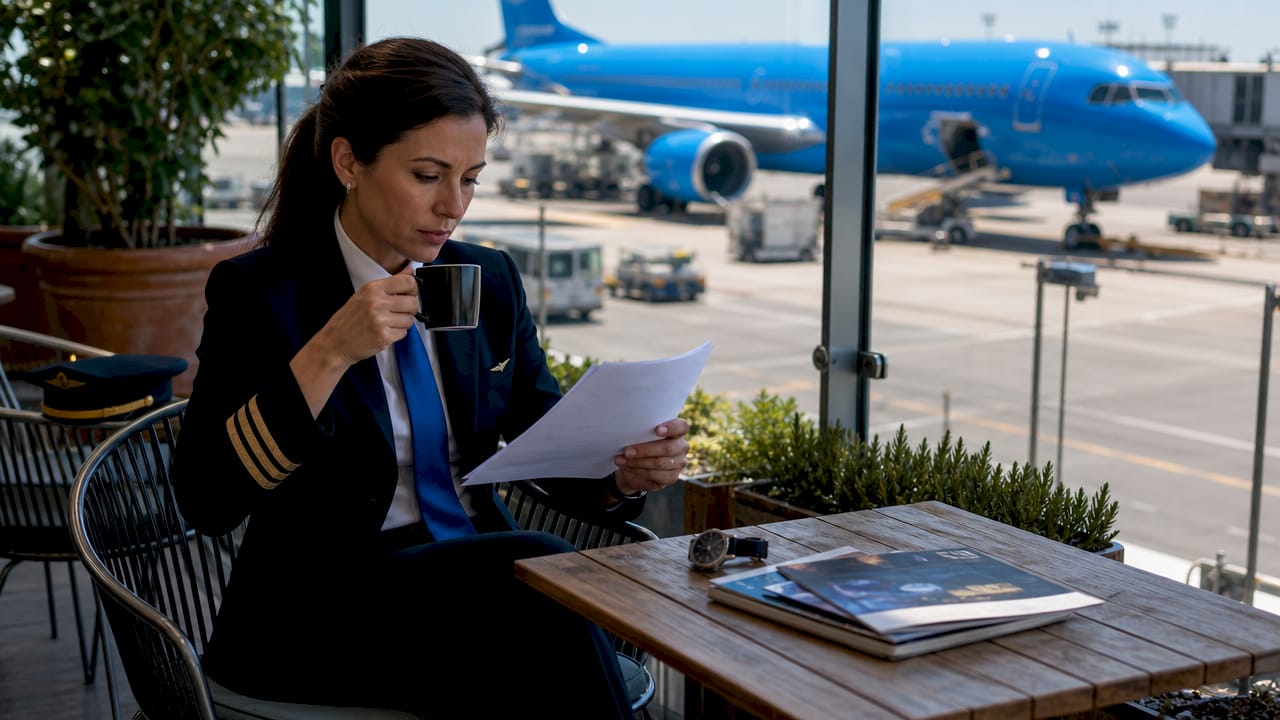
A deadhead flight is a flight where crew members or an entire aircraft travel without performing active commercial service, repositioning to meet operational needs. The term covers two distinct scenarios: airline pilots and flight attendants riding as passengers to reach their next duty assignment, and private jets flying empty between charter bookings. Both forms of deadheading are fundamental to how the aviation industry keeps aircraft and crews in the right place at the right time. Understanding the difference between these two contexts unlocks a surprisingly practical opportunity for travelers willing to pay attention.
What is a deadhead flight in commercial aviation?
In commercial airlines, deadheading means crew travel as passengers on a flight to reach the starting point of their next duty assignment, and they are paid for that travel time. This is not a perk or a commute. It is a confirmed, assigned, operational movement that keeps airline schedules from collapsing when crews end up in the wrong city after irregular operations, cancellations, or route changes.
The reasons airlines deadhead crew are specific and predictable. A pilot finishes a trip in Denver but is needed in Miami for a morning departure. A flight attendant’s original aircraft goes out of service and a replacement crew must be flown in from another hub. Federal Aviation Administration duty time regulations require that crew members receive mandatory rest periods, and sometimes the only way to honor those rules while keeping flights staffed is to reposition crew by air. Deadheading is the logistical solution airlines reach for constantly, especially at major carriers like United Airlines, Delta Air Lines, and American Airlines.
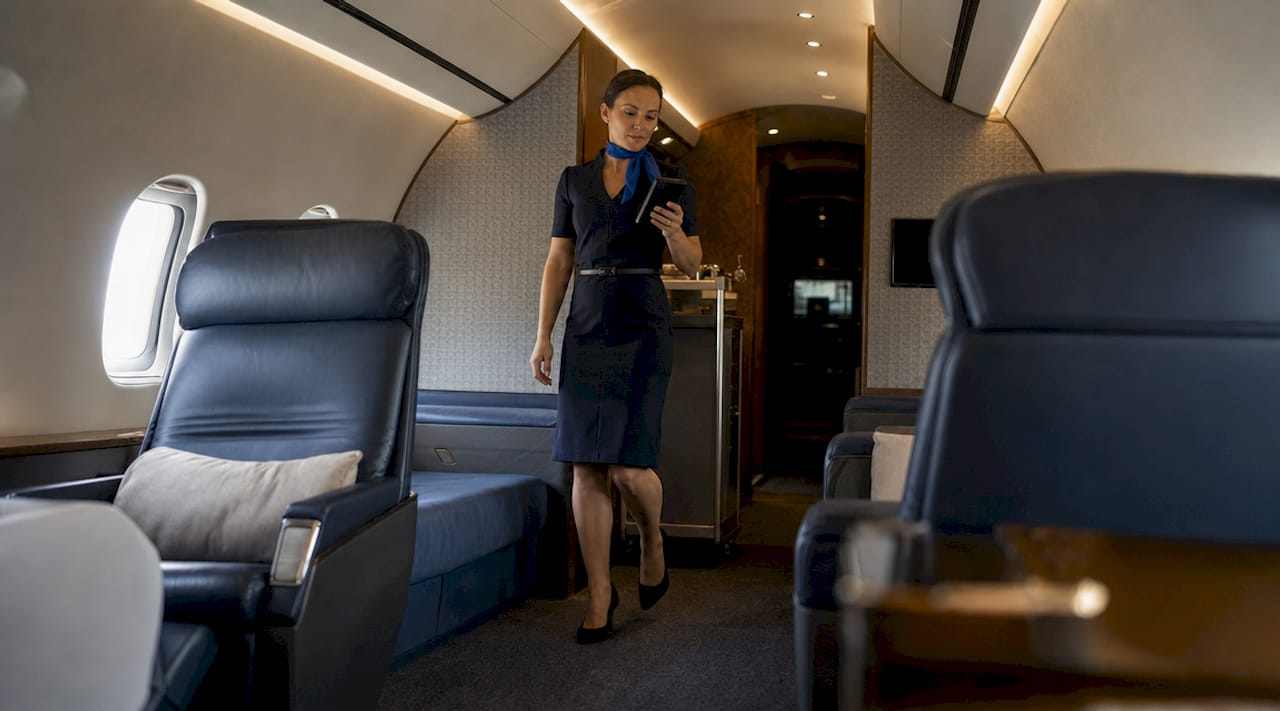
What crew members actually do on a deadhead flight
Deadheading crew are not ordinary passengers. Deadhead pilots remain on duty during the flight and may be called upon to assist during critical flight phases, even though they are not officially operating the aircraft. They are required to wear their uniform and maintain operational readiness throughout the journey. This status distinguishes deadheading sharply from jumpseating, where crew travel on a space-available basis in civilian clothes with no duty obligations.
Seating arrangements vary by airline and contract. Historically, deadheading pilots were placed in economy class or on the cockpit jumpseat. American Airlines now allows deadhead pilots to fly first class under the terms of its 2023 union contract, a change driven by pilot fatigue concerns and union negotiations. The practical logic is sound: a rested crew member arriving at their duty station in better condition reduces the risk of fatigue-related errors on the next flight.
Pro Tip: If you spot a uniformed pilot or flight attendant sitting in a passenger seat and not interacting with the cabin crew in a working capacity, there is a strong chance you are watching a deadhead in progress.
Deadheading is always a confirmed seat, never standby
Crew are paid their regular rate during the deadhead segment
Duty time rules still apply, meaning rest requirements count from when deadhead travel begins
Uniform and readiness requirements remain in force throughout
The airline, not the crew member, controls the booking and routing
How deadhead flights work in private aviation
In private aviation, the term deadhead flight refers to what the industry more commonly calls an empty leg, dead leg, or ferry flight. Multiple interchangeable terms exist for the same concept: a private jet that must fly from Point A to Point B without a paying charter client on board. The aircraft needs to reposition to pick up the next client, return to its home base, or relocate for seasonal demand. That repositioning leg generates no revenue by default, but operators have learned to sell it.
Here is how the sequence typically works:
A client books a one-way charter from New York to Miami on a Gulfstream G550.
The operator must return the aircraft to New York, or reposition it to Dallas for the next booking.
That return or repositioning leg is the empty leg. The aircraft flies regardless of whether anyone is on it.
Operators offer seats at deep discounts to avoid flying completely empty, recovering at least partial revenue on a flight they were already committed to operating.
The traveler gets access to a private jet cabin at a fraction of the normal charter price.
Pricing and the real discount opportunity
Empty leg flights offer discounts ranging from 25% to 75% below standard charter prices, depending on how urgently the operator needs to fill the seat and how close to departure the booking occurs. In some cases, discounts can reach 90% off standard pricing when an operator simply needs the aircraft repositioned and any revenue is better than none. That is not a marketing claim. It reflects the economics of a flight that costs the same to operate whether one person is on board or eight.
The catch is that empty leg inventory is genuinely unpredictable. Routes appear and disappear based on charter bookings that can change or cancel at any moment. A client who cancels their original charter can eliminate the empty leg that was created by their booking. This is not a product designed around traveler convenience. It is a byproduct of charter logistics that travelers can exploit if they approach it correctly.
Airline crew deadheading vs. private jet empty legs
These two forms of deadheading share a name and a concept but serve entirely different purposes and audiences. The table below captures the core distinctions.
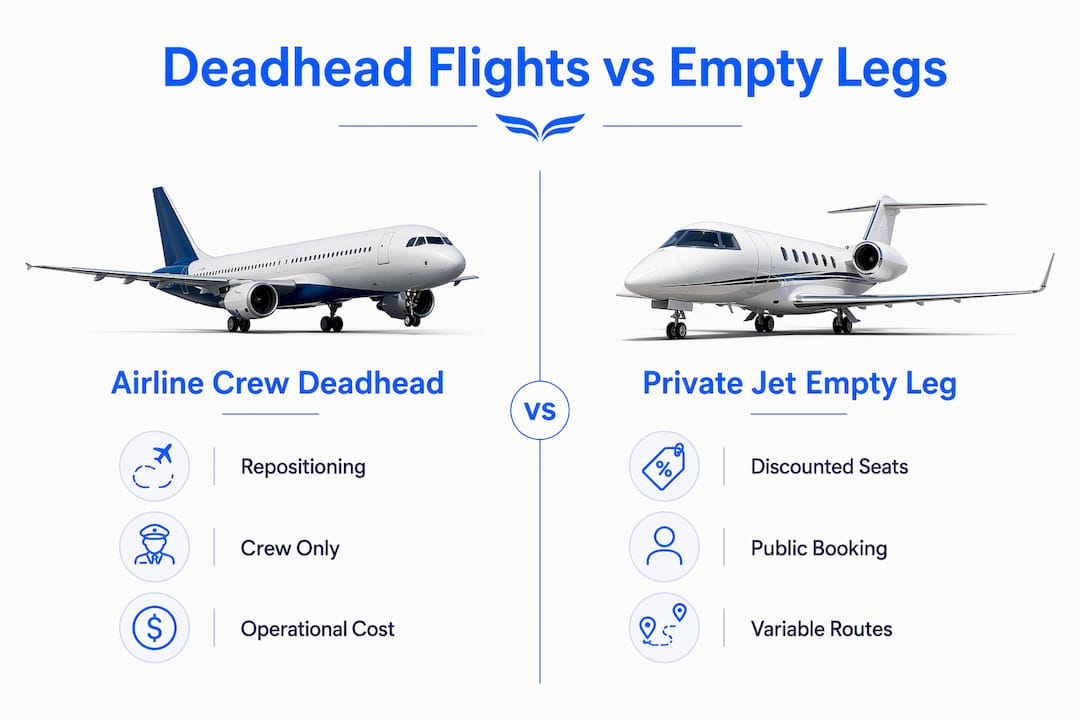
Factor | Airline crew deadhead | Private jet empty leg |
|---|---|---|
Primary purpose | Crew repositioning for duty | Aircraft repositioning between charters |
Who travels | Airline employees only | Any paying traveler |
Pricing | Non-revenue, paid by airline | Discounted, paid by traveler |
Booking access | Internal airline scheduling | Public listings on charter platforms |
Uniform required | Yes, operational readiness required | No, standard passenger experience |
Scheduling certainty | Confirmed and assigned | Volatile, subject to cancellation |
The financial logic differs completely. Airlines absorb the cost of crew deadheading as an operational expense because the alternative, a delayed or canceled flight, costs far more. Private jet operators, by contrast, use empty legs as a partial revenue recovery tool. Deadhead flights in private aviation are a strategic offset against the cost of unproductive repositioning, not a charitable discount program.
Pro Tip: When comparing a standard charter quote to an empty leg price, ask the operator whether the route is fixed or flexible. Some empty legs allow minor routing adjustments if the aircraft is already heading in your general direction.
How to find and book empty-leg deadhead flights
Accessing empty leg flights requires a different mindset than booking a commercial ticket or even a standard charter. Flexibility and readiness to book are the two non-negotiable requirements. Travelers who insist on specific dates, exact departure times, or particular aircraft types will find the empty leg market frustrating. Those who can move quickly and adapt their plans to available inventory will find genuine value.
Practical steps for finding empty leg opportunities:
Set up alerts on charter platforms. Services that aggregate empty leg listings will notify you when routes matching your preferences appear. The window between listing and departure is often 24 to 72 hours.
Focus on high-traffic corridors. Routes between major business aviation hubs like Teterboro, Van Nuys, Opa-locka, and Scottsdale generate the most empty leg inventory because charter demand is concentrated there.
Be prepared to book immediately. Empty leg inventory is not a typical schedule. The best opportunities disappear within hours of being listed.
Understand cancellation risk. If the original charter that created the empty leg cancels, your empty leg may cancel too. Confirm the operator’s policy before paying.
Consider membership programs. Platforms like Bluebirdjets aggregate empty leg listings and give members structured access to discounted repositioning flights without requiring you to monitor multiple operators independently.
The experience on board an empty leg private jet is identical to a standard charter on the same aircraft. The Cessna Citation XLS or Bombardier Challenger 350 does not fly differently because the seat was discounted. You get the same cabin, the same service, and the same routing. The only difference is the price and the booking timeline.
Key takeaways
Deadhead flights are the aviation industry’s primary mechanism for keeping crews and aircraft positioned where they are needed, and they create real discount opportunities for travelers willing to work with the constraints.
Point | Details |
|---|---|
Two distinct contexts | Airline crew deadheading and private jet empty legs share a name but serve different operational purposes. |
Crew deadhead is paid duty | Airline crew are compensated, uniformed, and on duty during deadhead flights, not traveling as civilians. |
Empty legs offer real discounts | Private jet empty legs can reach 25% to 90% below standard charter prices depending on timing and urgency. |
Booking requires flexibility | Empty leg inventory is volatile and unpredictable; successful travelers book fast and stay adaptable. |
Membership simplifies access | Aggregated platforms give travelers structured access to empty leg listings without monitoring multiple operators. |
Why deadhead flights deserve more attention than they get
Most aviation coverage treats deadhead flights as a footnote in crew scheduling or a novelty discount for the ultra-wealthy. Neither framing is accurate, and both miss the point.
From an operational standpoint, crew deadheading is one of the most consequential logistics decisions an airline makes daily. A mispositioned crew does not just inconvenience passengers. It triggers a cascade of delays, substitutions, and regulatory complications that can cost a carrier millions in a single day of irregular operations. The fact that airlines like Delta and United run sophisticated crew tracking systems specifically to minimize unnecessary deadheading tells you how seriously the industry takes it.
On the private aviation side, I have watched the empty leg market mature significantly over the past decade. What was once an informal arrangement between operators and well-connected clients has become a structured, searchable product. The travelers who benefit most are not necessarily wealthy. They are organized, flexible, and willing to treat private aviation the way a savvy traveler treats last-minute hotel deals. The value is real, but it rewards preparation over impulse.
The piece most travelers overlook is the cancellation risk. An empty leg is a derivative of someone else’s booking. When that booking changes, your flight changes. Building that reality into your planning, rather than being surprised by it, is what separates travelers who love empty legs from those who swear off them after one bad experience.
— Nick
Fly smarter with Bluebirdjets empty leg access
If the empty leg market interests you, the biggest friction point is finding reliable inventory without spending hours monitoring operator websites. Bluebirdjets solves that directly. A Bluebirdjets membership gives you unlimited access to empty leg listings on the platform, so you see repositioning flights as they become available without the manual search.
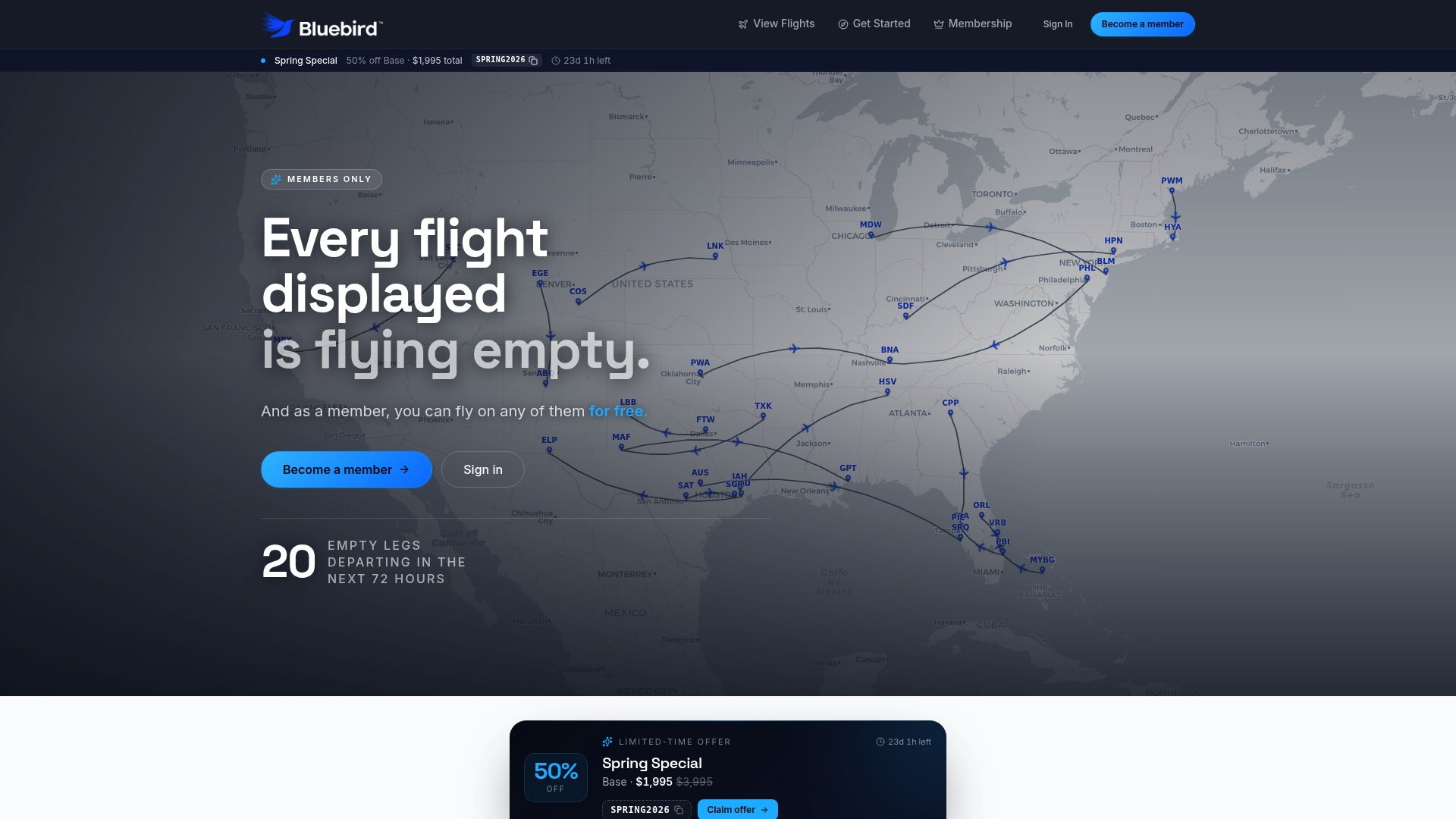
Current listings include routes like a MYBG to PBI empty leg on June 9 and an AUS to SRQ segment on June 7, which are exactly the kind of discounted repositioning flights this article covers. Browse the full Bluebirdjets flights catalog to see what is available now, or explore Bluebirdjets charter options if you need a confirmed route on your schedule.
FAQ
What does deadheading mean in aviation?
Deadheading in aviation refers to crew members traveling as passengers on a flight to reach their next duty assignment, or to an aircraft flying without revenue passengers to reposition for its next booking. Both uses of the term describe non-revenue operational travel.
Are deadhead flights available to the public?
Airline crew deadhead seats are reserved for airline employees only. Private jet empty legs, which are also called deadhead flights in charter aviation, are available to the public and can be booked through charter platforms and membership services like Bluebirdjets.
How much can you save on a deadhead empty leg flight?
Discounts on empty leg flights typically range from 25% to 75% below standard charter prices, and can reach up to 90% off when an operator needs to reposition urgently. The exact discount depends on route, aircraft type, and how close to departure you book.
Can a deadhead flight be canceled?
Yes. Private jet empty legs are tied to the original charter booking that created them. If that charter cancels or changes routing, the empty leg may be canceled as well. Travelers should confirm cancellation policies with the operator before booking.
What is the difference between a deadhead flight and a ferry flight?
A ferry flight specifically refers to an aircraft flying without any passengers, often for maintenance, delivery, or repositioning purposes. A deadhead flight can include crew members riding as passengers. In private aviation, both terms are often used interchangeably with empty leg and dead leg.