Empty Leg Ski Trip Booking Tips That Save You 75%

Empty Leg Ski Trip Booking Tips That Save You 75%
Empty leg flights are repositioning private jet trips sold at discounts of 30% to 75% off standard charter rates, making them the most cost-effective way to fly private to a ski resort. The industry term is “empty leg” or “ferry flight,” and the savings exist because operators need to move aircraft between locations after dropping off a charter client. These empty leg ski trip booking tips will show you exactly how to find, time, and secure these deals before someone else does.
What are empty leg ski trip booking tips and why do they work?
Empty legs function as flash sales for repositioning jets. A charter client books a one-way flight from Aspen to New York, and the operator must fly the jet back empty. Rather than absorb that cost, the operator lists the return leg at a steep discount. You pay a fraction of the full charter price. The catch is that the window to book is short, the schedule is fixed, and the deal can disappear in hours.
The savings are real and significant. Light and midsize jets on mid-range routes see the deepest discounts, often hitting that 75% ceiling. A flight that would cost $18,000 on a full charter might list as an empty leg for $5,000 or less. That math changes the entire calculation for a ski vacation.
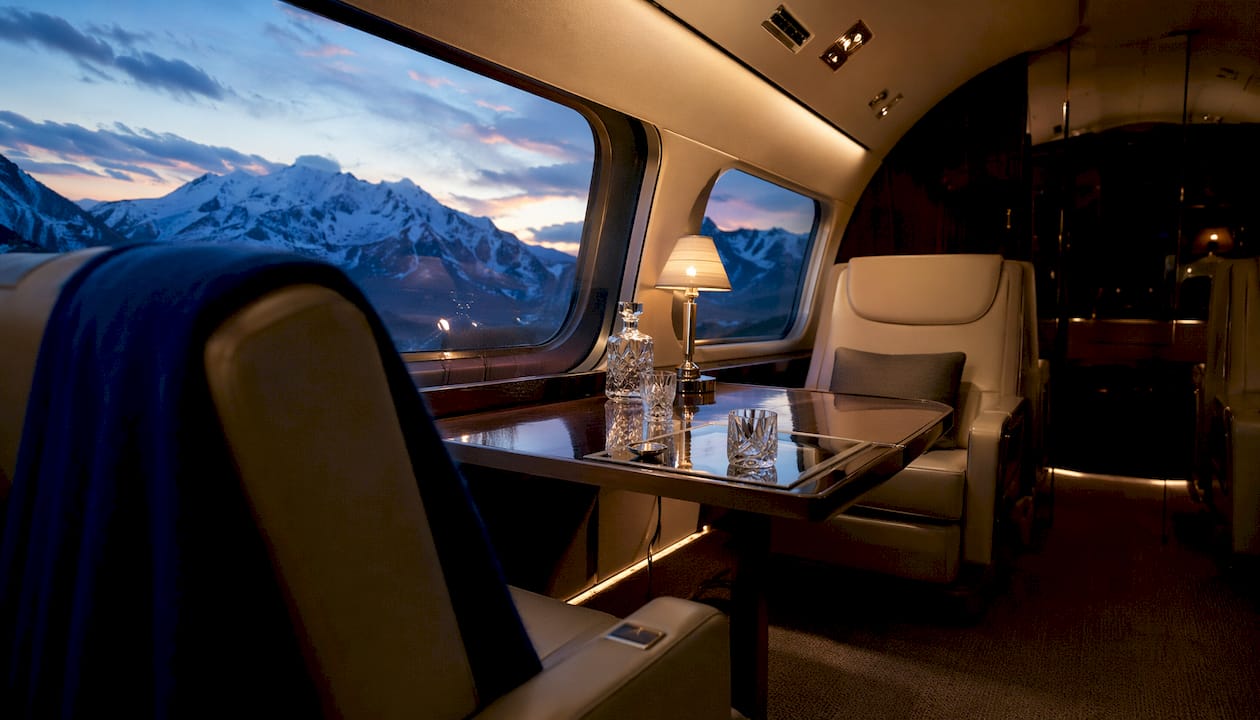
Ski season amplifies the opportunity. December through march sees heavy private jet traffic to mountain destinations like Aspen, Vail, Telluride, Jackson Hole, and Park City. More charter clients flying in means more empty legs flying out, and vice versa. The volume of available deals during peak ski season is genuinely higher than most other times of year.
How to prepare before you search for empty leg deals
Speed wins every time with empty legs. No membership or vetting is required to book, but you must be ready to confirm instantly when a deal appears. That means having everything prepared before you start searching.
Documents and details to have ready:
- Government-issued photo ID for domestic flights; passports and visas for international routes
- Full passenger names, dates of birth, and contact details for everyone traveling
- Passenger data submitted 24–72 hours before departure, so gather it early
- A payment method cleared and ready to process immediately
- Your preferred departure airports, including secondary options within driving distance
Flexibility on airports is one of the most underrated advantages you can give yourself. Major ski resort airports like Aspen/Pitkin County (ASE) are well-known and competitive. Smaller regional airports like Glenwood Springs or Montrose Regional (MTJ) near Telluride attract far less competition for the same empty legs.
Pro Tip: Set up route alerts on aggregator platforms the moment you decide on a ski trip. The earlier you configure alerts, the more lead time you get on deals that match your route.
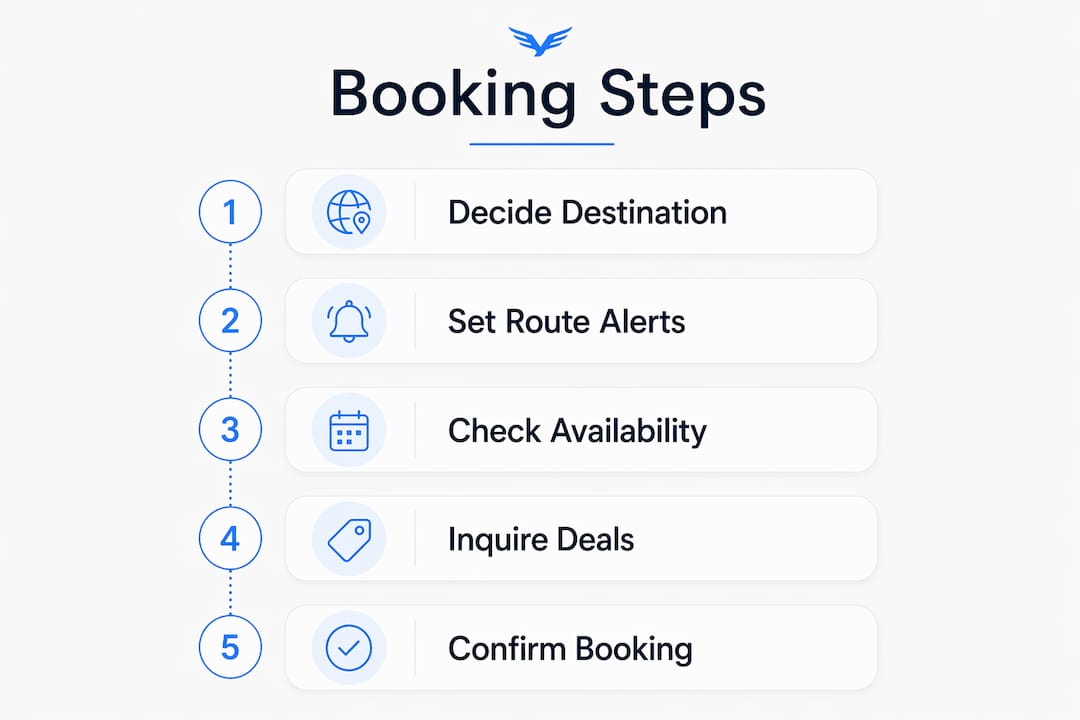
Aggregator platforms pulling from 10,000+ operators are the most time-efficient tool for finding empty legs. Checking individual operator websites one by one wastes time you do not have when deals sell within hours. A single aggregator search covers the full market in seconds.
How do you find and book an empty leg ski flight step by step?
The booking process for empty legs is fast and unforgiving. Follow this sequence to avoid missing deals or making costly mistakes.
- Set your search window. Empty legs are listed 2–14 days before departure, with the best discounts appearing 48–72 hours out. Start monitoring at the two-week mark but expect the real action closer to departure.
- Configure route and date alerts. Use aggregator platforms to set alerts for your target airports and a flexible date range. Include nearby secondary airports in every alert.
- Respond within 1–4 hours. Popular ski routes sell within that window. If you see a match, contact the operator or broker immediately, even before you have confirmed your full group.
- Ask the right questions before committing. Confirm the exact departure time, whether any flexibility exists on that window, what is included (catering, ground transport), and what fees are not included (landing fees, de-icing, FBO charges).
- Get refund terms in writing. Cancellation rates average 10–15% because primary charter plans change. A written refund confirmation protects you if the operator cancels.
- Confirm FBO and terminal details. Private jet terminals (FBOs) are separate from commercial terminals. Know exactly where to arrive and at what time.
- Submit passenger documentation promptly. Do not wait until the day before. Operators need manifests 24–72 hours out, and late submissions can cost you the booking.
Pro Tip: Inquire on a deal even if you are not 100% decided. Asking questions does not commit you to a purchase, and it keeps the conversation open while you confirm your group.
The table below shows how booking timing affects both price and availability on typical ski routes.
| Booking window | Typical discount | Availability | Risk level |
|---|---|---|---|
| 14 days out | 30%–45% | High | Low |
| 7 days out | 45%–60% | Moderate | Moderate |
| 48–72 hours out | 60%–75% | Lower | Higher |
| Same day | Varies | Very low | High |
What challenges should you expect when booking empty leg ski trips?
Empty legs are not for travelers who need certainty. Understanding the pitfalls before you book prevents frustration and financial loss.
- Cancellation risk is real. The 10–15% cancellation rate tied to primary charter changes means your flight can disappear with short notice. Always have a backup plan.
- Schedules are fixed. Most operators offer little to no flexibility on departure times. If the jet leaves at 7:00 AM, you are there at 7:00 AM or you miss it.
- Empty legs are one-way only. You need a separate return flight. This is not a limitation if you plan for it, but it catches unprepared travelers off guard.
- Competition is fast and real. On popular ski routes during peak season, deals sell within hours. Hesitation costs you the booking.
- Secondary fees add up. Landing fees, FBO handling charges, de-icing, and catering are sometimes excluded from the listed price. Confirm the all-in cost before you pay.
The price advantage of empty legs is fragile. A primary charter client changing plans can cancel your flight with little warning. Confirm refund or rebooking policies explicitly before any payment clears, and treat a refundable commercial ticket as standard insurance for any time-sensitive ski trip.
The empty leg vs. charter flight comparison matters here. A full charter guarantees your schedule. An empty leg trades that guarantee for a major price reduction. Knowing which tradeoff fits your trip is the first real decision you make.
For return flights, the hybrid booking approach solves the one-way problem cleanly. Book a full charter for one direction and an empty leg for the other. You get schedule reliability where you need it and maximum savings where you can absorb flexibility.
How do hybrid bookings and timing strategies maximize ski trip discounts?
The hybrid round-trip approach cuts total ski trip costs by 30%–50% compared to booking two full charters. You pay full price for the leg where timing is critical, typically the outbound flight to the resort, and use an empty leg for the return when you have more flexibility on departure time.
Timing your search around peak repositioning periods adds another layer of savings. The holidays from late december through early january generate enormous private jet traffic to ski destinations. Operators fly clients in for the holidays and need to reposition jets afterward. That post-holiday window produces a surge of empty legs on ski routes with minimal competition because most travelers have already returned home.
Pro Tip: Target the days immediately after major holidays. The volume of repositioning flights spikes, and many travelers are not yet thinking about their next trip. That gap is your opportunity.
Smaller secondary airports near ski resorts consistently produce better results than the primary resort airports. Montrose Regional for Telluride, Hayden/Yampa Valley for Steamboat Springs, and Friedman Memorial for Sun Valley all see genuine empty leg traffic with far less competition than the marquee airports. The drive to the resort adds 30–60 minutes but the savings justify it.
A flexibility window of plus or minus 4–6 hours on departure time opens significantly more options. Operators with fixed schedules may have a jet leaving at 6:00 AM or 2:00 PM. If you can work with either, you double your chances of matching a deal. The last-minute travel guide covers this timing logic in detail for travelers who want to go deeper on the strategy.
Key Takeaways
Booking empty leg ski trips successfully requires speed, flexibility, and a clear fallback plan because deals sell within hours and cancellations are a real risk.
| Point | Details |
|---|---|
| Discounts reach 75% | Empty legs offer 30%–75% off standard charter rates, with the deepest cuts 48–72 hours before departure. |
| Speed is the deciding factor | Popular ski route deals sell within 1–4 hours of listing; have documents and payment ready before you search. |
| Cancellation risk is 10–15% | Always get written refund terms and keep a refundable commercial ticket as a backup for time-sensitive trips. |
| Hybrid bookings cut costs 30%–50% | Pairing one full charter leg with one empty leg reduces total round-trip costs while preserving schedule reliability. |
| Secondary airports improve success | Regional airports near ski resorts have lower competition and more available empty legs than primary resort airports. |
Why I think most travelers approach empty legs the wrong way
Most people treat empty legs like a discount airline ticket. They wait for the perfect deal, at the perfect time, to the perfect airport. That mindset kills your chances before you start.
The travelers who consistently land great empty leg ski deals share one trait: they decide on a destination and a rough window, then let the deal shape the specifics. They are not flying from New York to Aspen on Saturday at noon. They are flying from somewhere in the Northeast to somewhere near a Colorado ski resort sometime between Thursday and Sunday. That mental flexibility is the actual product you are buying.
I have seen travelers miss a $4,500 flight to Telluride because they spent two hours debating whether to book. The deal was gone before they decided. The right move is to inquire immediately, ask your questions fast, and make a decision within the hour. Hesitation is expensive.
The cancellation risk is real but manageable. A refundable commercial ticket costs maybe $400 and gives you complete peace of mind. Think of it as insurance, not a fallback. You probably will not need it. But the one time you do, you will be grateful you bought it.
The empty leg booking best practices guide covers the mechanics well. What it cannot teach is the mindset shift from “finding the perfect deal” to “being ready for the right deal.” That shift is what separates travelers who fly private for less from those who talk about it.
— Nick
Bluebirdjets membership and empty leg ski trips
Bluebirdjets members get unlimited access to empty leg inventory on the platform, which means no per-search fees and no missed alerts when a ski route deal goes live. The membership model is built for exactly this kind of travel: spontaneous, flexible, and cost-focused.
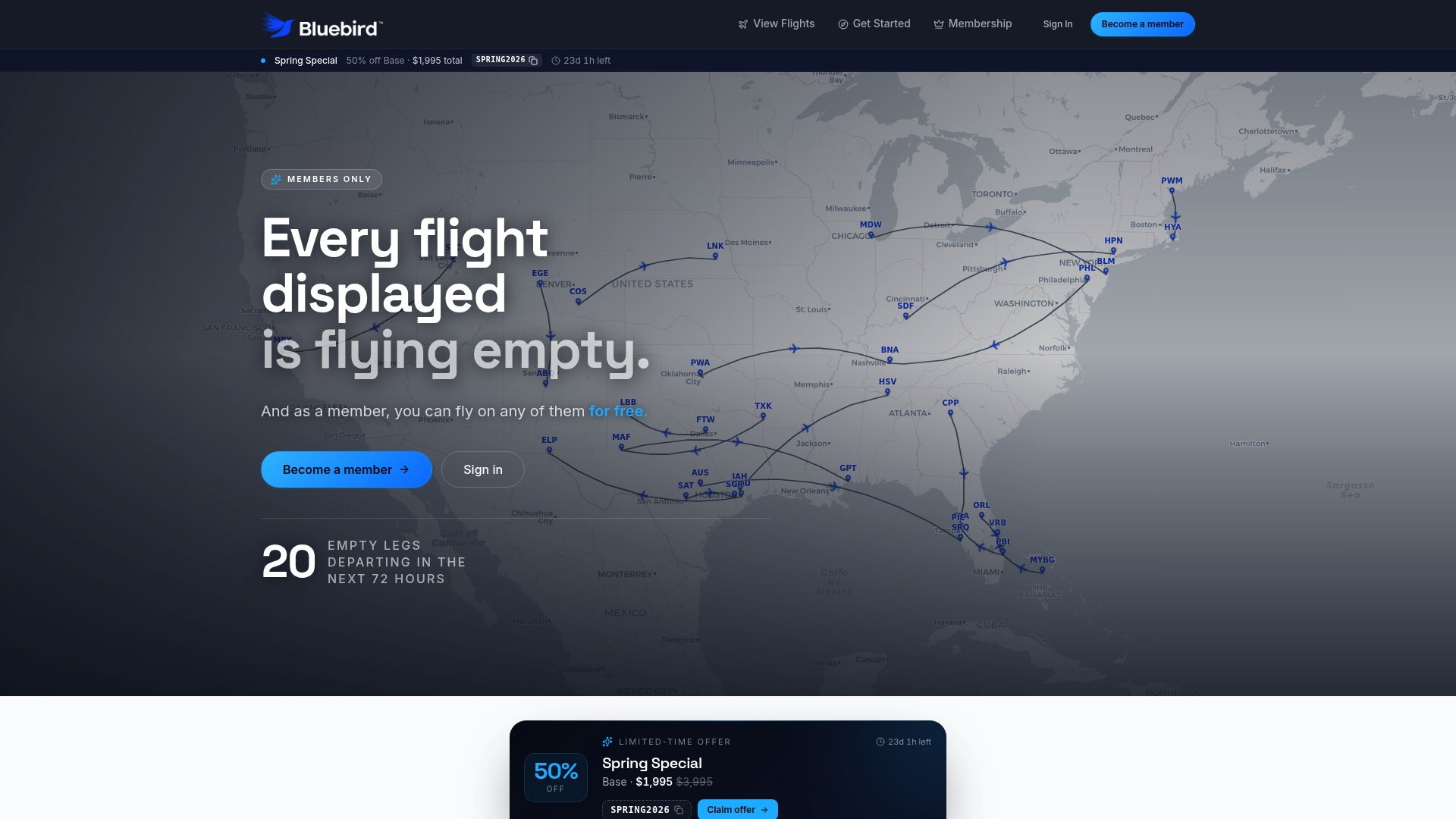
The platform aggregates live empty leg inventory and sends real-time notifications when a route matching your preferences becomes available. Members also get direct support for navigating cancellation policies, passenger documentation, and FBO logistics before departure. For ski travelers who want private jet access without paying full charter prices every trip, Bluebirdjets membership is the most direct path to consistent savings. Browse current available empty leg flights to see what is live right now on ski routes.
FAQ
What is an empty leg flight?
An empty leg is a repositioning private jet flight sold at a discount after a charter client books a one-way trip. Operators list these flights at 30%–75% below standard charter rates rather than fly the aircraft empty.
How far in advance should I book an empty leg ski flight?
Search 2–14 days before your trip, but expect the best discounts 48–72 hours before departure. Popular ski route deals sell within 1–4 hours of listing, so respond fast.
Can empty leg ski flights get canceled?
Yes. Cancellation rates average 10–15% because primary charter changes affect the repositioning schedule. Always get written refund terms and keep a backup commercial ticket for time-critical trips.
Are empty legs good for round-trip ski travel?
Empty legs are one-way only. The most cost-effective approach is a hybrid booking: one full charter leg for schedule reliability and one empty leg for the return, cutting total costs by 30%–50%.
Do I need a membership to book empty leg flights?
No membership is required to book an empty leg. Speed and preparation matter more than any account status. That said, a membership platform like Bluebirdjets gives you unlimited access to live inventory and real-time alerts, which significantly improves your chances of securing deals.