Best JetMembership.com Alternatives for Private Jet Travel in 2026

Best JetMembership.com Alternatives for Private Jet Travel in 2026
What are the top jetmembership.com alternatives in the US?
The strongest alternatives to jetmembership.com fall into three distinct models: fractional ownership, fixed-rate jet cards, and hybrid broker platforms. NetJets leads fractional ownership with minimum buy-ins starting at $215,000. Sentient Jet and Magellan Jets anchor the jet card space with fixed hourly rates and no capital lock-up. XO, VistaJet, and Wheels Up occupy the hybrid middle ground, blending deposit-based access with varying degrees of fleet scale and digital booking.
No single provider wins across every use case. The right choice depends on how often you fly, where you fly, and how much pricing certainty you need versus flexibility.
| Provider | Business Model | Best For | Pricing/Commitment | Booking Platform | Geographic Reach | Specialization |
|---|---|---|---|---|---|---|
| NetJets | Fractional ownership | Ultra-high-net-worth flyers, 100+ hrs/year | $215,000+ minimum; monthly mgmt fees + hourly | App and account manager | Global | Scale, safety, service consistency |
| Sentient Jet | Fixed-rate jet card | Frequent domestic flyers, predictable pricing | 25-hour blocks; hours never expire | Mobile-first app | US domestic primary | Brand heritage, transparent fixed rates |
| XO | Hybrid broker/membership | Tech-savvy, flexible flyers | $100,000–$500,000 refundable deposit tiers | App-forward, dynamic pricing | Global via Vista fleet | 200+ proprietary aircraft, loyalty credits |
| VistaJet | Global membership | International business travelers | Usage-band pricing, quote-driven | Dedicated account team | Global long-range | Uniform cabin standard, no repositioning fees in core zones |
| Wheels Up | Membership-based | High-volume US domestic flyers | Annual membership + pay-as-you-fly | App + Delta integration | US domestic primary | Delta ecosystem, guaranteed availability |
| Magellan Jets | Boutique jet card | Relationship-driven domestic travelers | Custom card builds, refundable options | Concierge-led | US domestic | Personalized, flexible terms |
| Air Trek | Boutique operator | Americas-focused, family/bespoke travelers | Deposit-based tiers, concierge coordination | Partner carrier network | Americas | Personalized service, family-owned |

How do the leading providers compare in depth?
Fractional ownership: NetJets sets the standard
NetJets operates in a fundamentally different financial paradigm from jet cards or deposit-based memberships. Its primary product, the NetJets Share, requires a minimum buy-in starting at $215,000, plus monthly management fees ranging from $14,000 to $50,000 and an occupied hourly rate on top. That structure suits principals flying 100 or more hours annually who prioritize guaranteed aircraft availability and institutional-grade safety governance. No other fractional provider matches its operational scale or six-decade track record. For everyone else, it is simply more capital than the model justifies.
Pro Tip: If you are evaluating fractional ownership, engage aviation legal counsel specifically to review exit provisions and depreciation methodology before signing. These clauses carry more financial risk than the hourly rate.
Fixed-rate jet cards: Sentient Jet and Magellan Jets
Sentient Jet invented the jet card concept and has spent 25 years refining a mobile-first booking experience built around fixed hourly rates and 25-hour blocks. Hours never expire, and published base pricing removes the guesswork that plagues dynamic-pricing platforms. That transparency is the core appeal for domestic flyers who want cost predictability without stepping into fractional territory.
Magellan Jets takes a different approach. Its boutique model lets buyers customize card builds with concierge support and, crucially, refundable terms. For relationship-driven travelers who want a program shaped around their specific routes and preferences, Magellan’s flexibility often outweighs Sentient’s brand scale. Private Jet Card Comparisons tracks both programs across 65+ variables, which makes it the most practical tool for a side-by-side evaluation before committing.
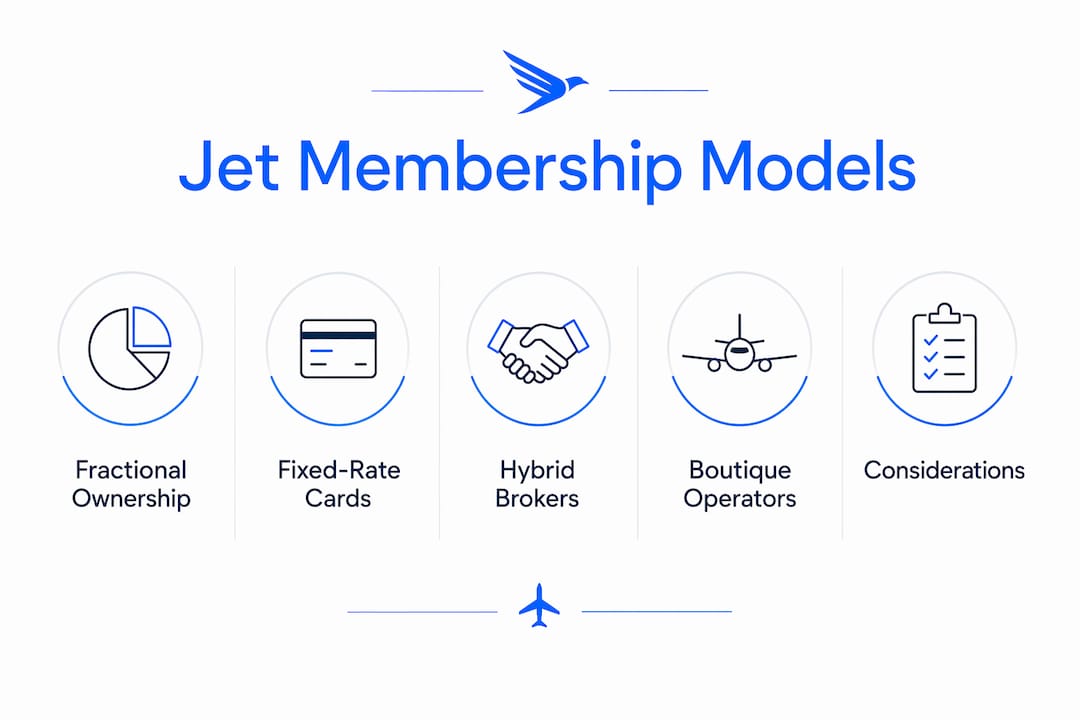
Hybrid and broker models: XO, VistaJet, and Wheels Up
XO operates as the consumer-facing brand of Vista Global and offers three membership tiers: XO Membership ($100,000 minimum refundable deposit), XO Reserve ($250,000), and XO Corporate ($500,000). Members earn loyalty credits of up to 4% per flight on Reserve and Corporate tiers. The Vista Members’ fleet of 200+ aircraft gives XO the largest proprietary fleet access of any platform in this category. The trade-off is pricing certainty: dynamic market rates mean your cost per trip can shift based on demand and route.
VistaJet suits a different buyer entirely. Its strength is international consistency. The cabin standard, crew training, and service protocol are identical whether you board in New York or Dubai. There are no repositioning fees within core zones, and tiered club options let members scale commitment without buying into aircraft ownership. For frequent transatlantic or transcontinental travelers, that uniformity has real value.
Wheels Up is the most accessible entry point among the major membership brands, partly because of its partnership with Delta Air Lines. SkyMiles integration and coordinated routing make it genuinely useful for flyers already embedded in the Delta ecosystem. The catch: cancellation policies require 72 hours notice with penalties up to 100% of flight cost, and the fine print on deposits and rate rules deserves careful reading before funding an account.
Air Trek and the boutique case
Air Trek is a family-owned operator focused on the Americas. It does not compete on brand recognition or fleet size. What it offers instead is a concierge-coordinated program built around a partner carrier network, with deposit-based tiers and a service model sized for travelers who fly regionally and want a personal relationship with their provider. For families or individuals whose routes stay within the Americas and who find the major platforms impersonal, Air Trek belongs in the conversation.
Cancellation policies and hidden costs
Peak-day surcharges vary sharply across providers. The industry average now sits at several dozen peak days per year, with some programs exceeding many high-demand days. On those dates, surcharges of 15–30% are common, and booking windows can stretch from 24 hours to 45 days advance notice. NetJets offers 10-hour cancellation windows on non-peak days. Wheels Up requires 72 hours. Flexjet allows as little as 4 hours. These differences matter enormously for travelers whose schedules change on short notice.
Current 2026 base rates run $5,650–$8,500 per hour for light jets, $6,400–$11,500 for midsize jets, and $10,000–$17,000 or more for super-midsize and heavy aircraft. Federal Excise Tax of 7.5% applies to every domestic flight, plus $4.50 per person per segment. Always confirm whether repositioning fees, catering, Wi-Fi, and crew overnight charges are included before comparing hourly rates across providers.
How to choose the right private jet membership for your needs
Matching a provider to your actual flight profile is the single most important step. A buyer who flies 30 hours a year domestically and a corporate principal flying 150 hours internationally have almost nothing in common in terms of what program structure serves them.
Work through these questions before contacting any provider:
- Flight frequency: Fewer than 50 hours annually? On-demand charter is usually more cost-effective and transparent than any membership. Above 50 hours, jet cards start to justify their structure. Above 100 hours, fractional ownership becomes worth modeling.
- Route focus: Primarily domestic US routes favor Sentient Jet, Magellan Jets, or Wheels Up. International and long-range travel points toward VistaJet or XO.
- Pricing certainty vs. flexibility: Fixed-rate jet cards (Sentient Jet, Magellan Jets) give you cost predictability. Hybrid platforms (XO, Wheels Up) offer more flexibility but less price certainty.
- Operator-run vs. broker-led: Operator-run programs typically deliver higher fleet consistency. Broker-led models offer broader aircraft access but variable service quality depending on the sourced operator. Understanding this distinction helps predict hidden fees and service reliability.
- Safety and certification: Ask each provider directly about ARGUS and Wyvern ratings for their sourced operators. These are independently verified safety standards, and they rarely appear in marketing materials. Private Jet Card Comparisons lets you filter programs by pilot experience requirements and surcharge policies, two variables that most providers bury.
- Contract terms: Read the cancellation policy, peak-day definitions, and deposit refundability before signing anything. Membership contracts are often complex, and the gap between the advertised hourly rate and the true all-in cost can be substantial.
- Customer support model: Some programs assign a dedicated account manager. Others route everything through an app. Know which you prefer before committing.
For a practical due diligence process: request a sample contract, ask for a full fee schedule including peak-day surcharges and repositioning costs, verify the safety ratings of the operators in their network, and compare at least three providers against your specific route flexibility needs before making a decision.
Key Takeaways
The most cost-effective private jet membership is the one matched to your actual flight frequency, routes, and pricing tolerance, not the most recognized brand name.
| Point | Details |
|---|---|
| Three core models | Fractional ownership, fixed-rate jet cards, and hybrid broker platforms each serve distinct flight profiles and budget levels. |
| NetJets minimum commitment | NetJets fractional buy-ins start at $215,000, making it appropriate only for flyers logging 100+ hours annually. |
| Peak-day costs matter | Industry average peak days now reach 47.5 per year, with surcharges of 15–30% and tighter cancellation windows on those dates. |
| Operator vs. broker distinction | Operator-run programs offer higher fleet consistency; broker-led models offer broader access but less predictable service quality. |
| Bluebirdjets empty-leg membership | Bluebirdjets offers a different entry point: a flat membership giving unlimited access to empty-leg flights, suited to flexible travelers who want private aviation without six-figure deposits. |
A lower-commitment path worth considering
The providers compared above all require substantial upfront capital, whether a $215,000 fractional buy-in or a $100,000 deposit for XO’s entry tier. For travelers who want private aviation without locking that kind of money with a single provider, there is a different approach.
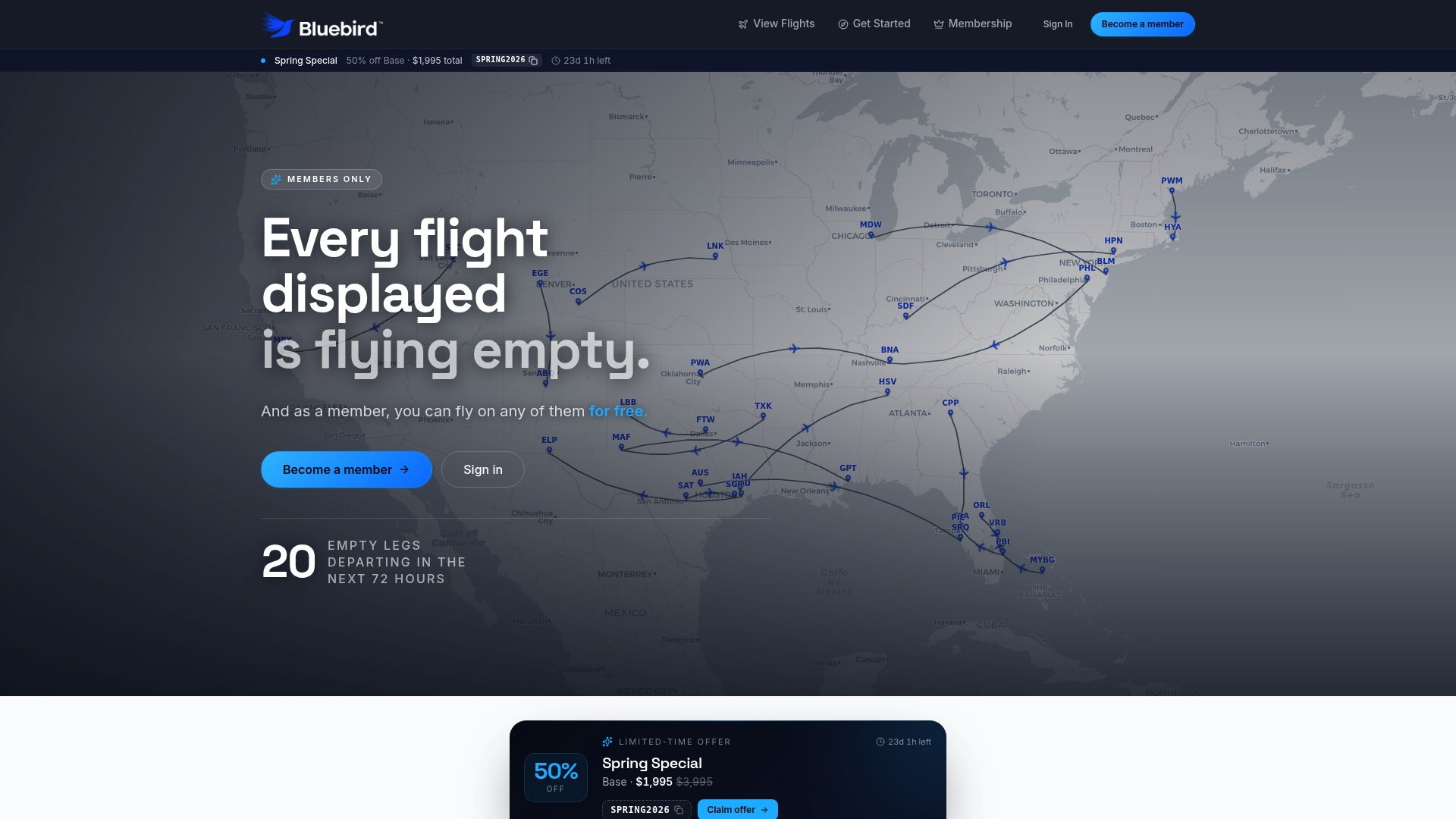
Bluebirdjets sells a membership that gives you unlimited access to empty-leg flights on its platform. Empty legs are repositioning flights that would otherwise fly empty, and they typically cost a fraction of a chartered trip on the same aircraft. The Bluebirdjets model does not replace NetJets or VistaJet for a principal flying 120 hours a year on fixed routes. It suits a different traveler: someone who flies private occasionally, values flexibility over guaranteed availability, and would rather pay for access than lock six figures into a deposit account. If that profile fits, the Bluebirdjets membership is worth a look before committing to any of the programs above.