Types of Flexible Flight Options for Spontaneous Travelers

Types of Flexible Flight Options for Spontaneous Travelers
Flexible flight options are defined by how much control you keep over changing or canceling a booking without paying a steep penalty. The industry groups these into four main tiers: fully refundable, changeable, semi-flex, and open-ended tickets. The US Department of Transportation’s 24-hour rule adds a baseline protection for every traveler, guaranteeing a full refund if you cancel within 24 hours of booking, provided the departure is at least two days out. For spontaneous travelers aged 25–45 who book on instinct and change plans often, knowing which tier fits your trip can save hundreds of dollars and a lot of frustration.
1. What are the types of flexible flight options?
Flexible flight options fall into four tiers: fully refundable, partially refundable, changeable, and semi-flex. Each tier gives you a different level of control over your booking. Fully refundable tickets sit at the top. Semi-flex tickets sit at the bottom, offering limited changes but no cancellation rights. Understanding where a ticket falls on this spectrum before you buy is the single most useful habit a spontaneous traveler can build.
The tier system matters because airlines rarely label tickets clearly. A fare branded “Flex” at one carrier may mean something different at another. Reading the fare rules, not just the marketing label, tells you exactly what you can and cannot do.

2. Fully refundable flights: maximum freedom, higher cost
Fully refundable tickets provide a 100% cash refund to your original payment method, with no vouchers and no airline credit. That distinction matters. Many travelers assume “refundable” means cash back, but some carriers issue travel credits by default unless you specifically request a cash refund.
These tickets carry a meaningful price premium over standard fares. The premium reflects real value: you are essentially buying travel insurance built into the ticket. Travelers who benefit most include:
- Business travelers whose meetings get canceled at short notice
- Travelers with medical conditions that make trip certainty impossible
- Anyone booking far in advance into a period of personal uncertainty
- Event attendees where the event itself might be postponed
Major airlines classify fully refundable fares under brand names like “Flex” or “Fully Refundable,” and premium cabins generally include these benefits by default. That means a business-class seat often comes with refundability already baked in, which partially offsets the cabin upgrade cost for travelers who need that protection.
Pro Tip: Book a fully refundable fare when your trip depends on a single external event, such as a job interview, a medical procedure, or a conference. The premium pays for itself the first time plans fall through.
3. How changeable flight tickets work
Changeable tickets allow you to shift your travel dates, but they do not guarantee a cash refund if you cancel. Cancellation on a changeable ticket typically results in airline credit, not money back to your card. That is the most common misunderstanding travelers have about this ticket type.
The cost of changing a changeable ticket has two parts. First, many major US carriers have eliminated flat change fees on domestic routes. Second, and more importantly, you still pay the fare difference if the new flight costs more than the original. That fare difference can easily exceed what a change fee used to cost.
Key features to check before buying a changeable ticket:
- Fare difference policy: Do you pay the full difference, or is there a cap?
- Credit expiration: Airline credits often expire within 12 months of the original booking date
- Same-day change rules: Some carriers allow free same-day changes to earlier flights on the same route
- International vs. domestic rules: Change policies often differ significantly by route type
Flexible tickets protect travelers against paying full new fares when plans shift, by requiring only the incremental fare difference. That protection has real value, especially on routes where prices spike close to departure.
Pro Tip: Monitor your booking for schedule changes after purchase. A shift of three or more hours in your departure time can legally entitle you to free rebooking or a refund even on a non-refundable ticket. Set a calendar reminder to check your itinerary every two weeks.
4. Open-ended and semi-flex tickets: adaptable travel on a budget
Semi-flex tickets sit between fully refundable and fully restrictive fares. They typically allow one or two free date changes within a set window, but cancellation rights are limited or absent. Think of them as a middle ground: you get some room to move without paying the full refundable premium.
Open-ended tickets, which let you return on any available flight without a fixed return date, are rare in modern commercial aviation. Most airlines have phased them out. The practical replacement is a two-one-way strategy or a multi-city itinerary.
Two-one-way strategy
Booking two separate one-way tickets instead of a round trip gives you independent control over each leg. You can change or cancel the return without touching the outbound. This approach costs more upfront on some routes but gives you genuine flexibility on both ends.
Multi-city itinerary strategy
A multi-city booking lets you structure an “anchor” flight on a fixed date and attach flexible segments around it. For example, you book a firm outbound to Madrid and leave the onward leg open by booking a separate one-way from Madrid to Lisbon later. This approach meets airline and border documentation requirements while giving you practical open-ended freedom.
Cost-benefit comparison of semi-flex approaches:
| Strategy | Upfront Cost | Flexibility Level | Best For |
|---|---|---|---|
| Semi-flex ticket | Moderate | Limited changes, no cancel | Short trips with soft plans |
| Two one-way tickets | Moderate to high | Full control per leg | Open-ended return dates |
| Multi-city itinerary | Variable | High on flexible segments | Multi-destination trips |
For spontaneous travelers, the two-one-way approach often delivers the best balance of cost and control. Check each leg’s fare rules independently, since they may differ by carrier.
5. How flexible date search tools cut costs without sacrificing adaptability
Flexible date search tools reveal ticket price differences that can range from slight to nearly double on the same route, depending on which day you fly. Expanding your search window to a week or a full month is the most reliable way to find low fares without locking yourself into a rigid schedule.
Most major booking platforms offer a calendar or grid view that shows prices across a range of dates at once. Using a plus-or-minus three-day window around your target date is a practical starting point. A full month view works best when your schedule is genuinely open.
Tactics that compound the savings from flexible date searching:
- Nearby airports: Flying into a secondary airport 60–90 minutes from your destination often cuts fares significantly on the same dates
- Midweek departures: Tuesday and Wednesday departures consistently price lower than Friday or Sunday on most domestic routes
- Off-peak windows: Searching the first two weeks of a month often surfaces lower fares than the final week, when business travelers fill seats
- One-way combinations: Mixing carriers on outbound and return legs through flexible search can undercut round-trip pricing
Spontaneous travelers who budget flights effectively treat flexible date search as a standard step, not an optional one. The time investment is under five minutes and the savings potential is real.
Pro Tip: Search your route on a Tuesday or Wednesday morning. Fare algorithms update frequently, and midweek searches often surface prices that disappear by the weekend.
6. Last-minute flexibility and schedule change rights
Last-minute flight flexibility works differently from advance flexible booking. Close to departure, standard fares spike sharply. The travelers who navigate this best are those who already hold a changeable ticket or who know how to use schedule change rules.
Significant schedule changes can legally entitle travelers to refunds or free rebooking, even on non-refundable tickets. A shift of three or more hours in departure time is the most common trigger. Airlines are required to notify you of schedule changes, but they are not required to proactively offer a refund. You have to ask.
This rule functions as a hidden flexibility tool for travelers who monitor their bookings. If your flight shifts significantly, you can request a full refund and rebook on a cheaper fare or a different carrier. The empty legs market is one area where last-minute availability and flexible scheduling intersect particularly well for travelers who can move quickly.
7. Flexible booking strategies that combine multiple approaches
The most cost-effective flexible travel strategy combines ticket type selection with active booking management. Buying a semi-flex ticket and then monitoring for schedule changes gives you two layers of protection. Adding a flexible date search at the outset gives you a third.
Travel flexibility is increasingly viewed as insurance against volatile fares rather than just administrative convenience. That framing is useful. When you think of a refundable fare’s premium as an insurance cost, the math often justifies it for trips where uncertainty is high.
Travelers often overlook the fare difference cost when changing flights, which can be a major expense despite waived change fees. The practical fix is to book the lowest changeable fare available on your preferred carrier, then monitor prices after booking. If the fare drops, some carriers allow you to rebook at the lower price and bank the credit.
Key takeaways
The most effective flexible flight strategy combines the right ticket tier with active post-booking management, including schedule change monitoring and flexible date searching.
| Point | Details |
|---|---|
| Know your ticket tier | Fully refundable, changeable, semi-flex, and open-ended tickets each offer different rights. |
| Changeable is not refundable | Canceling a changeable ticket usually produces airline credit, not a cash refund. |
| Monitor schedule changes | A shift of 3+ hours can entitle you to a free rebook or full refund on any ticket type. |
| Use flexible date search | Expanding your search window by a week or more can reveal fares that are nearly double on peak dates. |
| Two one-ways beat open-ended | Booking separate one-way tickets gives you independent control over each leg of your trip. |
Why I think most travelers buy the wrong level of flexibility
The standard advice is to buy the cheapest ticket and hope for the best. I disagree with that approach for anyone who travels more than four or five times a year.
The real cost of a non-refundable ticket is not the ticket price. It is the ticket price plus the full fare you pay when plans change and you have to rebook at short notice. I have seen travelers pay more in last-minute rebooking costs in a single year than a fully refundable fare would have cost them across every trip combined.
The schedule change rule is the most underused tool in commercial air travel. Airlines change schedules constantly, and most travelers just accept the new time without realizing they may be entitled to a full refund. I check every booking I hold at least twice between purchase and departure. That habit has saved me money on routes where I would otherwise have been stuck.
My honest recommendation: buy the lowest changeable fare available, not the cheapest non-refundable one. The fare difference between those two options is usually small. The difference in what you can do when plans shift is enormous. For trips where uncertainty is genuinely high, step up to fully refundable. Treat the premium as a line item in your travel budget, not an extravagance.
— Nick
Flexible travel and the Bluebirdjets membership advantage
Spontaneous travelers who want genuine flexibility without the premium fare markup have a different option worth knowing about. Bluebirdjets sells a membership for flexible travelers that gives you unlimited access to empty leg flights on the platform. Empty legs are repositioning flights that would otherwise fly empty, and they price significantly below standard charter rates.
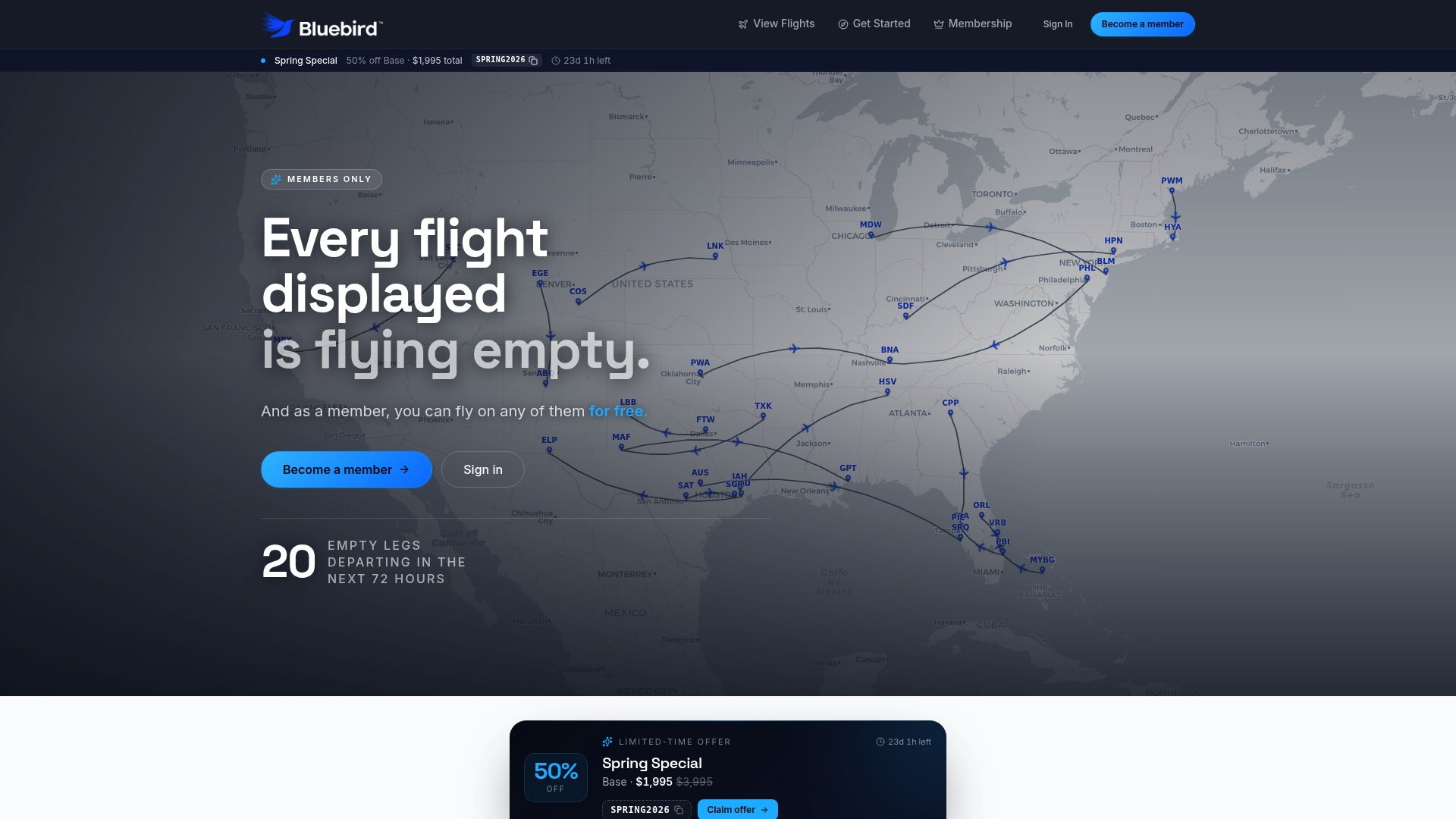
The Bluebirdjets model fits naturally with the flexible booking strategies covered here. You hold a membership, monitor available legs, and book when a route matches your plans. There are no per-booking premiums and no change fee structures to navigate. For travelers who can move on short notice, this approach delivers the kind of last-minute flight flexibility that standard airline tickets rarely provide at a comparable price point.
FAQ
What is the difference between a refundable and a changeable ticket?
A refundable ticket returns cash to your original payment method when you cancel. A changeable ticket lets you shift dates but typically issues airline credit on cancellation, not a cash refund.
Does the US DOT 24-hour rule apply to all flights?
The US Department of Transportation’s 24-hour rule applies to flights booked at least two days before departure. It guarantees a full refund if you cancel within 24 hours of booking, regardless of the fare type.
Can I get a refund on a non-refundable ticket?
A schedule change of three or more hours can entitle you to a full refund even on a non-refundable ticket. You must request it directly from the airline rather than waiting for them to offer it.
What is a semi-flex ticket?
A semi-flex ticket allows a limited number of free date changes within a set window but does not include cancellation rights. It sits between a fully refundable fare and a basic non-refundable ticket in both price and flexibility.
Are open-ended tickets still available?
Open-ended tickets are rare in modern commercial aviation. The practical alternative is booking two separate one-way tickets or a multi-city itinerary, which gives you independent control over each leg of your trip.