How Spontaneous Travelers Budget Flights in 2026

How Spontaneous Travelers Budget Flights in 2026
Spontaneous travel budgeting is the practice of setting firm spending limits before searching, then using flexible tools and timing to find airfare within those limits. How spontaneous travelers budget flights comes down to three factors: accepting that last-minute fares cost more, controlling every variable you can, and using tools like Google Flights Explore and Hopper to close the gap. The good news is that the gap is closable. You just need to know where to pull.
How spontaneous travelers find cheap last-minute flights
The first move is separating price discovery from booking. Search broadly, then commit. Mixing up those two steps is how travelers end up paying more than they should.
The right tools for price discovery:
- Google Flights Explore shows the cheapest destinations from your home airport on a map. You enter flexible dates and it surfaces the lowest available fares across all routes. This is the fastest way to find where your budget actually takes you, not just where you want to go.
- Hopper analyzes historical pricing and predicts whether a fare will rise or fall. For last-minute trips, it tells you whether to book now or wait a few hours.
- Going.com (formerly Scott’s Cheap Flights) sends fare alerts when prices drop significantly on routes you care about. It also explains the flexible date search method in detail.
Pro Tip: Search with Google Flights Explore first to identify your cheapest realistic options. Then open the airline’s own site to confirm the price before booking. Aggregator prices sometimes differ from what the airline charges at checkout.
Alternative airports are another underused lever. Flying into a secondary airport near your destination, say Midway instead of O’Hare or Oakland instead of SFO, regularly cuts fares by a meaningful amount. Use the radius search feature in Google Flights to compare nearby airports side by side.

Setting price alerts on Google Flights or Hopper costs nothing and removes the need to check manually every few hours. If a fare drops to your target, you get notified immediately. That matters when you’re watching a route for a weekend trip that’s still 10 days out.
How does timing affect last-minute flight prices?
Dynamic pricing raises fares as seat availability shrinks and departure approaches. That is not a theory. It is how airline revenue management systems work. The closer you get to departure, the less negotiating room you have.

The real cost of waiting
Last-minute cash fares average 59% more than fares booked at the ideal advance window. That premium is your baseline cost of spontaneity. Budget for it rather than fight it.
| Days before departure | Typical fare level | Best strategy |
|---|---|---|
| 21 days | Near-lowest cash price | Book now if dates are set |
| 14 days | Moderate premium | Use points or flexible dates |
| 7 days | High premium | Points redemption or packages |
| 1–3 days | Peak premium | Empty legs or package deals |
Booking around 21 days out is the sweet spot even for spontaneous travelers. You still get a relatively short planning window, but you avoid the steepest price spikes that hit inside two weeks.
Day of week matters more than most travelers realize
Midweek departures on Tuesday and Wednesday save about $42 per ticket compared to weekend departures. That is a 14% reduction just from shifting your departure day by 48 hours. If your job or schedule allows any flexibility, Tuesday or Wednesday departures are one of the easiest travel budgeting tricks available.
Red-eye flights follow the same logic. Fewer travelers want them, so airlines price them lower. A red-eye from Los Angeles to New York on a Tuesday can cost significantly less than a Friday afternoon departure on the same route.
What budget levers can you pull to cut last-minute flight costs?
Once you accept the higher baseline fare, the goal shifts to reducing total trip cost through every other available lever.
-
Book one-way tickets separately. One-way tickets can be cheaper than round-trips when booked last minute, especially if you mix airlines. Flying out on Delta and back on Southwest, for example, can undercut a round-trip on either carrier alone.
-
Redeem points for premium cabin seats. Airline points unlock last-minute premium seats at redemption rates that often beat the cash price by a wide margin. Business class seats that cost $1,200 cash sometimes redeem for 35,000 miles. Always compare the cash price against the redemption value before you decide.
-
Check flight plus hotel packages. Bundled packages on platforms like Expedia or Priceline sometimes price the flight below what you’d pay booking it separately. The hotel discount subsidizes the airfare. This works best for popular leisure destinations like Las Vegas, Miami, or Orlando.
-
Budget for ancillary fees upfront. Seat selection, checked bags, and priority boarding add real cost to a base fare. Decide before you search which add-ons you actually need. A $149 base fare with a $35 bag fee and a $25 seat fee is a $209 ticket. Budget for the real number, not the advertised one.
-
Consider open-jaw routing. Flying into one city and out of another can reduce total airfare, especially when one route has more competition. Open-jaw routing is a tactic most spontaneous travelers overlook entirely.
Pro Tip: Before redeeming miles, calculate the cents-per-mile value. Divide the cash price by the miles required and multiply by 100. Anything above 1.5 cents per mile is generally a good redemption for domestic flights.
How do you set and stick to a flight budget for spontaneous trips?
The biggest mistake spontaneous travelers make is searching before they set a number. Without a ceiling, you anchor to whatever price you see first. Set your maximum spend before you open any search tool.
A practical budgeting framework:
- Set a hard ceiling. Decide the most you will spend on the flight before you search. This number should include taxes, fees, and at least one checked bag if you need it.
- Build in a 20% buffer for ancillary costs. Base fares rarely reflect total cost. A $200 buffer on a $1,000 trip is not excessive.
- Use flexible destinations to stay within budget. If your ceiling is $300 and direct flights to your first-choice city cost $450, let the Google Flights Explore map show you what $300 actually buys. You may find a better trip than you planned.
- Book flights before hotels. Flight inventory shrinks faster than hotel inventory close to departure. Lock in the flight first, then find accommodation.
- Compare aggregators and airline sites directly. Multi-platform price comparison catches discounts that third-party sites miss. Airlines sometimes offer web-only fares not listed on Kayak or Google Flights.
- Track your total spend in a notes app or spreadsheet. Hidden fees accumulate fast. Knowing your running total prevents overspending on add-ons after you’ve already committed to the flight.
Setting a spending limit early and filtering by flexible destinations consistently surfaces more deals within budget than searching with a fixed destination and hoping the price fits.
Key Takeaways
Spontaneous travelers who budget flights effectively combine a hard spending ceiling with flexible tools, strategic timing, and points redemption to offset the 59% average premium on last-minute cash fares.
| Point | Details |
|---|---|
| Accept the price premium | Last-minute fares average 59% more. Budget for this baseline rather than searching for exceptions. |
| Use flexible search tools | Google Flights Explore and Hopper surface cheap options by destination and date flexibility. |
| Book around 21 days out | Fares at 21 days are significantly lower than at 7 or 14 days, even for spontaneous trips. |
| Fly midweek to save | Tuesday and Wednesday departures save about $42 per ticket compared to weekend flights. |
| Set your ceiling first | Define your maximum spend before searching to avoid anchoring to the first price you see. |
The uncomfortable truth about spontaneous travel budgets
Most spontaneous travelers I’ve watched struggle with last-minute flights share the same problem. They treat the search like a treasure hunt, hoping to stumble onto a deal. That mindset costs money every time.
The travelers who consistently find cheap flight deals for travelers are the ones who treat spontaneity as a destination preference, not a timing preference. They decide the budget first, then let the tools tell them where that budget takes them. That mental shift changes everything.
The other thing most articles won’t tell you: loyalty points are not a bonus. For last-minute trips, they are the primary cost control mechanism. Travel communities that share deal alerts and points strategies give spontaneous travelers a real edge over people searching alone. The collective intelligence of a good deal community is worth more than any single search tool.
The pitfall I see most often is ignoring ancillary fees until checkout. You’ve mentally committed to a $180 fare, then you add a bag and a seat and suddenly it’s $260. That’s not a bad deal gone wrong. That’s a failure to budget the real price from the start. Build fees into your ceiling before you search, not after you’ve already fallen in love with a fare.
Plan loosely. Budget tightly. Let the tools do the heavy lifting.
— Nick
Bluebirdjets and the spontaneous traveler’s edge
Spontaneous travelers who want to skip the fare premium entirely have another option worth knowing about. Bluebirdjets offers a membership that gives you unlimited access to empty leg flights on the platform. Empty legs are repositioning flights that would otherwise fly empty, priced well below standard charter rates.
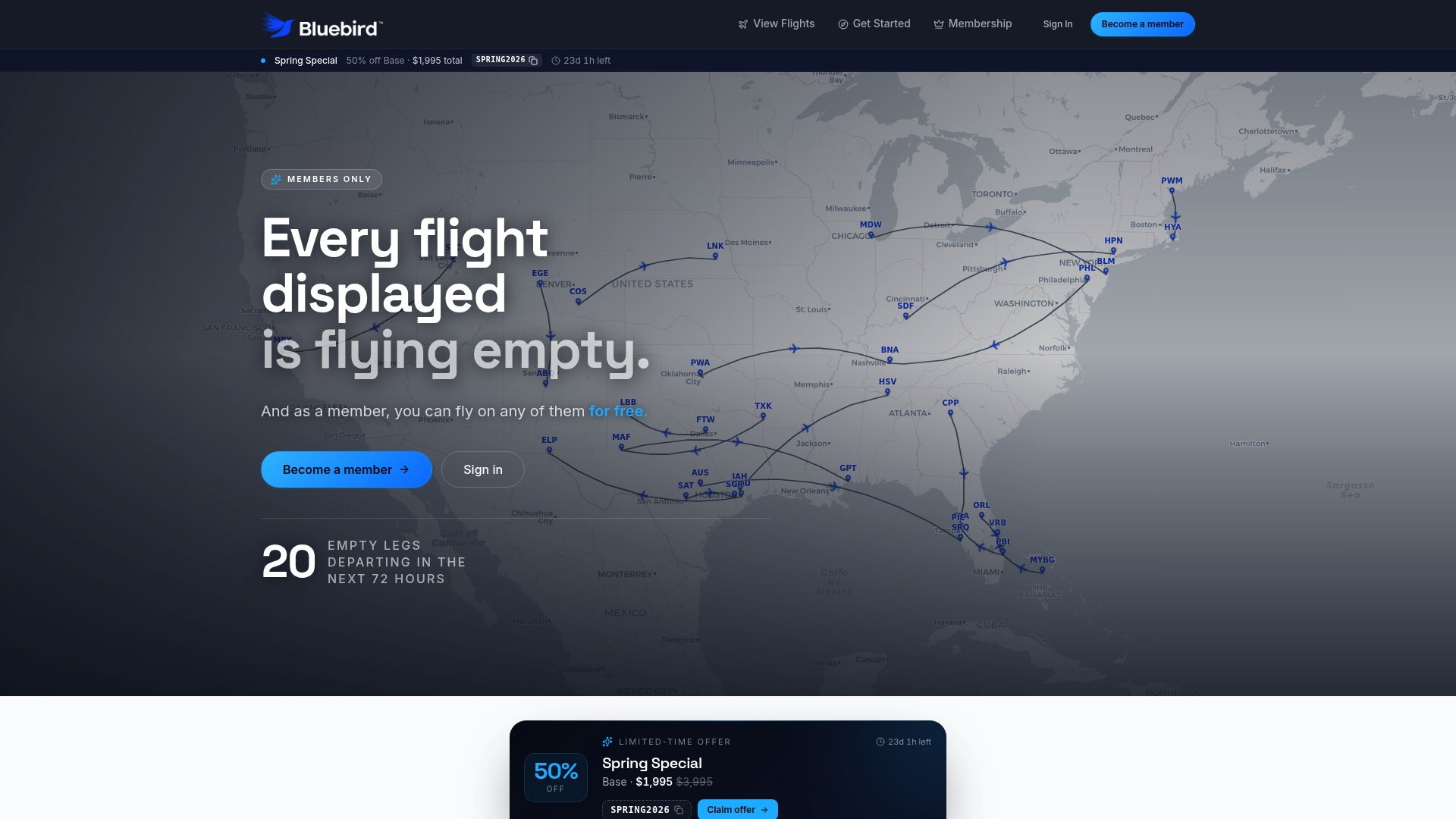
For travelers who move on short notice, empty legs flip the last-minute pricing dynamic entirely. Instead of paying a premium for booking late, you pay less because the seat needs to be filled. The Bluebirdjets membership program gives you access to these flights without per-search fees or booking surprises. If your schedule is flexible and your destinations are open, it is one of the most cost-effective ways to fly spontaneously in 2026.
FAQ
What is the average cost premium for last-minute flights?
Last-minute cash fares average 59% more than fares booked at the ideal advance window, according to a CheapAir analysis of 917 million airfares. That premium is the baseline cost of booking close to departure.
When is the best time to book a last-minute flight?
Booking around 21 days before departure typically offers lower fares than booking at 14 or 7 days out. Even for spontaneous trips, a few extra days of lead time makes a measurable difference in price.
Do one-way tickets save money on last-minute trips?
One-way tickets can be cheaper than round-trips when booked last minute, especially when you mix airlines. Combining two separate one-way fares on different carriers often undercuts a single round-trip booking.
How do airline points help with last-minute flight costs?
Points unlock premium cabin seats at redemption rates that frequently beat cash prices close to departure. Always calculate the cents-per-mile value before redeeming to confirm you’re getting a strong return.
Should I book my flight or hotel first for a spontaneous trip?
Book the flight first. Flight inventory shrinks faster than hotel availability close to departure, and airfares rise more sharply as the date approaches. Locking in the flight protects your budget before hotel prices become the main concern.