Empty Leg Safety Briefing: What to Confirm Before You Board

Empty Leg Safety Briefing: What to Confirm Before You Board
Short answer: empty-leg flights use the same FAA-certified aircraft and crews as any other private charter, but they carry more operational fragility because they depend entirely on another trip going as planned. Every on-demand charter flight in the U.S., including nearly all empty legs, operates under FAA Part 135, the certificate that governs crew qualifications, maintenance schedules, and legal authority to carry paying passengers. That baseline doesn’t change because the seat is discounted.
What changes is everything around the flight. Before you pay for an empty leg, take three actions:
- Verify the operator’s legal name and Part 135 certificate rather than trusting a marketplace’s branding alone.
- Get the departure window and cancellation remedy in writing, not as a verbal assurance from a broker.
- Ask for proof of crew-level safety checks, since an operator’s overall safety rating doesn’t guarantee anything about the specific pilots flying your leg.
Once you’re at the airport, none of this replaces the actual empty leg safety briefing the crew delivers before wheels-up. That briefing is still mandatory, still detailed, and still the moment to ask questions if anything about the aircraft or route seems off.
Key Takeaways
Empty-leg flights meet the same FAA safety standards as any charter, but written confirmation of the operator, departure window, and cancellation remedy is what actually protects passengers from the category’s structural fragility.
| Point | Details |
|---|---|
| Verify Part 135 status | Confirm the operator’s legal name and certificate before paying, not after arriving at the FBO. |
| Get the departure window in writing | A defined start and end time, not a vague half-day estimate, signals a firm booking. |
| Demand written cancellation terms | Refund timeline and notice window matter more than a verbal assurance from a broker. |
| Ask for crew-level safety proof | An operator-wide rating from ARGUS or Wyvern doesn’t confirm the specific crew flying your leg. |
| Choose documented listings | Bluebirdjets membership shows aircraft, route, and timing on individual leg pages before you pay. |
Table of Contents
- Understanding Empty Leg Flights and Why the Setup Matters
- Why the Pre-Flight Briefing Carries More Weight on Empty Legs
- What the Pre-Flight Safety Briefing Actually Covers
- The Pre-Boarding Checklist: What to Get in Writing First
- Regulatory Baseline vs. What Varies by Operator
- Cancellation Terms and Building a Backup Plan
- How Bluebirdjets Reduces Empty-Leg Fragility for Members
- Emergency Procedures Specific to Empty Leg Flights
- Communication Protocols During an Empty Leg Flight
- Safety Equipment and Crew Presence: Empty Legs vs. Standard Charters
- When an Empty Leg Isn’t Worth the Risk
- Booking an Empty Leg Through Bluebirdjets
- Sources
Understanding Empty Leg Flights and Why the Setup Matters
An empty leg is a repositioning flight: an aircraft flying without passengers to reach its next paying assignment, get home after a one-way charter, or return for scheduled maintenance. Operators sell these seats at a discount, often 25% to 75% off standard charter pricing, because the flight is happening anyway and any revenue beats flying it empty.
That pricing logic is also the source of every risk unique to this category. The empty leg only exists because of a different, primary trip. If that primary trip gets rescheduled, cancels, or swaps aircraft, your leg moves with it or disappears entirely. You’re not booking a flight so much as booking a seat on someone else’s itinerary.
This chain of dependency shapes what you need to confirm during the pre-boarding conversation with crew and ground staff:
- Whether the departure time is a fixed slot or a rolling estimate tied to the primary trip’s schedule.
- Whether the tail number and aircraft type you were quoted is the one actually parked at the FBO.
- Whether the crew flying today is the same crew whose credentials you were shown when booking.
Bluebirdjets built its membership model around exactly this friction, publishing live inventory with daily updated routes so members see real aircraft and real timing instead of a projected slot that might shift.
Why the Pre-Flight Briefing Carries More Weight on Empty Legs
The technical content of a safety briefing doesn’t change because the flight is discounted. What changes is how much that briefing has to compensate for uncertainty that scheduled charters simply don’t have. Four risks are specific to empty legs, and each one reshapes what the crew emphasizes and what you should have already confirmed in writing.
- Last-minute cancellation. If the primary trip that created the empty leg falls through, your flight can vanish with only hours of notice. Crews on empty legs sometimes brief passengers who booked within a tight window, which means the operational picture was still firming up right up until departure.
- Aircraft substitution. A maintenance issue or scheduling conflict can swap the tail number you were quoted for a different airframe, sometimes a different model entirely. The safety briefing itself won’t differ much between a Learjet and a larger cabin aircraft, but exit locations, oxygen mask deployment, and emergency equipment placement do, so the crew will walk through specifics for whatever aircraft actually shows up.
- Crew duty-time limits. Pilots operating under Part 135 face strict rest requirements. An empty leg scheduled late in a duty day carries a real chance of a pilot swap or a delay you weren’t told about until you arrived.
- Narrow departure windows. Because the leg exists to reposition an aircraft for another commitment, the crew often has less schedule flexibility than a chartered flight built around your calendar. That urgency can compress how thoroughly ground staff explain changes unless you ask directly.
These four risks explain why a verbal assurance from a broker, however confident it sounds, isn’t sufficient. “It’ll probably be fine” is not a remedy. A written departure window with defined start and end times, and a written explanation of what happens if the primary trip cancels, are the only protections that hold up if the leg falls apart the day before departure.
What the Pre-Flight Safety Briefing Actually Covers
Once you’re at the aircraft, the crew delivers a standard safety briefing, and it’s worth knowing exactly what to expect so you catch anything unusual. This is the moment industry explainers point to when they note that empty-leg safety is the same technical standard as any other charter. The seat is cheaper. The briefing isn’t.
Standard safety content you should hear:
- Seatbelt operation and the requirement to keep them fastened during taxi, takeoff, landing, and turbulence.
- Location and operation of primary and emergency exits, including how many exits exist on the specific aircraft and how to open them.
- Location of emergency equipment: fire extinguisher, first aid kit, and flashlight.
- Oxygen mask deployment and use, particularly relevant on higher-altitude aircraft.
- Life vest location and use if the route crosses significant water.
- Brace position and emergency landing posture.
Operational announcements that should accompany the safety content:
- Confirmation of the operator’s name and the aircraft’s tail number, matched against what you were quoted.
- An approximate departure window, and whether any fuel stops are planned en route.
- Baggage stowage rules, including weight limits and where carry-ons must go during flight.
- Any restrictions specific to that aircraft, such as cabin pressurization limits or lavatory availability.
Most of this happens in under five minutes, delivered directly by the pilot or a flight attendant depending on the aircraft’s crew configuration. Smaller aircraft, including the Learjet 60s common in empty-leg inventory, typically brief passengers pilot-to-passenger with no separate cabin crew.
Pro Tip: If a crew member glosses over the exit briefing or skips confirming the tail number against your booking, ask directly: “Can you confirm this is the aircraft and tail number I was quoted?” A professional crew will answer immediately and without hesitation. Hesitation is the signal worth noticing.
The Pre-Boarding Checklist: What to Get in Writing First
Everything above happens once you’re already at the aircraft. The more consequential safety work happens earlier, during booking, when you still have leverage to walk away.
- Confirm the operator’s legal name and Part 135 certificate. A marketplace or broker name is not the same as the operator flying the aircraft. Ask for the actual operating carrier and verify its certificate status.
- Insist on a defined departure window with a start and end time, not “sometime in the afternoon.” A reasonable window for a confirmed empty leg is a two to three hour range; anything vaguer suggests the primary trip hasn’t been finalized yet.
- Ask whether aircraft substitution is permitted, and if so, what category of substitute is acceptable. A same-model swap is a minor issue. A downgrade to a smaller cabin without notice is not.
- Request proof of crew-level safety checks, not just an operator-wide safety rating. Third-party auditors like ARGUS and Wyvern rate operators, but experienced brokers push further and ask for confirmation on the specific crew pairing assigned to your flight.
Beyond those four, a few practical items round out the checklist:
- Get the all-in price in writing, including landing fees and any FBO charges, so a “teaser price” doesn’t turn into a higher invoice at the gate.
- Confirm refund terms and the exact notice window the operator commits to if the leg cancels.
- Clarify baggage limits and pet policy before you pack, since smaller empty-leg aircraft often have tighter cargo space than the standard charter fleet.
- Confirm the exact FBO location and whether ground transport is included or needs to be arranged separately.
None of this is paranoia. It’s the same diligence experienced brokers recommend as standard practice before any empty-leg booking, because the seat’s fragility is structural, not a worst-case scenario.
Regulatory Baseline vs. What Varies by Operator
Every Part 135 charter, empty leg or not, has to cover a fixed set of safety items before departure. That baseline doesn’t bend for a discounted seat. The FAA doesn’t create a lighter version of the safety briefing for repositioning flights, and no legitimate operator would offer one.
What’s consistent across every operator:
- Exit locations and operation.
- Emergency equipment location: fire extinguisher, first aid kit, flashlight.
- Seatbelt and brace instructions.
- Crew instructions during taxi, takeoff, and landing.
What varies by operator and sometimes requires you to confirm ahead of time:
- Ground handling arrangements at the departure and arrival FBOs.
- Dispatch promises around delay notification, meaning how and when they’ll tell you if the schedule shifts.
- Catering and cabin service, which tends to be minimal or nonexistent on empty legs compared to a full charter.
- Whether a second pilot or flight attendant is present, which depends on aircraft size and operator staffing policy rather than any regulation specific to empty legs.
The safety content is regulated. The service and communication around it isn’t, and that’s exactly where a passenger’s own diligence has to fill the gap.
Cancellation Terms and Building a Backup Plan
The single clause worth reading twice in any empty-leg booking contract is the one covering what happens when the primary trip changes. Operators typically reserve broad discretion here, often under force majeure language or a general right to substitute aircraft or reschedule at their judgment. That’s standard, and it’s not inherently unfair. It just means the burden falls on you to know exactly what you’re owed if the leg falls through.
Because the empty leg depends entirely on another trip, a cancellation for you often traces back to something that happened on someone else’s itinerary hours or days earlier. You have no visibility into that other trip, so the only real protection is what the operator commits to in writing about your remedy, not their reasoning.
Before you pay, get written answers to three questions:
- What’s the refund timeline if the leg cancels, and is it a full refund or store credit?
- Does the operator offer any replacement transport, or is a refund the only remedy?
- What’s the minimum notice window they’ve committed to if plans change?
Pro Tip: Never book an empty leg as the only path to a fixed commitment, like a wedding, a closing deadline, or a connecting international flight. Build in at least a half-day buffer, and have a backup plan, whether that’s a commercial flight on standby or a second empty leg alert, coordinated with ground transport at both ends in case the schedule moves.
Practical contingency planning here isn’t complicated. Know your backup transportation before you need it, keep the operator’s contact information handy for same-day changes, and confirm ground transport at the arrival FBO so a shifted schedule doesn’t leave you stranded without a plan for the last leg of the trip.
How Bluebirdjets Reduces Empty-Leg Fragility for Members
Most of the risk described above comes from information gaps: not knowing the real aircraft, the real timing, or the real remedy until it’s too late to do anything about it. That’s a documentation problem as much as a safety one, and it’s the specific gap Bluebirdjets built its membership around.
Every empty leg published through Bluebirdjets appears as an individual, dated listing showing the specific route, aircraft, and departure timing before a member commits. That’s a different experience than a broker text message with a price and a rough time window. Members can see the actual tail number and route ahead of payment rather than taking a verbal assurance on faith.
A few structural features address the exact fragility points covered above:
- Live inventory updated daily means members are looking at current, not stale, availability, which cuts down on the “quoted flight no longer exists” problem.
- Priority booking and queue features give members a defined position rather than a first-come scramble once a desirable leg posts.
- Documented individual leg pages let a member verify aircraft type and timing themselves before paying, rather than relying entirely on a broker’s description.
- Unlimited access under one annual membership removes the per-transaction pressure that sometimes pushes travelers to skip verification steps just to lock in a discounted seat before someone else does.
None of this replaces the onboard safety briefing or the need to verify operator credentials on any given flight. It does mean less of the uncertainty starts at the booking stage in the first place.
Emergency Procedures Specific to Empty Leg Flights
The emergency procedures themselves don’t differ from any other Part 135 charter: brace positions, exit operation, and emergency equipment use follow the same standards regardless of ticket price. What’s worth knowing is how communication works if an emergency or serious delay happens on an empty leg specifically.
Because empty legs are tied to another trip’s schedule, an in-flight diversion or mechanical issue can leave a passenger stranded at an unplanned airport with fewer rebooking options than a scheduled charter would offer. Ask before departure what the operator’s protocol is for a diversion: which airport network they’d default to, and whether ground transport or a replacement aircraft is part of their standard response.
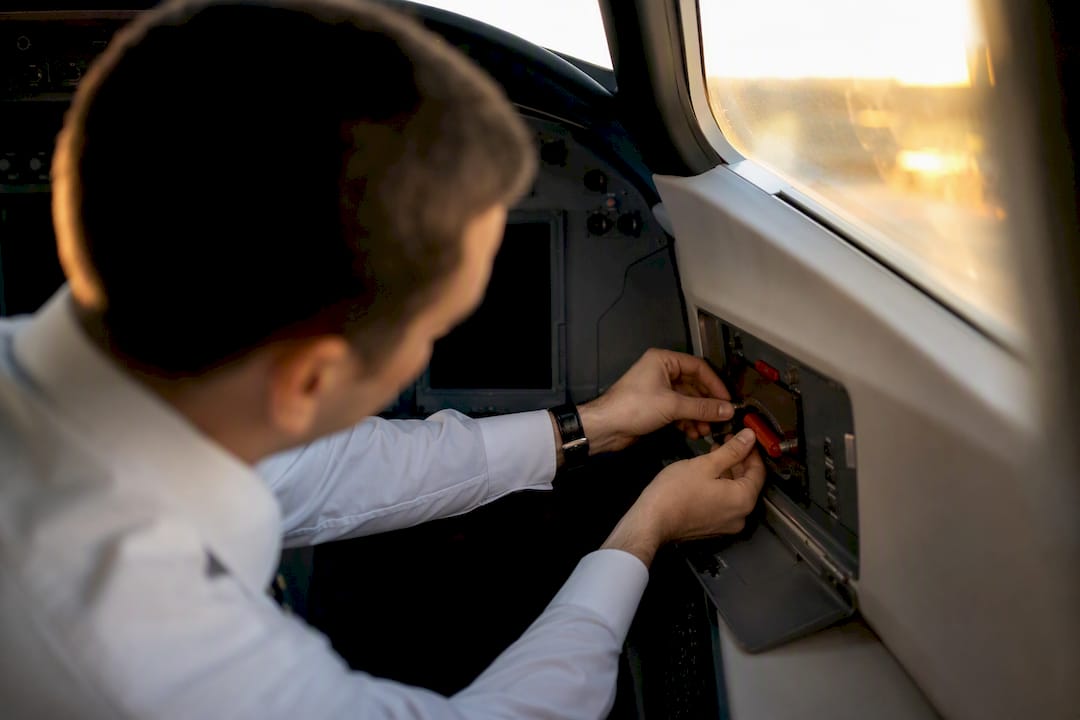
On the ground, if a mechanical issue is discovered pre-departure, professional operators will delay or cancel rather than fly with a deferred item that affects safety. That’s a good sign, not a bad one, even though it’s frustrating in the moment. A crew willing to scrub a flight over a maintenance concern is behaving exactly as Part 135 oversight requires.
The practical takeaway: ask about diversion and delay protocol at booking, not after you’re airborne. It’s a five-minute question that closes one of the few gaps unique to repositioning flights.
Communication Protocols During an Empty Leg Flight
Communication on an empty leg runs through the same crew you’d expect on any charter: the pilot in command handles safety-related instructions directly, and on larger aircraft a flight attendant manages cabin service and passenger questions. What differs is the frequency of pre-departure updates, since empty legs are more likely to shift than a dedicated charter built around your schedule.
Ask the operator upfront how they notify passengers of a delay or change: text, phone call, or through a booking platform. A same-day change with only a phone call as backup is a weaker system than one with automated text alerts tied to a live booking record. In flight, standard protocol applies: the crew will brief you on any turbulence, altitude change, or unexpected routing, and you should feel free to ask questions at any point rather than waiting for a formal announcement.
If something feels unclear before boarding, whether that’s a shifted departure time or an aircraft change, ask directly and get the answer confirmed by the crew or operator representative, not secondhand through a broker.
Safety Equipment and Crew Presence: Empty Legs vs. Standard Charters
The safety equipment onboard doesn’t change based on how the seat was sold. Fire extinguishers, first aid kits, and emergency exits are certified to the aircraft, not the transaction type. What can differ is crew configuration, and that comes down to aircraft size rather than empty-leg status specifically.
Smaller aircraft commonly used for empty legs, including Learjet 60s, typically operate with two pilots and no separate flight attendant. The pilot in command delivers the safety briefing directly. Larger cabin aircraft, whether flying an empty leg or a full charter, are more likely to carry a flight attendant who handles the briefing and cabin service.
The one place empty legs sometimes diverge is catering and cabin amenities, which tend to be minimal since the flight wasn’t originally booked around passenger service. Safety equipment and crew qualification standards remain identical to any other Part 135 flight on the same aircraft type.
When an Empty Leg Isn’t Worth the Risk
Empty legs work well when your schedule has flexibility built in. They work poorly the moment you’re locking in something with a hard deadline attached.
A few red flags should end the conversation before you pay. If an operator won’t confirm their legal name or Part 135 certificate, walk away. If the departure window is vague beyond a rough half-day estimate, walk away. If nobody will put the cancellation remedy in writing, that’s not a booking, that’s a hope.
Here’s my rule of thumb: if missing this flight costs you money, a wedding, or a connecting international leg, book a dedicated charter instead. The premium buys you fixed timing and a plane that isn’t tethered to someone else’s itinerary. Save empty legs for trips where a schedule slip is an inconvenience, not a catastrophe. It’s the same logic that separates an empty leg from a full charter booking in the first place, and it’s worth internalizing before you ever open a listing page.
Documentation and transparency, the kind published on well-run empty-leg listings, close most of the gap. They don’t eliminate the underlying fragility, and no honest broker or membership platform would claim otherwise.
— Nick
Booking an Empty Leg Through Bluebirdjets
Bluebirdjets built its membership to solve the exact problem this article walks through: too much empty-leg risk starts with too little information at the moment of booking. Instead of a broker text with a price and a rough time slot, members see documented leg listings with the actual aircraft, route, and timing before they commit to anything.

The membership grants unlimited access to published empty legs on operator-owned Learjet 60 jets for one annual fee, with the ability to bring up to six guests on a single flight. Members get access to live, daily-updated inventory and queue or priority booking so a desirable route doesn’t disappear before you can act on it. A premium tier adds higher priority for members who want first access on the routes that move fastest.
If you’ve read this far because you want private jet flexibility without gambling on secondhand information from a broker, the Bluebirdjets flights page is the place to see current listings and check whether membership fits how often you’d actually fly.
Sources
A few sources are worth bookmarking if you want to verify claims yourself before booking any empty leg.
- Empty Leg Flights: Rules, Risks, Best Deals
- Empty Leg Flights: How They Work and How to Book One | Peak Aviation Solutions
Each source helps confirm a different layer: regulatory context, operational risk, and practical booking diligence.