How Private Aviation Skips Baggage Delays for Good
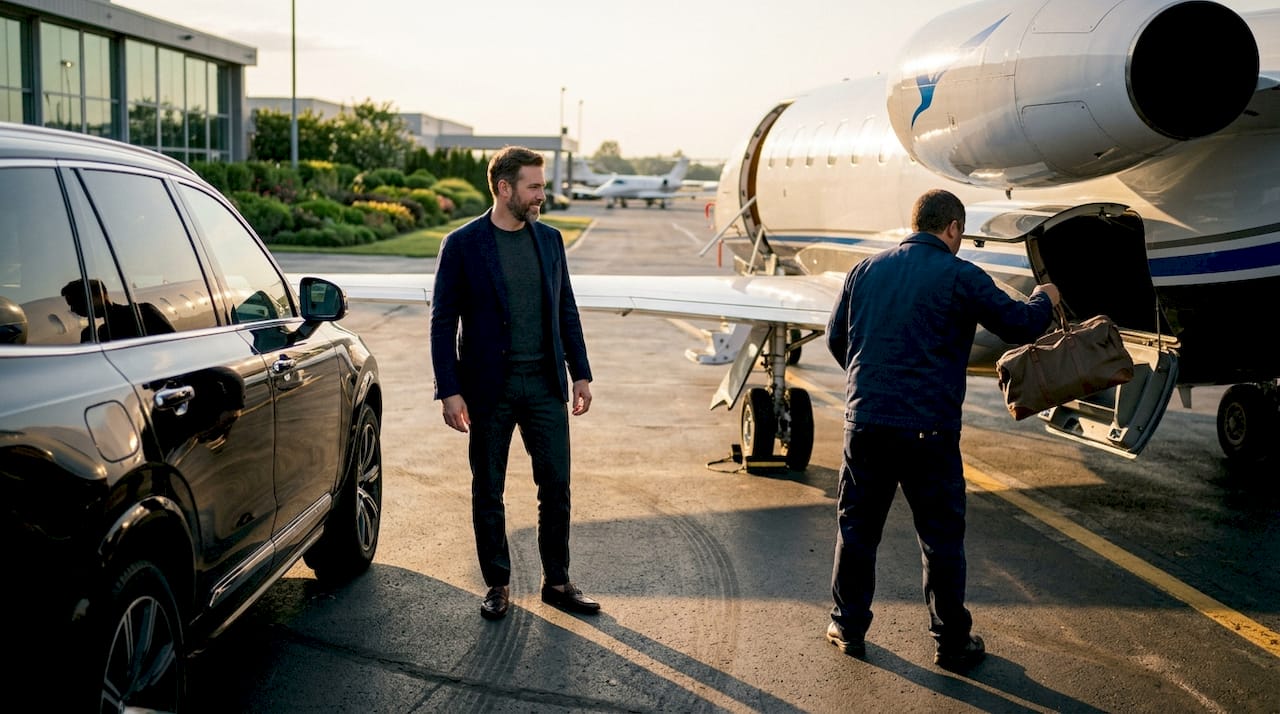
Private aviation eliminates baggage delays by removing every intermediary between you and your luggage. Ground staff transfer bags directly from your vehicle to the aircraft hold, and retrieval takes under 3 minutes after landing. Commercial flights average 20–45 minutes at baggage claim. That gap is not a minor convenience difference. It represents a fundamental structural difference in how private jets handle luggage versus how commercial airlines process thousands of bags through centralized conveyor systems. For frequent travelers aged 30–50 who fly regularly for business or personal reasons, understanding how private aviation skips baggage delays is the first step to reclaiming hours lost at carousels.
How private aviation skips baggage delays at the operational level
The core mechanism is direct, manual handling with no conveyor belts involved. At a Fixed Base Operator (FBO), the private terminal used by charter and private jet passengers, ground staff take your bags from your car and load them into the aircraft hold while you complete a brief security check. The entire FBO ground process takes 10–20 minutes from car to aircraft, compared to 2–3 hours at a commercial airport.
FBOs operate as private terminals separate from the main airport building. There are no public queues, no shared security lanes, and no centralized baggage sorting facilities. Identity and security screening at an FBO typically completes in under 10 minutes. That speed is structural, not circumstantial.

On arrival, the same ground crew unloads your bags and brings them directly to you, often before you have finished your post-flight conversation. Private aviation saves 30–45 minutes on door-to-door travel time on short to medium haul routes by eliminating baggage claim entirely. On a route like Chicago to New York, that time saving alone can justify the upgrade for a time-sensitive business traveler.
The contrast with commercial aviation is stark. Commercial airlines process thousands of bags simultaneously through automated systems, multiple handlers, and transfer points. Each handoff is a potential failure point. Private aviation removes all of them.
Key operational advantages at an FBO:
Bags move directly from your vehicle to the aircraft hold, handled by one dedicated crew
No baggage conveyor belts, sorting facilities, or centralized claim areas
Security screening is private and completes in under 10 minutes
Arrival baggage is returned to you within minutes of landing
No risk of bags being routed to a connecting flight or wrong terminal
Pro Tip: Book a flight that departs from an FBO rather than a commercial terminal whenever possible. The difference in boarding speed and baggage handling is significant, even on short routes.
How aircraft type and weight limits affect baggage efficiency
Baggage allowance on a private jet is not set by a per-passenger rule. It is determined by the aircraft’s maximum takeoff weight (MTOW), which accounts for passengers, fuel, and cargo combined. Light jets accommodate 50–70 kg of total baggage, midsize jets handle 90–130+ kg, and large jets carry 200+ kg or more. Those figures shift based on how many passengers are aboard and how much fuel the route requires.
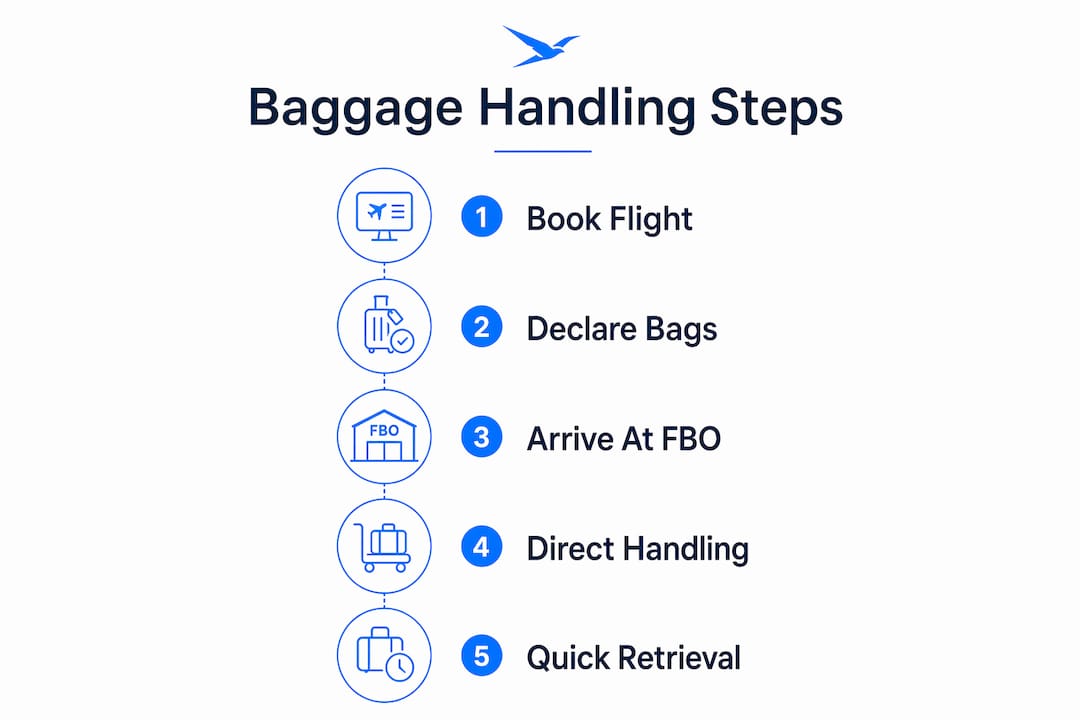
This matters for private jet baggage efficiency because the loading process is planned in advance. Operators calculate the weight balance before your flight, not at the gate. If you declare your luggage accurately at booking, the ground crew loads everything without delays or last-minute adjustments. Disclosing oversized items at booking ensures proper aircraft assignment and avoids last-minute delays or the need to switch to a larger aircraft.
Environmental factors add another layer of complexity. High temperatures or high-altitude airports reduce allowable payload because thinner air reduces lift. A flight departing from Denver in july carries less total weight than the same aircraft departing from sea level in january. Operators adjust by selecting a larger aircraft or modifying fuel load, but only if they know your baggage requirements ahead of time.
Aircraft type | Typical baggage capacity | Best for |
|---|---|---|
Light jet | 50–70 kg | Short trips, 2–4 passengers, carry-on sized bags |
Midsize jet | 90–130+ kg | Business travel, 4–6 passengers, standard suitcases |
Large jet | 200+ kg | Long haul, groups, oversized or specialty items |
Pro Tip: Always declare your full luggage weight and dimensions when booking, not just the number of bags. Operators use that information to assign the right aircraft and prevent loading issues on departure day.
Why continuous custody reduces lost and mishandled luggage
The single biggest structural advantage of private aviation baggage handling is custody continuity. The same crew and dedicated FBO staff handle your luggage from the moment it leaves your vehicle to the moment it reaches your hands at the destination. Continuous custody by the same crew drastically reduces mishandling and lost luggage risks compared to commercial systems.
Commercial airlines transfer bags across multiple handlers, sorting facilities, and sometimes entirely different airlines on connecting routes. Each transfer is a documented risk point. Private aviation eliminates transfers entirely. Your bags never touch a conveyor belt, never pass through a sorting hub, and never get tagged for a connecting flight.
The practical result is that lost luggage is nearly unheard of in private aviation. There is no system to lose your bag in. The ground crew loads what you arrived with, and the same crew unloads it at your destination.
“The primary benefit in private aviation is continuity of luggage custody by the same crew and dedicated staff, reducing mishandling drastically compared to commercial airlines.” — Starr Luxury Jets
Communication with your charter operator reinforces this advantage. If you have fragile items, sports equipment, or business materials that need specific handling, telling the operator at booking means the crew is prepared. Surprises at the aircraft door are the only real source of delay in private aviation baggage services.
What continuous custody eliminates:
Bag transfers between multiple ground handlers
Automated sorting errors in centralized baggage systems
Misrouting to connecting flights or wrong terminals
Delays caused by security re-screening of transferred bags
Damage from conveyor belt handling and stacking
Practical tips to get the most from private jet baggage handling
Avoiding baggage delays on a private flight starts before you pack. The choices you make about luggage type, declaration timing, and coordination with your operator determine how smooth the loading process is.
1. Use soft-sided bags whenever possible. Soft-sided luggage fits irregular aircraft holds better than rigid hard-shell suitcases. Aircraft baggage compartments, especially in light jets, are not rectangular. Flexible bags compress and conform to the available space, increasing effective storage and preventing loading delays caused by oversized rigid cases.
2. Declare everything at booking. List your bags, their approximate weight, and any special items when you book. Golf clubs, ski equipment, musical instruments, and oversized cases all require advance planning. Operators use this information to assign the right aircraft and prepare the ground crew.
3. Match your aircraft to your luggage needs. If you regularly travel with large amounts of gear, ask your operator about empty leg availability on larger aircraft. A midsize or large jet gives you significantly more baggage capacity than a light jet, and the cost difference on an empty leg route can be minimal.
4. Arrive at the FBO on time, not early. Commercial airports reward early arrival because check-in and security take time. FBOs do not. The 10–20 minute ground process means arriving 15–20 minutes before departure is sufficient. Arriving too early does not speed up baggage loading.
5. Pack for in-flight access if needed. Certain jets allow mid-flight access to internal baggage compartments, which is useful for business materials or pet carriers. Ask your operator whether your aircraft has this feature and pack accordingly.
Pro Tip: If you are traveling with a team, consolidate luggage into fewer, larger bags rather than many small ones. Ground crews load and unload faster with fewer pieces, and you reduce the chance of any single item being overlooked.
Key takeaways
Private aviation eliminates baggage delays through direct manual handling, continuous custody, and FBO-based processing that replaces the entire commercial baggage system.
Point | Details |
|---|---|
Direct manual handling | Ground staff move bags from your vehicle to the aircraft with no conveyor belts involved. |
FBO speed advantage | The full ground process at an FBO takes 10–20 minutes versus 2–3 hours commercially. |
Continuous custody | The same crew handles your bags start to finish, making lost luggage nearly impossible. |
Declare luggage early | Telling your operator your full baggage details at booking prevents last-minute delays. |
Aircraft type matters | Light jets carry 50–70 kg; large jets carry 200+ kg. Match your aircraft to your load. |
What frequent travelers miss about private baggage handling
I have flown commercially and privately on the same routes, and the baggage difference is not what most people expect. The speed is obvious. What surprises travelers is how much mental energy they recover when they stop managing luggage anxiety.
On commercial flights, the baggage claim wait is not just time lost. It is a sustained period of low-level stress: watching the carousel, wondering if your bag made the connection, calculating whether you have time to make your next meeting. Private aviation removes that entirely. You walk off the aircraft and your bags are already there.
The detail most travelers overlook is the declaration step. I have seen well-prepared travelers arrive at an FBO with undeclared oversized items and watch the departure slow down while the crew recalculates weight and load balance. The fix is simple: tell your operator everything at booking. Weight, dimensions, fragile items, sports gear. That one conversation eliminates the only real friction point in private aviation baggage services.
The other thing worth saying plainly: the empty leg market gives frequent travelers access to private aviation at a fraction of charter rates. The baggage handling advantages are identical on an empty leg flight. You get the FBO, the direct loading, the continuous custody, and the 3-minute retrieval at arrival. The price difference does not change the operational process.
Private aviation is not just faster. It is a structurally different system. Once you understand that, you stop thinking about baggage as a variable and start treating it as a solved problem.
— Nick
Bluebirdjets membership and the baggage-free travel experience
Bluebirdjets sells a membership that gives you unlimited access to empty leg flights on the platform. Every flight you book through Bluebirdjets uses the same FBO-based, direct-handling baggage process described in this article.
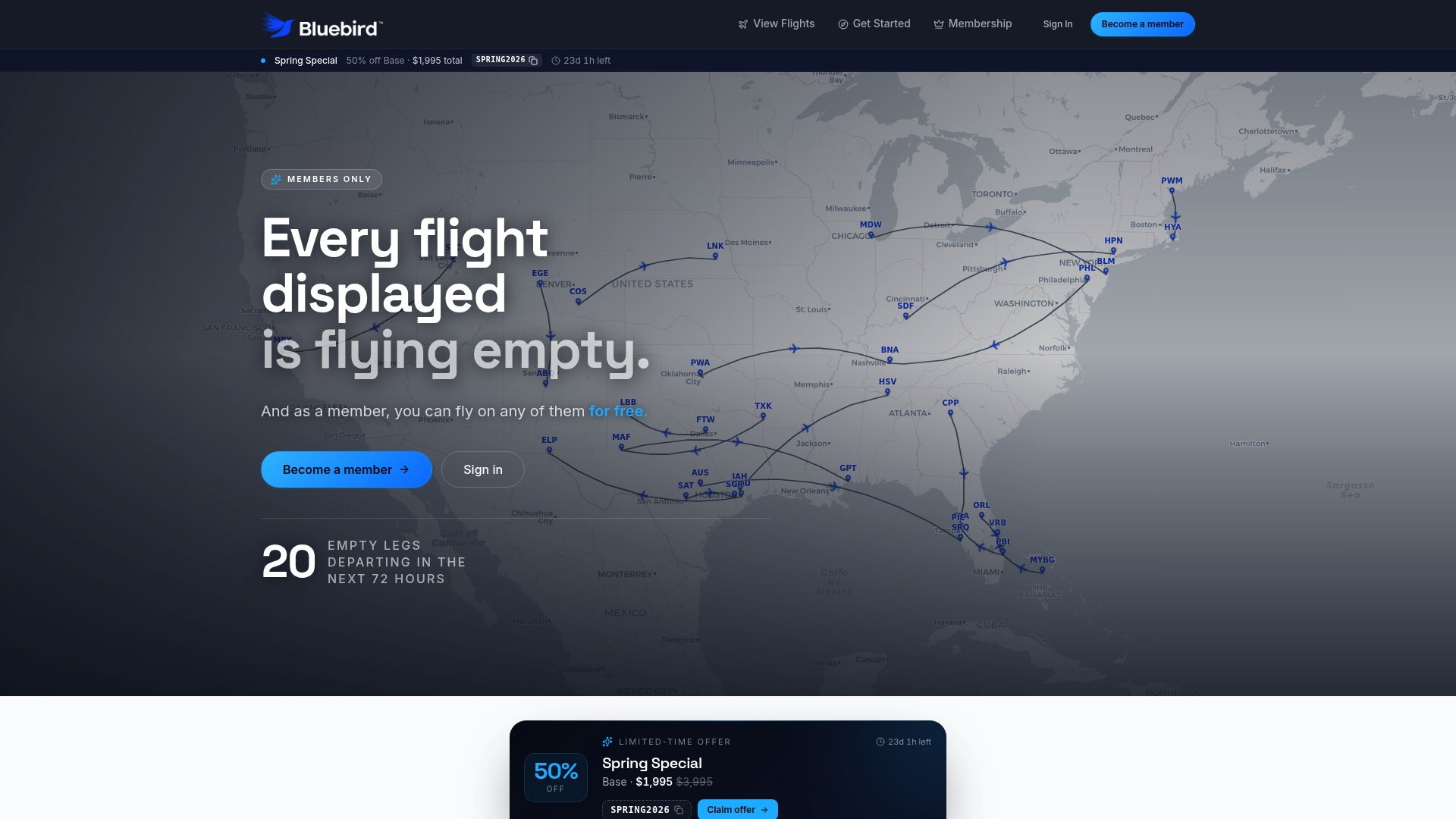
That means no baggage carousels, no 45-minute waits, and no lost bags. When you book through the Bluebirdjets membership, you can browse available routes, confirm baggage requirements directly with operators, and coordinate your full travel plan in one place. Frequent travelers who fly 4 or more times per year recover the membership cost quickly through time savings alone. Browse current available flights to see routes that match your schedule.
FAQ
How fast is baggage retrieval on a private jet?
Baggage retrieval on a private jet takes under 3 minutes after landing. Ground staff unload bags directly from the aircraft hold and bring them to you while you exit the aircraft.
Do private jets have baggage weight limits?
Private jets do have weight limits, but they are based on the aircraft’s maximum takeoff weight rather than a per-passenger allowance. Light jets carry 50–70 kg total, midsize jets carry 90–130+ kg, and large jets carry 200+ kg or more.
What is an FBO and how does it speed up baggage handling?
An FBO (Fixed Base Operator) is a private terminal that handles charter and private jet passengers separately from commercial travelers. Security and identity checks complete in under 10 minutes, and baggage moves directly between your vehicle and the aircraft without public queues or conveyor systems.
Can I bring oversized items like golf clubs or ski equipment on a private jet?
You can bring oversized items on a private jet, but you must declare them at booking. Early declaration allows the operator to assign an aircraft with the right hold dimensions and prepare the ground crew in advance.
Why is lost luggage so rare on private flights?
Lost luggage is rare on private flights because the same crew handles your bags from departure to arrival with no transfers between handlers, sorting facilities, or connecting flights. The continuous custody chain eliminates the failure points that cause commercial baggage mishandling.