Learjet 60 Cabin: Specs, Comfort, and Bluebird Empty Leg Access
Learjet 60 Cabin: Specs, Comfort, and Bluebird Empty Leg Access
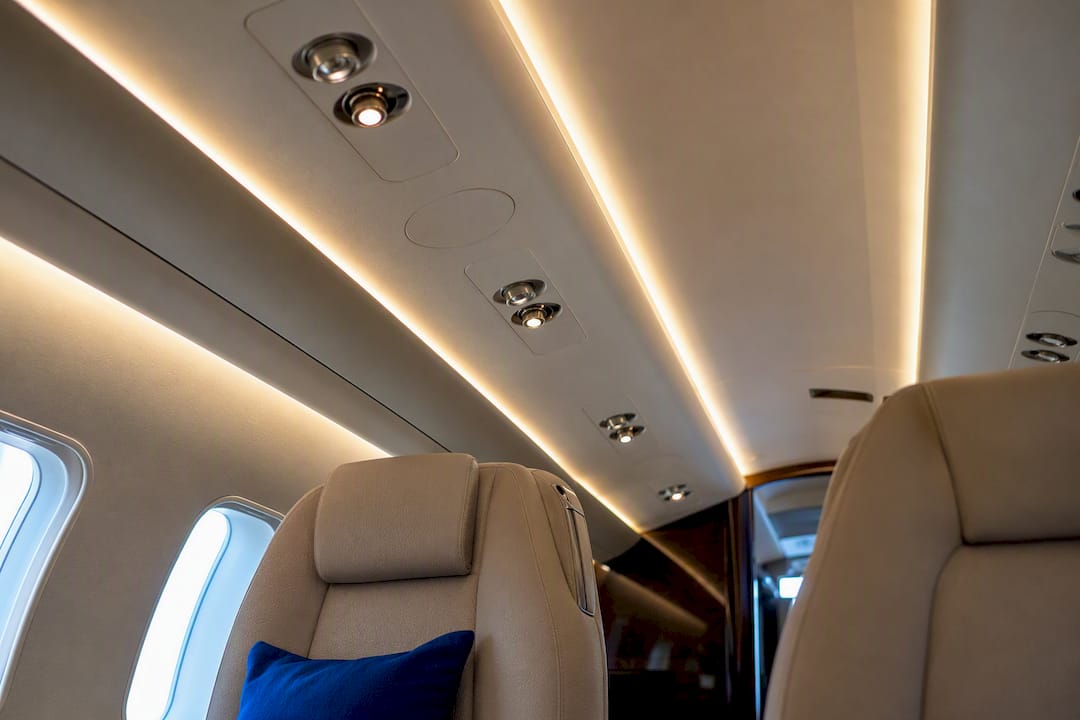
The Learjet 60 cabin measures approximately 17 feet 8 inches long, 5 feet 11 inches wide, and about 5 feet 9 inches tall, seating several passengers with an enclosed aft lavatory built in. That’s tight compared to a Gulfstream, but for two to three hours of executive flying with a small group, it works better than most people expect. You’ll duck your head walking to the lav. You won’t feel cramped in your seat.
TL;DR:
- The cabin height is 5 feet 9 inches, and seating for six offers a balance between comfort and space, but eight passengers may feel cramped.
- Cabin volume is approximately 447 to 597 cubic feet depending on measurements, so actual usable space varies significantly by configuration.
- Most Learjet 60s feature an enclosed aft lavatory, a galley, Wi-Fi on some aircraft, and carry only standard luggage, making efficient packing essential.
- Upgraded cabins with LED lighting, refreshed upholstery, and modern entertainment systems can improve comfort, especially on refitted aircraft.
- Maintenance history strongly influences cabin condition, with well-maintained aircraft offering quieter, cleaner, and more comfortable environments.
Table of Contents
- Learjet 60 Cabin Dimensions and Layout
- Seating Layouts and How Many Passengers Fit Comfortably
- Cabin Amenities: Lavatory, Galley, and Power
- Comfort in the Cabin: Headroom, Noise, and Lighting
- Baggage Space and Boarding Access
- How the Learjet 60 Cabin Stacks Up Against Other Midsize Jets
- Cabin Climate Control and Air Quality
- Soundproofing and Noise Reduction in the Cabin
- Customization and Upgrade Options for the Cabin
- Maintenance and How It Affects Cabin Condition
- Flying the Learjet 60 Through Bluebird’s Empty-Leg Access
- Getting on a Learjet 60 Without Booking a Full Charter
- Sources
Learjet 60 Cabin Dimensions and Layout
Numbers tell the real story here better than marketing language ever could. The cabin height comes in at 5 feet 9 inches, width at 5 feet 11 inches, and length at 17 feet 8 inches, giving the cabin a footprint that’s noticeably deeper than the light jets many buyers step up from, but shorter than the larger midsize and super midsize cabins some competitors offer.
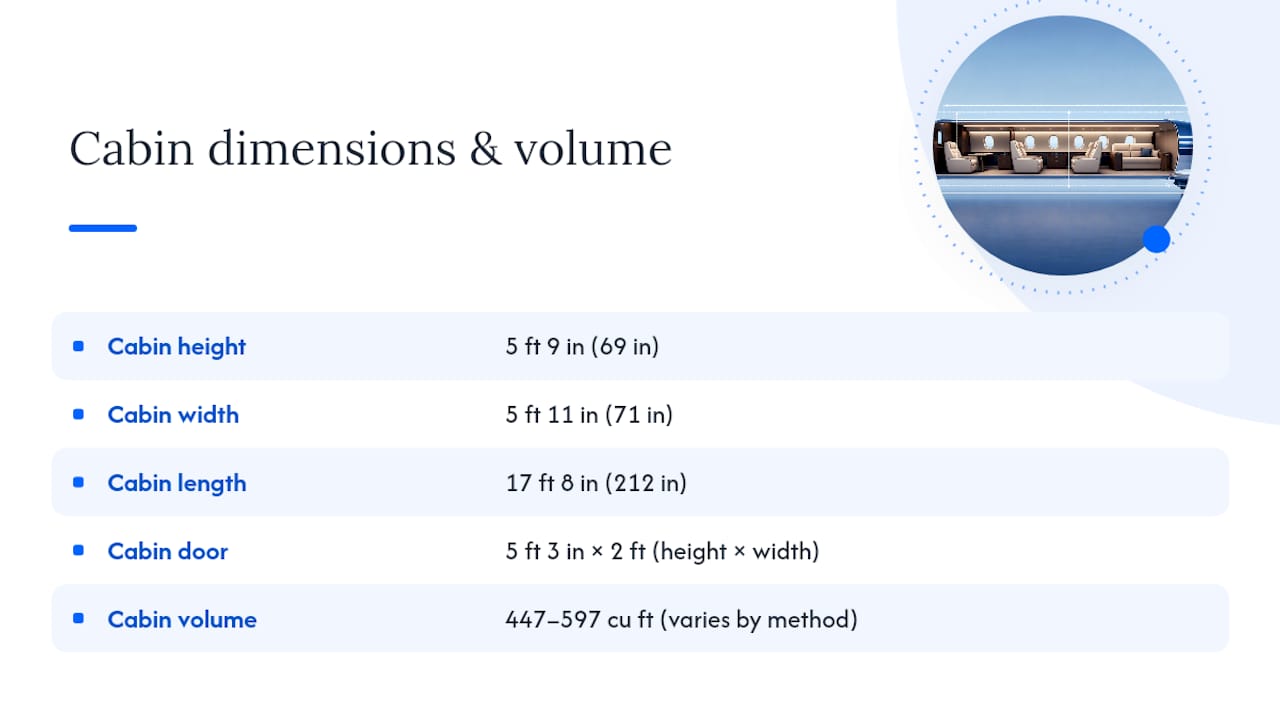
Cabin volume is where sources start to disagree, and it’s worth knowing why. Some spec sheets list it near 453 cubic feet, while others report figures ranging from 447 to 597 cubic feet depending on whether they’re measuring usable cabin space or the full interior envelope including the cockpit divider and baggage transitions. Treat any single volume figure as an approximation rather than gospel.
The cabin door measures about 5 feet 3 inches high and 2 feet wide. Anyone taller than average will need to duck on the way in, which is standard for this aircraft class but worth mentioning if you’re booking for a taller executive team.
Standing headroom is possible only near the cabin centerline for most adults. The aisle itself runs narrow but manageable, and moving between seats or to the lav doesn’t require the contortions you’d deal with in a lighter aircraft.
Seating Layouts and How Many Passengers Fit Comfortably
Most Learjet 60 configurations run a club four arrangement up front, facing seats paired around a folding table, with two or three additional forward or side facing seats toward the rear. Six passengers is the sweet spot for comfort. Push to seven or eight and legroom starts competing with elbow room, especially if everyone’s working laptops open.
- Club seating (4 seats): best for meetings, face-to-face conversation, and using the folding tables for documents or laptops.
- Full six-seat configuration: the most common charter layout, balancing workspace with enough open cabin to move around.
- Seven to eight-seat configurations: possible on some aircraft, but expect tighter knee room and less table space.
If your trip involves client work or a small negotiating team, pick the club four and let the remaining seats handle overflow. If it’s a straightforward transport leg for a larger group, the denser layout gets everyone there without complaint.
Cabin Amenities: Lavatory, Galley, and Power
An enclosed aft lavatory is standard on nearly every Learjet 60 configuration, giving passengers actual privacy rather than a curtained corner. That single feature is a bigger deal on business trips than it sounds. Charter operators consistently list the same core amenity set across configurations:
- Enclosed aft lavatory with a private door, not a curtain
- Galley or refreshment center stocked with drinks, ice, and light snacks
- In-cabin entertainment systems on many aircraft, ranging from audio to video displays
- Wifi connectivity available on select aircraft, though not universal across the fleet
- 110V power outlets for laptops and phones, positioned near most seats
None of this rivals a large-cabin jet’s amenity list, and it isn’t meant to. For a short executive hop where the priority is privacy, connectivity, and a working table, the Learjet 60 covers the essentials without excess.
Comfort in the Cabin: Headroom, Noise, and Lighting
That 5 foot 8 inch to 5 foot 9 inch cabin height means most adults won’t stand fully upright anywhere except right at the centerline. You adjust to it quickly. Seated comfort is genuinely good, with enough shoulder and hip room for adults to sit side by side without brushing elbows constantly.
Noise and vibration run typical for this jet class: noticeable during climb, settling into a manageable hum at cruise. Later aircraft and refitted cabins tend to run quieter, since 60XR upgrades often included improved insulation alongside LED lighting and refreshed cabin management systems. If you’re booking an older airframe versus a refitted one, ask which generation of interior work it received. That answer tells you more about comfort than the model year alone.
Lighting matters more than people expect on a business flight. LED cabin lighting on updated aircraft creates a noticeably calmer atmosphere than the older fluorescent strips, which helps if you’re working documents or trying to rest before a meeting on arrival.
Baggage Space and Boarding Access
Internal baggage capacity offers space for standard rolling luggage for a full passenger load but not much beyond that. Pack efficiently for group trips. Golf bags, oversized cases, or ski equipment often need to go on a different aircraft or get pre-cleared with the operator.
The 5 foot 3 inch by 2 foot cabin door is standard for the class. Boarding takes a moment longer for taller passengers, but nothing that slows down a typical departure once everyone knows to duck.
How the Learjet 60 Cabin Stacks Up Against Other Midsize Jets
Within the midsize category, the Learjet 60 sits toward the shorter end of the cabin-length spectrum. Some competing midsize aircraft stretch several feet longer, translating into more usable floor space and often a slightly taller cabin. The Learjet 60’s cabin represented a real step up from earlier Lear models when it launched, even though rival midsize jets eventually offered longer interiors.
Where the Learjet 60 earns its keep is mission efficiency. It’s built for short-to-medium range executive trips, the kind where speed to a smaller regional airport matters more than sprawling cabin real estate. Runway performance and climb speed on this airframe tend to outperform larger midsize jets that need more pavement and more time to reach altitude.
The trade-off is straightforward: choose the Learjet 60 when your priority is quick access to secondary airports and efficient short hops, and choose a longer-cabin midsize jet when the mission runs longer or the group needs more room to spread out. Neither choice is wrong. They’re built for different jobs.
Cabin Climate Control and Air Quality
Cabin temperature on the Learjet 60 is managed through an environmental control system that draws bleed air from the engines, cools or heats it as needed, and circulates it through cabin vents positioned near each seating row. Passengers can expect a stable, comfortable temperature range throughout a flight, though cabin crew or the pilot typically handle adjustments since there’s no dedicated flight attendant station managing climate in real time on most configurations.
Air quality follows the same bleed air system common across business jets this size. Fresh air gets continuously introduced and mixed with a portion of recirculated cabin air, rather than running on a fully sealed recirculation loop. That matters more than people realize. Fully recirculated systems can concentrate odors and stale air on longer flights, while a bleed air exchange keeps things fresher, particularly on trips lasting two hours or more.
Where the system shows its age is in the temperature ramp. Ground time before departure, especially in extreme summer or winter conditions, can leave the cabin uncomfortable until the engines are running and the environmental system reaches full output. It’s a fair reason to time your arrival at the aircraft closer to departure rather than boarding early during extreme weather.
Humidity control is minimal on most business jets of this generation, the Learjet 60 included. Cabin air runs dry compared to sea level conditions, which is normal at altitude but worth knowing if you’re prone to dry skin or sinus discomfort on longer legs. Bringing a small bottle of saline nasal spray or staying hydrated handles it without any need for aircraft modification.
Soundproofing and Noise Reduction in the Cabin
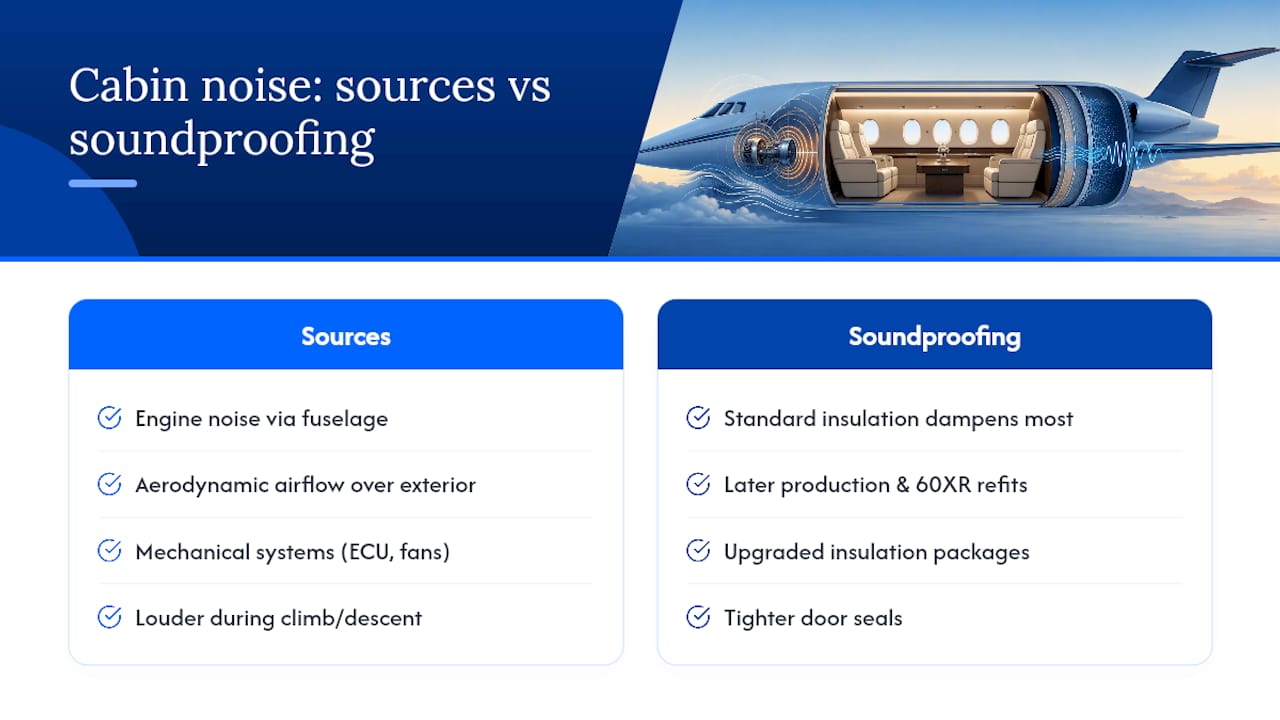
Cabin noise on the Learjet 60 comes from three main sources: engine noise transmitted through the fuselage, aerodynamic noise from airflow over the exterior, and mechanical noise from onboard systems like the environmental control unit. Standard insulation dampens most of it, but you’ll still notice a rise in volume during climb and descent compared to the steadier hum at cruise altitude.
Later production aircraft and 60XR refits generally handle this better. Upgraded insulation packages, tighter door seals, and revised interior paneling all contribute to a quieter cabin than earlier production units carried at launch. If noise level matters to you, particularly for working calls or simply resting on a longer leg, ask whether the specific aircraft you’re booking received a soundproofing refit.
Passengers coming from commercial aviation often assume a private cabin will be dramatically quieter. It’s quieter in the sense that there’s no crowd noise or crying infants three rows back, but engine proximity on a jet this size means ambient noise stays present throughout the flight. Noise-canceling headphones make a bigger practical difference than people expect, especially during the noisier climb and descent phases.
Customization and Upgrade Options for the Cabin
Owners and operators commonly refit Learjet 60 cabins with a handful of predictable upgrades. LED lighting replacements are the most frequent, swapping older fluorescent or incandescent fixtures for LED strips that run cooler, last longer, and create a noticeably better ambiance for evening flights or early morning departures.
Upholstery and interior paneling refreshes come next. Leather seating, updated stitching patterns, and replacement side panels can modernize a cabin that’s otherwise mechanically sound but visually dated. The same material considerations that matter in high-end yacht interiors, durability, cleanability, and how a material ages under regular use, apply just as directly to jet cabin refits.
Entertainment and connectivity upgrades round out the common list: retrofitted wifi systems, updated audio and video displays, and additional power outlets positioned closer to each seat. Not every aircraft in charter service carries every upgrade, which is exactly why it’s worth asking an operator directly what a specific tail number includes before you assume a feature will be there.
Maintenance and How It Affects Cabin Condition
Cabin condition on any Learjet 60 depends heavily on maintenance history, not just age. An aircraft with diligent upkeep, regular interior inspections, and prompt attention to worn seals or upholstery will feel noticeably better than a same-year aircraft that’s been maintained to the bare minimum.
Door and window seals deserve particular attention since they directly affect cabin pressurization comfort and noise levels. Worn seals let in more ambient noise and can create minor pressure fluctuations passengers actually notice, especially during climb and descent. Upholstery wear, tray table hinges, and lavatory fixtures are the other usual suspects that show an aircraft’s real maintenance level regardless of what the paint job suggests.
For charter or membership passengers, the practical takeaway is simple: cabin condition varies aircraft to aircraft even within the same fleet. An operator with a strong maintenance track record delivers a more consistent experience than judging by model year alone.
Flying the Learjet 60 Through Bluebird’s Empty-Leg Access
Cabin usability on the Learjet 60 comes down to how you use the space, not just what’s listed on a spec sheet. For short meetings or a quick trip with two or three colleagues, the club four seating works well. Pack luggage efficiently and stage it before boarding since cabin storage runs limited once everyone’s seated.
Empty-leg inventory changes the access equation entirely. Aircraft like the Learjet 60 show up on repositioning routes that would otherwise fly empty, meaning last-minute availability at a fraction of a full charter’s planning window. Seat selection still matters here: grab the forward club seats if you’re working, and let latecomers take the aft positions.
— Nick
Getting on a Learjet 60 Without Booking a Full Charter
Chartering a Learjet 60 outright means planning ahead, paying full charter rates, and hoping your dates line up with aircraft availability. Membership gives you unlimited access to published empty-leg flights on operator-owned aircraft repositioning between cities, with the flexibility to bring guests on qualifying flights.

What that means in practice: instead of committing to a full charter contract, you check live inventory that updates daily, queue for a seat on a route that fits your schedule, and fly last-minute at a cost structured around membership rather than a one-off charter invoice. A live example like the Eagle-to-Aspen empty leg shows how specific and time-sensitive these listings get. If your travel dates have any flexibility at all, that flexibility is exactly what turns membership into real savings.
Ready to see what’s flying? Check current empty-leg inventory and see which routes line up with your next trip.
Sources
- LEARJET 60 Specifications, Operating Cost, Performance
- Bombardier Learjet 60 — Wikipedia
- Bombardier Learjet 60 | Aircraft Ownership & Operating Costs Calculator