Light Jet vs. Midsize Jet: Which Fits Your Trip?
Light Jet vs. Midsize Jet: Which Fits Your Trip?
Pick a light jet when you’re flying 4 to 6 people under 1,500 miles on a budget, and pick a midsize jet when you need to cover 2,000-plus miles nonstop with 7 or more people and their luggage. The decision comes down to three things: passenger count, route distance, and how much you want to spend per hour. A 3-person trip from Boston to a golf weekend in Hilton Head is light jet territory, typically a Cessna Citation CJ3+ or Embraer Phenom 300. A 7-person crew flying Los Angeles to New York nonstop, with bags for a week, is midsize country, think Citation Latitude or Hawker 900XP.
- Light jet fits: 4 to 8 passengers, regional and mid-range routes, tighter budgets
- Midsize jet fits: 7 to 9 passengers, coast-to-coast range, more baggage and cabin room
Key Takeaways
The right jet class comes down to matching passenger count and route distance to the aircraft, since light jets save money on shorter regional trips while midsize jets cut per-person cost on longer, fuller flights.
| Point | Details |
|---|---|
| Match class to headcount | Light jets fit 4 to 8 passengers; midsize jets fit 7 to 9 and spread cost better at higher counts. |
| Range dictates nonstop capability | Light jets run 1,500 to 2,000 nm; midsize jets run 2,300 to 3,000 nm for true coast-to-coast trips. |
| Cabin height affects comfort past 3 hours | Midsize cabins near 5.5 to 5.9 feet allow standing and working; light jets stay under 5 feet. |
| Runway access can override cost math | Light jets can use 3,000 to 4,000 foot runways, opening resort and regional airports midsize jets can’t reach. |
| Membership changes the cost equation | Bluebirdjets offers unlimited empty-leg access for frequent, flexible flyers instead of paying per-hour charter rates. |
Table of Contents
- What Is a Light Jet vs Midsize Jet?
- How Far Can Each Jet Class Actually Fly?
- Does Cabin Height Change the Flying Experience?
- What Do Light Jets and Midsize Jets Cost Per Hour?
- What Runway and Payload Limits Should You Know?
- Which Jet Class Fits Your Actual Trip?
- What Buyers Get Wrong About Jet Size
- A Different Way to Pay for Private Flights
- Frequently Asked Questions
- Sources
What Is a Light Jet vs Midsize Jet?
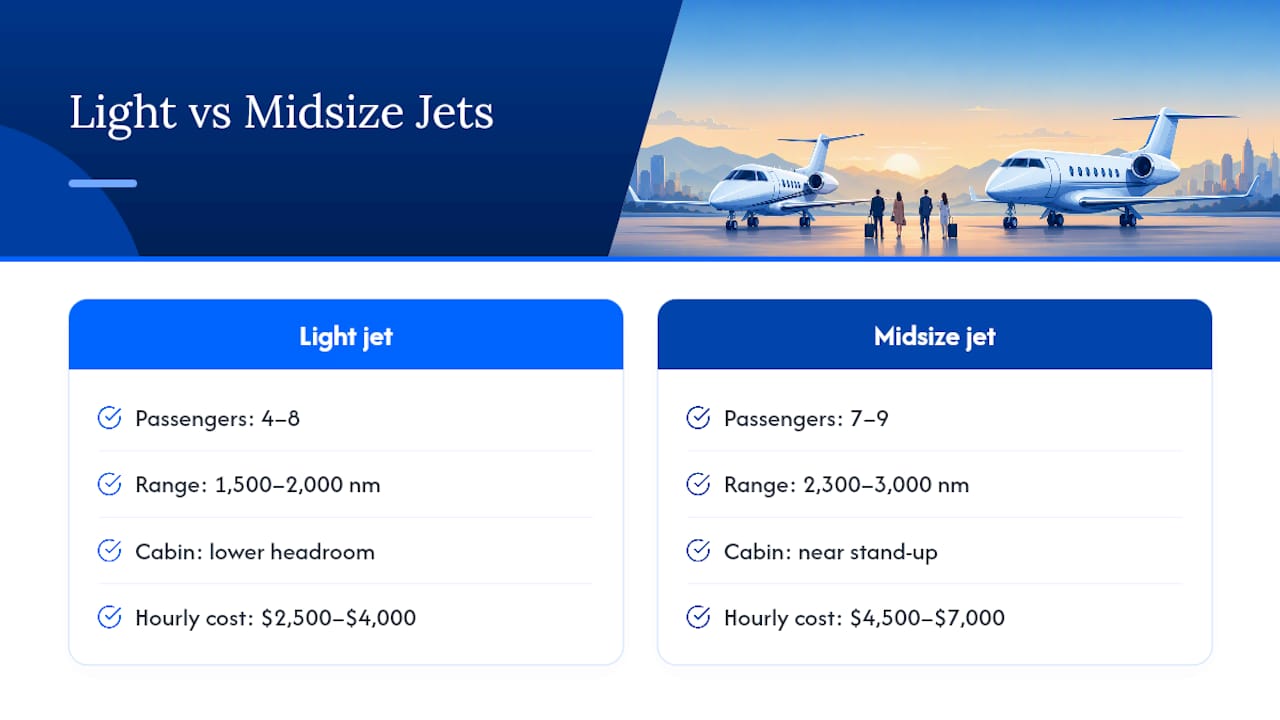
A light jet is a smaller cabin-class aircraft built for short-to-medium trips, usually seating 4 to 8 people with a cabin height around 4.5 to 5.0 feet, meaning most adults will duck or stoop walking down the aisle. Range typically runs 1,500 to 2,000 nautical miles, enough for New York to Miami or Chicago to Denver without stopping. The Cessna Citation CJ3+, Embraer Phenom 300, and Learjet 75 are the models that show up again and again in this class.
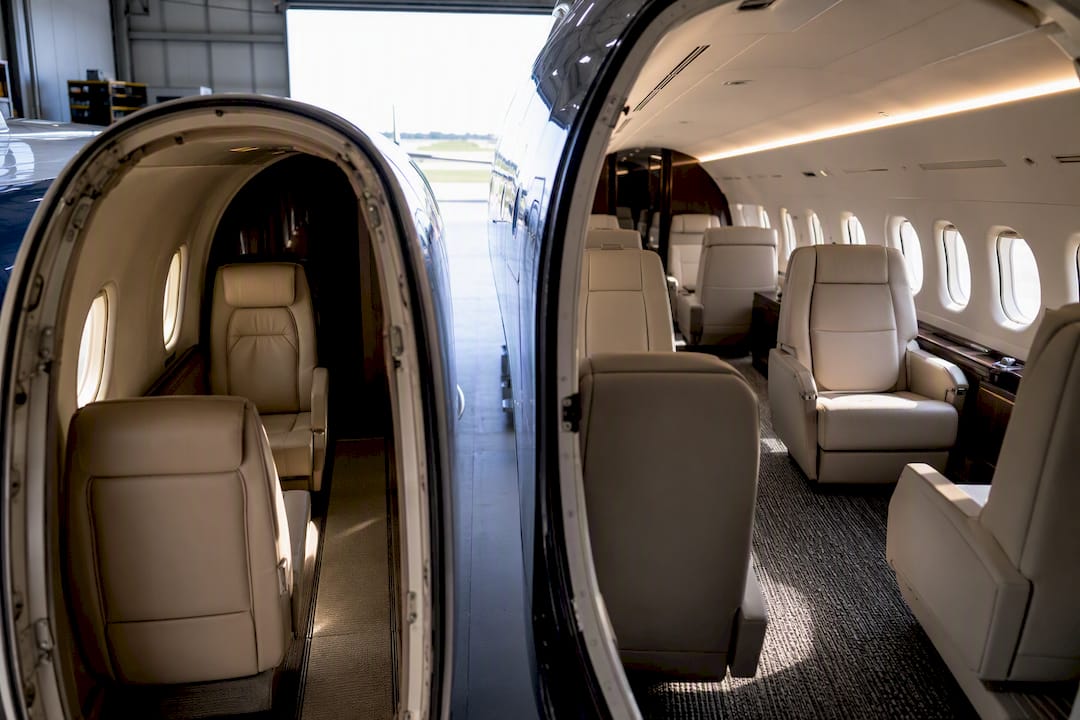
A midsize jet step up in every dimension that matters on a longer flight. Cabin height climbs to 5.5 to 5.9 feet, close enough to full stand-up that most passengers can walk the aisle without hunching. Seating stretches to 7 or 9 people, and range extends to 2,300 to 3,000 nautical miles, covering most domestic nonstops including Los Angeles to New York. The Citation XLS+, Citation Latitude, Hawker 900XP, and Gulfstream G150 or G280 anchor this category.
| Factor | Light jet | Midsize jet |
|---|---|---|
| Typical range | 1,500 to 2,000 nm | 2,300 to 3,000 nm |
| Passenger capacity | 4 to 8 | 7 to 9 |
| Cabin height | ~4.5 to 5.0 ft (crouch) | ~5.5 to 5.9 ft (near stand-up) |
| Baggage capacity | Limited, tight external holds | Larger holds, more flexible |
| Runway needed | ~3,000 to 4,000 ft | ~4,000 to 5,000 ft |
| Typical hourly cost | ~$2,500 to $4,000 | ~$4,500 to $7,000 |
Light jets win on cost per hour and airport access, they can land at short runways near ski resorts and small regional fields where a midsize can’t fit. Midsize jets win on range, cabin comfort, and baggage room, especially once your group crosses 6 people or your trip crosses 3 hours in the air.
How Far Can Each Jet Class Actually Fly?
The range gap between these two classes isn’t marketing fluff, it changes how you plan a trip. A light jet’s 1,500 to 2,000 nautical mile ceiling covers most of the country east of the Rockies from a single hub, but a true coast-to-coast run, say Miami to Seattle, will often need a fuel stop. A midsize jet’s 2,300 to 3,000 nautical mile range typically clears that same route nonstop.
Payload eats into that range fast. Load a light jet with 6 adults and full luggage and you can lose real distance off the advertised max range, since fuel and weight trade off directly on smaller airframes.
- Light jet: fine for regional loops, risky for full transcontinental nonstops
- Midsize jet: built for the long haul, especially with a full cabin
- Full passenger and bag loads reduce usable range on both classes, but the effect is sharper on light jets
Does Cabin Height Change the Flying Experience?
Cabin height sounds like a minor spec until you’re 3 hours into a flight and can’t stand up straight. Light jets run around 4.5 to 5.0 feet, which means most adults duck through the cabin and stay seated for the whole leg. Midsize jets close in on 5.5 to 5.9 feet, close enough to full stand-up that walking, stretching, and even a quick call from the back of the cabin feels normal.
That difference shows up hardest on flights past the 2.5 to 3 hour mark. Midsize cabins generally handle a working meeting or a full seating reconfiguration better, and their lavatories and galleys tend to be more functional rather than symbolic.
- Light jets: tighter seating, smaller lavatory, minimal galley space
- Midsize jets: room to work or rest, real galley service, more usable lavatory
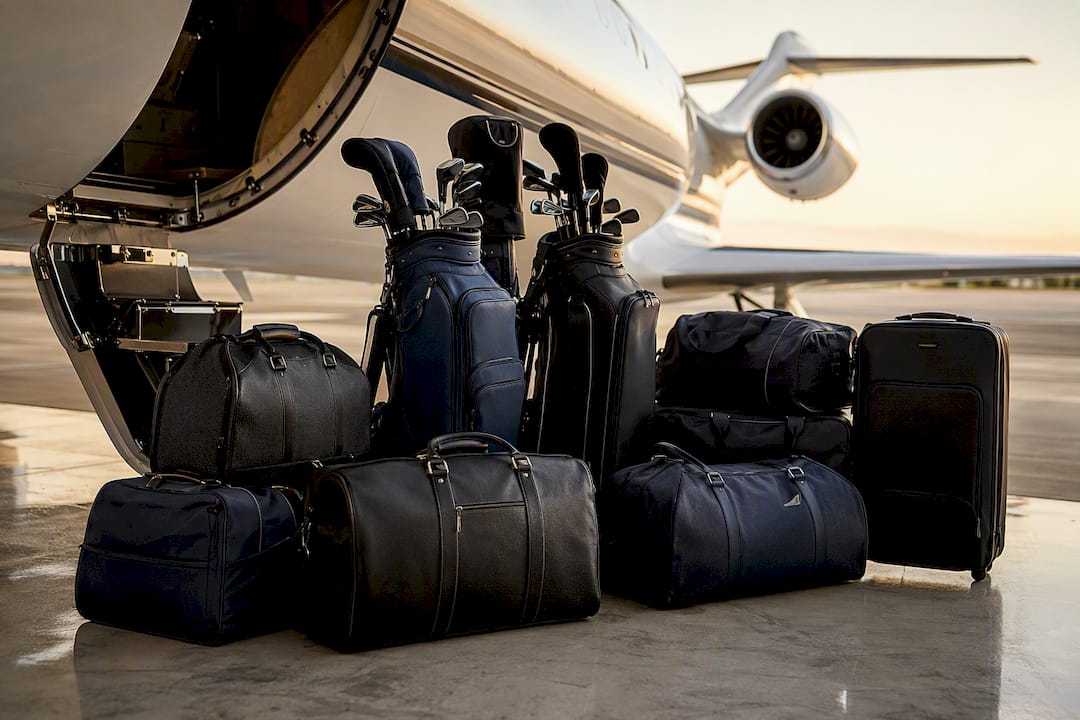
- Baggage matters here too, ski bags, golf clubs, and multiple large suitcases fit far more easily in a midsize hold
Pro Tip: If your trip involves more than one bag per person or oversized gear, call the operator and ask for exact baggage dimensions before you book, don’t assume the aircraft class alone settles it.
What Do Light Jets and Midsize Jets Cost Per Hour?
Hourly rates are where the size difference turns into real dollars. Light jets typically run $2,500 to $4,000 per hour, while midsize jets run $4,500 to $7,000 per hour. On paper, the light jet looks like the clear budget pick. The math shifts once you add passengers.
- A 2.5 hour trip for 4 people in a light jet at $3,000/hour runs roughly $7,500 total, or about $1,875 per person.
- That same trip for 4 people in a midsize jet at $5,500/hour runs about $13,750, or roughly $3,438 per person, still pricier per head, but the gap narrows fast as headcount rises.
- Add 3 more passengers to fill the midsize cabin at 7, and the per-person cost drops toward $1,964, nearly matching the light jet while adding legroom and nonstop range.
- Fuel stops change the equation further. A light jet forced into a refueling stop on a long route adds time, landing fees, and often a repositioning charge that can erase its hourly-rate advantage entirely.
What Runway and Payload Limits Should You Know?
Runway length is the constraint that trips up buyers who only compare hourly rates. Light jets can typically operate from 3,000 to 4,000 foot runways, opening up small regional and resort airports a midsize jet can’t touch. Midsize jets generally need 4,000 to 5,000 feet, which rules out some mountain and coastal strips entirely.
Payload works against light jets on the return trip too, a full cabin plus bags can force a lighter fuel load and shorter effective range. Before booking, confirm with your operator: nearest usable runway length, whether a fuel stop is required, lavatory service expectations, and crew duty/rest rules on longer days.
- Short or unpaved runways near resorts often rule out midsize jets by default
- Full passenger and baggage loads reduce a light jet’s real-world range more than its spec sheet suggests
Which Jet Class Fits Your Actual Trip?
Match the scenario, not the sales pitch.
- Short regional hop, 2 to 4 people. A light jet like the Phenom 300 or CJ3+ wins on cost and can land closer to your actual destination.
- Coast-to-coast for 6 to 9 people, or you need nonstop no matter what. A midsize jet, Citation Latitude or Hawker 900XP class, covers the distance without a fuel stop and spreads the hourly cost across more people.
- Ski trip or gear-heavy travel. Midsize for the baggage room, unless the destination airport has a short runway, in which case a turboprop may beat both jet classes.
Before you call an operator, run through this: passenger count, total luggage, whether nonstop is a must, and the runway length at your destination.
Pro Tip: Count your bags before you count your seats, a light jet with 5 passengers and 10 golf bags will often struggle harder than one with 6 passengers and light carry-ons.
What Buyers Get Wrong About Jet Size
The most common mistake isn’t picking the wrong jet class, it’s overcrowding a light jet to save money and then discovering the baggage hold won’t cooperate. The second most common mistake is underestimating how much a midsize jet’s per-person cost improves once the group grows past 6.
What doesn’t get discussed enough is how membership and empty-leg access change this calculus entirely for flyers who book often and can move on short notice. If you’re weighing light versus midsize every few months, the math looks very different once your marginal cost per flight drops toward zero. Route flexibility becomes the bigger lever than aircraft class.
A Different Way to Pay for Private Flights
Most of the jet-size math above assumes you’re paying full charter rates every time you fly, but that’s not the only model. Bluebirdjets runs on annual membership that gives you unlimited access to empty leg flights on operator-owned Learjet 60 aircraft, so instead of comparing $3,000/hour against $5,500/hour, you’re comparing a fixed yearly cost against free last-minute flights.
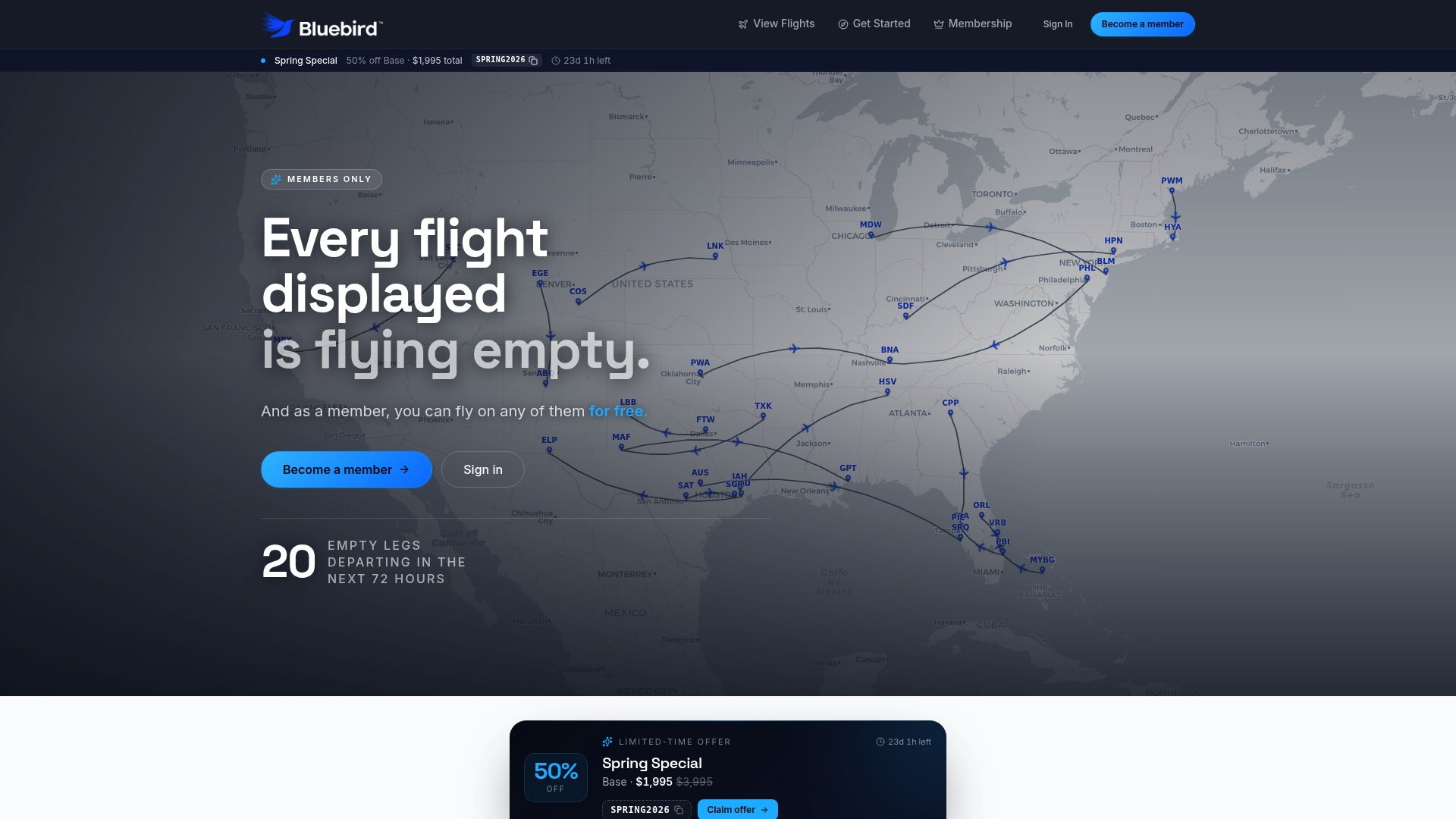
This fits best if you fly often and can be flexible on timing, since empty legs come from live inventory with routes updated daily rather than fixed schedules. Members can bring up to 6 guests per flight, and priority booking features help you grab the routes you actually want. If a custom route doesn’t show up in inventory, paid charter requests are still available. Check current empty-leg availability or look at membership details to see if the math works for your travel pattern.
Frequently Asked Questions
What is the main difference between a light jet and a midsize jet? Passenger capacity, range, and cabin height. Light jets seat 4 to 8 and run 1,500 to 2,000 nautical miles; midsize jets seat 7 to 9 with near stand-up cabins and 2,300 to 3,000 nautical mile range.
Can a light jet fly coast to coast? Usually not nonstop. Most light jets top out around 2,000 nautical miles, so a Los Angeles to New York trip typically needs a fuel stop, while a midsize jet can often cover it without one.
Is a midsize jet always more expensive than a light jet? Not per person once your group grows. Midsize jets run $4,500 to $7,000 per hour versus $2,500 to $4,000 for light jets, but that gap shrinks fast as passenger count rises.
Which jets count as light jets? The Cessna Citation CJ3+, Embraer Phenom 300, and Learjet 75 are the most commonly cited models in this class.
Which jets count as midsize jets? The Citation XLS+, Citation Latitude, Hawker 900XP, and Gulfstream G150 or G280 are the standard examples buyers compare.
Sources
- Light Jet vs Midsize Jet: Which Private Aircraft Fits Your Travel Needs?
- Light Jet vs Midsize Jet: Which Is Better for Your Next Charter? - Impact Wealth
- Light Jet Charter Flights | Book Phenom 300, CJ3, Citation | Elevate Jet
- Light Jet vs Midsize Private Jet Interior Guide | Boulevard
- Light Jet vs. Midsize Jet: Which Is Right for Your Trip? | The Jet Guys