Digital Nomad Travel Styles: Your Complete 2026 Guide

Digital Nomad Travel Styles: Your Complete 2026 Guide
A digital nomad travel style is the specific pattern of movement, housing, and work rhythm a location-independent worker builds around their life. The six most common styles are:
- Perpetual wanderer: Moving every few days to weeks, rarely staying in one city longer than a month
- Slow traveler / long-term nomad: Spending one to three months per location, prioritizing depth over breadth
- Vanlife / RV nomad: Living and working from a vehicle, typically within the U.S. or across a single continent
- Digital expat: Relocating to one foreign city for six months to a year or more, living like a local
- Family nomad: Traveling as a unit with children, often anchoring to school schedules and family-friendly infrastructure
- Hybrid / occasional nomad: Keeping a home base and traveling for stretches of two to eight weeks at a time
Which style fits you depends on your work type, income stability, family situation, and honestly, your tolerance for logistics. The rest of this guide breaks down each style in detail, then covers destinations, housing, tools, taxes, and a practical starter plan.
Key Takeaways
The digital nomad lifestyle works best when you choose a travel style that matches your work type, build redundant infrastructure before you leave, and plan social anchors from day one.
| Point | Details |
|---|---|
| Pick your travel style first | Choose from six styles (perpetual, slow, vanlife, expat, family, hybrid) based on your work type and life situation. |
| Test before committing | A 30–90 day trial trip with a furnished apartment and measured Wi-Fi reveals what your setup actually needs. |
| Infrastructure beats possessions | Primary Wi-Fi at 50+ Mbps, a backup hotspot, and two bank cards prevent single-point failures from derailing your income. |
| U.S. tax obligations follow you | U.S. citizens owe federal tax on worldwide income; consult a tax advisor and track visa days from day one. |
| Plan social anchors deliberately | Coworking cadence, repeat visits, and scheduled calls with home prevent the loneliness that ends most nomad experiments early. |
Table of Contents
- What is digital nomad travel style, and how do the six types compare?
- How do nomads choose where to go?
- Where do digital nomads actually live?
- What tools and setups keep nomads productive?
- What are the tax and legal basics for U.S. nomads?
- What are the real pros and cons of nomad life?
- How do you actually start living as a digital nomad?
- Why long-term nomads invest in infrastructure, not possessions
- What nomad life actually feels like day to day
- Sources
What is digital nomad travel style, and how do the six types compare?
A digital nomad is a location-independent worker who uses internet-enabled technology to do their job from anywhere. Chamber of Commerce](https://www.uschamber.com/co/grow/thrive/what-is-a-digital-nomad). Over half of digital nomads actually remain in the United States rather than traveling internationally. The lifestyle spans programmers, designers, content creators, consultants, and remote employees across nearly every industry.
The six styles differ most on three axes: pace of movement, housing stability, and administrative complexity.
Perpetual wanderer
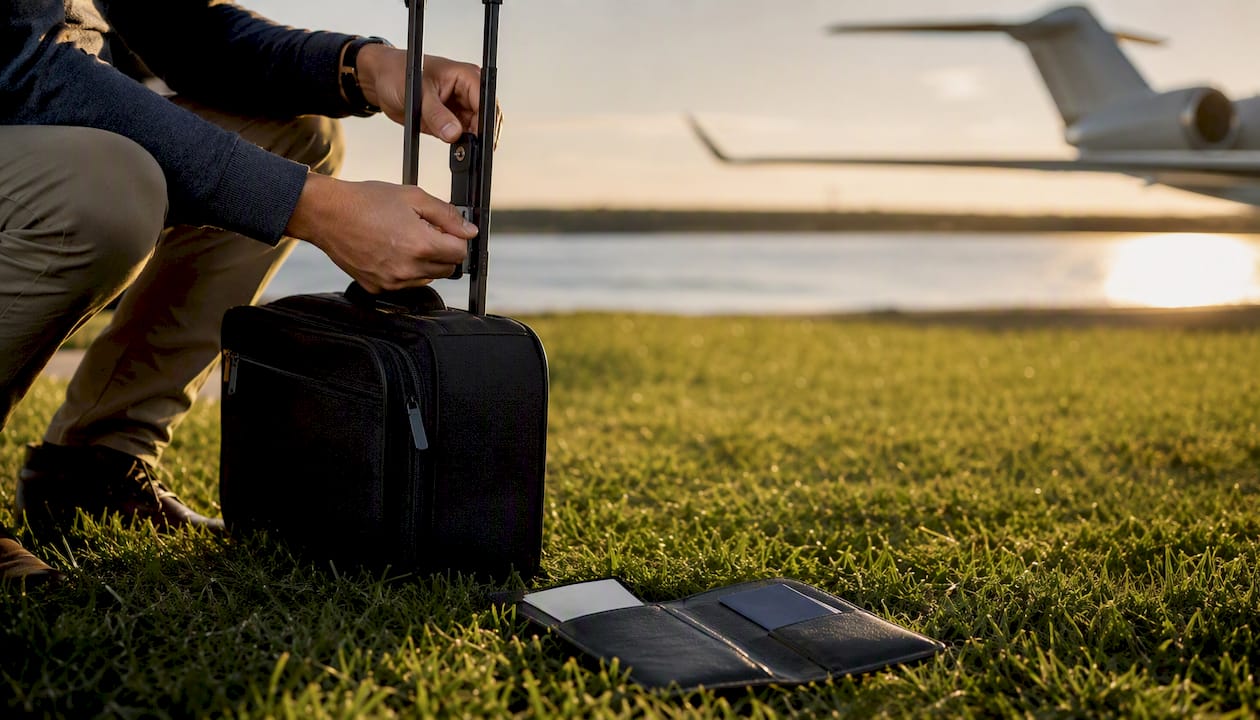
This is the style most people picture when they hear “digital nomad.” You move every one to four weeks, cycling through cities, countries, and time zones. The appeal is obvious. The cost is real: visa tracking becomes a part-time job, reliable internet is never guaranteed, and building any kind of social life requires deliberate effort. Best suited for single, unattached workers with asynchronous jobs and no hard meeting schedules.
Slow traveler
Slow travel means staying four to eight weeks per location, sometimes longer. You get the benefits of exploration without the churn. Grocery shopping, finding a gym, learning neighborhood coffee shops — these small routines protect productivity in ways that hotel-hopping never can. Digital Nomads Magazine specifically recommends slow travel as the most effective antidote to loneliness and burnout, two of the lifestyle’s most common failure modes.
Vanlife / RV nomad
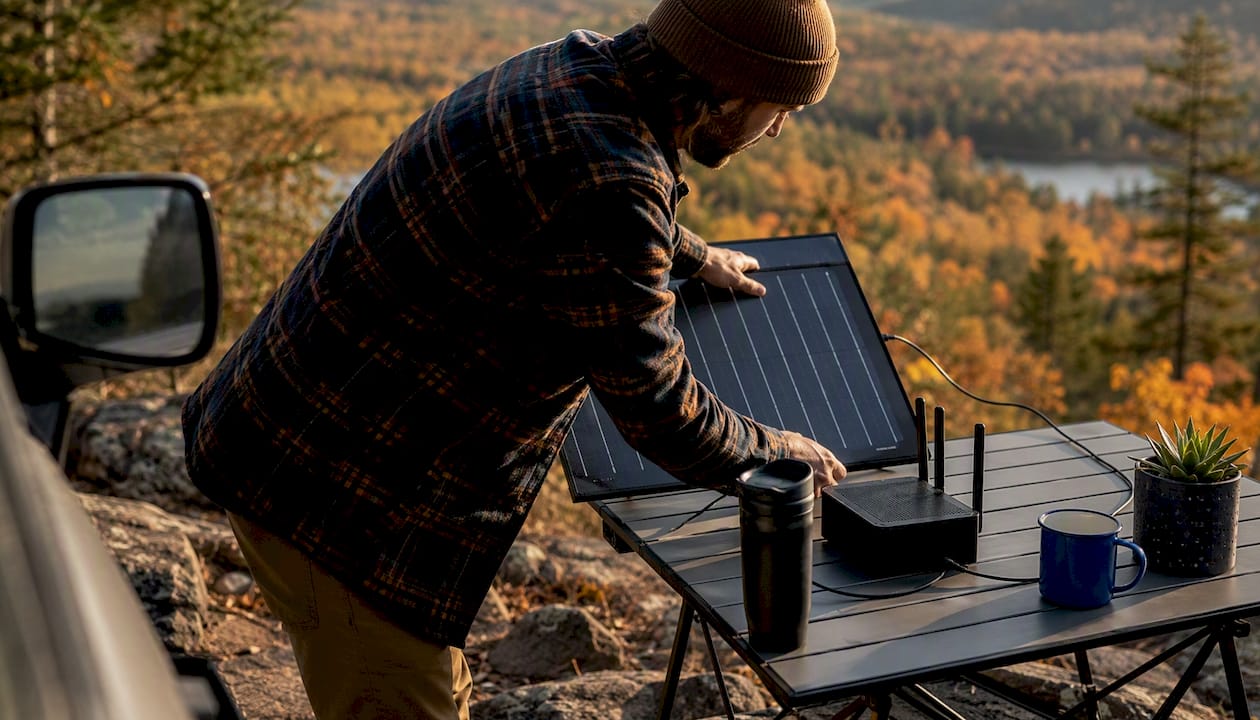
Vanlife keeps you on the road without leaving the country, which eliminates most visa and tax complexity for U.S. citizens. You trade international variety for logistical simplicity: one currency, one phone plan, one set of driving rules. The hard constraint is internet. Cellular coverage gaps are real, and a single dead zone on a client call day can cost you hours. This style suits people who love the outdoors, have flexible meeting schedules, and are mechanically comfortable enough to handle minor vehicle issues.
Digital expat
Rather than moving constantly, the digital expat picks one city — Lisbon, Medellín, Chiang Mai, Mexico City — and settles in for six to twelve months. This is the closest thing to “normal life” in the nomad taxonomy. You sign a proper lease, join a gym, build friendships. The trade-off is that you are committing to one place’s weather, culture, and infrastructure for a long stretch. For workers with regular video calls and employer-set hours, this style is often the most sustainable.
Family nomad
Traveling with children changes every calculation. School schedules, pediatric healthcare access, and child-friendly housing all constrain destination choices significantly. Many family nomads use a hybrid approach: slow travel during school breaks, a stable base during the academic year. The logistics are heavier, but families who make it work often cite it as the most meaningful version of the lifestyle.
Hybrid / occasional nomad
Most people who try nomad life end up here. You keep an apartment or house somewhere, then take extended working trips of two to eight weeks. You get the experience without abandoning your roots. Administratively, this is the simplest option: your tax residency is clear, your mail goes somewhere, and your social life at home stays intact.
| Style | Best for | Typical stay per location | Primary trade-offs |
|---|---|---|---|
| Perpetual wanderer | Single, async workers | 1–4 weeks | Visa complexity, no routine, loneliness |
| Slow traveler | Most remote workers | 4–8 weeks | Slower exploration, requires planning |
| Vanlife / RV | Outdoor lovers, U.S.-based | 1–3 weeks per spot | Internet gaps, vehicle maintenance |
| Digital expat | Employees, families | 6 months | Less variety, local bureaucracy |
| Family nomad | Parents with kids | 1–3 months | School access, healthcare proximity |
| Hybrid / occasional | Anyone with a home base | 2–8 weeks per trip | Limited immersion, travel costs |
How do nomads choose where to go?
Destination choice is rarely about bucket-list appeal. Experienced nomads run through a practical checklist before booking anything.
- Cost of living: Can you live comfortably on your income without burning savings? Latin America and Southeast Asia offer dramatically lower costs than Western Europe or Australia.
- Internet speed and redundancy: A minimum of 50 Mbps on apartment Wi-Fi is the working standard. Check Speedtest data and nomad forums before committing.
- Visa rules and length of stay: Tourist visas in most countries allow 30–90 days. Overstaying is a serious legal risk. Several countries now offer dedicated digital nomad visas with longer authorized stays.
- Time zone overlap: If your clients or employer are in the U.S., working from Southeast Asia means 5 AM calls. Latin America keeps you within one to three hours of U.S. time zones, which is a significant practical advantage.
- Healthcare access: Proximity to quality hospitals matters more than most first-timers expect, especially for longer stays.
- Community: Cities with established coworking scenes and nomad communities (Medellín, Lisbon, Chiang Mai, Tbilisi) reduce the social isolation that derails many first-year nomads.
Regional patterns reflect these priorities. Latin America — Mexico City, Medellín, Buenos Aires — draws U.S.-based nomads for time-zone alignment and cost. Southeast Asia — Chiang Mai, Bali, Ho Chi Minh City — attracts budget-focused nomads with mature coworking infrastructure. Europe offers visa programs and cultural depth but at higher cost, and the Schengen Zone’s 90-day limit in any 180-day period requires careful planning.
Domestic travel within the U.S. sidesteps all visa complexity entirely. Many nomads start there: Nashville, Austin, Asheville, and Tucson all have coworking scenes and lower costs than coastal cities. From an administrative standpoint, staying domestic keeps your tax situation clean and your banking frictionless.
Pro Tip: Match your destination’s time zone to your heaviest meeting day, not your lightest. One 6 AM call is manageable; five in a row breaks your sleep and your work quality.
Where do digital nomads actually live?
Housing is the single biggest lever on your productivity and your budget. The options range from flexible to fully settled.
Short-term rentals (Airbnb, Furnished Finder, direct landlord)
A furnished one-bedroom in Mexico City might run $800–$1,200/month; the same in Lisbon, $1,200–$1,800/month; in Chiang Mai, $400–$700/month. The key is verifying the workspace before you book.
Co-living spaces
Co-living combines private rooms with shared common areas and, usually, a built-in community of other remote workers. Costs vary widely: $800–$2,500/month depending on city and amenity level. The social upside is real. The downside is noise and limited privacy for calls.
Hotels and hostels
Fine for a night or two between apartments. Terrible for sustained work. Hotel Wi-Fi is notoriously unreliable for video calls, and the absence of a kitchen inflates food costs fast.
Vanlife / RV
Monthly costs for vanlife in the U.S. run roughly $1,000–$2,000 all-in (fuel, campgrounds, food, maintenance reserve), which is competitive with renting in many cities. The ceiling is internet reliability.
Housesitting
Platforms like TrustedHousesitters let you stay in furnished homes for free in exchange for caring for pets or property. The savings are substantial; the availability is unpredictable. Works best as a supplement to a primary housing strategy, not a replacement.
Seasoned nomads consistently prefer furnished apartments with dedicated desks and tested Wi-Fi over hotels or hostels for any stay longer than a week. The productivity difference is not subtle.
Before booking any accommodation, verify:
- Actual measured internet speed (ask the host to run a Speedtest and share the screenshot)
- Desk or dedicated workspace (a kitchen table is not a desk)
- Quiet space for calls (thin walls in a party hostel will cost you clients)
- Cancellation policy (30-day notice requirements can trap you)
- Power outlet placement near the desk
- Neighborhood safety and walkability at night
Stays of 30 nights or longer unlock monthly pricing, reduce the administrative churn of constant moves, and give you enough time to build a social routine. Practical nomad guidance consistently points to 30+ night stays as the threshold where life starts feeling stable rather than chaotic.
| Housing type | Best for | Typical monthly cost (mid-range city) | Productivity trade-off |
|---|---|---|---|
| Furnished apartment | Long stays, deep work | $700–$1,800 | Highest — desk, kitchen, quiet |
| Co-living | Community-seekers | $800–$2,500 | Good — shared workspace, social |
| Vanlife / RV | U.S. domestic nomads | $1,000–$2,000 | Variable — internet dependent |
| Housesitting | Budget stretchers | Low cost | Variable — depends on property |
| Hotel / hostel | Short transitions only | $1,500–$3,000 | Low — Wi-Fi unreliable, no desk |
What tools and setups keep nomads productive?
The eight-part nomad setup that experienced practitioners recommend covers hardware, internet, software, money, safety, logistics, productivity, and community. Here is what that looks like in practice.
Hardware
Your laptop is your business. A thin, powerful machine (13–15 inch) with at least 16 GB RAM handles most professional workloads. Add a compact USB-C hub, a travel-friendly mechanical or low-profile keyboard, a noise-canceling headset (Sony WH-1000XM5 or Bose QuietComfort 45 are the standard recommendations), and a portable laptop stand for ergonomics. An external monitor is worth the weight for developers and designers; everyone else can skip it.
Connectivity
Layer your internet so no single failure kills your workday. Primary apartment Wi-Fi is recommended to have high speed, supplemented by a local eSIM for mobile data and a backup portable hotspot capable of supporting calls. Run a VPN (Mullvad or ExpressVPN) on all devices, especially on public networks.
Pro Tip: Test your apartment’s Wi-Fi on a video call within the first 30 minutes of arrival. If it fails, you have time to find a coworking space before your first meeting.
Software and workflows
- Password manager: 1Password or Bitwarden (non-negotiable for security across devices)
- Cloud storage: Google Drive or Dropbox for file access anywhere
- Async communication: Loom for video messages, Notion or Confluence for documentation
- Calendar hygiene: Calendly with time zone detection prevents scheduling disasters
- Invoicing and payments: Wave (free) or FreshBooks for freelancers; Wise or Revolut for international transfers
- Coworking memberships: WeWork All Access or Regus day passes give you a professional backup when your apartment Wi-Fi fails
What are the tax and legal basics for U.S. nomads?
U.S. citizens owe federal income tax on worldwide income regardless of where they live or work. That does not change when you become a nomad. The IRS does not care that you were in Bali for six months.
Numbered checklist before you leave:
- Establish a U.S. mailing address. A virtual mailbox service (Traveling Mailbox, PostScan Mail) handles physical mail and forwards documents digitally.
- Consult a tax advisor familiar with expat or nomad situations. The Foreign Earned Income Exclusion (FEIE) may apply if you meet the bona fide residence or physical presence tests, but qualifying rules are specific. The IRS publishes the official guidance and it is worth reading before you assume you qualify.
- Get international health insurance. Your domestic plan almost certainly does not cover you abroad. SafetyWing, Cigna Global, and GeoBlue are commonly used options.
- Confirm banking and payment access. Notify your bank of travel plans. Open a fee-free international account (Charles Schwab High Yield Investor Checking reimburses ATM fees globally; Wise and Revolut handle multi-currency spending).
- Research visa requirements for each destination. The U.S. State Department’s travel site lists entry requirements by country. Many countries now offer dedicated digital nomad visas — Portugal’s D8, Costa Rica’s Rentista, and Indonesia’s Second Home Visa are among the most discussed — but eligibility requirements, income thresholds, and application processes vary significantly. Verify directly with each country’s consulate or immigration authority.
- Track your days in each country. Overstaying a visa has consequences ranging from fines to entry bans. A simple spreadsheet works; apps like Nomad Tax or Taxnomads help automate the tracking.
Pro Tip: Keep a U.S. mailing address in a state with no income tax (Texas, Florida, South Dakota, Wyoming) if you are giving up your primary residence. State tax residency rules vary, and some states aggressively pursue former residents.
What are the real pros and cons of nomad life?
Benefits
- Geographic flexibility: Work from cities, beaches, or mountains without asking permission
- Cost arbitrage: Living in lower-cost countries on a U.S. dollar income stretches purchasing power significantly
- Cultural depth: Extended stays build real understanding of places rather than tourist-level snapshots
- Schedule control: Many nomads report better work-life balance when they design their own day
- Productivity gains: Research cited by Wikipedia’s digital nomad entry points to a roughly 4.4% average output increase with work-from-anywhere arrangements
Downsides
- Loneliness: The most commonly cited challenge, especially in the first six months
- Administrative overhead: Visas, taxes, insurance, banking, mail — the logistics are a part-time job
- Healthcare continuity: Managing prescriptions, specialist care, and dental work across countries is genuinely difficult
- Variable income risk: Freelancers with one or two clients are one lost contract away from a crisis
- Burnout from novelty: Constant newness is stimulating until it is exhausting
Mitigation tactics
- Slow down. Four to eight weeks per stop is the practitioner consensus for sustainable travel pace.
- Build a coworking cadence. Even two or three days per week in a shared space dramatically reduces isolation.
- Keep three to six months of expenses in a liquid emergency fund before you leave.
- Schedule regular video calls with friends and family at home — not just for logistics, but for connection.
- Return to places you liked. Repeat visits build the community that first visits cannot.
Environmental impact
Frequent flying carries a real carbon cost. Nomads who care about this tend to favor slower travel (fewer flights), train travel within regions, and carbon offset programs like Gold Standard or Terrapass. Choosing destinations reachable by train or bus from your current location is the most effective single change.
How do you actually start living as a digital nomad?
The Harvard Business Review’s guidance on becoming a digital nomad is clear: build income stability first, then test the setup on a short trip, then iterate. Do not optimize your packing list before you have a reliable paycheck.
Step-by-step starter plan:
- Secure location-independent income. Remote employment, diversified freelance clients (three or more), or a combination. One client is not a foundation.
- Reduce possessions to what fits in carry-on luggage. Most nomads report cutting their initial packing by roughly 40% after their first year — start lean.
- Set up a multi-currency bank account. Charles Schwab, Wise, or Revolut before you leave.
- Buy international health insurance. Do this before your domestic coverage lapses.
- Book a 30+ night furnished apartment with a desk in your first destination. Verify the internet speed in advance.
- Run a connectivity test on day one. Locate the nearest coworking space as a backup.
- Plan at least one social anchor per week. A coworking day, a language exchange, a local meetup — something that gets you out of the apartment.
- Track visa days from day one. Build a simple spreadsheet or use a tracking app.
Budget expectations by tier:
- Budget nomad: $1,500–$2,500/month (Southeast Asia, Latin America, Eastern Europe)
- Mid-range nomad: $2,500–$4,500/month (most of Latin America, Southern Europe, parts of Southeast Asia)
- Comfortable nomad: $4,500–$7,000+/month (Western Europe, Japan, Australia, major U.S. cities)
30/60/90-day evaluation questions:
- Day 30: Is my income stable? Did I hit my billable hours? Do I know at least three people in this city?
- Day 60: Am I sleeping well? Is my work quality holding? Do I want to stay or move?
- Day 90: What pace of travel actually fits my workload? What would I change about my setup?
If you answer “no” to the income and productivity questions at day 30, slow down before moving to a new location. Chasing novelty while your work suffers is how nomad experiments end early.
Why long-term nomads invest in infrastructure, not possessions
The counterintuitive lesson that most experienced nomads learn within the first year: your possessions do not make the lifestyle work. Your infrastructure does.
Practitioners who have sustained the lifestyle for multiple years consistently prioritize infrastructure-first housing choices: furnished apartments with reliable desks, stable power, and tested Wi-Fi. These choices reduce transition costs, protect billable hours, and make each new city feel livable within days rather than weeks.
The redundancy principle is equally important. The most common operational failure for nomads is single-point dependence: one bank account, one SIM card, one internet connection. Any one of those failing on a deadline day is a crisis. Built-in redundancy prevents that.
Practical implementation:
- Primary Wi-Fi at 50+ Mbps, tested before arrival
- Local eSIM plus a portable hotspot capable of 10–20 Mbps for calls
- Two bank cards from different institutions (one traditional, one fintech like Wise)
- International health insurance active before departure
- Furnished apartment with a real desk as the default housing choice
Packing priorities (what actually matters):
- Laptop, charger, and USB-C hub
- Noise-canceling headset
- Portable hotspot device
- Universal power adapter
- One week of clothing (laundry is everywhere)
- Basic first-aid kit and a 90-day supply of any prescription medications
Everything else is optional. The nomads who last are the ones who protect their income-generating capacity above all else.
What nomad life actually feels like day to day
The fantasy version of nomad life is a laptop on a beach. The reality is closer to: a furnished apartment, a standing desk you assembled from a chair and some books, three video calls before noon, and a grocery run in a language you are still learning.
The emotional arc follows a predictable pattern. The first month in a new place tends to feel exciting and slightly overwhelming. By month two, novelty fades and routine takes over, which is actually when productivity peaks. By month three, if you have not built social anchors, loneliness tends to surface. This is not a failure of the lifestyle. It is a feature of human psychology that the lifestyle exposes.
The fix is not moving to a new city. It is building repeated social touchpoints: a coworking space you go to on Tuesdays and Thursdays, a language class, a running group, a weekly video call with people back home. Experienced nomads consistently report that returning to places they have been before accelerates community formation faster than any first visit can.
Work-life balance in this lifestyle is not automatic. You have to design it. That means setting a hard stop time for work, leaving the apartment for at least one non-work activity per day, and resisting the temptation to fill every free hour with productivity because you feel guilty about the freedom.
The nomads who thrive long-term are not the ones who optimized their packing list. They are the ones who treated the lifestyle as a design problem: what infrastructure, what pace, what social structure, and what work setup lets me do my best work and actually enjoy where I am?
Sources
These are the primary sources worth bookmarking for official guidance and deeper research:
- The Ultimate Guide to Becoming a Digital Nomad in 2026 - Digital Nomads Magazine
- How to Become a Digital Nomad | Harvard Business Review
- What I Learned About the Digital Nomad Lifestyle After 4 Years and 40 Countries | Blueground
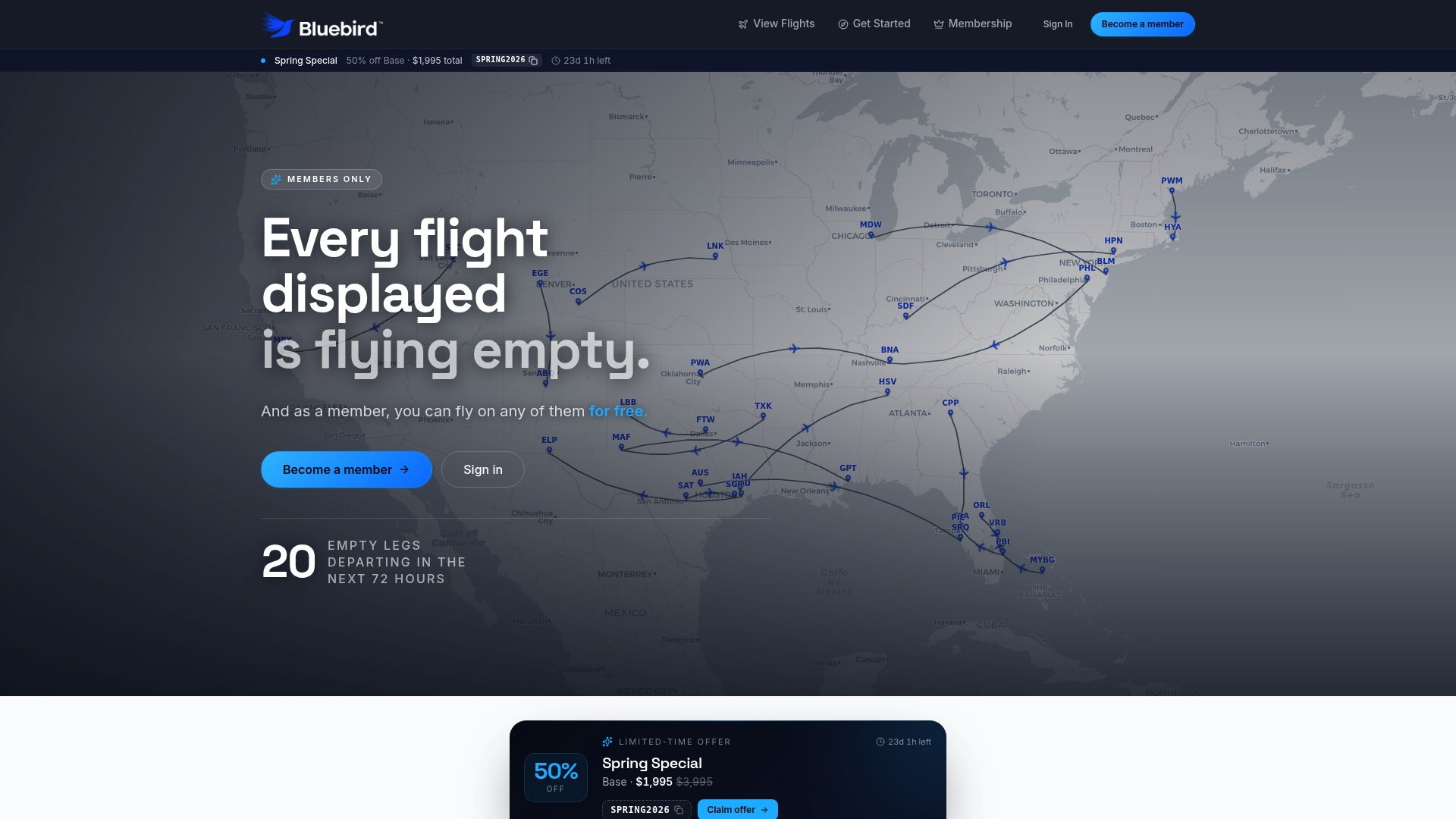
For nomads who move frequently and value their time above all else, Bluebirdjets membership offers unlimited access to empty leg flights on Learjet 60 jets, with priority booking and the ability to bring up to six guests. When your schedule demands you get somewhere fast and commercial routing adds hours you do not have, browse live flight inventory to see what is available. For nomads who need a guaranteed route rather than an empty leg, a custom charter quote is also available. Flexible private travel pairs naturally with the kind of spontaneous, schedule-driven movement that defines the nomad lifestyle at its most efficient.
This article is general information, not a substitute for advice from a qualified financial advisor. Consult a qualified financial professional about your own circumstances before acting on anything here.