Flight Crew Composition: Who's Required and Why
Flight Crew Composition: Who’s Required and Why
Flight crew composition is the specific mix and number of pilots and flight attendants legally required to operate an aircraft, based on the plane’s certification, seating capacity, and the type of flight being flown. It’s not a single number. It’s a formula that changes with the airplane.
The short answer for most U.S. commercial flights: at least two pilots, a Pilot in Command (PIC) and Second in Command (SIC), plus flight attendants scaled to seating.
- Pilots: FAA regulation §121.385 sets the floor at two qualified pilots for most commercial operations, with no operator allowed to fly below what the aircraft’s type certificate or Flight Manual specifies.
- Cabin crew: the common rule of thumb is roughly one flight attendant for every 50 passenger seats, though the real number depends on exits and aircraft configuration.
The sections ahead break this down by aircraft type, operation category, and the roles each crew member actually performs on board.
Key Takeaways
Flight crew composition is set by regulatory minimums tied to the aircraft’s Flight Manual, then adjusted upward based on flight duration, cabin size, and operator policy.
| Point | Details |
|---|---|
| Two-pilot floor | FAA rules require at least a PIC and SIC for most commercial flights, per §121.385. |
| Cabin crew scales with seats | Flight attendant counts generally follow a roughly one-per-50-seats formula. |
| Long-haul adds crew | Extended routes and ETOPS operations often require relief pilots and extra cabin staff. |
| CRM ties the team together | Crew Resource Management coordinates communication and decision-making between cockpit and cabin. |
| Operation type changes the roster | Cargo, charter, and private flights can legally carry far fewer cabin crew than scheduled airlines. |
Table of Contents
- What Is Flight Crew Composition, Exactly?
- What Do Regulations Require for Minimum Crew?
- How Many Crew Members Does a Typical Flight Have?
- When Do Flights Need Extra or Augmented Crew?
- Who Does What: Duties and Crew Resource Management
- What Training and Certification Does Crew Need?
- Does Crew Composition Change by Type of Flight?
- Why Crew Composition Is About More Than Headcount
- Where to Read the Primary Rules
- Frequently Asked Questions
- Sources
What Is Flight Crew Composition, Exactly?
Aviation uses three overlapping terms, and mixing them up causes real confusion. Aircrew is the umbrella term covering everyone whose job happens in the air, both cockpit and cabin. Flight crew refers specifically to the pilots, the people licensed to operate and navigate the aircraft. Cabin crew means the flight attendants responsible for passenger safety, service, and emergency response, a distinction laid out clearly by the Canadian Centre for Occupational Health and Safety.
A simple way to separate them: if someone is handling navigation, radio communication with air traffic control, or systems management, they’re flight crew. If they’re briefing passengers, directing an evacuation, or checking that exit rows are clear, they’re cabin crew.
A few roles sit in gray areas:
- Flight engineers were once a third cockpit role on older aircraft; they’re now rare, since modern automation lets two pilots handle what once took three.
- Mission specialists on cargo or specialty flights aren’t flight crew in the regulatory sense, even though they’re on the aircraft doing operational work.
What Do Regulations Require for Minimum Crew?
The federal baseline comes straight from the Code of Federal Regulations. Operators cannot legally fly with fewer crew members than the aircraft’s type certificate or Flight Manual specifies, and for most commercial airplane operations, that means a minimum of two pilots.
“No certificate holder may operate an airplane… with less than the minimum flight crew specified in the airplane flight manual or the airplane’s type certificate data sheet.” That’s the operating principle behind §121.385, and it’s the reason every commercial jet you’ve ever boarded had a captain and a first officer at minimum.
The rule goes a step further where a flight engineer is still required on a specific aircraft type. In that case, another crewmember must be qualified to step into the flight engineer’s role if that person becomes incapacitated mid-flight. No single crewmember can be asked to perform two separate airman-certified functions at once, no matter how short-staffed a flight might be.
Practical checkpoints worth remembering:
- Always check the specific airplane’s Flight Manual and type certificate. Minimums are aircraft-specific, not universal.
- Confirm which operations specifications apply. Part 121 air carrier rules differ from private operations under Part 91.
- Cabin crew counts typically follow seat-based formulas layered on top of the pilot minimum.
Pro Tip: Never assume two pilots is the ceiling. It’s the floor. The real number for any given flight depends on the aircraft’s certified limits and the operator’s own specifications.
How Many Crew Members Does a Typical Flight Have?
Regulatory minimums set the floor, but actual rosters usually sit well above it. Here’s what crew composition tends to look like across aircraft classes.
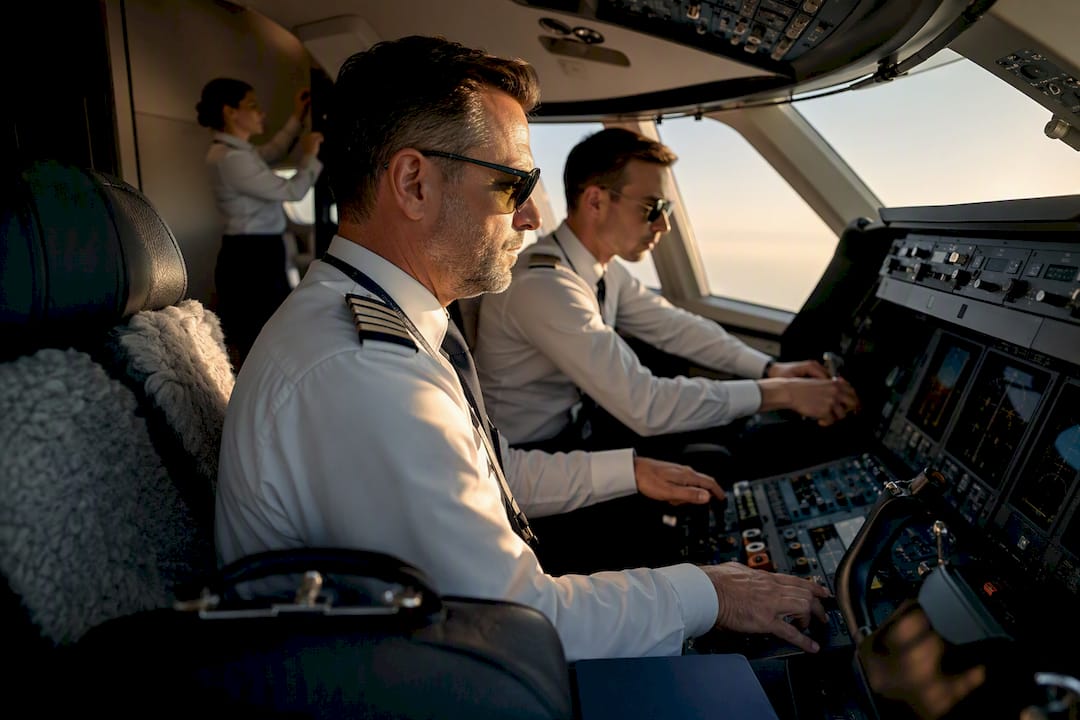
Cockpit roles stay fairly consistent: a Captain (PIC) who holds final authority, a First Officer (SIC) who shares flying duties, and on longer routes, one or more relief pilots who rotate in so the primary crew can rest.
Cabin roles scale with aircraft size: a purser or lead flight attendant manages the cabin team, and additional flight attendants are positioned near exits based on capacity and safety requirements, roles the Bureau of Labor Statistics and O*NET both catalog under standardized job titles.
Rough real-world numbers by aircraft class:
- Regional jets: two pilots plus one or two flight attendants, depending on seat count.
- Narrowbody aircraft (think a standard single-aisle jet): two pilots, several flight attendants.
- Widebody aircraft on long routes: multiple pilots including relief crew, a larger number of flight attendants depending on cabin size and class configuration.
Airlines frequently staff above these numbers for service standards, union contracts, or route-specific operational needs, not because regulation demands it.
When Do Flights Need Extra or Augmented Crew?
Certain flights legally require more people than the baseline, and the trigger is usually duration or route risk rather than aircraft size alone.
Common reasons composition grows beyond the minimum:
- Duty time and rest rules. Long-haul sectors exceed how long a single pilot pair can legally stay on duty, so airlines add relief pilots.
- ETOPS routes (extended operations over water or remote terrain) sometimes carry additional qualified crew for diversion scenarios.
- Ultra-long-haul flights may run multiple full flight deck shifts, with pilots resting in dedicated crew bunks between rotations.
- Legacy aircraft types that still require a flight engineer need a second qualified person on board who can take over that role in an emergency, per federal contingency rules.
A concrete example: a fifteen-hour widebody route might carry four pilots total, two active and two resting in rotation, along with a larger-than-usual cabin crew to cover multiple meal services and rest breaks. Operator policy and international regulatory differences can shift these numbers even on identical aircraft flying different routes.
Who Does What: Duties and Crew Resource Management
Pilots and flight attendants split duties cleanly but operate as one coordinated team. Pilots handle navigation, aircraft systems, and communication with air traffic control. Flight attendants manage passenger safety briefings, cabin security, evacuation leadership, and onboard medical response, a responsibility the Bureau of Labor Statistics notes is central to the job despite its service-oriented public image.
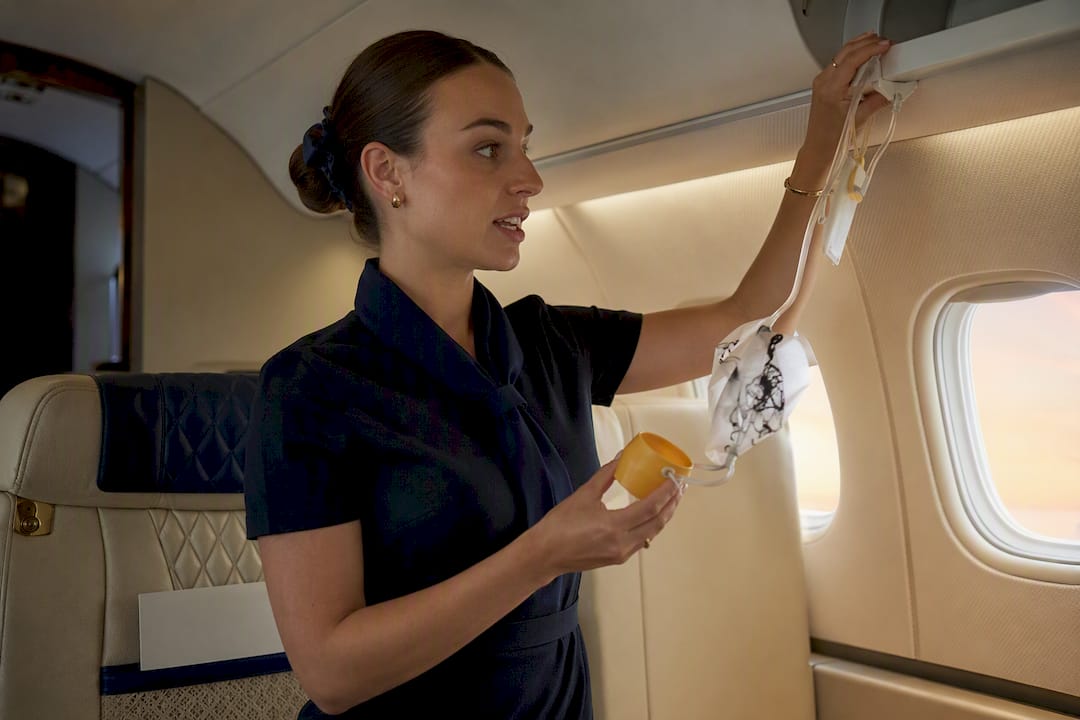
What ties both groups together is Crew Resource Management (CRM), a training discipline built to improve communication, leadership, and decision-making across the entire crew, not just the cockpit. CRM emerged specifically to address human-factor incidents, and it’s now standard practice industry-wide.
In practice, that means:
- Pilots and cabin crew brief together before departure on weather, expected turbulence, and any passenger-specific concerns.
- Emergency roles are pre-assigned so nobody is figuring out their job mid-crisis.
Pro Tip: A thorough preflight briefing that covers contingencies, not just the flight plan, is one of the clearest signals of a well-run crew.
What Training and Certification Does Crew Need?
Every seat on the flight deck and in the cabin comes with its own certification path. Pilots need a commercial or airline transport pilot certificate plus a type rating for the specific aircraft they’re flying. Flight attendants complete FAA-approved training through their employer and hold certification tied to that program, as outlined by the Bureau of Labor Statistics.
None of this is a one-time credential. Recurrent training keeps everyone current:
- Pilots repeat simulator checks and type-specific proficiency exams on a recurring cycle.
- Both pilots and cabin crew go through periodic CRM refreshers and emergency procedure drills.
- New hires or crew transitioning to a new aircraft type complete initial indoctrination before ever working a live flight.
Where flight engineers still exist on specific aircraft, they hold a separate certificate entirely, and that qualification doesn’t transfer to other roles.
Does Crew Composition Change by Type of Flight?
Composition shifts significantly depending on what kind of operation is flying the aircraft, even when the plane itself is identical.
- Scheduled network carriers meet the strict regulatory floor and then staff above it for service consistency and contractual obligations.
- Regional carriers run smaller cabins, so fewer flight attendants are needed relative to a mainline jet.
- Cargo operators typically carry pilots only. With no passenger cabin, there’s often no cabin crew requirement at all.
- Charter and private flights can vary widely. Some list only the essential crew required by the aircraft’s Flight Manual, since flexibility is part of the appeal.
Union agreements and airline-specific policy explain most of the staffing that sits above the legal minimum. That’s a business decision layered on top of a regulatory one, and it’s worth knowing the difference when you’re evaluating why one flight feels differently staffed than another.
Why Crew Composition Is About More Than Headcount
Composition is really a balance of three things: legal minimums, safety redundancy, and service expectations. Get it right, and you get faster emergency response, better-rested pilots on long routes, and cabin crew who aren’t stretched thin. The number on the roster isn’t bureaucratic filler. It’s the difference between a crew that can handle a bad day and one that’s hoping nothing goes wrong.
If you fly private, you’re likely already aware how much crew composition on charter and empty leg flights can differ from a scheduled airline. Bluebirdjets built its annual membership around operator-owned Learjet 60 aircraft, giving members unlimited access to empty leg flights, room for up to six guests, and a live inventory of routes updated daily. If you’re curious what’s actually available on any given day, check current flight availability and see how a smaller, dedicated crew translates into a more flexible way to fly private.
Where to Read the Primary Rules
For readers who want the source documents rather than a summary, a few are worth bookmarking. 14 CFR §121.385 is the actual statute governing minimum flight crew, and the related §121.391 text covers flight engineer contingency staffing.
For role descriptions and training expectations, the Bureau of Labor Statistics and O*NET both maintain detailed occupational profiles. For CRM specifics, FAASafety.gov hosts the training course directly.
A quick note on scope: these federal sources cover U.S. Part 121 operations specifically. International carriers follow their own regulator’s equivalent rules, which can set different minimums for the same aircraft type.
Frequently Asked Questions
What is flight crew composition? Flight crew composition is the specific number and mix of pilots and cabin crew required to legally operate a given aircraft, set by the plane’s Flight Manual, type certificate, and applicable federal regulations.
What is the minimum flight crew for a commercial flight? At least two pilots, a Captain and a First Officer, for the vast majority of U.S. commercial operations under FAA rules.
How many flight attendants are required per flight? The common standard is roughly one flight attendant per 50 passenger seats, though exact numbers depend on exits and cabin configuration rather than a single fixed rule.
What’s the difference between flight crew and cabin crew? Flight crew are the pilots operating and navigating the aircraft. Cabin crew are the flight attendants responsible for passenger safety, security, and service, a distinction the CCOHS outlines clearly.
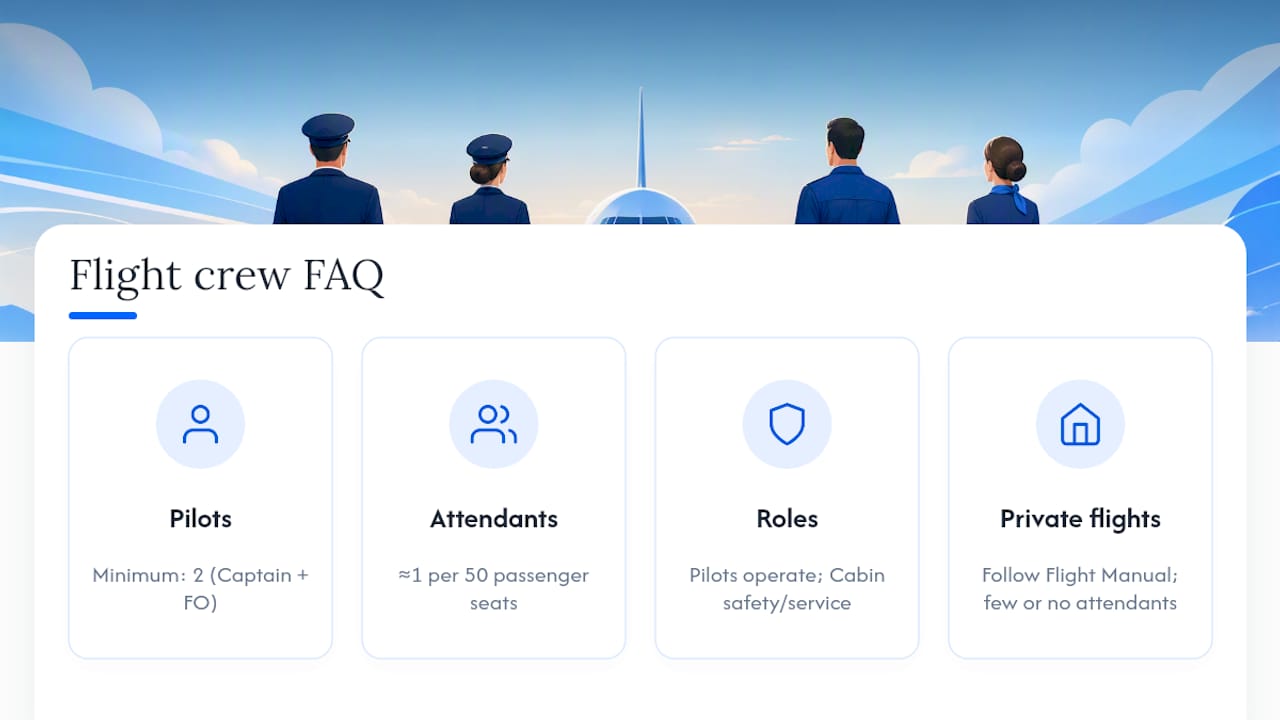
Do private jets need the same crew composition as commercial airlines? Private and charter flights must still meet their aircraft’s Flight Manual minimums, but they often carry fewer or no cabin crew, especially on smaller jets without a full passenger cabin configuration.
Sources
- 14 CFR § 121.385 - Composition of flight crew.
- CFR-2023-title14-vol3-sec121-391 (govinfo PDF)
- Faasafety
- Flight Attendants | Occupational Outlook Handbook | U.S. Bureau of Labor Statistics
- Flight Crew and Cabin Crew | Canadian Centre for Occupational Health and Safety (CCOHS)