What Is a Peak Travel Surcharge on Your Airline Ticket?

What Is a Peak Travel Surcharge on Your Airline Ticket?
A peak travel surcharge is an extra fee airlines add to fares on high-demand travel dates, on top of the base ticket price. It shows up whether you pay cash or redeem miles, and it can push your final cost up by a noticeable margin without changing the fare class you booked. You’ll usually spot it hiding behind fare component codes like YQ or YR, or as a flat add-on tied to specific calendar dates.
- Applies on both cash and award (miles) bookings
- Often labeled YQ (fuel-related) or YR (carrier-imposed) on your receipt
- Can turn a “cheap” award seat into an expensive one once cash fees are added
Key Takeaways
Peak travel surcharges are carrier-imposed fees, often coded YQ or YR, that raise your final ticket cost on high-demand dates regardless of whether you pay cash or redeem miles.
| Point | Details |
|---|---|
| Definition | A peak travel surcharge is an added carrier fee on high-demand dates, separate from the base fare. |
| Watch for YQ/YR codes | These fare component codes signal fuel or carrier-imposed charges hiding in the total price. |
| Award tickets aren’t exempt | Cash surcharges can apply even when you redeem miles, sometimes offsetting most of the savings. |
| Shift dates to save | Moving travel by a day or two often avoids the surcharge window entirely. |
| Bluebirdjets as an alternative | Membership access to empty-leg flights sidesteps typical peak-date surcharge structures for flexible travelers. |
Table of Contents
- How Peak Travel Surcharges Work
- Reading the Fare Breakdown Before You Buy
- When Airlines Apply Peak Surcharges
- Peak Surcharges and Award Bookings
- How to Avoid or Reduce Peak Travel Surcharges
- What to Do If a Surcharge Looks Unfair
- A Different Way to Sidestep Peak Pricing Entirely
- A Membership Built for Travelers Tired of Surprise Fees
- Frequently Asked Questions
- Sources
How Peak Travel Surcharges Work
Airlines don’t just raise the base fare during busy weeks. Instead, they layer on carrier-imposed charges that sit separately from the ticket price itself. Two codes matter most here: YQ, which historically tracked fuel costs, and YR, a more flexible carrier-imposed fee not tied to any specific cost input. YQ is the fuel surcharge code and YR is a carrier-imposed surcharge used for charges airlines don’t want baked into the advertised fare.
These charges can apply per segment or per full ticket, and some are triggered purely by travel dates rather than route or cabin. That’s deliberate. Keeping surcharges separate from base fares gives airlines more room to adjust pricing without touching the number that shows up first in search results.
- YQ historically linked to fuel costs, though airlines can keep charging it even when fuel prices drop
- YR used more broadly for demand-based or “carrier-imposed” fees
- Surcharges can apply per segment on connecting itineraries, multiplying the total
When jet fuel prices spike, the surcharge portion of a fare can grow rapidly, making it the most volatile line item on your ticket, more so than taxes or the base fare itself.
Reading the Fare Breakdown Before You Buy
Every online booking flow gives you a fare breakdown before checkout, and that’s where surcharges live. Most travelers skip past it. Don’t.
- Check the base fare line against the total price. A big gap between the two usually means surcharges or fees are baked in.
- Look for YQ or YR codes in the fare rules or receipt breakdown, often listed as “carrier-imposed international surcharge” or similar language.
- Confirm refund and change rules tied to that fare, since peak-period tickets are often the least flexible ones available.
Glossaries and consumer guides consistently recommend checking the final checkout page and fare rules directly, since surcharges tied to specific dates aren’t always visible in the initial search results.
Pro Tip: Open the fare rules link (usually small text near the price) before you pay. That’s where airlines are required to disclose surcharge details, even if the main screen doesn’t highlight them.
When Airlines Apply Peak Surcharges
Peak surcharges cluster around a handful of predictable windows. Airlines have applied these dates historically to smooth demand spikes without discounting seats during the busiest travel days:
- Thanksgiving weekend, especially the Sunday after
- The stretch between Christmas and New Year’s Day
- Peak summer travel weeks in June, July, and August
- Major events that spike demand on specific routes (championship games, festivals, concerts)
Reporting on this practice goes back years. Coverage from ABC News documented airlines applying holiday surcharges as a revenue tool that expanded in scope over time, and Travelers United has flagged peak surcharges as a hidden fare increase precisely because they’re easy to miss until the final total appears. Historical reports have shown per-segment surcharges ranging up to several tens of dollars on certain routes, though the exact figure always depends on the carrier and the specific date.
Peak Surcharges and Award Bookings
Redeeming miles doesn’t get you out of paying surcharges. This is the part that catches frequent flyers off guard.
- YQ and YR charges can be collected in cash even on award tickets, sometimes adding hundreds of dollars to a “free” flight
- The cash fee can occasionally approach the dollar value of the miles you redeemed, undercutting the point of using points at all
- Fee exposure varies significantly by airline and by route, so a business class award seat on one carrier might carry a modest fee while the same routing on another carrier adds a steep one
Before booking with miles for a peak date, run a sample cash-fare comparison alongside the award price. If the surcharge on the award ticket eats up most of the savings, paying cash or waiting for a different date is usually the better move.
How to Avoid or Reduce Peak Travel Surcharges
None of this is fixed in stone. Airlines set these fees around specific dates and routes, which means small adjustments on your end can avoid them entirely.
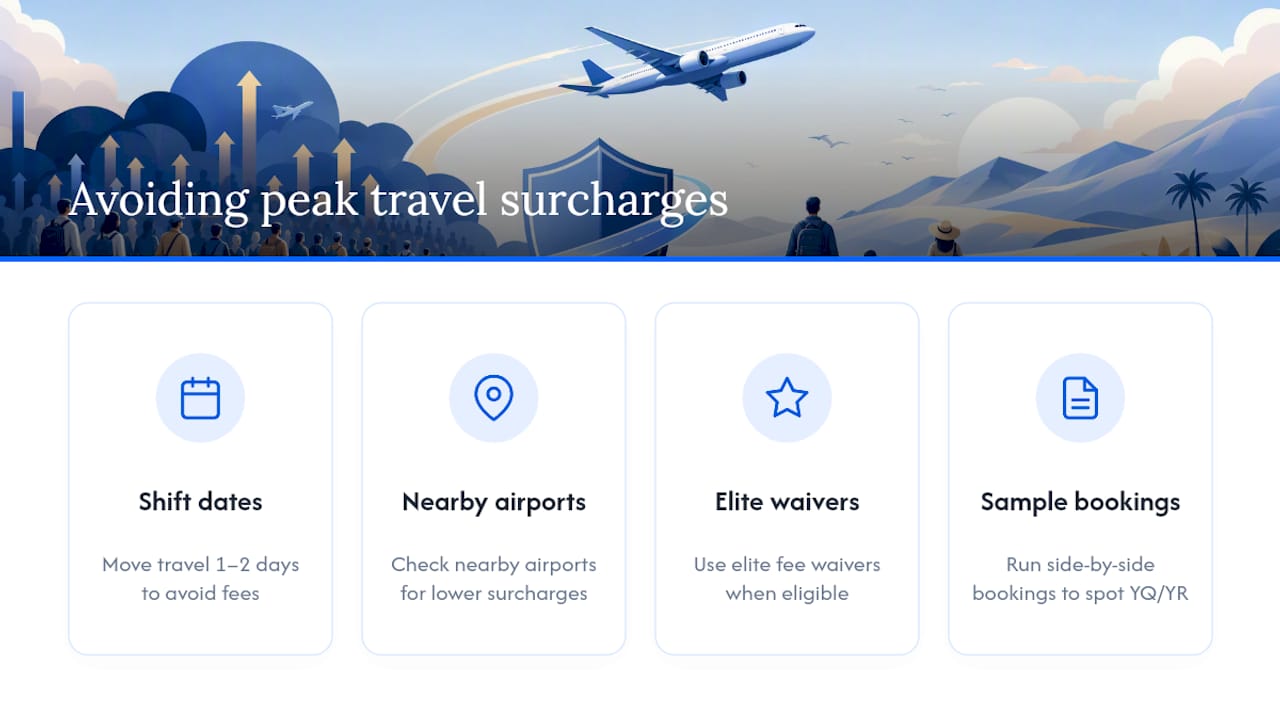
- Shift your travel date by 24 to 48 hours. Surcharges often apply to a narrow band of specific dates, and flying a day earlier or later can drop the fee completely. Seattle Times reporting on peak summer pricing confirms that date flexibility during high-demand windows can meaningfully lower total fares.
- Search nearby airports. A connecting hub an hour further away sometimes runs a different fare structure entirely, without the same date-based add-on.
- Check elite status fee waivers. Some loyalty programs waive or reduce carrier-imposed surcharges for top-tier members, particularly on award redemptions.
- Compare a few sample bookings side by side. Pull up the same route on two or three dates and note where the total price jumps. That jump is usually the surcharge kicking in, not a change in demand-based fare class.
- Try different booking channels. Fares booked directly with an airline sometimes carry different surcharge treatment than the same seat booked through a third-party site.
Pro Tip: Before booking anything around a holiday, price the exact same route three days earlier and three days later. If the fare drops by more than the cost of an extra hotel night, the difference is almost certainly a peak surcharge, not real demand pricing.
What to Do If a Surcharge Looks Unfair
If a fee seems inflated or wasn’t disclosed clearly at booking, document everything before you contact anyone.
- Screenshot the booking page, fare rules, and final receipt immediately
- Save the confirmation email with the full fare breakdown
- Contact the airline’s customer service team first and ask them to point to the specific fare rule justifying the charge
- If the airline doesn’t resolve it, escalate to your travel agency or file a complaint through a consumer protection channel if the dispute involves a payment issue
Keep records for at least a full billing cycle. Resolution isn’t guaranteed, but documentation is what makes a complaint worth pursuing.
A Different Way to Sidestep Peak Pricing Entirely
Membership-based access to empty-leg flights works differently from commercial fare pricing. Because these seats come from repositioning flights rather than scheduled peak-demand routes, they typically don’t carry the same date-based surcharge structure. It’s not a fit for everyone. It works best for flexible, affluent travelers who can move on short notice rather than travelers locked into a fixed holiday date.

A Membership Built for Travelers Tired of Surprise Fees
Bluebirdjets is built for travelers who’d rather skip the surcharge guessing game altogether. Instead of hunting for a workaround on a commercial booking screen, members get unlimited access to live empty-leg inventory on operator-owned Learjet 60 aircraft, updated daily, with no per-flight surcharge structure tacked onto the price.
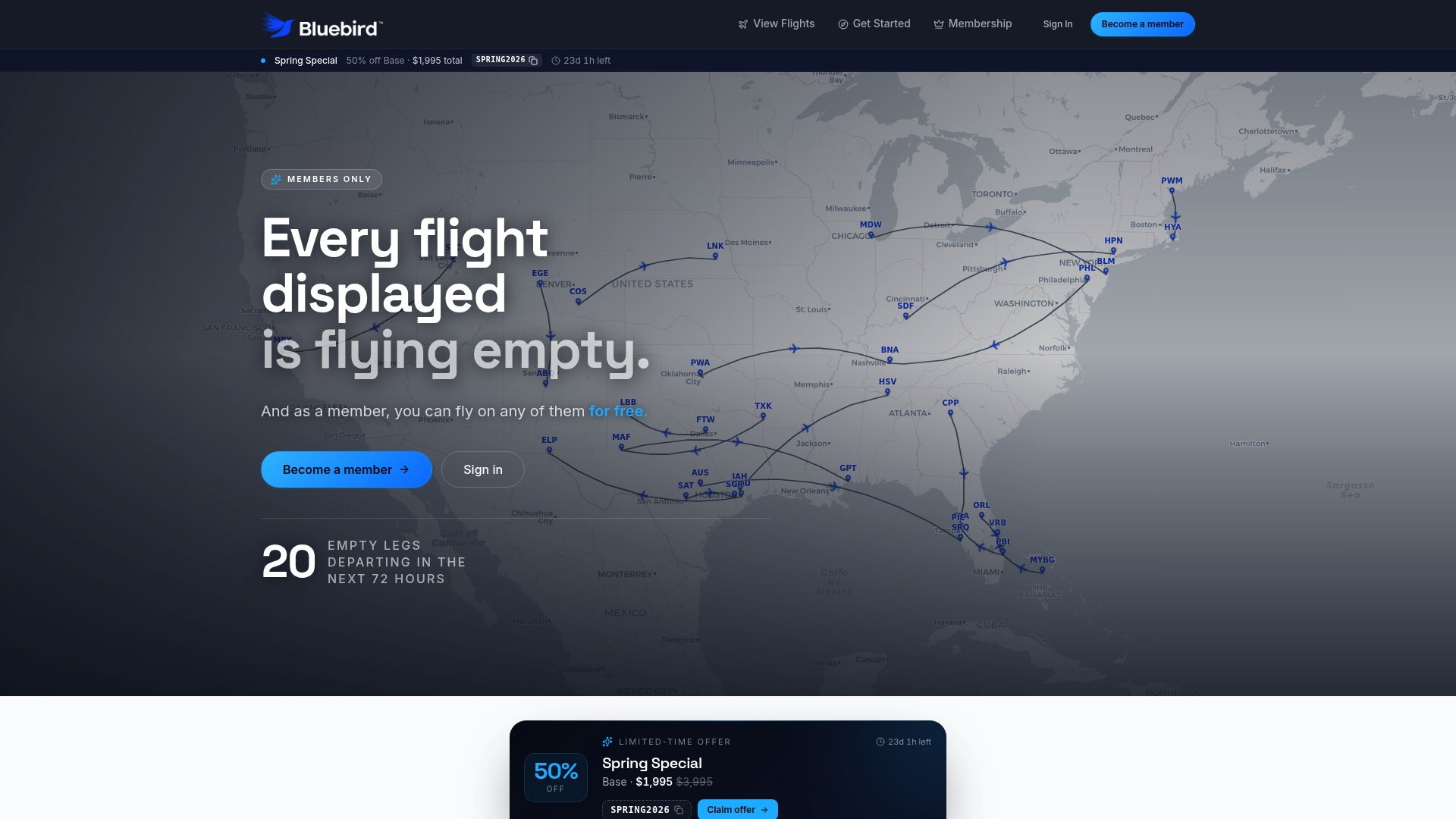
Membership includes room for up to six guests per flight, priority booking through the queue system, and the option to request a custom charter when the published inventory doesn’t line up with your dates. It fits a narrow group well: people who travel often, value flexibility over a fixed itinerary, and want to stop calculating whether a “deal” actually holds up once fees are added. If that sounds like your travel pattern, check current flight availability and see what routes are open this week.
Frequently Asked Questions
What is a peak travel surcharge? It’s a fee airlines add to tickets on high-demand travel dates, layered on top of the base fare, often coded as YQ or YR on your receipt.
Does a peak travel surcharge apply to award bookings? Yes. Airlines can charge YQ or YR fees in cash even when you’re redeeming miles, which can significantly increase your out-of-pocket cost.
How much are peak season travel fees? Amounts vary by airline and route. Historical reports have shown per-segment fees ranging from a few dollars to $30 to $50 or more, with no single universal rate.
How can I avoid peak surcharges? Shift your travel date by a day or two, compare nearby airports, check elite fee waivers, and run sample bookings side by side to spot where the surcharge kicks in.
What should I do if I think a surcharge was applied unfairly? Screenshot the booking and fare rules, contact the airline directly, and escalate to a consumer complaint channel if the issue involves a payment dispute.
Sources
- What is fuel surcharge? (Navan glossary)
- What Is A Fuel Surcharge? (Forbes Advisor)
- Peak travel surcharges, a hidden fare increase (Travelers United)
- What Is Fuel Surcharge? How Jet Fuel Prices Affect the Cost of Your Flight (Wego Travel Blog)