What Is Travel on Impulse? A Guide to Spontaneous Trips
What Is Travel on Impulse? A Guide to Spontaneous Trips
Travel on impulse is a short-notice trip taken with minimal planning, built around flexibility, spontaneity, and a lightweight safety net rather than a fixed itinerary. Picture this: on Thursday night you decide you need mountain air by the weekend, so you throw a pre-packed bag by the door and book whatever leaves within 24 to 72 hours. You land somewhere unfamiliar Saturday morning with no reservations past the first night and let the trip shape itself from there. Rick Steves has built a career around this exact mindset, and a growing share of travelers are booking this way. Some go further and skip commercial airports entirely, using a membership like Bluebird Jets to catch a same-week empty-leg flight instead.
Key Takeaways
Impulse travel works when minimal planning is paired with just enough preparation, a go-bag, flexible bookings, and a clear anchor point, to keep spontaneity from becoming chaos.
| Point | Details |
|---|---|
| Definition | Travel on impulse means booking within 24 to 72 hours with light packing and flexible plans. |
| Mindset matters | Rick Steves’ “go with the bumps” approach turns disruptions into the best parts of a trip. |
| Prep reduces risk | A go-bag, valid documents, last-minute insurance, and one refundable booking cover the essentials. |
| Match modality to priorities | Road trips maximize control, empty legs maximize speed and flexibility for members. |
| Bluebird Jets fits frequent flyers | Unlimited empty-leg access and priority booking suit travelers who go on impulse several times a year. |
Table of Contents
- What Is Travel on Impulse, Exactly?
- Why Do People Choose to Travel Without a Plan?
- How Do You Prepare for a Trip You Haven’t Planned?
- What Are the Best Ways to Travel on Impulse?
- What Does an Impulse Trip Actually Look Like?
- When Should You Not Travel on Impulse?
- Why Impulse Travel Deserves a Real Place in How We Travel
- Bluebird Jets: Built for the Traveler Who Doesn’t Plan Ahead
- Sources
What Is Travel on Impulse, Exactly?
Impulse travel has a recognizable shape once you know what to look for. It’s less about the destination and more about how little stands between the decision and the departure.
A few traits show up almost every time:
- A short decision window. You commit within hours or days, not months.
- Light packing. One bag, versatile clothing, nothing that needs checking or special handling.
- Flexible bookings. Refundable rates, walk-in lodging, or open-jaw tickets instead of locked-in plans.
- Mood-driven choices. The trigger is often a feeling (restlessness, a slow week, a sudden opening in your schedule) rather than a bucket-list deadline.
- Comfort with uncertainty. You accept that some details will sort themselves out after you land.
Same-day trains and ferries make this easy in regions with dense transit networks. Short road trips work almost anywhere. Last-minute commercial flights fill the gap when you need distance fast, and empty-leg private flights serve travelers who want speed without airport friction.
Pro Tip: Keep a running list of three to five “trigger destinations” you’d say yes to on 48 hours’ notice, and store a pre-packed go-bag in a closet. Removing the two biggest decisions in advance is what actually makes spontaneity possible.

Why Do People Choose to Travel Without a Plan?
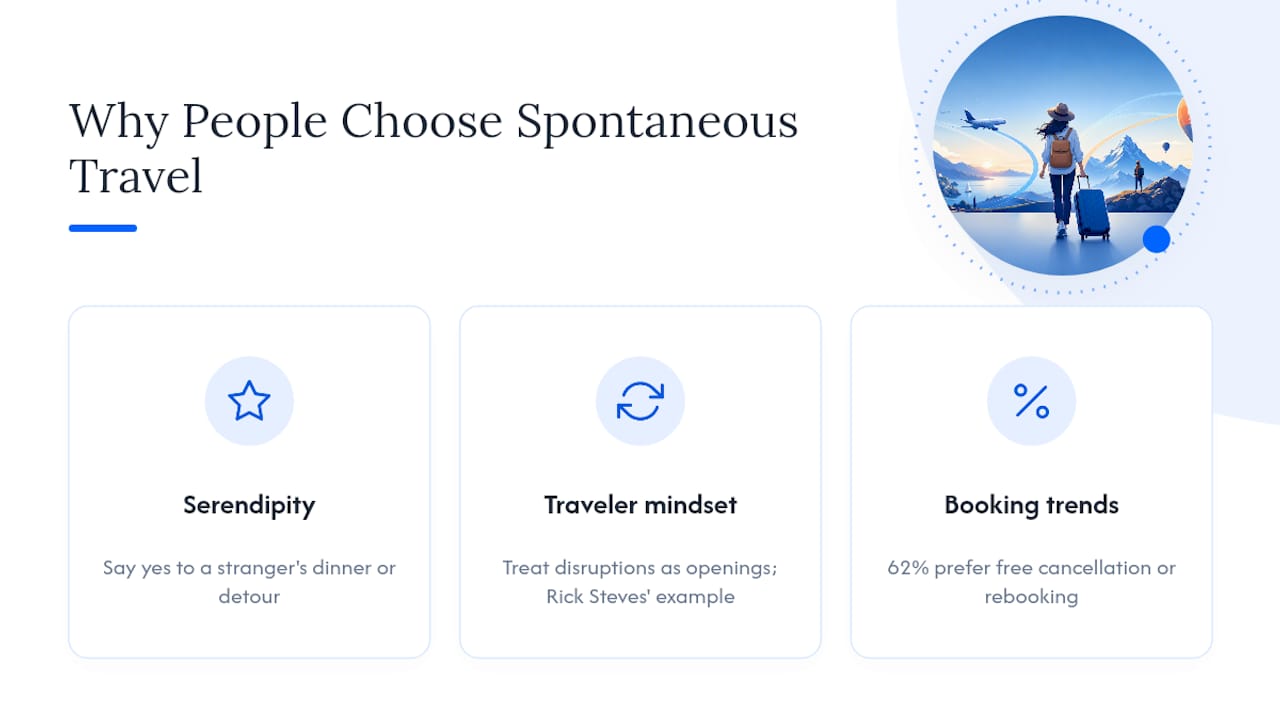
The biggest payoff is serendipity. When you’re not locked into a schedule, you say yes to the stranger’s dinner recommendation, the detour to a town you’d never heard of, the extra night somewhere that surprised you. That kind of local engagement rarely survives a rigid itinerary.
Rick Steves has argued for years that the best trips come from treating disruptions as openings rather than problems. His own habit of hopping a train to a new city on a whim is a small example of a bigger philosophy.
Go with the bumps. A missed connection or a canceled plan isn’t a failure. It’s an invitation to discover something you weren’t looking for.
The data backs up the appetite for this kind of trip. A Travel and Tourism Research Association survey found that 62% of travelers now prefer free cancellation or rebooking, and the World Travel & Tourism Council reports many travelers are more likely to book last-minute than they were before the pandemic. Flexibility isn’t a niche preference anymore.
How Do You Prepare for a Trip You Haven’t Planned?
The minimum responsible prep for impulse travel comes down to four things: valid documents, a go-bag, some form of travel insurance, and a payment method that won’t lock you out abroad.
Here’s the sequence that keeps a spontaneous trip from turning into a mess:
- Check your documents first. Passport validity, any visa requirements, and vaccination rules for your trigger destinations, checked in advance so this step takes seconds later.
- Grab your go-bag. A pre-packed carry-on with weather-neutral layers, a phone charger, and toiletries under the security limit.
- Buy insurance last-minute if needed. Short-term travel insurance policies can often be purchased the same day you book.
- Book the first anchor point. One refundable night of lodging so you have somewhere to land, even if nothing else is fixed.
- Set a flexible-date search alert. Tools that search a window of dates instead of one fixed day routinely surface cheaper, faster options.
Beyond the sequence, a few items make the difference between a smooth trip and a stressful one:
- An eSIM activated before departure so you’re not hunting for Wi-Fi at arrivals.
- A backup payment card stored separately from your primary wallet.
- Offline maps downloaded for your likely destinations, since flexible flight tools don’t help much if you can’t navigate once you land.
- Local emergency numbers saved before you lose signal.
- A rough contingency plan: what you’ll do if your first choice of lodging or transport falls through.
Pro Tip: Book only your first night on a refundable rate, then decide everything else once you’ve got a feel for the place. Locking in one anchor point buys you the freedom to improvise on everything after it.
What Are the Best Ways to Travel on Impulse?
Not every impulse trip looks the same, and the right format depends on your budget, timeline, and appetite for uncertainty.
- Road trips cost the least and give you the most control over pace and route. Best for travelers within driving distance of varied terrain.
- Trains work well in regions with dense rail networks, where you can decide at breakfast and be in a new city by dinner.
- Last-minute commercial flights are deal-driven and unpredictable. Prices can swing wildly depending on the route and how full the plane already is.
- Empty-leg private flights offer the fastest, most flexible option for travelers who want to skip the unpredictability of commercial fares altogether. These are repositioning flights that operators need to fly anyway, which is why empty-leg pricing works so well for flexible schedules.
| Modality | Time to departure | Cost shape | Booking friction | Best geography |
|---|---|---|---|---|
| Road trip | Same day | Low, predictable | Minimal | Anywhere with drivable distance |
| Short-haul rail | Same day | Low to moderate | Low | Dense regional networks |
| Last-minute commercial flight | Hours to days | Volatile, deal-dependent | Moderate | Wherever airlines fly |
| Empty-leg private flight | Hours to a few days | Fixed under membership | Low for members | Wherever routes are published |
For travelers who take three or more impulse trips a year, a Bluebird Jets membership solves the exact friction points that make spontaneous flying stressful: unlimited access to published empty-leg inventory, the ability to bring up to six guests, and priority booking so you’re not competing blind for a seat. It’s the option worth weighing seriously if impulse travel isn’t a once-a-year event for you but a habit you want to build. Match your budget and your comfort with uncertainty to the modality, and the trip almost plans itself.
What Does an Impulse Trip Actually Look Like?
A friend of Bluebirdjets once described deciding on a Friday afternoon to catch a same-day ferry to a nearby island, with nothing booked beyond the ferry ticket itself. She found a room by walking into the first inn with a vacancy sign. Another traveler used a last-minute empty-leg flight to surprise a partner with a weekend away, landing less than 30 hours after deciding to go.
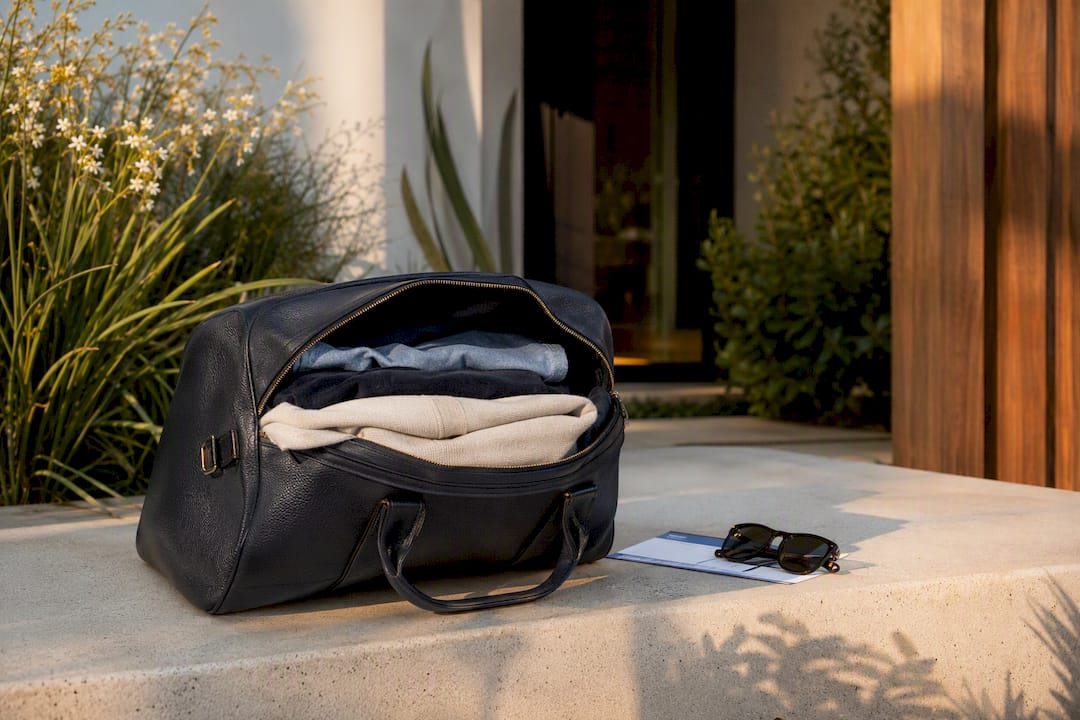
What made both trips work wasn’t luck. It was a pre-packed bag sitting ready, a flexible booking method, and enough familiarity with local transit to improvise once they landed.
The magic isn’t in having no plan. It’s in having just enough of one that the unplanned parts don’t feel like chaos.
Image caption idea: a lightweight go-bag sitting by a front door next to a passport and boarding pass, suggesting readiness without over-preparation.
When Should You Not Travel on Impulse?
Spontaneity isn’t the right call every time. Skip it around tight work or family deadlines, during major festivals or peak season when lodging and transport sell out fast, when your destination has complex visa requirements, or if you have a health condition that needs guaranteed access to care.
- Red flag: no flexible lodging left. Mitigation: postpone, or confirm a refundable room before you commit to travel.
- Red flag: unclear visa rules. Mitigation: verify entry requirements before booking anything.
- Red flag: a medical condition needing reliable care access. Mitigation: research local medical facilities first, or wait for a planned trip instead.
Why Impulse Travel Deserves a Real Place in How We Travel
I think most people overplan out of fear, not necessity, and it costs them the exact moments that make a trip memorable. Bluebird Jets exists because a growing number of travelers want that freedom without sacrificing reliability, and watching members use empty-leg flights to chase a Tuesday whim has convinced me spontaneity is a skill worth building, not a personality trait you either have or don’t.
Bluebird Jets: Built for the Traveler Who Doesn’t Plan Ahead
If you’re the kind of traveler who decides on a Thursday and wants to be gone by Saturday, a Bluebird Jets membership removes the two biggest obstacles: finding a flight on short notice and paying commercial last-minute prices for the privilege. Members get unlimited access to live empty-leg inventory that updates daily, the option to bring up to six guests along, and priority queue placement so you’re not scrambling against every other spontaneous flyer on the platform.
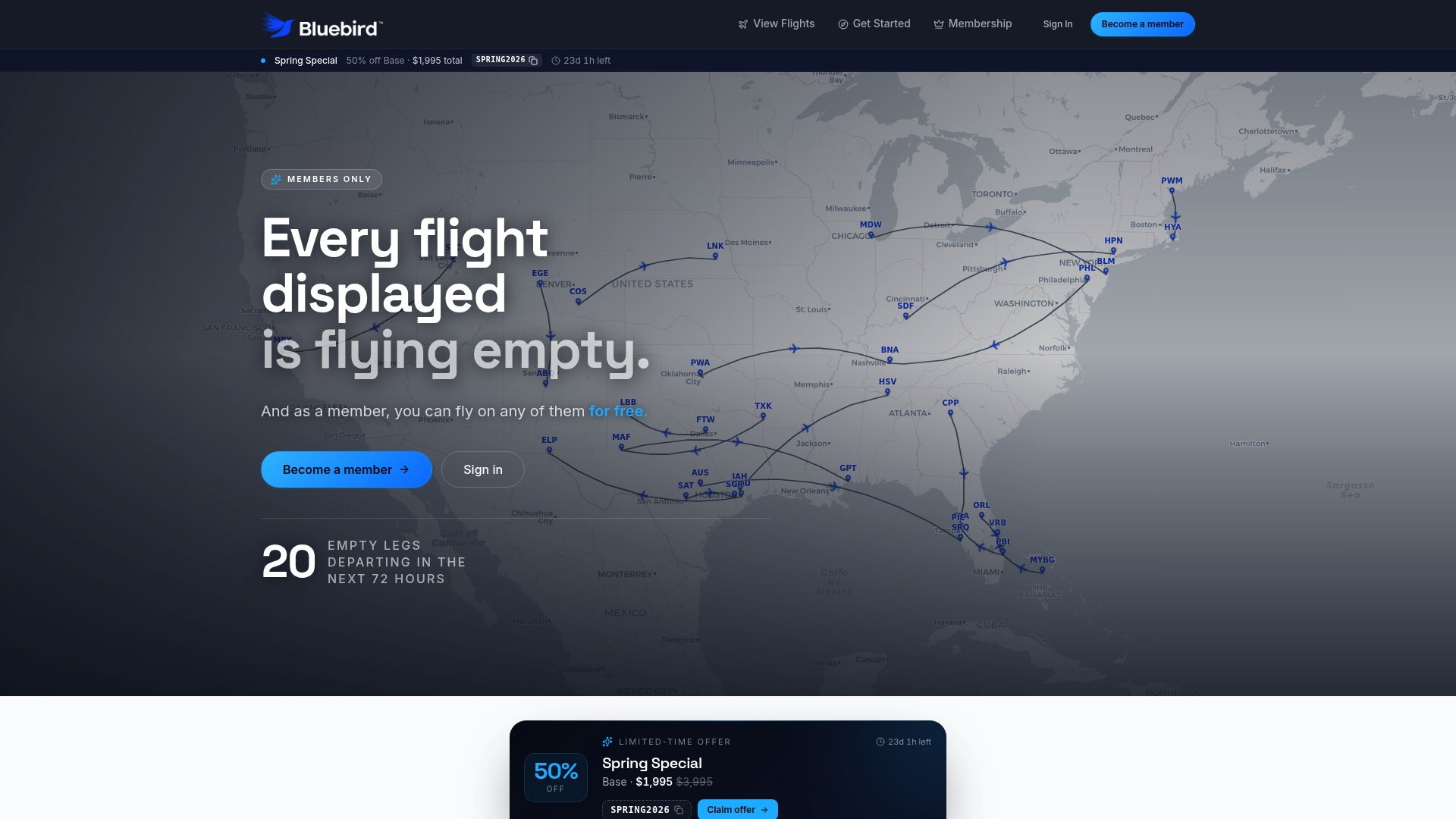
This is Bluebirdjets’ own membership product, and it’s built specifically for people who travel this way often, not occasionally. If a handful of impulse trips a year sounds like your kind of travel, check current membership options or browse live flight availability to see what’s flying this week.