Why Island Travel Favors Private Jets Over Commercial Flights
Why Island Travel Favors Private Jets Over Commercial Flights
Private jets are the better choice for most island trips because they eliminate the three things that make commercial island travel painful: dead time, distance, and rigid schedules. A commercial itinerary to a place like the Balearics or the Dominican Republic usually means a connecting flight into a major hub, a long taxi to a rental car or ferry, and a fixed departure window you build your whole day around. A private jet skips the hub entirely, often lands at an airfield minutes from the villa or resort, and leaves when you’re ready, not when the airline is.
That’s the one-sentence version. Here’s what it means in practice. Time savings come from cutting out layovers, shrinking the pre-flight window from two hours to about fifteen minutes, and landing at a strip close enough to your destination that the “last mile” stops being an ordeal. Access comes from the sheer size of the general aviation network: the FAA’s airport system alone lists thousands of public and private-use facilities that commercial carriers never touch, most of them exactly the kind of small regional field that sits nearest to island resorts. Flexibility comes from building your own routing, hopping between three islands in a day if you want to, without waiting on a single scheduled connection.
Usage data backs up that this isn’t a fringe habit. Business Insider’s reporting cited WingX figures showing private flights up 3.6% year-over-year in the first half, and 33.6% above pre-pandemic levels. Membership programs like Bluebirdjets have grown alongside that trend precisely because they turn occasional private travel into something repeatable and affordable for people who fly to the same handful of islands often.
The concrete benefits break down into four categories:
- Time: Skip the security line, the connection, and the wait at baggage claim.
- Proximity: Land at the airfield closest to your actual destination, not the nearest major hub.
- Schedule control: Depart when you want, not when a carrier’s timetable allows.
- Privacy and productivity: Use flight time for calls, rest, or family time without an audience.
Pro Tip: For short island runways, ask your operator about light jets or turboprops before booking. They handle shorter strips that midsize and heavy jets can’t, and pre-clearing customs at your departure FBO shaves another 20 to 30 minutes off arrival.
Key Takeaways
Private jets outperform commercial travel for island trips primarily because they cut door-to-door time, reach airfields closer to the final destination, and allow routing that commercial schedules can’t replicate.
| Point | Details |
|---|---|
| Time savings are structural | Skipping connections and hub layovers can save three to four hours on many island routes. |
| Access beats airline networks | Private aviation reaches thousands of small airfields commercial carriers never serve. |
| Aircraft choice drives feasibility | Light jets and turboprops handle short island runways that larger aircraft cannot use. |
| Membership lowers marginal cost | Empty-leg access through a program like Bluebirdjets can pay for itself after a few trips. |
| Bluebirdjets fits repeat island flyers | Its membership gives unlimited empty-leg access, daily inventory updates, and guest allowances suited to frequent island travel. |
Table of Contents
- Why Island Travel Favors Private Jets on Time Alone
- Access to Smaller Airports Closer to Your Island Destination
- Building Flexible Multi-Leg Island-Hopping Itineraries
- Privacy, Comfort, and Getting Work Done in the Air
- When Private Aviation Makes Financial Sense for Island Trips
- What to Check Before Flying Into a Smaller Island Airstrip
- The Structural Bypass Behind Private Aviation’s Island Advantage
- What Repeat Island Travelers Get Wrong About Private Flights
- Making Island Private Travel Actually Affordable
- Frequently Asked Questions
- Sources
Why Island Travel Favors Private Jets on Time Alone
Door-to-door math is where the private jet case gets hard to argue against. Commercial travel to an island destination typically stacks up like this: drive to the airport, park or get dropped off, clear security, wait at the gate, board, taxi, fly (often with a connection), taxi again, deplane, collect luggage, then find ground transport. Each step adds friction, and island routes are notorious for forcing a connection through a hub that’s nowhere near your final destination.
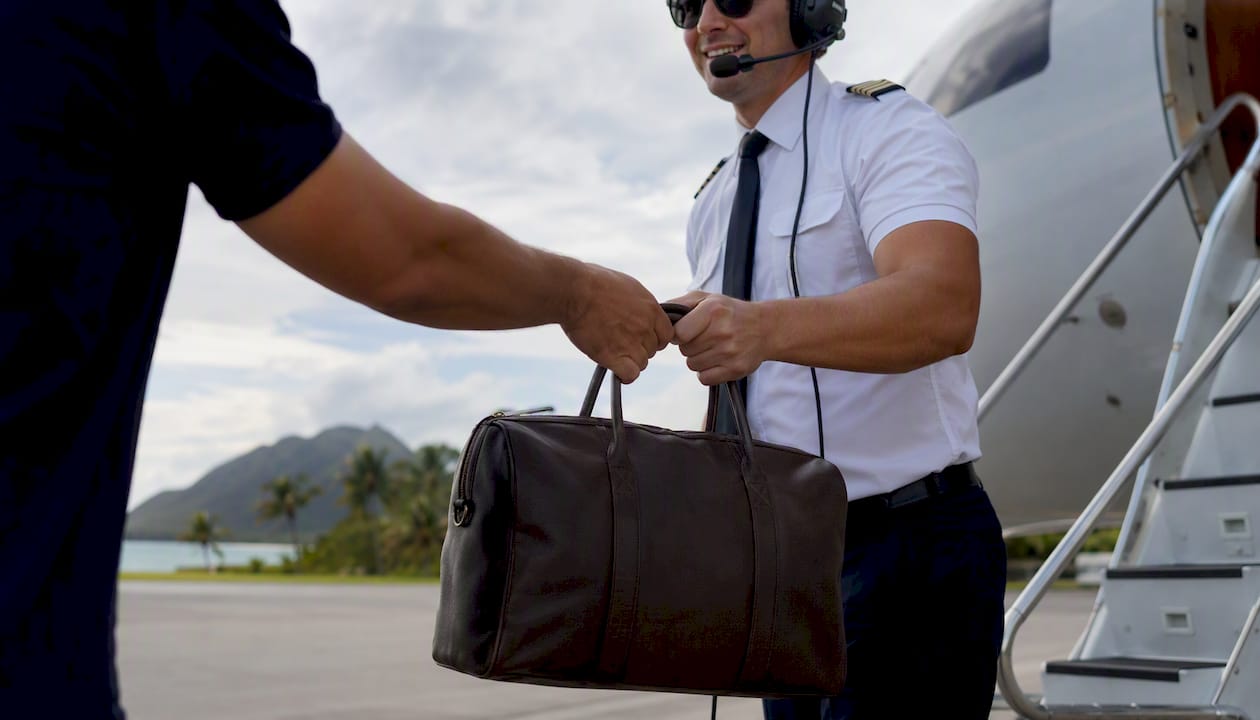
Private travel strips most of that away. You arrive at the FBO roughly 15 to 20 minutes before departure, according to Jettly’s breakdown of typical private terminal timing, compared to the two hours commercial travelers are told to budget. There’s no connection, because your route is direct by design.
Take two real-world comparisons. A New York to La Romana trip on a commercial itinerary often includes a connection through Miami or Santo Domingo, turning what should be a three-and-a-half-hour flight into a six-to-eight-hour day once you count layover and transfer time. Flying direct on a private jet, and landing at a field close to the resort corridor instead of the main international terminal, can realistically save three to four hours door-to-door. A London to the Balearics run shows a similar pattern: commercial flights into Palma often mean a longer taxi or ferry connection to reach smaller islands like Formentera, while a private flight can land closer to the final stop and cut an hour or more off ground transfer alone.
Those savings compound in ways people underestimate:
- Same-day round trips become realistic instead of exhausting.
- You avoid unnecessary overnight stays near a connecting hub.
- Weather delays and missed connections stop being a personal itinerary risk.
The WingX data cited by Business Insider suggests this time-value calculation, not status, is now the primary driver behind rising private flight volume. People aren’t buying speed for its own sake. They’re buying back hours they’d otherwise lose to terminals and connections, and route flexibility is a big part of how that happens.
Access to Smaller Airports Closer to Your Island Destination
Commercial airlines fly into a short list of major hubs. Private aviation uses a network that’s an order of magnitude larger, and that difference is what actually shortens an island trip. Jettly estimates private aircraft can access several thousand airports in the U.S. compared to a few hundred served by commercial carriers, and that gap is even more pronounced once you look at island regions where only one or two airports handle scheduled service.
The Dominican Republic is a clear example. Mighty Travels documented a notable increase in private-jet movements at Punta Cana between 2023 and 2025, with a growing share of that traffic routing to smaller fields like La Romana and Samaná instead of the main international terminal. Landing at La Romana instead of Punta Cana’s commercial terminal can cut ground transfer time to nearby villa communities by close to an hour, since you skip the congested main airport corridor entirely.
Aircraft choice matters here. Light jets and turboprops are the workhorses for these shorter, less-developed runways, since they don’t need the length or weight capacity a midsize or heavy jet requires. That’s part of why experienced operators build fleets around aircraft suited to short island hops rather than assuming one plane fits every leg.
FBOs add another layer of advantage:
- Dedicated ramps mean no taxiing behind commercial traffic.
- Customs and immigration processing tends to move faster through private terminals.
- Arrivals are quieter and less chaotic, especially during peak season.
Pro Tip: Before booking a lesser-known island airfield, ask the operator directly about the destination FBO’s ground handling capacity and customs hours. Some smaller fields close their customs desk earlier in the evening than you’d expect.
Building Flexible Multi-Leg Island-Hopping Itineraries
Commercial schedules force you into whatever routing a hub-and-spoke network dictates. Private charter flips that: you build the route, not the airline. That’s the real value behind island hopping private jet trips, since a chartered aircraft can hit three islands in a day where a commercial itinerary would take three separate days with layovers between each.

A sample three-leg loop might look like this: depart from a primary hub on a light jet to the first island, spend the morning there, take a short turboprop hop to a second island for lunch and an afternoon activity, then a final light jet leg back to the mainland by evening. Each leg might run 45 minutes to just over an hour in the air, with turnaround times at each stop kept tight because there’s no gate assignment to wait on.
The levers that make this work:
- On-demand departure times mean you leave when the group is ready, not on a fixed schedule.
- Rapid turnarounds between legs, often under an hour, are standard when ground handling is arranged ahead of time.
- Empty-leg availability and membership access, as Jettly notes, can lower the marginal cost of adding an extra stop to an existing itinerary.
International hops between islands add a paperwork layer. Confirm pre-clearance options, passport requirements, and any cargo restrictions with the operator before departure. Some islands lack a runway entirely and require a helicopter or boat connection for the final leg, according to Bookajet’s guide to island-hopping logistics, so confirm the full route before assuming a jet gets you door to door.
Privacy, Comfort, and Getting Work Done in the Air
Island trips often mix business with leisure, and that’s exactly where a private cabin earns its keep. A property viewing, a sensitive negotiation, or a family conversation you don’t want overheard all become possible mid-flight instead of waiting until you land.
Productivity gains follow the same logic. Onboard Wi-Fi turns a 90-minute hop into usable work time rather than dead air, and cabin layouts on midsize and larger jets can double as an informal meeting space for a small group. That’s transit time you’d otherwise lose entirely on a commercial flight.
Comfort extends past the seat. Private travel handles the logistics that commercial baggage systems struggle with:
- Pets travel in the cabin instead of cargo hold.
- Golf clubs, dive gear, and other oversized equipment load without excess fees or damage risk.
- Cabin temperature and humidity controls protect delicate cargo like wine, art, or medical supplies.
Pro Tip: Request the aircraft’s equipment list and Wi-Fi specs before booking if the trip involves work calls or sensitive cargo. Not every light jet has reliable connectivity, and that gap only becomes obvious mid-flight.
When Private Aviation Makes Financial Sense for Island Trips
Cost is the real question behind every private jet island getaway decision, and the honest answer is: it depends on group size, frequency, and how much your time is actually worth. The main cost drivers are aircraft type, flight hours, positioning or empty-leg availability, landing and handling fees, customs costs, and peak-season surcharges that spike around holidays.
Private travel tends to pencil out well in a few specific scenarios:
- A group of four to six splitting one charter, where the per-person cost lands close to premium commercial fares.
- Last-minute itinerary changes that would otherwise mean rebooking fees or a scrapped trip entirely.
- Property owners or repeat visitors who fly to the same island corridor multiple times a season.
- Multi-stop trips where a single charter replaces two or three separate commercial bookings.
Membership and empty-leg strategies change the math further. Jettly’s analysis points to empty-leg access as one of the most practical ways to lower the per-trip cost of frequent island travel, since these are one-way repositioning flights operators need to fill anyway. A single one-off charter for a weekend trip might run several thousand dollars, while an annual membership with unlimited empty-leg access can pay for itself after just a handful of trips for someone who travels to islands regularly throughout the year, particularly for affluent flyers who fly often.
Pro Tip: When comparing costs, factor in ground transfers and lodging. Landing closer to your destination often means skipping a hotel night near a connecting hub, and that savings rarely shows up in a simple charter-versus-flight comparison.
What to Check Before Flying Into a Smaller Island Airstrip
Short runways change which aircraft can fly the route. Light jets and turboprops handle strips that midsize and heavy jets simply can’t, and that constraint drives payload and range trade-offs an operator needs to plan around before departure.
Fuel planning matters more on remote island hops than most travelers assume. Some routes require an en-route technical stop for refueling, particularly on longer Caribbean or Pacific island chains where a direct hop exceeds a smaller aircraft’s range.
Weather is its own variable in island regions. Sea breeze effects and sudden microbursts are common near coastlines, and experienced operators build buffer time into departure windows specifically to account for these local patterns.
Customs and immigration handling at secondary fields varies widely. Some offer full pre-clearance, others process on arrival, and a few close their customs desk earlier than you’d expect during off-peak hours.
Pro Tip: Always get alternate-airport and diversion plans in writing before departure, not as a verbal assurance. If weather closes your primary strip, you want a confirmed backup, not a scramble.
The Structural Bypass Behind Private Aviation’s Island Advantage
Industry observers describe what private aviation does for island access as a kind of structural bypass. It doesn’t just move faster, it routes around the actual bottlenecks: airport selection, fixed schedules, and terminal queues that commercial travel can’t avoid by design.
The FAA’s airport infrastructure makes this possible on the U.S. side, since it maintains far more general aviation fields than commercial carriers ever use. The usage numbers back up that travelers are increasingly choosing this bypass deliberately. WingX data cited by Business Insider put private flights 33.6% above pre-pandemic levels, and Forbes has reported similar growth alongside practical guidance on what travelers should confirm before booking.
The practical takeaway: look for operators who publish small-airport availability and empty-leg calendars in advance. That transparency is usually a sign they’re set up to route around the same bottlenecks commercial travel can’t.
What Repeat Island Travelers Get Wrong About Private Flights
The biggest misconception is that private jet travel is about the plane. It’s about what happens on the ground. A same-day round trip to a family property, landing at a quiet regional strip instead of a congested international terminal, is the kind of thing that sounds unremarkable until you’ve tried doing it commercially.
Three things come up constantly with island clients. Book peak weeks early, since Christmas and spring break windows fill fast even for charter. Confirm ground handling at the destination before departure, not after landing. And choose the aircraft for the runway, not the other way around. A beautiful midsize jet is useless if the strip can’t take it.
None of this is exotic. It’s the same manifest pre-checks and FBO coordination any well-run operation handles as routine.
Making Island Private Travel Actually Affordable
A single one-off charter for a weekend island trip can run into the thousands, which is exactly the math that keeps a lot of affluent travelers flying commercial out of habit rather than preference. Bluebirdjets exists for the traveler who’s done that math and wants a better option than paying full charter rates every time.

The membership works on a simple mechanism: unlimited access to empty-leg flights on operator-owned Learjet 60 aircraft, updated daily, with priority booking and queue features so you’re not competing blind for the best routes. You can bring up to six guests per flight, and if the published inventory doesn’t fit your dates, a custom charter request is available as a paid add-on. For someone flying to the same island corridor multiple times a year, that structure turns private travel from an occasional splurge into a repeatable habit.
Consider membership over a single charter when you fly to islands more than a couple of times a year, when your dates have some flexibility around empty-leg availability, or when bringing a group makes per-person cost the deciding factor. A one-off charter still makes sense for a single trip with fixed, non-negotiable dates.
Check current empty-leg listings to see what’s available on your usual island routes, or review membership details to see how the annual cost compares to what you’re currently spending on charters.
Frequently Asked Questions
Why does island travel favor private jets over commercial flights? Island routes usually force a connection through a distant hub on commercial carriers. Private jets fly direct into smaller fields near the actual destination, cutting hours off total trip time.
How much time can a private jet actually save on an island trip? Depending on the route, three to four hours is realistic once you account for skipped connections, faster boarding, and landing closer to the final destination instead of a main international terminal.
Are private jets safe for landing on small island runways? Light jets and turboprops are specifically suited to shorter strips, and experienced operators plan fuel, weather buffers, and diversion options before every flight to island destinations.
Is a private jet membership worth it for occasional island travelers? It tends to make sense for travelers flying to island destinations multiple times a year, where the marginal cost of empty-leg access beats paying full charter rates on every single trip.
What should I ask an operator before booking an island flight? Confirm the destination FBO’s customs hours, ground handling capacity, and alternate-airport plans in writing, along with which aircraft the runway length actually supports.
Sources
- FAA — U.S. airports
- I Saw Why Jets Are the Ultimate Status Symbol — It’s Not Why You Think - Business Insider
- Private Jets Are More Popular Than Ever. Here’s What To Know Before You Book One. - Forbes
- Exploring the Dominican Republic by Private Plane A New Era for Island Hopping | Mighty Travels
- Benefits of Private Jet: Why More Travelers Choose Private Jets Over Commercial Flights | Jettly Blog