Private Jet Travel Frequency Benefits for Business Pros
Private Jet Travel Frequency Benefits for Business Pros
Private jet travel frequency benefits compound with every additional flight hour, turning what looks like a luxury into a measurable business tool. Frequent travelers who fly private more than 50 hours per year access a different cost structure, a different tax position, and a different level of productivity than occasional users. This article breaks down exactly how flying private more often pays off, from time saved per trip to the 2026 tax provisions that reward aircraft ownership, and which program type fits your annual flight hours.
1. How private jet travel frequency benefits your time above all else
Time is the clearest advantage of flying private, and frequency amplifies it. Private jet travel saves an average of 3.5 hours per round trip by eliminating security lines, early check-in requirements, and baggage claim. That figure adds up fast: at 50 round trips per year, you recover more than 175 hours of productive time.
Commercial travel demands arrival 1.5–3 hours before departure. Private jets require only 15–30 minutes of pre-flight time. That gap alone changes the math on same-day meetings across multiple cities.

Private aviation also opens access to over 5,000 airports versus roughly 500 commercial hubs. That wider network means you land closer to your actual destination, cutting ground transit time significantly. A trip from Manhattan to the Hamptons, for example, becomes a 45-minute flight to East Hampton Airport instead of a 2-hour drive.
Pro Tip: Book early morning departures on private jets to reach a second city before lunch. Commercial travelers on the same route will still be clearing security when you land.
2. Cost per hour drops sharply as your annual flight hours increase
The economics of private aviation reward frequency directly. All-in cost per hour runs approximately $14,000–$19,000 at 100 hours per year, and falls to $7,000–$9,000 at 400 hours per year. That reduction reflects fixed costs spread across more flights and access to more efficient ownership structures.
Three main tiers define the cost structure:
- Below 50 hours per year: Jet cards offer the best balance of cost and flexibility with zero capital outlay.
- 50–200 hours per year: Fractional ownership delivers more predictable availability and better per-hour economics.
- Above 200 hours per year: Full ownership becomes the most cost-efficient model, though it carries the highest upfront commitment.
Jet card programs lose their financial edge above 75–100 annual flight hours. At that point, fractional ownership offers a better blend of reliability and cost savings. Understanding your actual annual hours is the single most important input when choosing a program.
Pro Tip: Track your commercial and private flight hours for 12 months before committing to a program. Most professionals underestimate how quickly hours accumulate once they start flying private regularly.
3. What are the business tax benefits of frequent private jet travel in 2026?
The 2026 tax environment rewards aircraft ownership more than any year in recent memory. Under the One Big Beautiful Bill Act, businesses can claim 100% bonus depreciation on qualifying aircraft placed in service after January 20, 2025. That means the full purchase price of a qualifying aircraft can offset taxable income in the year of acquisition.
Section 179 deductions are capped at approximately $2.5 million for 2026. The aircraft must meet the Qualified Business Use test, meaning more than 50% of flights must serve a legitimate business purpose. Documentation is not optional here. The IRS uses automated flight data audits, and any gap in records creates exposure.
Rigorous contemporaneous documentation is the foundation of any private aviation tax strategy. Flight logs must include the business purpose, passenger names, departure and arrival times, and destinations for every flight. Without this, depreciation recapture claims and disallowed deductions become real risks.
Key rules to follow:
- Personal use by the aircraft owner is generally non-deductible.
- Employee personal use must be reported as taxable fringe benefit income, calculated using SIFL (Standard Industry Fare Level) rates.
- Aircraft must be fully placed in service, not just under contract, by December 31 to qualify for 2026 bonus depreciation.
- Pre-purchase inspections take 2–8 weeks, so procurement must begin months before year-end.
Pro Tip: Work with a tax advisor who specializes in private aviation. General business tax counsel often misses aircraft-specific rules around depreciation recapture and SIFL calculations.
4. How frequent flying multiplies business productivity
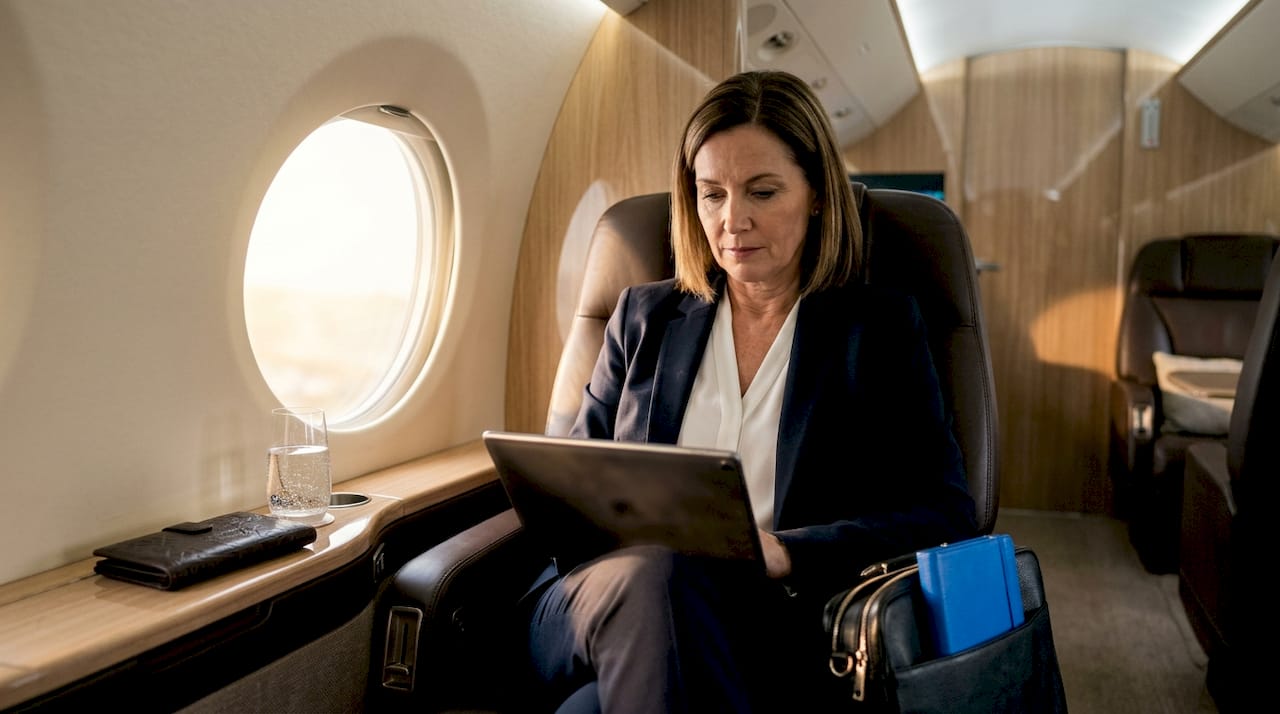
The private cabin is a working environment that commercial travel cannot replicate. Confidential board meetings and complex multi-city itineraries become routine when your aircraft is your office. A deal team can review sensitive documents, hold a live negotiation call, and land ready to sign, all within a single flight.
Frequent private flyers describe this as “strategic multiplication.” Three-day commercial itineraries compress into single-day trips. A professional who flies private can visit clients in Chicago, Dallas, and Atlanta in one day. The same trip by commercial airline requires two nights and three days.
Reduced fatigue is a real productivity factor, not a soft benefit. Arriving rested and on schedule consistently improves decision-making quality. Business professionals who fly private regularly report that the absence of delays, middle seats, and crowded terminals changes how they show up to meetings.
Multi-city routing is one of the most underused advantages of private aviation. You can design an itinerary that no commercial airline would ever offer, with stops timed to your schedule rather than a carrier’s hub connections.
Pro Tip: Use flight time for calls that require privacy. Attorney-client conversations, board briefings, and investor discussions are all appropriate for the private cabin in ways they never are in a commercial first-class seat.
5. Which program fits your travel frequency?
Choosing the right private aviation program is a direct function of how many hours you fly per year. The wrong program costs more money and delivers less reliability.
Jet cards work best below 50 hours per year. They require no capital commitment, offer instant booking, and provide fixed hourly rates. The trade-off is a higher per-hour cost and limited availability during peak periods.
Fractional ownership suits the 50–200 hour range. You purchase a share of a specific aircraft and gain guaranteed availability within a defined notice window. Fractional programs offer more predictable availability and service consistency than jet cards above 100 hours. The commitment is typically a multi-year contract with a capital outlay.
Full ownership becomes the most cost-efficient model above approximately 200 hours per year. You control the aircraft entirely, which also gives you the strongest position for tax deductions under the Qualified Business Use rules. The upside on depreciation is highest here. The downside is management cost, crew costs, and maintenance responsibility.
Program choice also affects your tax treatment. Full ownership and fractional ownership both support private aviation tax deductions more directly than jet cards, since you hold an ownership interest in the aircraft. Jet card users typically cannot claim depreciation at all.
Pro Tip: Review your program annually. Travel patterns shift, and moving from a jet card to a fractional share at the right time can save tens of thousands of dollars per year.
6. How booking practices shape the value of frequent private flying
The way you book private flights determines how much value you extract from each trip. Private aviation booking best practices include confirming aircraft type, verifying operator certificates, and locking in routing flexibility before departure. These steps matter more as your frequency increases, because small inefficiencies compound across dozens of annual flights.
Empty leg flights represent one of the highest-value opportunities for frequent travelers. An empty leg is a repositioning flight that an operator needs to complete anyway. Bluebirdjets members get unlimited access to empty legs on the platform, which means frequent flyers can fill gaps in their schedule at a fraction of standard charter rates.
The key is flexibility. Empty legs have fixed routes and departure windows, so they reward travelers who can adjust timing to match availability. For professionals with variable schedules, this model delivers private jet access at a cost structure that changes the entire calculation.
Key Takeaways
Frequent private jet travel delivers compounding advantages in time, cost, and tax efficiency that occasional users never access.
| Point | Details |
|---|---|
| Time savings scale with frequency | Flying private saves an average of 3.5 hours per round trip, adding up to 175+ hours annually at 50 trips. |
| Cost drops with more hours | Per-hour costs fall from $14,000–$19,000 at 100 hours to $7,000–$9,000 at 400 hours annually. |
| Tax benefits require documentation | 100% bonus depreciation is available in 2026, but only with rigorous flight logs and qualified business use above 50%. |
| Program choice depends on annual hours | Jet cards suit under 50 hours; fractional ownership fits 50–200 hours; full ownership pays off above 200 hours. |
| Empty legs maximize value | Bluebirdjets members access unlimited empty legs, giving frequent travelers private jet options at reduced cost. |
Why frequency is the variable most travelers overlook
Most people evaluating private aviation focus on the per-flight cost. That is the wrong frame. The real question is what your annual hours look like, because that number determines your program, your tax position, and your actual cost per hour.
I have seen professionals commit to jet cards at 80 hours per year and pay a significant premium they did not need to. The math on fractional ownership at that usage level is straightforward, but the capital commitment feels uncomfortable. That discomfort costs real money over a three-year period.
The tax angle in 2026 is genuinely significant for business owners. The 100% bonus depreciation provision under the One Big Beautiful Bill Act is not a loophole. It is a deliberate policy choice, and it rewards business owners who document their use correctly. The professionals who miss it are usually the ones who waited too long to start the procurement process or did not keep adequate flight logs.
My honest advice: treat private aviation as a capital allocation decision, not a travel preference. Run the hours, model the tax impact, and pick the program that fits the math. The lifestyle benefit is real, but the business case stands on its own when the numbers are right.
— Nick
Bluebirdjets: private jet access built for frequent flyers
Frequent travelers who want private jet access without a long-term capital commitment have a direct path through Bluebirdjets. The Bluebirdjets membership gives you unlimited access to empty legs on the platform, which means you fly private at repositioning rates whenever your schedule aligns with available routes.
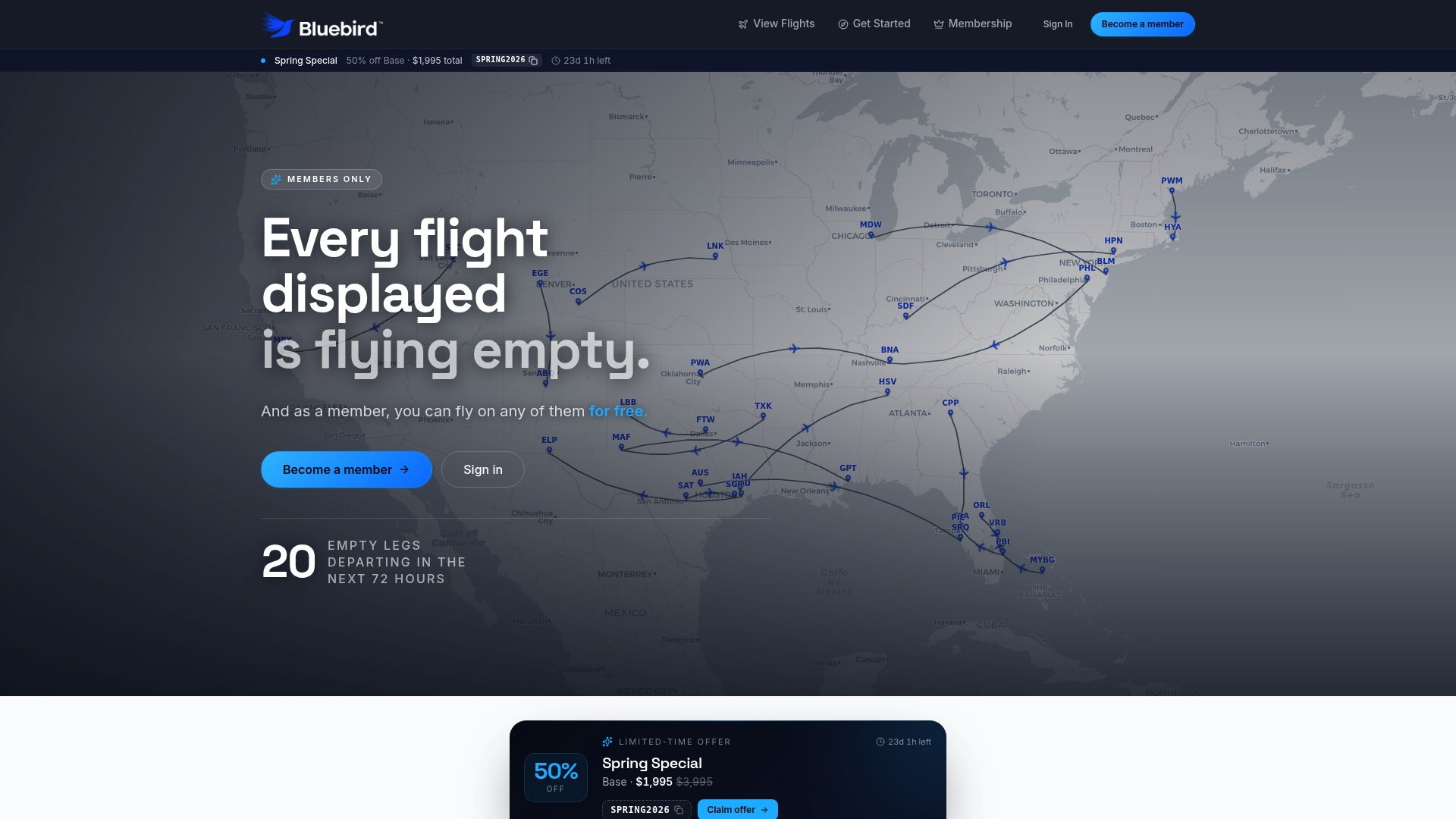
For trips that require a specific route or departure time, on-demand charter covers the gaps. Bluebirdjets members combine both options to build a private aviation routine that fits their actual travel patterns. Whether you fly 20 hours a year or 120, the platform gives you the tools to fly smarter without locking capital into an aircraft you may not need year-round.
FAQ
How much time does private jet travel save per trip?
Private jet travel saves an average of 3.5 hours per round trip by eliminating security lines and reducing pre-flight arrival to 15–30 minutes. Access to over 5,000 airports also cuts ground transit time significantly.
What are the tax benefits of private jet travel in 2026?
Qualifying aircraft placed in service in 2026 are eligible for 100% bonus depreciation under the One Big Beautiful Bill Act, provided the aircraft meets the Qualified Business Use test of more than 50% business flights. Section 179 deductions are capped at approximately $2.5 million.
How many hours per year justify fractional ownership?
Fractional ownership becomes more cost-efficient than jet cards above 50–75 annual flight hours. It suits travelers flying 50–200 hours per year, offering better availability and lower per-hour costs than jet card programs at that usage level.
What documentation does the IRS require for private jet deductions?
The IRS requires contemporaneous flight logs that include the business purpose, passenger names, departure and arrival times, and destinations for every flight. Personal use by owners is non-deductible, and employee personal use must be reported as taxable fringe benefit income using SIFL rates.
When does full aircraft ownership make financial sense?
Full ownership delivers the best per-hour economics above approximately 200 annual flight hours. At that level, fixed costs spread across enough flights to make ownership more cost-efficient than fractional or jet card programs.