What Does FBO Mean in Aviation? A Traveler's Guide

What Does FBO Mean in Aviation? A Traveler’s Guide
FBO stands for Fixed-Base Operator, a commercial business that operates at an airport under an agreement with the airport authority to provide fueling, parking, maintenance, and passenger services for general aviation. Think of it as the private terminal side of the airport, separate from the commercial gates.
That distinction matters the moment you fly private for the first time. Skip the security lines and the crowded concourse. Instead, you pull up to a small building near the ramp where your aircraft is already waiting.
A few groups depend on FBOs every day:
- Private pilots and aircraft owners who need fuel, hangar space, or a place to file a flight plan
- Charter passengers and corporate flight departments coordinating ground logistics for a trip
- Business travelers who want privacy and speed instead of a commercial terminal experience
Key Takeaways
An FBO is a privately leased airport business, not a government facility, and its fees, amenities, and even ramp access vary from field to field with no federal standard tying them together.
| Point | Details |
|---|---|
| Core definition | FBO stands for Fixed-Base Operator, a private business leasing airport space to provide fuel, hangar, and passenger services. |
| No federal price standard | The FAA defines FBO activities but leaves pricing and service levels to each operator’s lease terms. |
| Same airport, different FBOs | Ramp space, ground vehicles, and customs capability can differ sharply between FBOs at one field. |
| Fees are itemized separately | Expect ramp, handling, hangar, and fuel uplift charges billed as distinct line items. |
| Ask before you book | Confirm fuel pricing, customs availability, and operating hours directly with the FBO. |
Booking flexibility matters just as much as picking the right FBO. Members exploring current empty-leg inventory through Bluebirdjets can see how last-minute routing and FBO coordination come together on an actual flight.
Table of Contents
- What Does FBO Mean for Passengers? Services You’ll Actually Use
- Fueling, Hangar, and Maintenance: The Aircraft Side of an FBO
- Who Actually Uses FBOs, and Why It Matters to You
- How to Use an FBO: A Step-by-Step Walkthrough
- Who Regulates FBOs? The FAA’s Role and Its Limits
- What Fees Show Up on an FBO Invoice
- How to Choose the Right FBO for Your Trip
- Where the Term “FBO” Came From
- FBO vs. Airline Terminal: What’s Actually Different
- What Members Should Know Before Landing at an Unfamiliar FBO
- Sources
What Does FBO Mean for Passengers? Services You’ll Actually Use
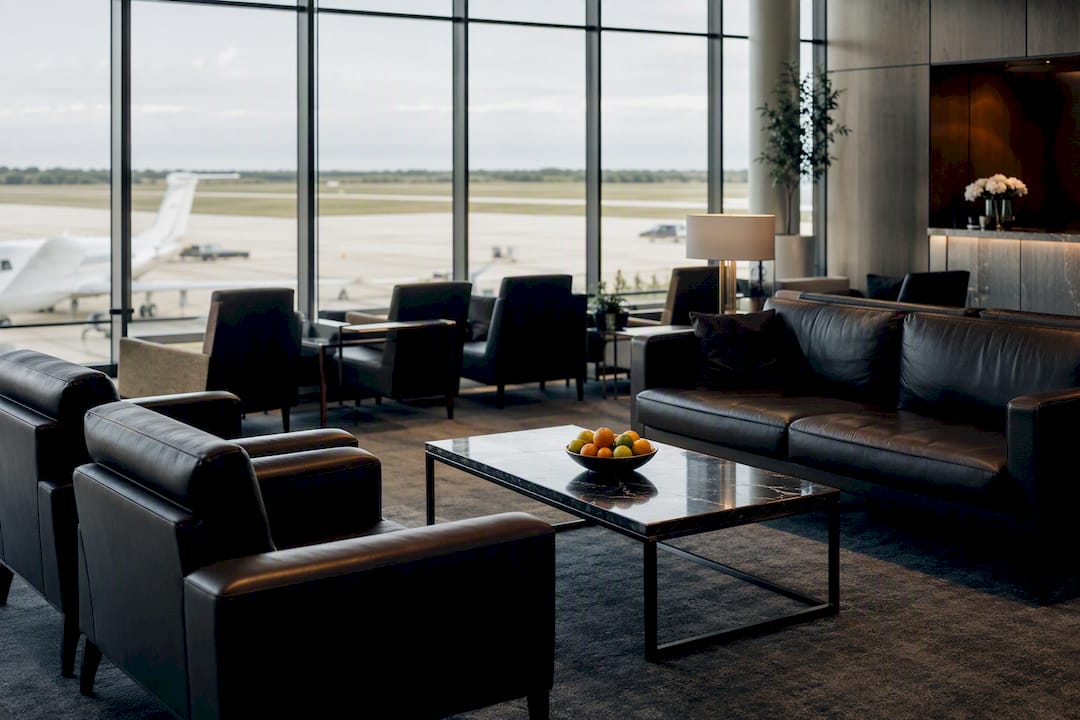
The FBO is where the private-flying experience actually happens for you as a passenger. Walk in, and you’ll typically find a lounge with coffee and Wi-Fi, a conference room if you need to take a call before boarding, and a front desk staffer who can arrange a rental car or a catering order with a phone call.
Common passenger-facing amenities include:
- Private lounges with workspaces and refreshments
- Meeting rooms for pre-flight calls or briefings
- Concierge services (car rentals, hotel bookings, dining reservations)
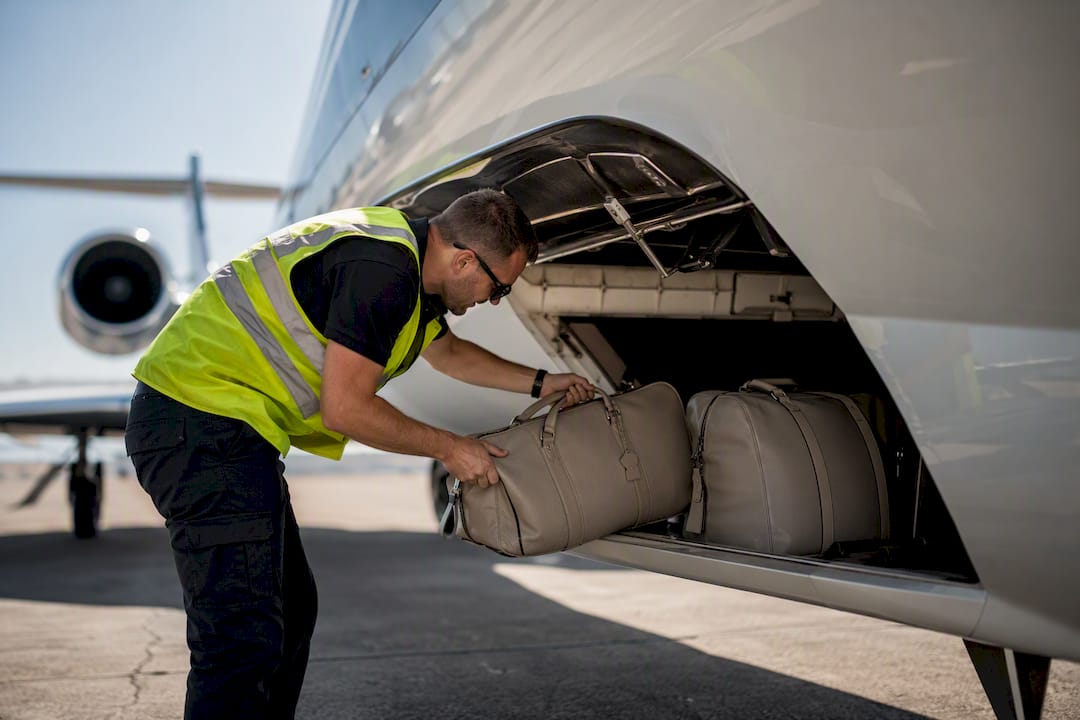
- Baggage handling directly to and from the aircraft
Customs and immigration processing works differently through an FBO than at a commercial terminal. Some FBOs at international gateway airports have on-site U.S. Customs and Border Protection facilities, letting arriving passengers clear customs privately rather than joining a general terminal queue. Not every FBO offers this, so confirm availability before booking an international leg.
Service quality varies more than first-timers expect. A basic FBO at a small regional airport might amount to a single front desk and a coffee pot. A luxury FBO at a major business-aviation hub can look more like a boutique hotel lobby, complete with shower suites and a dedicated crew lounge. Chantilly Air notes that the core appeal across both tiers is the same: privacy and shorter waiting times compared to commercial terminals.
Pro Tip: If you’re flying into an unfamiliar airport, call the FBO directly a day ahead and ask what’s actually on-site that day. Amenities listed online sometimes don’t reflect current staffing or hours.
Fueling, Hangar, and Maintenance: The Aircraft Side of an FBO
Passengers see the lounge. Pilots and ground crews see the ramp, and that’s where most of an FBO’s real work happens.
Fueling is the biggest line item most FBOs handle. They stock Jet A for turbine aircraft and 100LL avgas for piston aircraft, and many operate under contract fuel programs that let operators lock in pricing across a network of locations rather than paying rack rate at every stop.
Beyond fuel, an FBO typically offers:
- Hangar space for based aircraft and overnight tie-down for transient traffic
- Line maintenance covering routine inspections, tire changes, and minor squawks
- Weather briefing rooms and flight planning terminals for pilots
- Crew rest areas, since duty-time rules mean pilots sometimes need a quiet place between legs
The scope of maintenance stops at “line” service for a reason. Heavier work like engine overhauls or major airframe repairs usually goes to a dedicated maintenance, repair, and overhaul (MRO) shop, which may or may not share a ramp with the FBO.
Who Actually Uses FBOs, and Why It Matters to You
FBOs exist because different types of flyers all need the same basic ground infrastructure, just for different reasons.
- General aviation pilots and private owners rely on FBOs for fuel, hangar storage, and routine maintenance between flights, often at the same home-base FBO for years.
- Charter operators and corporate flight departments coordinate directly with an FBO’s ground staff to arrange fueling, catering, and crew logistics before a trip ever leaves the ground.
- Business travelers and private flyers choose FBOs mainly for the privacy and speed, avoiding the security theater and gate changes of a commercial terminal.
- Flight operators and dispatchers schedule ramp access and ground handling in advance, since NATA notes that FBOs at the same airport can differ sharply in ramp space and ground vehicle availability.
That last point is easy to overlook. Two FBOs sitting a few hundred yards apart on the same airport can offer wildly different capabilities, which is exactly why operators specify which one they’re using rather than just naming the airport.
How to Use an FBO: A Step-by-Step Walkthrough
Using an FBO for the first time feels unfamiliar mostly because nobody explains the sequence. Here’s the practical version.
- Before the flight, confirm the FBO your operator plans to use, submit passenger names for the manifest, and flag any special requests (ground transport, dietary needs, extra bags).
- On arrival at the departure airport, park in the FBO’s dedicated lot, walk into the lounge, and check in with the front desk. There’s no security line to join.
- While you wait, your bags go straight to the aircraft, and the crew handles fueling and preflight checks on the ramp.
- At your destination, the process reverses: a ground vehicle or the FBO staff meets you at the aircraft door, and your rental car or driver is typically already waiting if you arranged it ahead.
- Before departing again, settle any fees directly with the FBO if your operator doesn’t handle billing centrally.
A few etiquette notes worth knowing: arrive on schedule since ramp slots and crew duty times are tightly planned, tip ground staff for exceptional service the way you would a hotel concierge, and keep in mind that FBO lounges are shared spaces, so a little discretion about business calls goes a long way. First-timers can find a fuller etiquette breakdown in Bluebirdjets’ private jet etiquette guide.
Pro Tip: Ask your operator for the FBO’s direct phone number, not just the general airport info line. When plans shift last minute, that one call saves twenty minutes of confusion.
Who Regulates FBOs? The FAA’s Role and Its Limits
The FAA defines what an FBO does but doesn’t run the businesses themselves. Federal guidance describes an FBO as a commercial entity offering aeronautical services such as fueling, maintenance, storage, and flight instruction, per FAA guidance, but the same guidance is clear that no single federal standard governs every FBO’s operations or pricing.
That gap gets filled by lease agreements. FBOs are private businesses that lease ramp space and buildings from the airport authority, and that landlord-tenant arrangement, confirmed by Wikipedia’s overview of the fixed-base operator model, is why:
- Fees vary widely from one airport to the next
- Service hours and amenities depend on the individual operator’s lease terms
- Two FBOs at the same field can set completely different pricing
NATA counts nearly 3,000 FBO locations across the United States, each operating under its own local contract rather than a uniform national rulebook.
What Fees Show Up on an FBO Invoice
FBO pricing surprises a lot of first-time private flyers because it’s itemized in ways commercial travel never is.
Typical charges include:
- Ramp or parking fees, charged for the time an aircraft sits on the FBO’s property
- Handling fees, covering ground crew coordination, marshaling, and passenger assistance
- Hangar fees, for overnight or longer-term indoor storage
- Fuel uplift charges, priced per gallon and often the largest single cost
- Passenger handling fees, sometimes bundled with concierge services
Price swings with airport size, local competition, and service tier. A busy business-aviation hub with three competing FBOs usually prices more aggressively than a single-FBO regional field. Ask for a written fuel quote and a bundled handling estimate before committing. Many operators will waive ramp fees entirely with a minimum fuel purchase, so it’s worth asking.
How to Choose the Right FBO for Your Trip
Picking an FBO isn’t just about which one shows up first in a search. A short checklist keeps you from a bad surprise on the ramp.
Must-have capabilities to confirm:
- Fuel type availability and current pricing
- Customs and immigration processing, if the trip is international
- On-site or nearby maintenance support for minor issues
Before booking, ask directly:
- What are your current ramp and handling fees, and are they bundled?
- Do you have ground transportation or rental car partners on-site?
- What are your operating hours, and is staff available for early or late arrivals?
Red flags worth checking twice include vague answers about fuel pricing, no clear point of contact for scheduling, and no verifiable safety or service accreditation. NATA membership is a reasonable signal of an FBO’s standing in the industry, since NATA represents established general aviation service providers and holds members to industry norms.
Where the Term “FBO” Came From
The phrase has been around longer than most people assume. It traces back to the years following the Air Commerce Act of 1926, when the federal government first began regulating civil aviation in the United States. Airports at the time hosted a mix of permanent businesses and itinerant operators who flew in, sold rides or lessons for a few days, then moved on.
Airport authorities needed a way to distinguish the two. A business that leased space, built a hangar, and committed to staying put earned the label “fixed base,” separating it from the traveling barnstormers and part-time flight instructors passing through. Wikipedia’s history of the fixed-base operator ties the term directly to this regulatory sorting process.
As general aviation grew through the mid-twentieth century, FBOs expanded well beyond simple fuel sales. Flight schools, aircraft sales, charter operations, and maintenance shops all folded under the same fixed-base model, since a single leased facility could reasonably support all of it. By the time business jets became common in the 1960s and 1970s, FBOs had already evolved into the multi-service operations recognizable today, adding passenger lounges and ground handling to keep pace with a wealthier, faster-moving clientele.
The name stuck even as the business model kept changing. Modern FBOs now compete on amenities and speed of service as much as fuel price, a shift that would have been unrecognizable to the small hangar operators the term was originally coined to describe.
FBO vs. Airline Terminal: What’s Actually Different
Confusing an FBO with an airline terminal is an easy first-timer mistake, but the two operate on completely different models.
An airline terminal is built and typically operated or leased by the airport authority itself, serving scheduled commercial flights with fixed gates, centralized security screening, and standardized boarding procedures across every airline that uses it. Passengers have no choice in which terminal facility handles their departure. It’s whichever gate the airline assigns.
An FBO is a separate leased business on the same airport property, usually on the general aviation side of the field, and it serves aircraft rather than routes. There’s often more than one FBO at a single airport, and a charter operator or private owner picks which one to use based on service quality, fuel pricing, or ramp space, not based on a fixed assignment. Flying Magazine’s explainer compares this setup to a highway service plaza: it exists to keep vehicles fueled and moving, not to manage scheduled routes the way an airline terminal does.
The other distinction worth knowing: an airline terminal only exists where scheduled service does. FBOs operate at thousands of general aviation airports that never see a single commercial flight, which is exactly why private and charter flying can reach small regional fields that airlines never touch.
What Members Should Know Before Landing at an Unfamiliar FBO
Coordinating an empty-leg flight through Bluebirdjets usually means confirming which FBO the operator plans to use once a route firms up, since the aircraft’s home base and the departure FBO aren’t always the same. Members manifest passengers early and flag guest counts, since the flexibility to bring up to six guests only works smoothly when ground staff know headcount ahead of arrival.
The most common friction point is timing. Empty-leg schedules shift, and the FBOs that communicate fastest tend to make the biggest difference in how smooth the day feels.
— Nick