Off-the-Beaten-Path Flying: What Adventurers Need to Know
Off-the-Beaten-Path Flying: What Adventurers Need to Know
Off-the-beaten-path flying is the use of specialized aircraft, unconventional routes, and niche aviation techniques to reach destinations that commercial airlines cannot or will not serve. It covers everything from bush planes landing on wilderness gravel strips to long-haul jets crossing the Arctic to avoid closed airspace. For adventurous travelers aged 25–45, this form of travel delivers something no crowded airport terminal ever will: genuine access to places most people will never see from the air.
What is off-the-beaten-path flying, exactly?
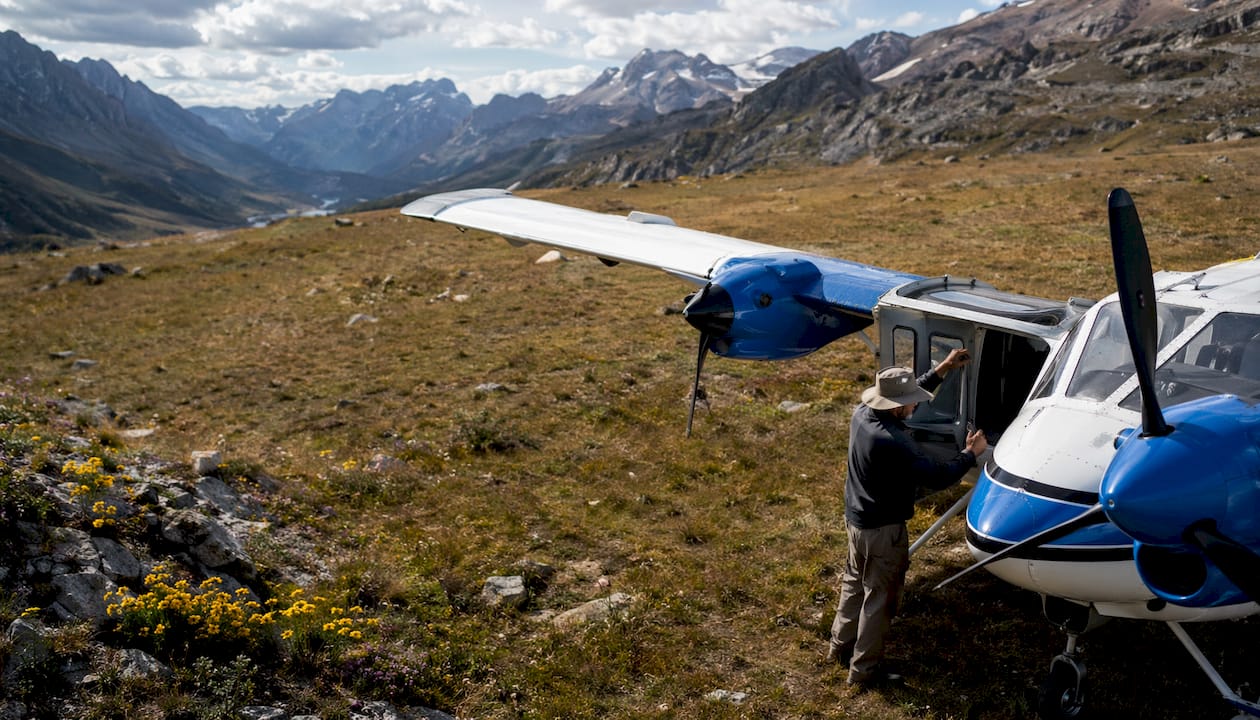
Off-the-beaten-path flying is defined as any flight that departs from standard commercial routing or uses specialized aircraft to access remote, rarely visited, or operationally complex locations. The industry term that covers the most extreme version of this is backcountry flying, also called bush flying. It uses short takeoff and landing (STOL) aircraft to reach wilderness strips, lakebeds, and beaches that no paved runway connects to the outside world.
The de Havilland DHC-6 Twin Otter is the aircraft most associated with this category. It operates in places like Idaho’s Frank Church Wilderness, where backcountry STOL aircraft land on unpaved strips that are invisible on most maps. That kind of access is the defining feature of offbeat flying. It is not about luxury or speed. It is about going where no road leads.
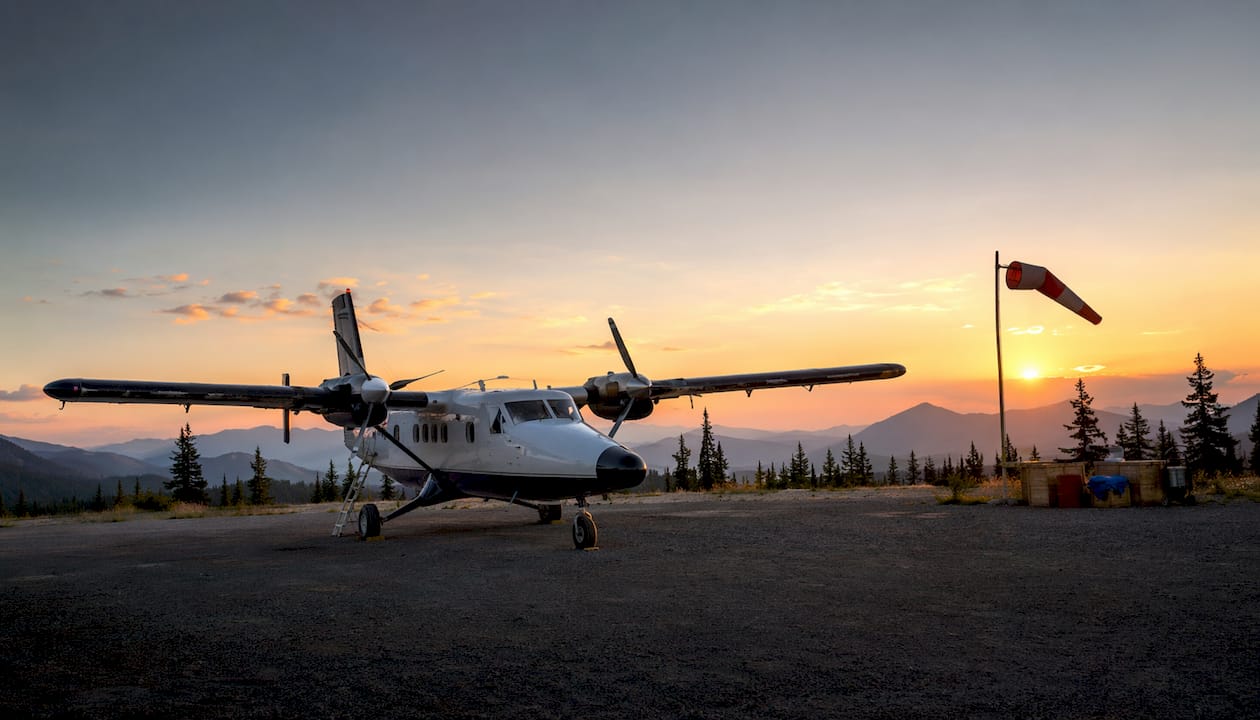
Unconventional commercial flight routes form a second category. These are scheduled airline flights that take geographically longer paths for reasons of fuel efficiency, safety, or airspace politics. Both categories share one trait: the route chosen is not the obvious one.
What types of offbeat flying exist?
Bush and backcountry flying
Bush flying is the most visceral form of adventure flying. Pilots use STOL-capable aircraft to land on surfaces that range from gravel bars to frozen lakes. The destinations are places like wilderness fishing lodges in Alaska, remote safari camps in Botswana, or island resorts in the Pacific that have no ferry service. Passengers board a small prop plane, often with six seats or fewer, and arrive somewhere that feels genuinely off the grid.
Scenic flights from small airfields offer a more accessible entry point. These flights typically last 20 to 60 minutes and serve locations like Tangier Island in the Chesapeake Bay or Mackinac Island in Michigan, neither of which can be reached by car. They require no pilot license and no special fitness level. They are the easiest way for a traveler to experience what offbeat flying actually feels like.
Unconventional commercial routes
Commercial airlines sometimes fly routes that look wrong on a map. A flight from Sydney to London might arc over the North Pole rather than crossing Asia. About 20% of certain Sydney to London flights now use polar routes to capture favorable jet streams, with flight times reaching up to 21 hours. That is longer in distance but often shorter in fuel burn and elapsed time.
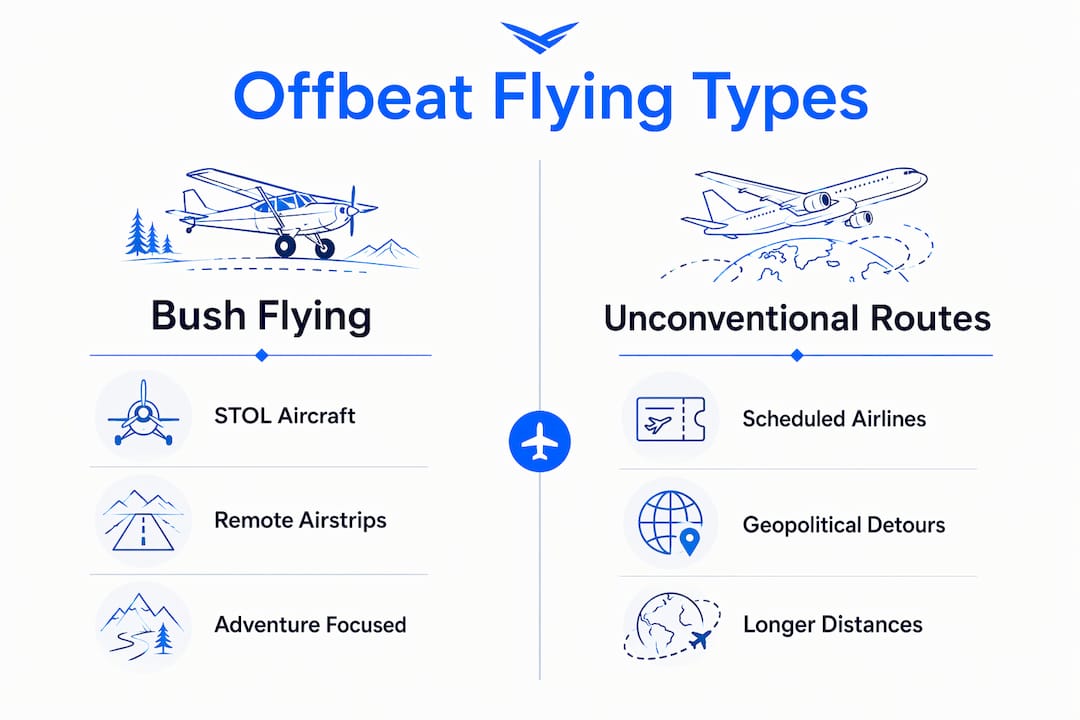
Geopolitical airspace closures push airlines onto equally unusual paths. When certain countries close their airspace, airlines reroute over oceans or polar regions, adding hours to flights that once took direct paths. Jet streams, weather, and airspace restrictions cause airlines to choose longer but more efficient or safer routes on a daily basis.
| Type | Aircraft used | Typical destination | Who it suits |
|---|---|---|---|
| Bush/backcountry flying | STOL props, floatplanes | Wilderness strips, remote islands | Pilots and adventure travelers |
| Scenic airfield flights | Small single or twin props | Car-free islands, coastal areas | First-time offbeat flyers |
| Private charter to remote areas | Turboprops, light jets | Secluded resorts, niche airports | Travelers seeking flexibility |
| Unconventional commercial routes | Wide-body jets | Polar crossings, geopolitical detours | Frequent long-haul flyers |
How do pilots and travelers experience these flights?
What pilots must know
Backcountry flying demands rigorous specialized training that goes well beyond a standard private pilot certificate. Pilots learn to manage density altitude, which is the effective altitude the aircraft “feels” in hot or high conditions and which directly reduces engine power and lift. They also learn to read terrain, assess wind direction from grass movement or water ripples, and make go or no-go decisions without a control tower telling them what to do.
Before landing on any backcountry strip, pilots perform a low-speed flyby to inspect the surface for rocks, ruts, animals, or soft ground. Runway conditions in backcountry flying are variable and unpredictable. Charts may show a strip exists, but only the flyby confirms whether it is usable that day. This is disciplined, methodical work, not the reckless adventure that movies suggest.
The “destination unknown” philosophy extends this discipline into route planning. Pilots select several suitable landing sites and adjust plans based on real-time weather, blending genuine freedom with hard safety limits. That adaptability is a skill that takes years to develop.
What travelers experience
For passengers, the experience is unlike anything a commercial terminal delivers. St. Barts Airport in the Caribbean requires pilots to clear a hill and touch down on an extremely short runway that ends near a beach road. Flights arrive from nearby hubs using turboprops specifically chosen for their short-field performance. Passengers describe the approach as one of the most memorable moments of any trip.
The practical benefits are real too. Fewer crowds, faster boarding, and direct access to destinations that lack commercial service in 2026 all combine to make offbeat flying genuinely efficient, not just scenic.
Pro Tip: If you are booking a scenic flight from a small airfield, ask the operator about the specific aircraft and route before you pay. A 20-minute flight over open water in a Cessna 172 is a very different experience from a 45-minute mountain tour in a de Havilland Beaver.
Why do commercial airlines choose unconventional routes?
The shortest path between two points on a globe is a great circle route. Airlines rarely fly it exactly. Modern route planning balances atmospheric dynamics, airspace restrictions, and operational costs, producing flight paths that look circuitous on a flat map but are highly efficient in practice.
Three forces drive unconventional commercial routing:
-
Jet streams. High-altitude wind rivers can add or subtract hundreds of miles of effective distance. A westbound transatlantic flight often dips south to avoid headwinds. An eastbound flight climbs north to ride a tailwind. The fuel savings from correct jet stream positioning can exceed the cost of the extra distance flown.
-
Geopolitical airspace closures. When a country closes its airspace, airlines cannot simply fly through it. Routes that once crossed Central Asia now arc over the Arctic or detour south over the Indian Ocean. These closures add hours to flights and force carriers to find new paths that were previously considered impractical.
-
Safety and operational limits. Some airspace carries elevated risk due to conflict zones or inadequate air traffic control infrastructure. Airlines avoid these areas regardless of the distance penalty. The result is a global network of flight paths that looks nothing like a straight-line map.
The polar route example illustrates all three forces at once. Sydney to London via the North Pole avoids congested Asian airspace, captures favorable polar jet streams in northern winter, and sidesteps geopolitical complexity over certain regions. The route flexibility required to execute these decisions is exactly what separates sophisticated aviation operations from simple point-to-point flying.
Where can adventurous travelers find and book these flights?
Finding offbeat flying experiences requires knowing where to look. The mainstream booking platforms do not list backcountry flights or scenic airfield tours. The best sources are local operators, regional aviation associations, and private aviation platforms that specialize in flexible routing.
- Small airfield operators near national parks, coastal areas, and island communities often run scenic tours. Search for FAA-registered Part 135 operators near your destination. These are charter operators held to commercial safety standards.
- Floatplane services in the Pacific Northwest, Alaska, and the Maldives connect remote lodges and islands that have no other air access. Companies in these regions advertise directly through lodge partnerships.
- Private aviation memberships give travelers access to empty leg flights and flexible routing that commercial carriers cannot match. An empty leg is a repositioning flight that would otherwise fly without passengers. These flights frequently serve smaller airports and regional destinations that scheduled airlines skip entirely.
- Remote destination research starts with identifying which airports near your target destination are accessible by small aircraft. The FAA Airport Master Record database lists thousands of public-use airports, many of which serve only general aviation traffic.
Pro Tip: Fuel planning is a real constraint at remote destinations. Ask your operator whether the destination airport has fuel available on site. Remote offbeat destinations often lack fuel services, which means your pilot must plan carefully or stop elsewhere on the way back.
Private aviation booking for offbeat routes works best when you treat flexibility as a feature, not a compromise. The best booking practices for niche aviation travel involve confirming aircraft type, pilot experience, and alternate landing options before departure.
Key Takeaways
Off-the-beaten-path flying is the most direct way to reach destinations that roads and commercial airlines cannot serve, and understanding its types, risks, and booking channels separates travelers who experience it from those who only read about it.
| Point | Details |
|---|---|
| Two core categories exist | Bush/backcountry flying and unconventional commercial routing are distinct but both qualify as offbeat flying. |
| Specialized aircraft matter | STOL aircraft like the de Havilland DHC-6 Twin Otter make remote wilderness and island access physically possible. |
| Pilot training is non-negotiable | Backcountry pilots train specifically for density altitude, surface assessment, and real-time route adaptation. |
| Commercial airlines use offbeat routes too | Jet streams, airspace closures, and safety concerns push airlines onto polar and detour paths regularly. |
| Private memberships open access | Platforms offering empty leg access and flexible routing reach destinations that scheduled carriers skip entirely. |
Why offbeat flying still surprises me after years of watching aviation
I have followed aviation closely for a long time, and the thing that still catches people off guard is how disciplined backcountry flying actually is. The popular image is a cowboy pilot landing on a sandbar by instinct. The reality is a methodical professional who has studied that strip from satellite imagery, flown the approach twice before touching down, and already identified three alternate landing sites in case conditions change.
What offbeat flying delivers that conventional travel cannot is a specific kind of perspective. When you land on a gravel bar in a wilderness area and the engine goes quiet, you are genuinely somewhere. Not somewhere adjacent to somewhere. Not a resort built to simulate remoteness. The actual place. That experience changes how travelers think about distance and access.
The trend I expect to continue through 2026 and beyond is the convergence of private aviation technology and offbeat destination access. Better weather data, lighter aircraft, and more flexible booking platforms are lowering the barriers that once made these flights available only to pilots or the very wealthy. The traveler who books an empty leg to a regional airport and then connects to a floatplane service is assembling a trip that would have required serious expedition planning a decade ago. Now it takes an afternoon of research and a membership.
The one thing I would caution against is treating offbeat flying as a bucket list checkbox. The best version of it is a mindset: go where the infrastructure is thin, trust the professionals who operate there, and pay attention to what you see from the air.
— Nick
Bluebirdjets and the flights worth taking
Travelers who want genuine access to offbeat destinations need more than a search engine. They need a platform built for flexible routing.
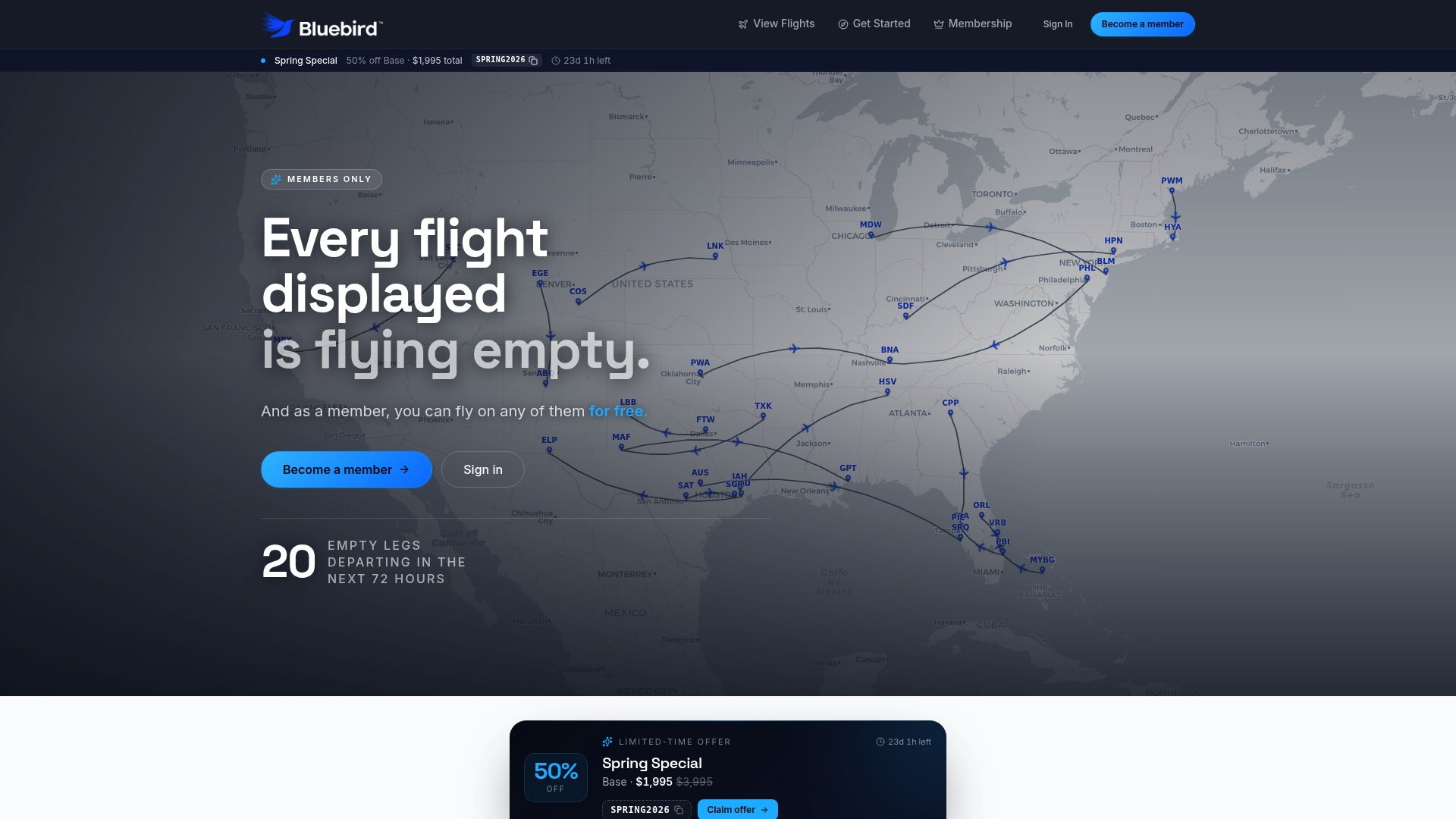
Bluebirdjets offers a membership that gives you unlimited access to empty leg flights on the platform. Empty legs are repositioning flights that frequently serve smaller regional airports, island destinations, and niche routes that scheduled airlines ignore. Instead of waiting for a commercial carrier to add a route, you book the flight that is already going there. The Bluebirdjets membership is built for travelers who treat flexibility as the point, not a fallback. Browse available flights on the platform and see which routes are open right now.
FAQ
What is off-the-beaten-path flying in simple terms?
Off-the-beaten-path flying is any flight that uses specialized aircraft or unconventional routes to reach destinations that standard commercial airlines do not serve. It includes bush flying to wilderness strips and long-haul jets crossing polar regions to avoid closed airspace.
What aircraft are used in backcountry flying?
Backcountry flying relies on STOL-capable aircraft like the de Havilland DHC-6 Twin Otter, which can land on short, unpaved surfaces in remote wilderness areas. Floatplanes are also common for destinations near lakes or coastal waters.
Is off-the-beaten-path flying safe?
Backcountry flying is safe when conducted by properly trained pilots who follow disciplined pre-landing assessment procedures. Pilots perform low-speed flybys to inspect runway conditions and always identify multiple alternate landing sites before departure.
Why do commercial airlines sometimes fly longer routes?
Airlines fly longer routes because jet streams, geopolitical airspace closures, and safety considerations make the shortest geographic path impractical or inefficient. Polar crossings, for example, can reduce fuel burn even when they add distance.
How can travelers book offbeat flying experiences?
Travelers can book offbeat flights through local Part 135 charter operators near national parks or island destinations, floatplane services in Alaska and the Pacific Northwest, and private aviation membership platforms that provide access to empty leg flights on flexible routes.