On-Demand Private Aviation: A Clear Guide for First-Time Flyers

On-Demand Private Aviation: A Clear Guide for First-Time Flyers
On-demand private aviation is a pay-as-you-go charter model that lets you book a whole aircraft for a specific trip with no long-term commitment, no upfront deposit, and no shared cabin. You pay for the flight, you fly, and that’s the end of the transaction. Three things to know right away:
- Flexibility over ownership. You’re not buying a share of a plane or prepaying a large block of hours. Each booking stands alone, which makes on-demand charter the most flexible entry point into private aviation.
- FAA Part 135 oversight. Every legitimate U.S. on-demand charter operation runs under an FAA Part 135 certificate, the regulatory standard covering maintenance, crew qualifications, and operational safety.
- Broad use cases. Short-notice business trips, family travel to airports commercial airlines don’t serve, and urgent repositioning are the most common reasons people book on-demand.
Table of Contents
- How does on-demand charter compare to other private aviation options?
- Who owns and operates the aircraft, and how do you verify safety?
- What types of aircraft are used on on-demand charters?
- What does an on-demand charter flight actually cost?
- What are the pros and cons, and when is on-demand the right call?
- How do jet cards, fractional ownership, and memberships compare?
- What should you expect at the FBO on departure day?
- What questions should you ask before booking?
- How do empty-leg memberships relate to on-demand charter?
- Key Takeaways
- The case for knowing your flight hours before you decide anything
- Bluebirdjets membership: private jet access for spontaneous flyers
- Useful sources and further reading
How does on-demand charter compare to other private aviation options?
Private aviation has four main access models, and where you land depends almost entirely on how often you fly and how predictable your schedule is.
On-demand charter (pay-per-trip) is the starting point for most first-time private flyers. You request a quote, pick an aircraft, and pay for that trip. No deposit, no annual fee, no commitment. The tradeoff is that you’re sourcing a new quote every time, and per-hour rates tend to be higher than prepaid alternatives.
Jet cards require a prepaid deposit, often ranging from $100,000 to over $500,000, in exchange for guaranteed access to a specific aircraft category at a locked-in hourly rate. They suit travelers who fly 25–50 hours per year and want pricing predictability. The commitment is real, though, and unused hours can expire.
Fractional ownership means buying a share of a specific aircraft, typically a one-sixteenth to one-quarter stake. You get guaranteed availability and a consistent cabin, but you’re also on the hook for monthly management fees and your share of maintenance costs. This model makes sense for travelers who fly frequently throughout the year.
Full ownership is the top of the pyramid: maximum control, maximum cost. Acquisition, crew, hangar, maintenance, and insurance add up fast. Most private aviation advisors put the break-even point at a very high annual flight hour threshold.
For a practical side-by-side of all four models, the traveler profiles that fit each one are worth reading before you commit to anything.
On-demand charter tends to attract three types of travelers: people who fly privately infrequently each year, those whose aircraft needs vary by trip (a turboprop for a quick regional hop, a large-cabin jet for a transatlantic run), and anyone who wants to try private aviation without locking up capital. A single business trip to a small regional airport, a family ski weekend to a mountain airstrip, or an urgent same-day repositioning flight are all natural fits.
Who owns and operates the aircraft, and how do you verify safety?
Most on-demand providers operate what’s called an asset-light model: they don’t own every aircraft in their network. Instead, they contract with vetted FAA Part 135 operators who own and maintain the planes. The broker or marketplace arranges the match; the Part 135 operator is legally responsible for the flight.
FAA Part 135 is the regulatory floor for U.S. on-demand charter. It covers:
- Pilot training, recurrency, and minimum flight-hour requirements
- Aircraft maintenance schedules and airworthiness standards
- Operational specifications (routes, weather minimums, crew rest rules)
Part 135 is meaningfully stricter than Part 91, which governs private (non-commercial) operations. A common misconception is that charter means lower safety standards. The opposite is true: Part 135 operators face more frequent FAA oversight than most private owners.
Beyond the FAA baseline, two independent audit programs set the industry’s higher bar. ARG/US and Wyvern both conduct third-party safety audits of charter operators, reviewing maintenance records, pilot qualifications, incident history, and operational procedures. An operator with a Platinum or Gold ARG/US rating, or a Wyvern Wingman designation, has passed a rigorous external review. The NBAA also publishes operational best practices that serious operators follow, and the IS-BAO program from IBAC sets an internationally recognized standard for business aviation safety management systems.
Before you book, ask for:
- The operator’s FAA Part 135 certificate number (you can verify it on the FAA registry)
- Proof of liability insurance (minimum $100 million per occurrence is standard for reputable operators)
- The aircraft’s current maintenance records or a summary of its last inspection
- The lead pilot’s total flight hours and hours in type
- The operator’s ARG/US or Wyvern audit status and rating date
What types of aircraft are used on on-demand charters?
Aircraft class determines cost, range, and comfort. Matching the right aircraft to your mission avoids overpaying for cabin space you don’t need or underpowering a long-haul trip.
| Aircraft Class | Typical Capacity | Mission Range | Common Use Case |
|---|---|---|---|
| Turboprop | 6 passengers | Up to several hundred miles | Short hops, remote/short runways, island access |
| Light Jet | 5–7 passengers | Over 1,000 miles | Regional business trips, day trips under 3 hours |
| Midsize Jet | 7 passengers | Several thousand miles | Cross-country flights, small groups with luggage |
| Super-Midsize Jet | 8–10 passengers | Several thousand miles | Transcontinental, stand-up cabin, coast-to-coast |
| Large-Cabin Jet | 10 passengers | 4,000+ miles | International, full-flat beds, conference setups |
A few practical notes on aircraft selection:
Runway access matters more than most people realize. Turboprops and light jets can operate from runways under 4,000 feet, opening up hundreds of smaller airports that jets can’t use. If your destination is a mountain resort or a rural community, a turboprop may be your only private option.

Luggage is a real constraint on light jets. The baggage compartment on a light jet is small. Six passengers with ski bags will overflow it. Midsize and above handle luggage more generously.
Mission examples: A two-person day trip from New York to Boston is a light jet job. A family of five heading to Aspen with ski gear needs a midsize at minimum. A corporate group of eight flying coast-to-coast with a working cabin wants a super-midsize or large-cabin jet.
What does an on-demand charter flight actually cost?
Charter pricing isn’t a single number. It’s a stack of components, and knowing each one helps you read a quote critically and spot where there’s room to negotiate.
Core pricing components:
- Hourly aircraft rate. The base cost, set by aircraft class and operator. This is the largest line item.
- Positioning (deadhead) fees. If the aircraft isn’t already at your departure airport, the operator charges for the empty ferry flight to get it there. On a one-way trip, you often pay for both legs.
- Fuel surcharge. Usually baked into the hourly rate but sometimes listed separately. Jet fuel prices fluctuate, so some operators add a variable surcharge.
- Landing fees. Charged by the destination airport, passed through to the customer.
- FBO handling fees. The private terminal charges a ramp fee for ground handling. These vary widely by airport.
- Crew fees. On longer trips (typically over 8 hours), crew overnight costs may be added.
- Federal Excise Tax (FET). The IRS levies a 7.5% federal excise tax on domestic charter flights, plus a per-segment fee.
- International fees. Customs, overflight permits, and international handling add cost on cross-border trips.
How a quote comes together (illustrative formula):
| Cost Element | Short Regional Flight | Cross-Country Flight (5 hrs) |
|---|---|---|
| Hourly aircraft rate | $3,000/hr | $5,000/hr |
| Positioning fee | $1,500 | $5,000 |
| Landing + FBO fees | $500 | $1,000 |
| Federal Excise Tax (7.5%) | Included | Included |
| Estimated total | $7,000 | $35,000 |
Ranges are illustrative; actual quotes depend on aircraft class, operator, and market conditions.
Empty legs are a separate category worth understanding. When an aircraft needs to reposition after dropping off passengers, operators sometimes sell that one-way leg at a steep discount. The catch is that the schedule is fixed by the operator’s needs, not yours. If you can be flexible, an empty leg can cut the cost of a one-way flight significantly. For a deeper look at how one-way charter dynamics work, this guide on one-way charters explains positioning economics clearly.
Ways to reduce your charter cost:
- Book midweek when aircraft are less in demand
- Use a nearby reliever airport instead of a major hub
- Accept flexible departure windows (morning vs. afternoon)
- Ask about return-leg availability on the same aircraft to reduce positioning fees
- Monitor empty-leg inventory if your schedule allows flexibility
For detailed cost breakdown examples, this pricing guide walks through how each component combines into a final quote.
What are the pros and cons, and when is on-demand the right call?
Pros:
- No upfront deposit or long-term commitment
- Aircraft choice tailored to each specific trip
- Access to thousands of airports commercial airlines don’t serve
- Full schedule control: depart when you want, not when the airline does
- Useful for infrequent or unpredictable travel patterns
Cons:
- Higher per-hour rates compared to prepaid jet cards at scale
- Quote variability: pricing can shift based on aircraft availability and positioning
- No guaranteed priority during peak travel periods
- Sourcing a new quote for every trip takes time and requires vetting each operator
When on-demand makes sense: If you fly privately fewer than 25 hours per year, or if your trips vary enough in aircraft type and destination that a fixed card or fractional share wouldn’t fit, on-demand charter is the logical choice. It’s also the right starting point if you’re new to private aviation and want to experience the product before committing capital.
When to consider something else: Frequent flyers who book 30-plus hours annually and value pricing predictability are better served by jet cards. Those flying 100-plus hours with consistent routes and cabin preferences should look at fractional ownership. And travelers who fly spontaneously and often, particularly on shorter routes, may find that an empty-leg membership delivers better value than repeated on-demand quotes. The private aviation access comparison covers these tradeoffs in practical terms.
How do jet cards, fractional ownership, and memberships compare?
Here’s a quick orientation for readers weighing their options:
Jet cards lock in a per-hour rate for a specific aircraft category in exchange for a prepaid deposit. The upside is pricing certainty and guaranteed availability within the card’s terms. The downside is capital tied up in hours that may expire, and limited flexibility if your aircraft needs change trip to trip.
Fractional ownership gives you a deeded share of a specific aircraft. You get consistent cabin experience and guaranteed availability, but monthly management fees and maintenance assessments make the total cost of ownership higher than the purchase price suggests. It suits high-frequency flyers with predictable routes.
Full ownership delivers maximum control and maximum cost. Beyond acquisition, you’re responsible for crew salaries, hangar, insurance, and scheduled maintenance. The economics rarely work below 200 hours per year.
Memberships and empty-leg programs sit between on-demand and jet cards. Rather than prepaying for hours, you pay a subscription fee for priority access to published empty-leg inventory. The cost per flight can be dramatically lower than on-demand charter rates, but availability depends on the operator’s repositioning schedule. For spontaneous, flexible travelers, this model often delivers the best value per flight.
What should you expect at the FBO on departure day?
The FBO experience is one of the biggest practical differences between private and commercial travel. Private aviation saves time not just in the air but on the ground, and the FBO is where most of that time savings happens.
Arrive 15–30 minutes before your scheduled departure. That’s the standard window for most domestic on-demand flights. For international departures with customs requirements, your operator will advise a longer lead time, typically 60–90 minutes.
At the FBO, you’ll park close to the terminal, often in a dedicated lot steps from the entrance. There’s no TSA security theater: your bags go straight to the aircraft, and you walk directly to the ramp. Some FBOs offer a lounge, refreshments, and a concierge desk. Others are smaller and more utilitarian. Either way, the process is fast.

Baggage: Private aircraft don’t have the same baggage infrastructure as commercial airlines. There are no weight fees, but physical space is the constraint. Light jets have tight baggage compartments. Midsize and large-cabin jets handle luggage more generously. Tell your operator exactly what you’re bringing, including oversized items like golf bags, ski equipment, or strollers, so they can confirm the aircraft can accommodate it.
Onboard: Cabin service varies by operator and aircraft. Most on-demand charters offer catering on request, arranged in advance. Larger aircraft typically have full galleys; light jets may have a small refreshment setup. Wi-Fi is available on many midsize and large-cabin jets but is not universal. Ask your operator before departure if connectivity matters.
What questions should you ask before booking?
Vetting an operator takes about 10 minutes if you know what to ask. Here’s the checklist:
- Confirm the Part 135 certificate. Ask for the operator’s FAA certificate number and verify it at the FAA registry. No certificate, no booking.
- Request proof of insurance. Ask for a certificate of insurance showing liability coverage. Reputable operators carry at least $100 million per occurrence.
- Ask about the lead pilot’s qualifications. Total flight hours, hours in the specific aircraft type, and recency of training are all fair questions.
- Check the maintenance program. Ask when the aircraft last had a scheduled inspection and whether it’s on an FAA-approved maintenance program.
- Verify audit status. Ask whether the operator holds an ARG/US or Wyvern rating and request the most recent audit date.
- Read the cancellation and refund terms. Understand exactly what happens if you cancel 48 hours out versus 24 hours out, and what the operator’s policy is for mechanical cancellations.
- Confirm all fees in writing. Ask for an itemized quote that separates the aircraft rate, positioning fees, landing fees, FBO handling, and taxes.
Red flags to walk away from:
- Operator can’t or won’t provide a Part 135 certificate number
- No written proof of insurance available
- Vague or verbal-only cancellation terms
- Pressure to pay off-platform or via wire transfer to an unfamiliar account
- Quote that seems unusually low without explanation (often a sign of a non-certificated aircraft)
Sample verification email you can copy:
How do empty-leg memberships relate to on-demand charter?
Empty legs are repositioning flights: when an aircraft drops off passengers and needs to fly back to its home base, or to its next pickup location, that flight goes empty unless the operator sells it. In the open market, empty legs are published sporadically, the schedule is set by the operator’s needs, and access is first-come, first-served. For a traveler without a system, finding and booking a useful empty leg takes real effort.
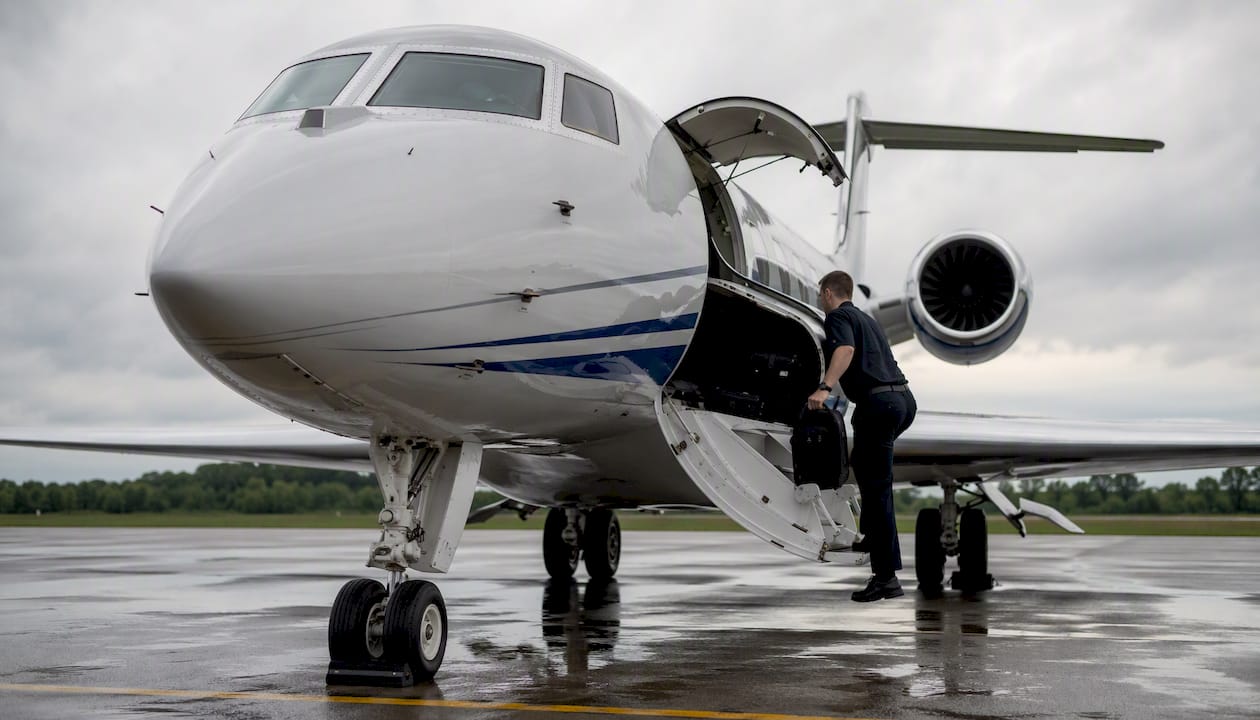
Bluebirdjets operates a membership model that changes this dynamic. Members get unlimited access to published empty-leg inventory on operator-owned Learjet 60 jets, with routes updated daily. The live flight inventory shows current empty legs so you can see what’s available before committing to a membership. Priority booking features mean members aren’t competing on equal footing with the general public for the same seats, and each flight accommodates up to six guests.
For travelers who fly spontaneously and often, this model addresses the core friction of on-demand charter: the time and cost of sourcing a new quote for every trip. A Bluebirdjets membership doesn’t replace on-demand charter for every use case. If you need a specific route on a specific date with guaranteed availability, a traditional on-demand booking or jet card is the right tool. But if your travel pattern is flexible and frequent, membership access to curated empty-leg inventory can deliver private jet travel at a fraction of typical charter rates.
This article is published by Bluebirdjets. General information only, not legal or financial advice. Confirm current regulations and pricing with the FAA, your operator, or a qualified aviation advisor.
Key Takeaways
On-demand private aviation is the most flexible entry point into private flying, but matching the right access model to your flight frequency and budget is what actually determines value.
| Point | Details |
|---|---|
| On-demand definition | Pay-per-trip charter with no deposit or long-term commitment, regulated under FAA Part 135. |
| Safety signals to check | Verify the operator’s Part 135 certificate, insurance, ARG/US or Wyvern audit status, and pilot hours before booking. |
| Cost drivers | Hourly rate, positioning fees, FBO handling, and federal excise tax combine into the final quote; empty legs can reduce cost significantly. |
| Best fit for on-demand | Travelers flying fewer than 25 hours per year with variable aircraft needs and unpredictable schedules. |
| Bluebirdjets membership | Offers unlimited access to published empty-leg inventory on Learjet 60 jets, with priority booking and guest access for frequent spontaneous flyers. |
The case for knowing your flight hours before you decide anything
Most people who research on-demand charter are asking the wrong first question. They want to know what it costs, or whether it’s safe, or which aircraft is best. Those are all worth knowing. But the question that actually determines which access model fits you is simpler: how many hours a year do you realistically fly privately, and how predictable is your schedule?
Under 25 hours with irregular trips? On-demand charter is genuinely the right answer. You’re not flying enough to justify a deposit, and your aircraft needs vary too much for a fixed card to serve you well. The per-hour premium is real, but it’s the cost of flexibility, and for infrequent flyers, it’s worth it.
Above 25 hours with some schedule predictability? A jet card starts to make financial sense. The locked-in hourly rate pays back the deposit over time, and guaranteed availability during peak periods is worth something.
Above that, or if your travel is spontaneous and frequent rather than predictable, the empty-leg membership model deserves a serious look. The economics are different from both on-demand and jet cards, and the access model suits a specific type of traveler: someone who flies often, values flexibility over guaranteed routing, and wants private jet travel without paying charter rates every time.
The conventional wisdom in private aviation pushes everyone toward fractional ownership or jet cards as the “serious” options. That framing serves the industry more than it serves the traveler. For most people entering private aviation, on-demand charter is the right starting point, and a membership model is the right next step once you know your patterns.
Bluebirdjets membership: private jet access for spontaneous flyers
If you’ve read this far and realized your travel pattern is frequent and flexible rather than predictable and scheduled, on-demand charter will serve you well for the first few trips. After that, the friction of sourcing a new quote every time starts to add up.
Bluebirdjets offers a different approach for that traveler. The annual membership gives you unlimited access to published empty-leg flights on operator-owned Learjet 60 jets, with daily-updated routes and priority booking so you’re not racing the general public for the same inventory. Bring up to six guests per flight. Need a specific route the empty-leg calendar doesn’t cover? Custom charter requests are available as an add-on.
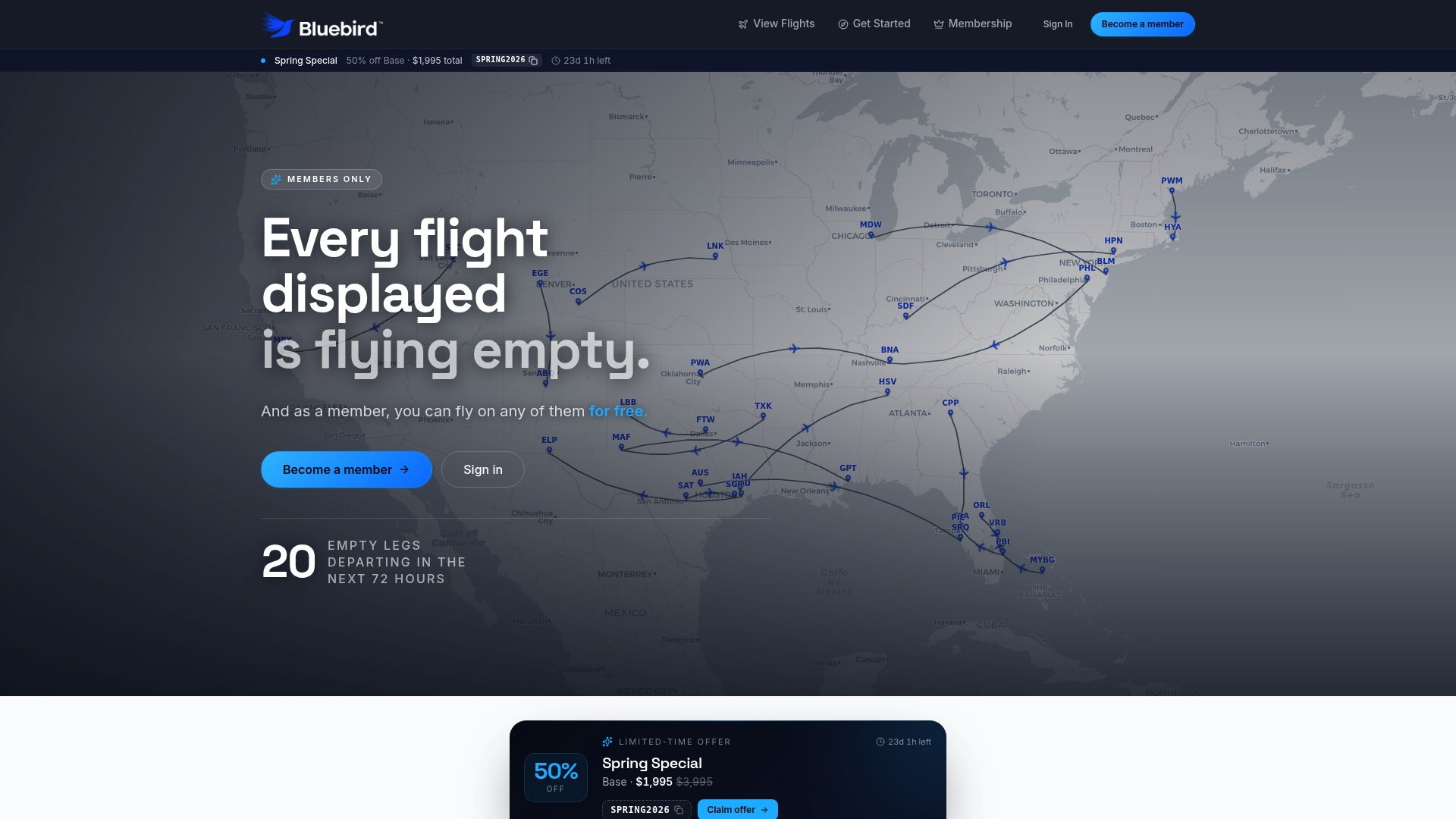
The membership is built for people who want private jet travel to be a regular part of how they move, not a one-off event they have to plan weeks in advance. View current empty-leg availability to see what’s on the calendar right now, or explore membership details and tiers to find the option that fits your flight frequency.
Useful sources and further reading
These are the primary sources for the regulations, safety standards, and guidance covered in this article:
- Federal Aviation Administration (FAA)
- FAA - Aircraft repair and operations guidance
- NBAA
- IBAC - IS‑BAO
- Bluebird
- Bluebird
- Bluebird - Types of private aviation access: a practical guide
- Bluebird - Private aviation booking best practices: 2026 Guide