48–59 Cubic Feet: What Learjet 60 Baggage Actually Holds
48–59 Cubic Feet: What Learjet 60 Baggage Actually Holds
The Learjet 60 typically carries a total baggage volume ranging around 48 to 59 cubic feet, split roughly evenly between an external aft compartment and internal lavatory storage. That translates to several medium suitcases, depending on whether you’re packing soft-sided duffels or rigid hard-shell cases. Shape matters more than volume here, so plan around door dimensions, not just the cubic-foot total.
TL;DR:
- The external baggage compartment of the Learjet 60 typically holds about 24 to 31 cubic feet, with total capacity including the lavatory compartment reaching up to 55 to 59 cubic feet, depending on measurement methodology.
- Small, soft-sided bags are more likely to fit through the narrow external door, whereas rigid suitcases often require careful size consideration or use of the internal pressurized compartment.
- Loading practices involve placing heavier items in the external hold first, with the lavatory space used as overflow, but overpacking the internal compartment can interfere with lavatory access or emergency exits.
- For a typical trip, expect to carry around 6 to 8 medium suitcases, based on roughly 5 cubic feet per bag, with packing soft-sided luggage preferred to optimize fit and conform to compartment shapes.
- Always confirm baggage weight limits, size restrictions, and compartment usage with your operator before traveling to avoid delays, especially when bringing oversized or heavy items.
Table of Contents
- Learjet 60 Baggage Dimensions and Why the Numbers Don’t Match
- Where Your Bags Actually Go on a Learjet 60
- How Many Suitcases Fit: A Practical Packing Guide
- Confirming Baggage Rules With Your Operator Before You Fly
- When Baggage Weight Changes the Whole Flight Plan
- What Empty-Leg Bookings Teach You About Packing Smart
- Book Smarter With Bluebird’s Empty-Leg Access
- Where These Baggage Figures Come From
- Sources
Learjet 60 Baggage Dimensions and Why the Numbers Don’t Match
Ask three sources for the Learjet 60’s baggage capacity and you’ll likely get three different answers. That’s not sloppy reporting. It reflects how manufacturers, data aggregators, and charter operators each measure “baggage space” differently.
Here’s what’s actually published:
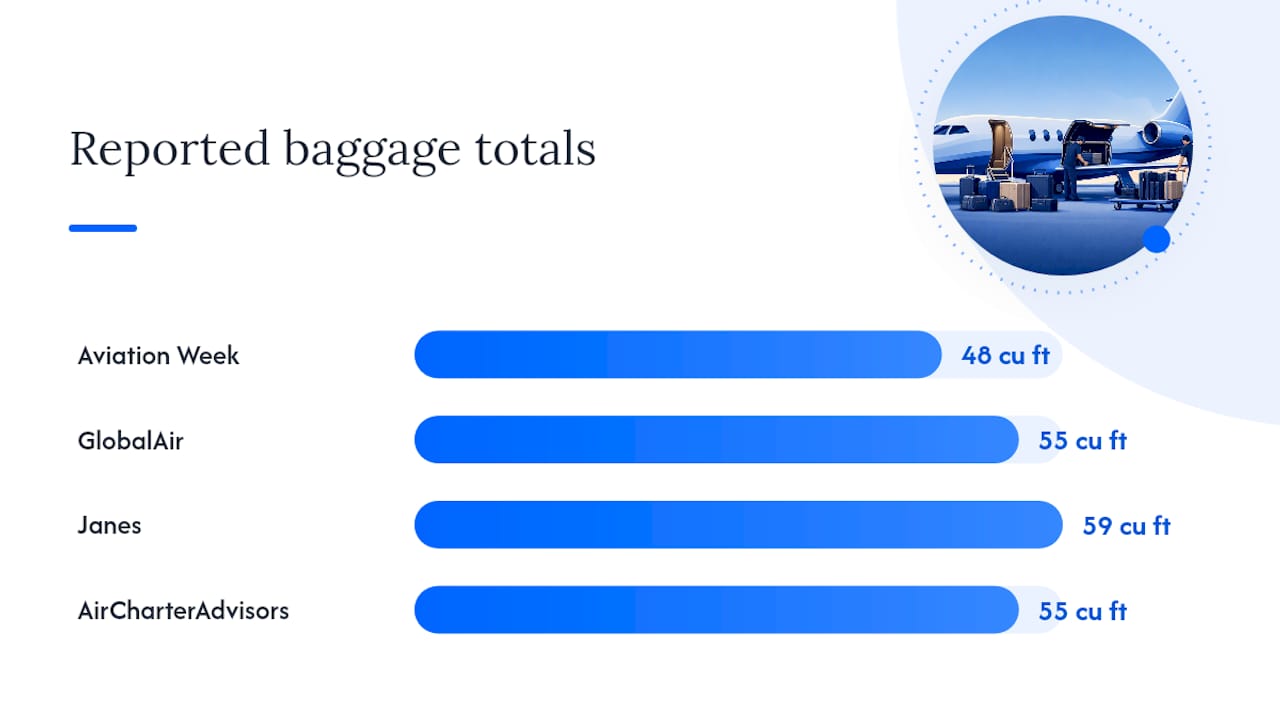
- Aviation Week reports a 24 cubic foot external hold plus roughly 24 cubic feet of usable lavatory space, for a working total near 48 cubic feet.
- Janes lists a combined total of 59 cubic feet (about 1.67 cubic meters), split between the external hold and an internal pressurized compartment accessible in flight.
- GlobalAir’s specification page cites 31 cubic feet internal and 24 cubic feet external, landing closer to 55 cubic feet total.
- AirCharterAdvisors publishes a similar internal 31 plus external 24 combination for certain Learjet 60/60XR listings, reinforcing that split as a common industry figure.
The gap comes down to methodology. Some figures count only the sealed external hold. Others fold in the internal compartment built into the lavatory area, which isn’t accessible from outside the aircraft and depends on how much lavatory space the operator has configured for storage versus passenger use. GlobalAir’s own specification notes point to a broader issue: published totals often reflect usable volume after structural intrusions and service panels, not a clean geometric box.
Quick figure check: if you see a number below 45 cubic feet, you’re likely looking at external-hold-only data. Above 55, the source is almost certainly including the lavatory compartment.
Cabin door dimensions on the Learjet 60 are narrow relative to midsize and super midsize jets, which is the real constraint most published cubic-foot figures don’t capture.
Where Your Bags Actually Go on a Learjet 60
Two separate spaces handle luggage on this aircraft, and they work very differently.
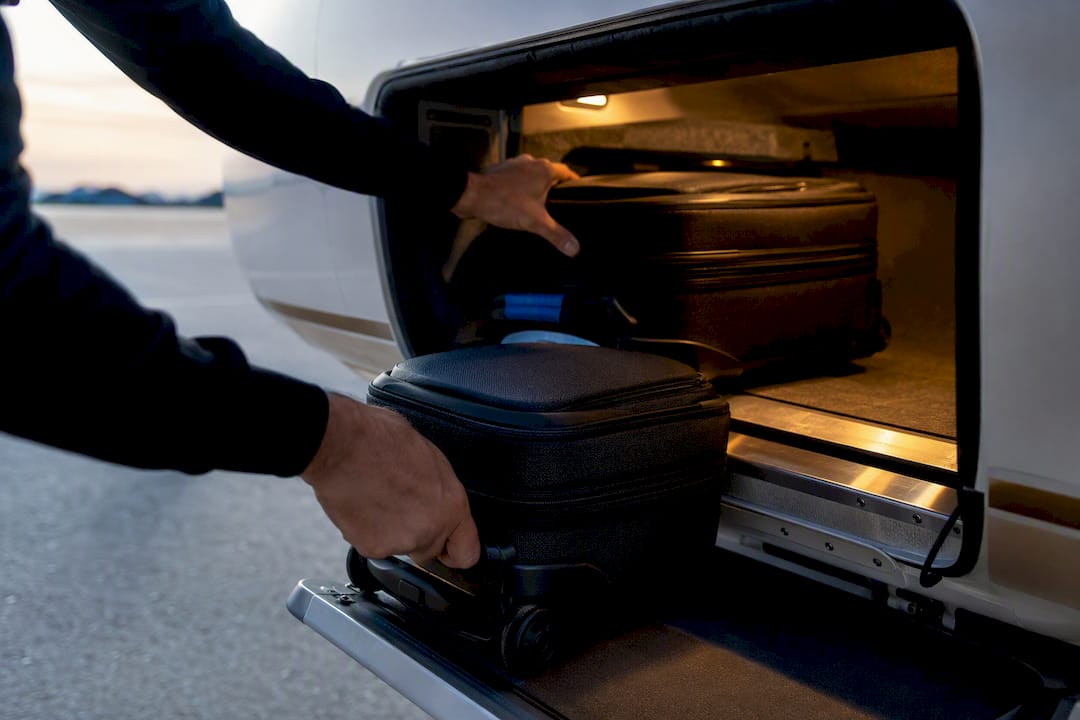
The external aft compartment sits outside the pressurized cabin, accessed by ground crew before departure through a dedicated exterior door. This is where most checked luggage goes. It’s unpressurized and unheated, so it’s not the place for anything temperature-sensitive. Weight distribution matters here too. Crews load heavier items first and against the forward wall to keep the aircraft balanced correctly.
The internal compartment lives inside the lavatory area, and this is the detail most travelers miss entirely. It’s pressurized and climate-controlled, which makes it the better spot for delicate items, but it also means crew may load bags after boarding, and using it heavily can crowd or block lavatory access mid-flight.
A few practical constraints worth knowing:
- Door width and height on the external hold favor soft-sided bags over rigid hard-shell cases.
- Overloading the lavatory compartment can interfere with servicing tasks and, in rare cases, emergency exit clearance.
- Crew typically load the external hold first, then use lavatory space only for overflow, following best practices in private jet ground transportation.
How Many Suitcases Fit: A Practical Packing Guide
Cubic feet don’t mean much until you translate them into actual bags. Using the common industry assumption of roughly 5 cubic feet per medium checked suitcase, a 48 cubic foot total gets you about 6 bags, while the higher 59 cubic foot figure stretches to 7 or 8, provided they’re compressible.
Here’s the sequence that keeps you from getting stuck at the ramp:
- Choose soft-sided luggage first. Duffels and compressible packing cubes conform to irregular compartment shapes far better than rigid cases.
- Weigh and measure before you leave home. Confirm your bags against the operator’s stated dimensions, not just the aircraft’s general specs.
- Pack fragile or valuable items for lavatory storage. That space is pressurized and climate-controlled, unlike the external hold.
- Keep a small bag for the cabin. Anything you need mid-flight should stay with you, not buried in the aft hold.
- Do a dry run. Lay out everything you plan to bring and estimate total volume before booking a flight with limited baggage capacity.
Pro Tip: Bring one collapsible duffel as your “overflow” bag. If your hard-shell suitcase doesn’t clear the external hold door, a soft bag lets you redistribute weight on the spot instead of leaving items behind.
Confirming Baggage Rules With Your Operator Before You Fly
Every operator interprets “baggage capacity” a little differently, which means the safest move is asking directly rather than assuming the published specs apply to your flight.
Confirm these details before departure:
- Per-piece weight limits and maximum bag dimensions for that specific aircraft.
- Whether the lavatory compartment will be used for your load, and how that affects in-flight access.
- Any fees tied to oversized or excess baggage.
- Ground handling support for loading, particularly for heavy or awkward items.
If you’re traveling with sports equipment, musical instruments, or anything oversized, notify the operator well ahead of time. These items often need special stowage or may not fit the external hold at all, and last-minute surprises at the ramp are the number one reason boarding gets delayed.
When Baggage Weight Changes the Whole Flight Plan
Volume and weight are two separate constraints, and travelers often confuse them. You can have plenty of cubic feet left and still hit a weight limit that forces the operator’s hand.
On a fully booked Learjet 60, heavy baggage sometimes means the operator has to make trade-offs:
- Limiting total passenger baggage allowance to stay within weight and balance limits.
- Reducing fuel load for shorter routes to compensate for extra weight.
- Adding a fuel stop on longer legs if the aircraft is loaded near capacity.
If you know your group is bringing heavy items, whether that’s golf clubs, ski gear, or several hard-shell suitcases, flag it with the operator during booking rather than at the airport. Simple fixes like consolidating into fewer, lighter bags or accepting one fewer passenger often solve the problem before it becomes one.
What Empty-Leg Bookings Teach You About Packing Smart
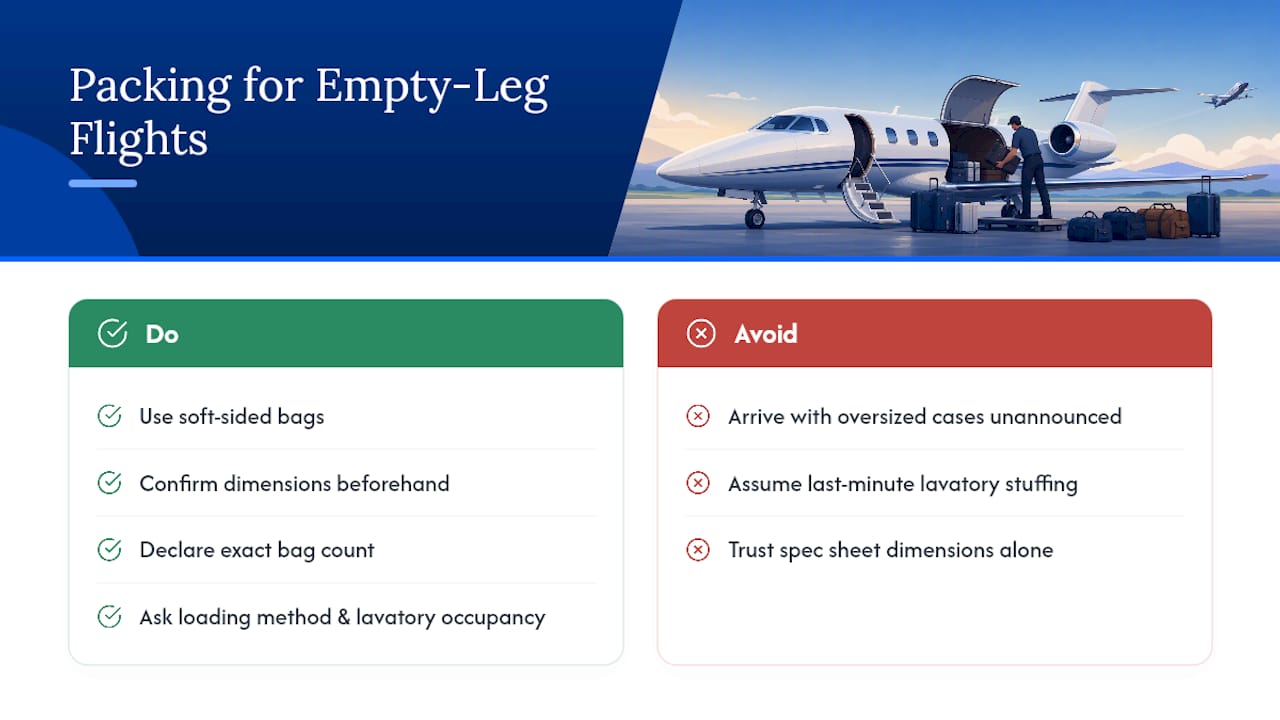
Watching how empty-leg flights actually load luggage tells you more than any spec sheet. The recurring issue isn’t volume. It’s shape. A rigid 32-inch hard-shell suitcase that “should” fit on paper often doesn’t clear the external hold door, forcing a scramble to redistribute bags into the lavatory compartment right before departure.
The fix is almost always the same: soft-sided bags, confirmed dimensions in advance, and an honest count of exactly what’s coming aboard. Travelers who ask about loading method and lavatory occupancy before arrival rarely run into surprises. Those who show up with oversized cases and no warning usually do.
— Nick
Book Smarter With Bluebird’s Empty-Leg Access
Knowing your Learjet 60 baggage limits only helps if you can actually get a seat on one. A membership service can offer unlimited access to live empty-leg inventory on operator-owned Learjet 60 aircraft, updated daily, so you can check baggage-friendly routes before you commit rather than guessing after you’ve booked.

Members may receive priority booking on published routes, the ability to bring guests per flight, and advance visibility into each listing to flag oversized bags or special items before arrival. That means fewer surprises at the ramp and no reshuffling luggage between the external hold and lavatory compartment at the last minute. If you want a real sense of how listings and baggage details show up in practice, browse a current Bluebird empty-leg listing or check available Learjet 60 flights directly through membership.
Where These Baggage Figures Come From
- Aviation Week: The Learjet 60 aft hold and lavatory storage breakdown
- Janes: Learjet 60 total baggage capacity specifications
- GlobalAir: Learjet 60 specifications and operating costs
- LibertyJet: Lear 60 baggage-to-suitcase conversion guidance
Sources
- The Learjet 60: Solid Reliability, But Short Cabin
- Learjet 60 — Janes (specifications extract)
- LEARJET 60 Specifications, Operating Cost, Performance
- Lear 60 — LibertyJet