6 Prebuy Checks That Reveal a Learjet 60's True Safety
6 Prebuy Checks That Reveal a Learjet 60’s True Safety
The Learjet 60’s recorded safety issues cluster around runway operations, not cruise-phase airframe failures, and the jet is routinely safe to fly when operators follow airworthiness directives, keep tires and brakes on strict maintenance rhythms, and train pilots to recognize thrust reverser malfunctions. The single most important action for any buyer, operator, or safety-conscious passenger: verify AD and service bulletin compliance along with current tire, brake, and inspection logs before you trust a specific tail.
TL;DR:
- Most Learjet 60 accidents occur during takeoff or landing, often linked to tire issues and crew decisions rather than mid-flight failures.
- Regular tire pressure checks every four days and the installation of three-disc brakes significantly improve operational safety margins.
- Verifying compliance with FAA mandates like AD 2013–13–09 and ensuring recurrent training covers SAFO 09017 are crucial for assessing safety.
- A thorough maintenance history, including recent inspections, tire logs, brake upgrades, and engine program enrollment, indicates a safer aircraft.
- Focus on ground maintenance records and operational practices rather than hull-loss statistics provides a clearer risk assessment.
Table of Contents
- Learjet 60 Safety Record: What the Databases Show
- Notable Learjet 60 Crash History and the Recurring Failure Chain
- FAA Safety Mandates and Regulatory Fixes for the Learjet 60
- Operational Practices That Cut Learjet 60 Risk
- Prebuy Checklist: Verifying a Learjet 60’s Safety Pedigree
- What Bluebird Verifies Before You Fly
- Primary Sources Worth Reading Directly
- Separating the Jet From the Way It’s Flown
- Sources
Learjet 60 Safety Record: What the Databases Show
The Aviation Safety Network’s Learjet 60 index tracks the type’s occurrences and hull losses, and it’s the first stop for anyone trying to separate perception from fact. Raw counts on a database like this can mislead if you don’t account for fleet size and decades of service hours. A handful of hull losses spread across a fleet flying continuously since the late 1990s produces a very different risk picture than the same number concentrated in a few years.
What the record actually shows is a pattern, not a random scatter. Most serious Learjet 60 events tie back to takeoff and landing, not mid-flight structural or engine failure. That distinction matters for how you evaluate risk on this airframe specifically.
Here’s what tends to separate this jet’s incident history from a generic “small jet crash” narrative:
- Serious accidents concentrate heavily in the takeoff/landing phase, rarely in cruise.
- Tire condition and rejected-takeoff decisions appear repeatedly as contributing factors.
- The NTSB’s investigation summary of the type’s most notorious accident points to a maintenance and procedural chain, not a design flaw in the traditional sense.
- Occurrence counts on ASN include incidents with no fatalities, so a hull-loss number alone doesn’t tell you how dangerous a given flight actually was.
Pooled statistics flatten nuance. A tire that’s 20 psi under spec behaves nothing like a properly serviced one, and that single variable shows up again and again in this type’s accident history.
Notable Learjet 60 Crash History and the Recurring Failure Chain
The 2008 Columbia, South Carolina accident remains the clearest teaching case in the Learjet 60’s history, and it’s worth walking through step by step because the failure chain repeats in smaller form elsewhere in the fleet’s record.
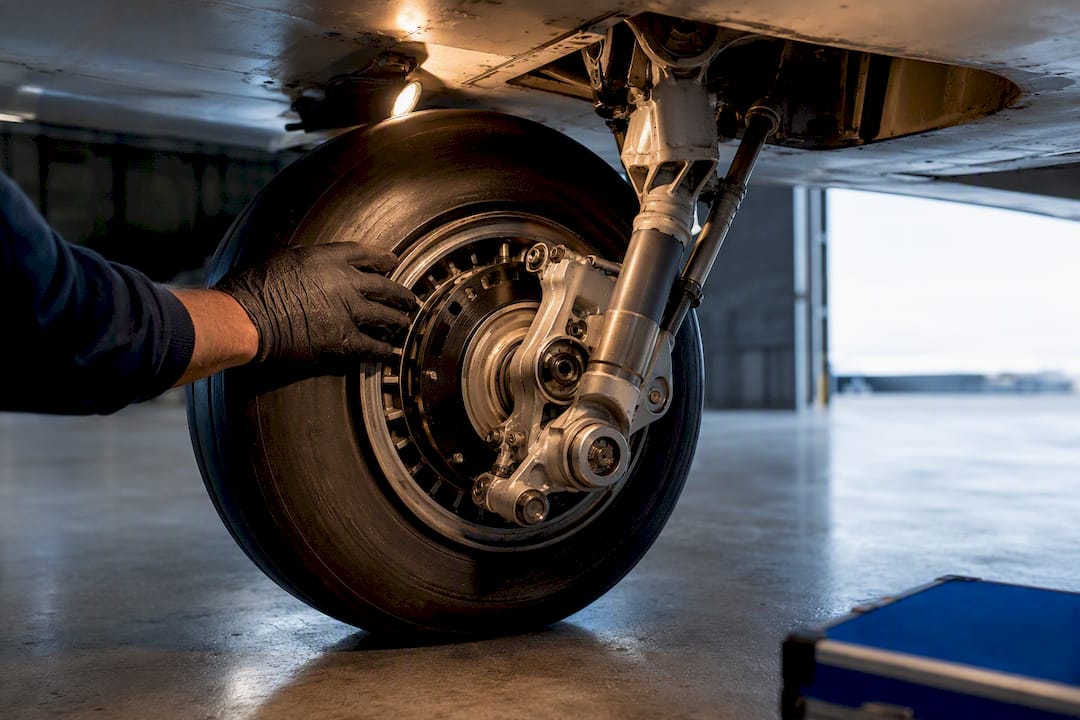
- Underinflated tires. Investigators found the main tires significantly below required pressure, which changed how the tires behaved under load during the takeoff roll.
- Tire failure and debris. As the aircraft accelerated, tire material broke apart and struck the airframe.
- Squat switch damage. Debris damaged a landing gear squat switch, a component that tells the aircraft’s systems whether it’s on the ground or in flight.
- Reverser logic confusion. That damage disrupted the thrust reverser system’s logic, a factor the NTSB tied directly to the accident sequence.
- Rejected takeoff after decision speed. The crew aborted after V1, the point past which stopping on the remaining runway is no longer guaranteed.
- Runway overrun. The aircraft ran off the end of the runway, with fatal results.
Other runway-related Learjet 60 incidents echo pieces of this same chain: tire issues, contaminated or wet runway surfaces, and go/no-go decisions made under pressure. None of this points to a fragile airframe at altitude. It points to a jet whose ground-phase margins get thin fast when tire pressure, runway condition, or crew response deviate from the standard.
FAA Safety Mandates and Regulatory Fixes for the Learjet 60
Regulators didn’t let the Columbia accident’s lessons sit unaddressed. Two federal actions define the type’s current safety baseline.
- AD 2013–13–09 requires modifications to landing gear wiring, brackets, and hydraulic tubing to prevent the kind of tire-debris damage that disrupted braking, spoiler, and reverser systems in the Columbia sequence.
- SAFO 09017 warns crews about inadvertent thrust reverser stowage during takeoff and landing and recommends specific recognition training so pilots can catch the malfunction before it becomes a control problem.
Pro Tip: Ask any operator whether recurrent training explicitly covers SAFO 09017 scenarios. A yes usually signals a deeper safety culture than the paperwork alone reveals.
Beyond these two, later modifications, including improved thrust reverser warning logic and brake system retrofits, have appeared across the fleet at different points. Verify what’s actually installed on a specific tail rather than assuming fleet-wide compliance, since not every aircraft gets every optional upgrade on the same timeline.
Operational Practices That Cut Learjet 60 Risk
Hardware fixes only work if day-to-day operations back them up. The practices below come directly from how the most disciplined Learjet 60 operators run their maintenance and training programs.
- Tire pressure checks every few days. Aviation Week’s reporting on the type notes that Learjet 60 tires bleed pressure faster than many pilots expect, which makes the 4-day check interval a real safety practice, not a paperwork formality.
- Three-disc brake retrofit. Operators who’ve upgraded to the three-disc brake system report meaningfully better stopping margins, which changes the math on marginal runways.
- The 5-6-7 runway rule. Experienced crews plan for 5,000 feet on dry pavement, 6,000 feet wet, and 7,000 feet if the runway is contaminated with snow, slush, or standing water, building in margin the type’s history suggests it needs.
- Rejected takeoff drills. Simulator sessions that specifically rehearse thrust reverser malfunction recognition and stop/go decisions near V1 address the exact failure sequence seen in past accidents.
- Clean AD and SB paperwork. A maintenance shop that can produce every airworthiness directive and service bulletin record on demand is telling you something about how the rest of the aircraft is cared for too.
None of these practices are exotic. They’re disciplined basics, applied consistently, and the type’s history shows what happens when one of them slips.
Prebuy Checklist: Verifying a Learjet 60’s Safety Pedigree
Buying or leasing a specific Learjet 60 means verifying its individual history, not the type’s reputation in general. Work through this sequence before you sign anything.
- Confirm AD compliance, especially AD 2013–13–09, and ask for the mechanic’s sign-off, not just a statement that it’s “done.”
- Pull the tire pressure logs. Frequent gaps or missing entries are one of the clearest warning signs of a lax maintenance culture.
- Check brake service history and confirm whether the three-disc retrofit has been installed.
- Review the 12-year inspection record. Aviation Week notes this inspection can uncover corrosion that adds significant shop time and cost, so a clean recent record is worth confirming in detail.
- Verify PW305A engine program enrollment, including overhaul history and any monitoring program participation.
- Ask for training syllabi and confirm recurrent training explicitly addresses SAFO 09017 topics.
A tail with clean paperwork across every one of these points is a fundamentally different risk proposition than one with gaps, even if both wear the same model designation.
What Bluebird Verifies Before You Fly
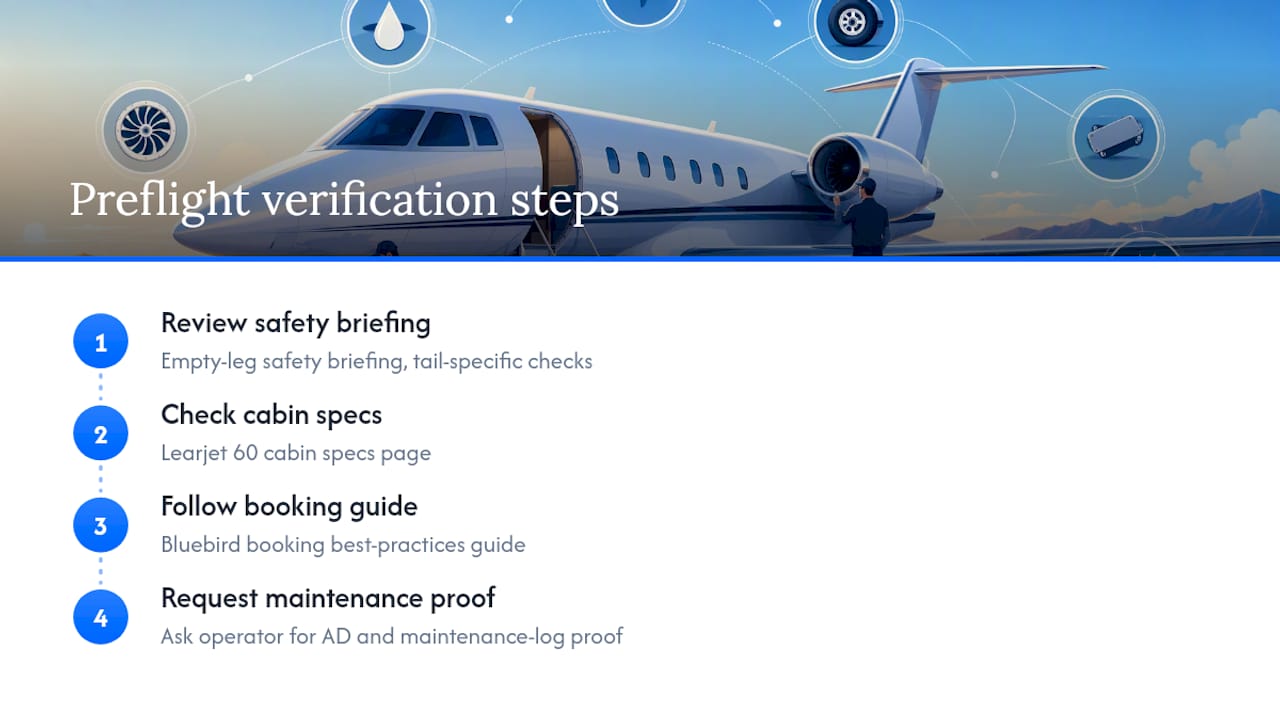
Bluebird members flying Learjet 60 empty legs get access to the same aircraft category covered throughout this guide, and the questions above apply directly to any specific flight you book. Before boarding, review Bluebird’s empty-leg safety briefing for what to confirm with the operator on a tail-specific basis, and check the Learjet 60 cabin specs page to understand what you’re stepping into. If you’re new to booking last-minute private flights, Bluebird’s booking best-practices guide covers what to ask any operator, including AD and maintenance-log proof, before you commit to a seat.
Primary Sources Worth Reading Directly
For readers who want to verify any claim in this article against the original document: the FAA’s AD 2013–13–09 text covers the landing-gear modification mandate in full, SAFO 09017 details the thrust reverser guidance, ASN’s Learjet 60 database lists occurrences and hull losses, and Aviation Week’s reliability analysis covers maintenance realities in depth.
Separating the Jet From the Way It’s Flown
The conventional take on Learjet 60 safety tends to treat every incident as evidence about the airframe itself, and that’s the part I think gets it wrong. The accidents that actually define this type’s reputation, Columbia included, trace back to tires, maintenance timing, and crew decisions under pressure, not a structural or aerodynamic weakness in the design.
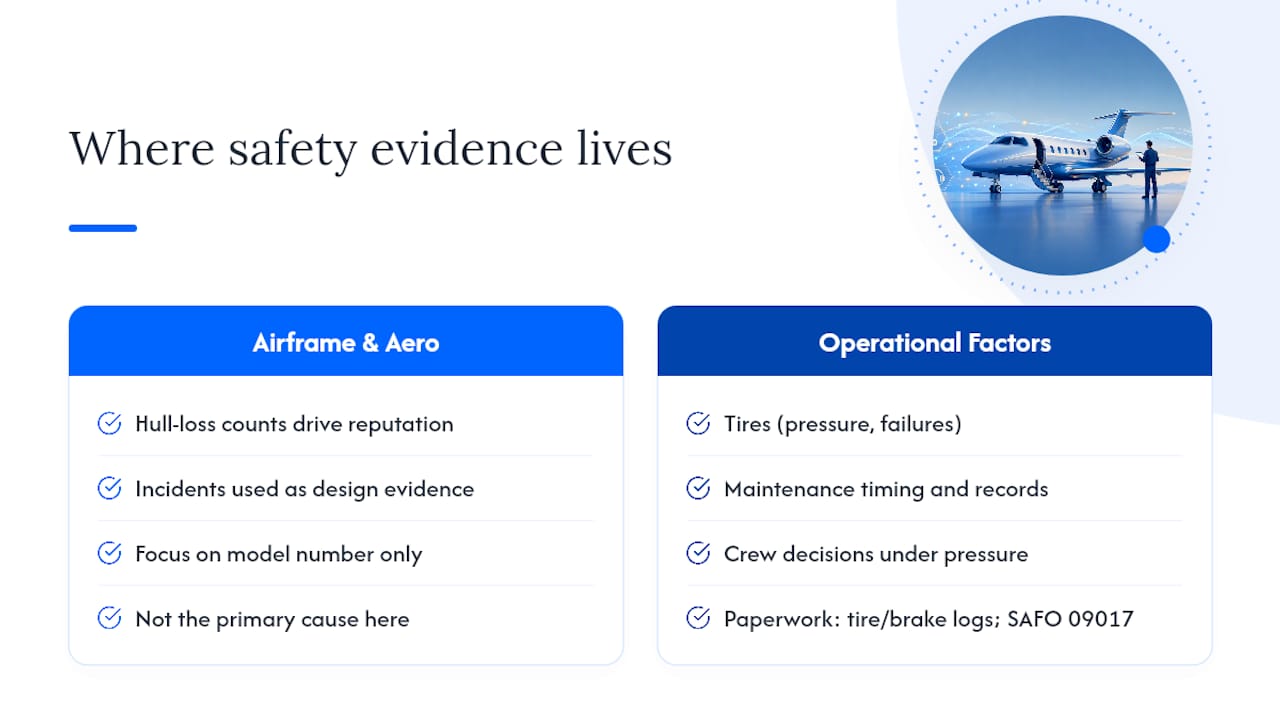
That distinction should change how you spend your attention. Reading through ASN’s occurrence list is useful, but it’s not where the real risk signal lives. The tire pressure log is. The brake service record is. Whether recurrent training covers SAFO 09017 by name is. Buyers and passengers who fixate on hull-loss counts without asking about those specifics are looking at the wrong data.
Prioritize the paperwork over the reputation. A well-maintained Learjet 60 with disciplined tire and brake practices is a fundamentally different aircraft, safety-wise, than a poorly kept one wearing the same model number, and the accident record backs that up more clearly than most people realize.
— Nick
Sources
- ASN Aviation Safety Database — Learjet 60
- FAA SAFO 09017 — Training for Bombardier Learjet 60 pilots on inadvertent thrust reverser stowage
- Federal Register — AD 2013–13–09 Learjet Inc. (Final rule)
- Aviation Week — The Learjet 60: Solid reliability, but short cabin