Private Aviation Booking Best Practices: 2026 Guide

Private aviation booking best practices are defined as the set of verified steps that reduce cost, eliminate surprises, and protect travelers from unsafe operators before a single wheel leaves the ground. The charter industry rewards preparation. Travelers who arrive at a booking with exact airport codes, a clear passenger count, and a firm grasp of all-inclusive pricing consistently get better aircraft, better rates, and fewer last-minute headaches. This guide covers every critical step, from the details you provide upfront to the safety credentials you must verify, so your next flight runs exactly as planned.
1. What are the essential booking details to provide upfront?
The single fastest way to get an accurate quote is to give the operator everything they need on the first contact. Vague requests produce vague quotes, and vague quotes almost always cost more when the final invoice arrives.
Provide these details from the start:
Exact departure and arrival airports (ICAO or IATA codes, not just city names)
Travel dates and preferred departure windows (a two-hour window is more useful than a single time)
Total passenger count, including any children
Luggage volume, especially oversized items like golf bags or ski equipment
Special requirements: pets, catering preferences, cabin Wi-Fi, or medical equipment
One-way or round-trip, since this directly affects repositioning costs
Providing precise info speeds the matching process and improves quote accuracy. Operators can immediately filter their available fleet to aircraft that fit your mission, rather than sending a generic estimate.
Pro Tip: Submit passport copies and passenger manifest data at the time of booking, not the day before departure. Early manifest submission prevents security clearance delays and keeps your departure on schedule.

2. How to get transparent, all-inclusive pricing on private jet quotes
Transparent pricing is the clearest signal of a trustworthy operator. Reliable providers separate flight costs and service fees so you know exactly what each line item covers.
A complete all-in quote must include:
Base aircraft hourly rate
Fuel surcharges (variable and often significant)
Landing and handling fees at both airports
Crew costs, including overnight expenses if applicable
Applicable taxes and government fees
Repositioning charges for one-way flights
Hidden costs can add roughly 15% to a quoted price when operators omit these line items upfront. That gap between the initial quote and the final invoice is where most traveler frustration originates.
When comparing quotes from multiple operators, ask each one to confirm whether the price is fully all-inclusive or whether additional fees may apply. Any operator who hesitates or deflects that question is telling you something important.
Quote Component | What to Ask |
|---|---|
Base rate | Is this hourly or per-trip? |
Fuel surcharge | Is it fixed or variable at time of flight? |
Repositioning fee | Does a round-trip eliminate this charge? |
Crew overnight | Who pays if the trip extends by a day? |
Taxes and fees | Are all government fees included? |
Pro Tip: Request an itemized quote in writing before signing anything. An operator confident in their pricing will send it without hesitation.
3. What safety credentials should you verify before booking?
Safety verification is non-negotiable. The private charter market includes operators at very different levels of safety maturity, and the price difference between a certified and uncertified operator is rarely worth the risk.
The three independent safety rating systems to know are:
ARGUS: Offers tiered ratings including ARGUS Platinum, the highest designation, which requires an on-site audit of the operator’s safety management system
Wyvern: Provides the Wingman and PASS ratings, with PASS requiring a full audit of the operator, aircraft, and crew
IS-BAO: The International Standard for Business Aircraft Operations, which signals that an operator has implemented a formal safety management system
Verifying safety ratings through ARGUS, Wyvern, or IS-BAO is the most reliable way to confirm an operator’s safety culture before you fly. These ratings are not self-reported. They require third-party audits, which means they carry real weight.
Ask any operator for their current rating certificate and the date of their last audit. A reputable operator will provide this without hesitation. If they cannot produce documentation, move on.
4. How does timing affect price, availability, and flexibility?
Booking timing is one of the most controllable variables in private aviation. Small adjustments to when and how you book can produce meaningful cost differences.
Key timing principles:
Book 2–4 weeks in advance for the best balance of availability and price. Last-minute bookings reduce your leverage and often limit aircraft options.
Midweek departures (tuesday through thursday) typically offer better availability than friday and sunday, which are peak demand days.
Off-peak hours reduce competition for popular routes and can improve pricing.
Empty-leg flights should be booked within one week of the scheduled repositioning flight for the best availability window.
Flexible date windows of even one or two days can open significantly better options. Flexibility in travel dates directly improves both aircraft availability and final pricing.
Round-trip bookings save 20%–30% by eliminating repositioning fees that operators would otherwise charge on one-way legs. Empty-leg flights go further, offering discounts of 50%–75% compared to standard charter rates. Understanding why empty legs are cheaper comes down to repositioning logic: the operator needs to move the aircraft regardless, so any revenue is better than none.
One nuance worth knowing: operators with floating fleets can offer lower base prices, but floating fleets may increase delay risk compared to home-based fleet operators. The tradeoff between cost and reliability is real, and it matters most on time-sensitive trips.
5. What contract and payment terms should you confirm before signing?
The contract is where private aviation bookings either protect you or expose you. Most travelers skim it. That is a mistake.
Confirm these terms before signing:
Cancellation policy: Cancellation penalties typically apply within 24–72 hours of departure. Know the exact penalty window and the dollar amount before you commit.
Operational control: Confirm which entity holds operational control under Part 135. Operational control language in a contract determines which party controls dispatch and compliance, and it directly affects liability in the event of an incident.
Aircraft substitution clause: Understand whether the operator can swap your aircraft for a different model and what notice they must give you.
Payment timing: Full payment is typically required 48 hours before departure to secure the aircraft and crew. Some operators require payment at signing.
Trip protection: Ask whether the operator offers any form of trip interruption coverage or rebooking assistance.
Clear contract terms on substitution, cancellation, and trip protection reduce your exposure to last-minute surprises. Good operators disclose all of these details upfront without prompting.
6. How to use empty legs and round-trip routing to cut costs
Empty legs are the most underused cost tool in private aviation. They exist because every repositioning flight, where an aircraft flies without passengers to reach its next assignment, represents a revenue loss for the operator. Operators price these flights aggressively to recover some of that cost.
The 2026 guide to empty leg deals outlines how to identify and book these flights before they disappear. The key constraint is timing: empty legs are confirmed close to the departure date, so flexibility is required.
Round-trip routing is the more predictable cost tool. When you book both legs of a trip with the same operator, repositioning costs are priced into round-trip symmetry, and the operator avoids a deadhead flight entirely. That saving gets passed to you in the form of a lower total price. For travelers who fly the same route regularly, a round-trip commitment made weeks in advance is one of the most reliable ways to control costs.
Open-jaw routing, where you depart from one airport and return from another, adds complexity but can still yield savings when planned correctly. Understanding open-jaw flight routing before you request a quote gives you a stronger negotiating position with operators.
7. What to do on travel day to keep your departure on schedule
Private aviation’s core advantage over commercial travel is time. Arriving at the FBO (fixed-base operator) 15–30 minutes before departure is standard practice. That window bypasses commercial check-in lines, security queues, and gate holds entirely.
To protect that advantage, complete these steps before travel day:
Confirm your departure FBO location, not just the airport. Large airports have multiple FBOs, and arriving at the wrong one costs time.
Verify that all passenger documents are already on file with the operator.
Reconfirm the flight 24 hours before departure, especially for empty-leg bookings where schedule changes can occur.
Communicate any last-minute passenger changes immediately. Manifest changes after security processing begins create delays.
The travelers who consistently get the most out of private aviation treat the pre-departure checklist as seriously as the booking itself. The flight experience is only as good as the preparation behind it.
Key Takeaways
The most effective private aviation booking process combines early planning, itemized all-inclusive pricing, and verified safety credentials before any contract is signed.
Point | Details |
|---|---|
Book 2–4 weeks ahead | This window gives the best balance of aircraft availability and competitive pricing. |
Demand all-in pricing | Request itemized quotes that include fuel, fees, crew costs, and repositioning charges. |
Verify safety credentials | Confirm ARGUS, Wyvern, or IS-BAO ratings with current audit documentation. |
Use round-trips and empty legs | Round-trips save 20%–30%; empty legs can cut costs by 50%–75% on flexible routes. |
Review contract terms carefully | Confirm cancellation windows, operational control, and payment timing before signing. |
What I’ve learned after years of watching travelers get this wrong
The most common mistake I see is treating private aviation like a premium version of commercial booking. Travelers compare headline prices, pick the lowest number, and sign without reading the contract. Then they call frustrated when the final invoice is 15% higher than the quote, or when the aircraft gets swapped the morning of departure.
The operators worth flying with are transparent before you ask. They send itemized quotes. They hand over their ARGUS or Wyvern documentation without a follow-up email. They explain the Part 135 operational control language in plain terms. If you have to chase any of those details, that tells you everything about how the relationship will go when something actually goes wrong.
The other thing most guides skip: the empty-leg market rewards travelers who understand the pricing logic, not just the discount. Knowing why a flight is priced at 60% off, and what that means for schedule reliability, is the difference between a great deal and a frustrating experience. I’ve seen travelers book empty legs without understanding that the schedule can shift. That flexibility has to be genuine, not just theoretical.
My practical checklist: confirm the all-in price in writing, verify the safety rating, read the cancellation clause, and submit your manifest early. Those four steps alone put you ahead of most private aviation travelers.
— Nick
Bluebirdjets makes the booking process work for frequent flyers
Bluebirdjets is built around one idea: frequent travelers should have direct, ongoing access to the best-priced private flights without rebuilding the process from scratch every time they fly.
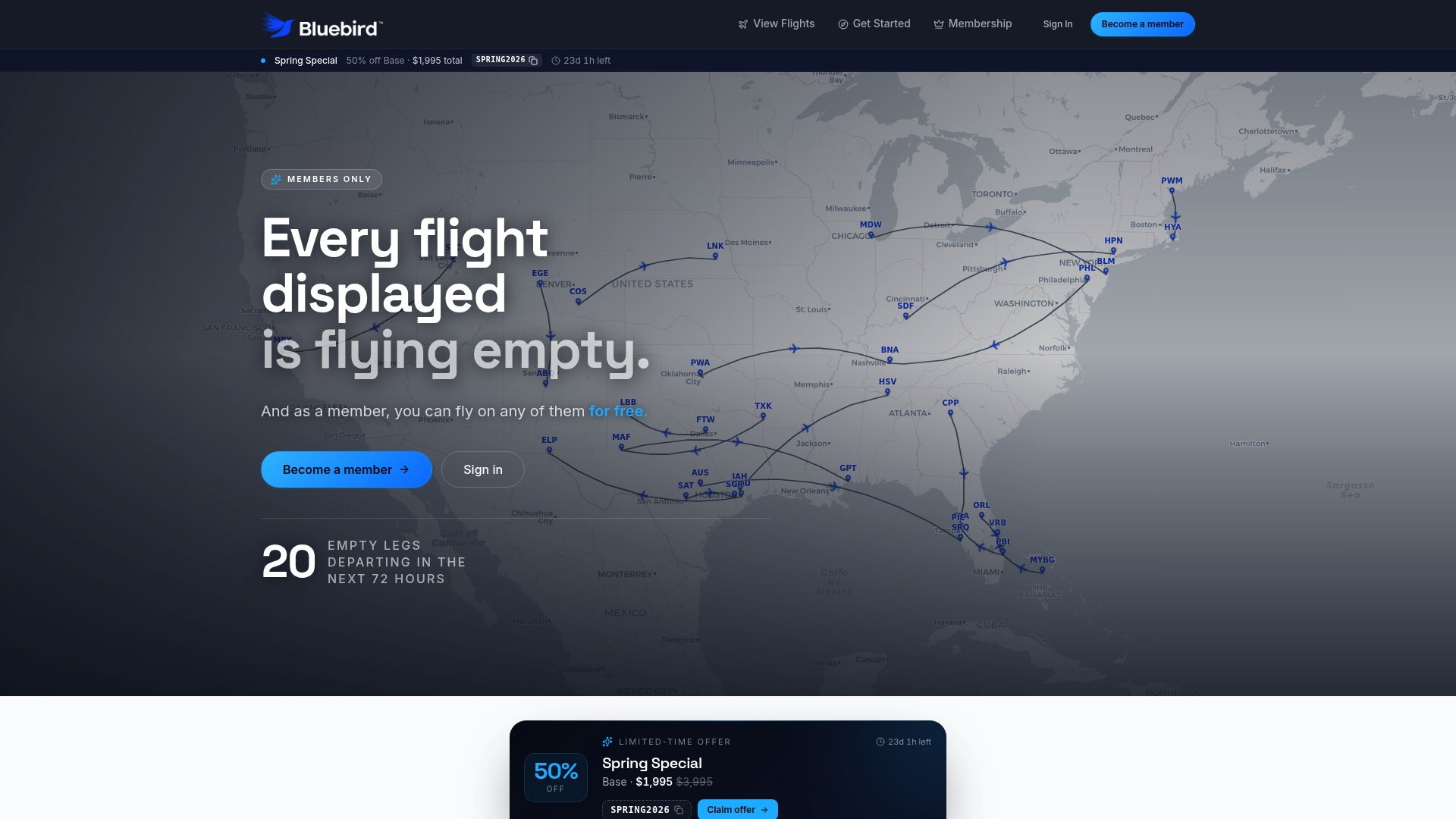
The Bluebirdjets membership gives you unlimited access to empty-leg flights on the platform. That means every repositioning flight in the network becomes available to you at a fraction of standard charter rates. The pricing is transparent, the safety vetting is done, and the booking process is direct. For travelers who fly regularly and want to apply the best practices covered in this guide without managing every detail manually, Bluebirdjets charter is the most direct path to consistent, cost-controlled private travel.
FAQ
What is the best time to book a private jet?
Book 2–4 weeks in advance for the best combination of aircraft availability and pricing. Last-minute bookings reduce your options and increase cost.
What does all-inclusive private jet pricing include?
A complete quote covers the base aircraft rate, fuel surcharges, landing and handling fees, crew costs, applicable taxes, and repositioning charges. Hidden fees can add roughly 15% to an incomplete quote.
How do I verify a private jet operator’s safety record?
Request current documentation from ARGUS, Wyvern, or IS-BAO. Each organization publishes independent audit-based ratings, and a reputable operator will provide their certificate without hesitation.
What are empty-leg flights and how much can they save?
Empty-leg flights are repositioning trips where the aircraft flies without passengers. They typically offer 50%–75% discounts compared to standard charter rates, but require schedule flexibility since timing is set by the operator’s existing commitments.
What contract terms matter most before signing a charter agreement?
Confirm the cancellation penalty window (typically 24–72 hours before departure), which entity holds Part 135 operational control, the aircraft substitution policy, and the payment deadline, usually 48 hours before departure.