Avoid Delays: REAL ID and CBP Rules for U.S. Private Jet Travel

Avoid Delays: REAL ID and CBP Rules for U.S. Private Jet Travel
For domestic private flights, you need a REAL ID-compliant license, passport, or another TSA-accepted form of ID. For international private flights, you need a valid passport, possibly a visa, and your operator must file manifest data with CBP and secure permission to land or depart. The two agencies that matter most are the TSA and CBP, and private terminals do not change either agency’s rules.
TL;DR:
- A valid passport is required for all international private flights, along with any necessary visas, and the operator must file advance manifest data with CBP.
- Domestic private flights mandate a REAL ID-compliant license or a valid passport, with TSA likely to accept trusted traveler or federal IDs as alternatives.
- Private operators handle most CBP manifest submissions and clearance, but passengers should confirm these are completed 24 to 48 hours before departure.
- Children under 18 usually do not need ID for domestic private flights, but international trips always require a valid passport for every traveler.
- TSA PreCheck speeds screening but does not eliminate the requirement for an acceptable ID at the airport.
Table of Contents
- What ID you need for domestic private jet flights
- International private flights: passports, visas, and CBP clearance
- How operators handle manifests and CBP clearances
- Special cases: children, noncitizens, and trusted traveler programs
- Practical checklist: what to bring and when to arrive
- Bluebirdjets’ approach to preflight paperwork and timing
- Why private aviation feels easier, and why the paperwork still matters
- How Bluebirdjets membership reduces document friction
- FAQ
- Sources
What ID you need for domestic private jet flights
The TSA enforces REAL ID at every checkpoint, including the private terminals where charter and membership flights depart. Since May 7, 2025, state driver’s licenses that are not REAL ID compliant are no longer accepted for boarding at TSA checkpoints, and that rule applies whether you’re walking through a commercial terminal or an FBO lobby. A passport works as a substitute without any special preparation.
The TSA accepts several forms of ID beyond the standard REAL ID license:
- REAL ID-compliant driver’s license or state ID card
- U.S. passport or passport card
- Enhanced Driver’s License (EDL) or Enhanced ID (EID)
- Global Entry or other trusted traveler program card
- U.S. Department of Defense ID
- Federally recognized tribal ID
If you show up without any of these, the TSA has a contingency called ConfirmID, a paid identity verification process that launches as an emergency option starting February 1, 2026. It’s not a replacement for bringing proper ID, just a last resort that adds time and cost.
Pro Tip: Carry your passport even on domestic trips. It satisfies every TSA ID requirement and doubles as a backup if your license has expired or gone missing.

International private flights: passports, visas, and CBP clearance
International private jet travel adds a layer of federal paperwork that has nothing to do with the aircraft itself and everything to do with crossing a border. Here’s what applies:
- Passport for every international departure or arrival. There’s no domestic workaround for leaving or entering the country by private aircraft; a valid passport is required regardless of destination.
- Visa or transit visa, depending on nationality and destination. Some travelers qualify for visa-free entry under reciprocal agreements, while others need a transit visa even for a brief stopover. Check the destination country’s consulate directly, since rules vary by nationality and change without much notice.
- APIS manifest submission by the operator. Every private aircraft arriving in or departing from the United States must transmit Advance Passenger Information System data, meaning passenger names and travel document details go to CBP before wheels-up. Outbound flights require an email clearance from CBP before departure, and inbound flights require permission to land from the arrival port.
- DTOPS decal for the aircraft. Private aircraft operating internationally need a Private Aircraft User Fee decal, purchased through the DTOPS system. This is the operator’s responsibility, not the passenger’s, but it’s worth confirming it’s current if you’re flying on an owned aircraft rather than a managed charter.
CBP’s own Private Air Guide spells out the specific manifest fields pilots must submit, including a DHS-approved travel document such as a passport for every person on board. None of this is optional, and none of it is something a passenger can complete on their own behalf: it runs through the operator.
How operators handle manifests and CBP clearances

Pilots and operators, not passengers, carry the administrative weight of international compliance. They submit eAPIS manifests within the required window before departure and must confirm electronic clearance from CBP before taking off on an outbound international leg. For inbound flights, the same process works in reverse: the operator needs permission to land from the CBP port of arrival before the aircraft is cleared to enter U.S. airspace on approach.
On inspection, a pilot or aircraft may need to present:
- Pilot certificate and medical certification
- Aircraft registration
- Airworthiness certificate
- Private Aircraft User Fee decal (for international operations)
As a passenger, your job is lighter but still matters. Ask your operator to confirm the APIS submission went through and that CBP clearance was received, keep your passport and booking reference on hand, and ask what arrival procedures look like at your destination airport before you land.
Special cases: children, noncitizens, and trusted traveler programs
A few situations come up often enough to address directly. Children under 18 generally aren’t required to present ID for domestic travel, though individual operators may still ask for proof of age, so it’s worth confirming ahead of time rather than assuming.
- Noncitizens must carry a valid passport and the appropriate visa or travel authorization, and some nationalities may qualify under the Visa Waiver Program instead of a full visa.
- Trusted traveler cards (Global Entry, NEXUS) and military IDs are accepted as valid identification under TSA’s acceptable ID list.
- Expired IDs have limited allowances at TSA’s discretion, and ConfirmID exists as the formal fallback starting in 2026 for travelers without acceptable ID.
TSA PreCheck doesn’t remove the ID requirement, but it does streamline the screening process itself, which matters less at small FBOs where lines are already short.
Practical checklist: what to bring and when to arrive
A short list covers most situations:
- REAL ID-compliant license or passport for domestic flights
- Valid passport for any international leg, plus visa documents if required
- Printed or digital booking confirmation and manifest reference
- Country-specific paperwork, such as pet import permits or vaccination records, if applicable
- Contact information for your operator and, for international trips, the CBP port handling your arrival
Domestic private departures typically need only a short lead time at the FBO, a fraction of what commercial terminals require. International departures need considerably more, since CBP clearance has to be confirmed before the aircraft can legally leave, and that process depends on your operator’s timeline, not yours.
Pro Tip: Confirm APIS submission and CBP clearance status with your operator 24 to 48 hours before departure, not the morning of.
Bluebirdjets’ approach to preflight paperwork and timing
We’ve found that the same discipline that goes into a 48-hour wheelchair access checklist applies just as well to document readiness: build the checklist early, confirm it twice, and leave nothing to the morning of departure.
- A concierge team can confirm APIS submission and CBP clearance status directly with the operator before you head to the FBO.
- Live inventory on a platform shows route and timing details travelers need to plan passport and visa logistics around actual departure windows.
- For those flying internationally, it is recommended to have concierge services verify clearance status 24 to 48 hours out, the same window operators use for their own compliance checks.
Why private aviation feels easier, and why the paperwork still matters
Private terminals cut the lines, the crowds, and the waiting, but they don’t cut the rules, and requiring thorough aircraft disinfection is part of maintaining a safe and healthy flight environment. The TSA, CBP, and FAA enforce the same identity and manifest requirements whether you’re boarding a Learjet or a commercial jet. Operators absorb most of the administrative load, but you’re still the one who has to show up with the right documents in hand. Confirm requirements with your operator early, not at the FBO door.
— Nick
How Bluebirdjets membership reduces document friction
Membership doesn’t change what the TSA or CBP requires, but it changes how much of that burden falls on you. Our concierge team coordinates with operators to confirm APIS filings and CBP clearances ahead of time, so members arrive at the FBO with the paperwork question already answered.
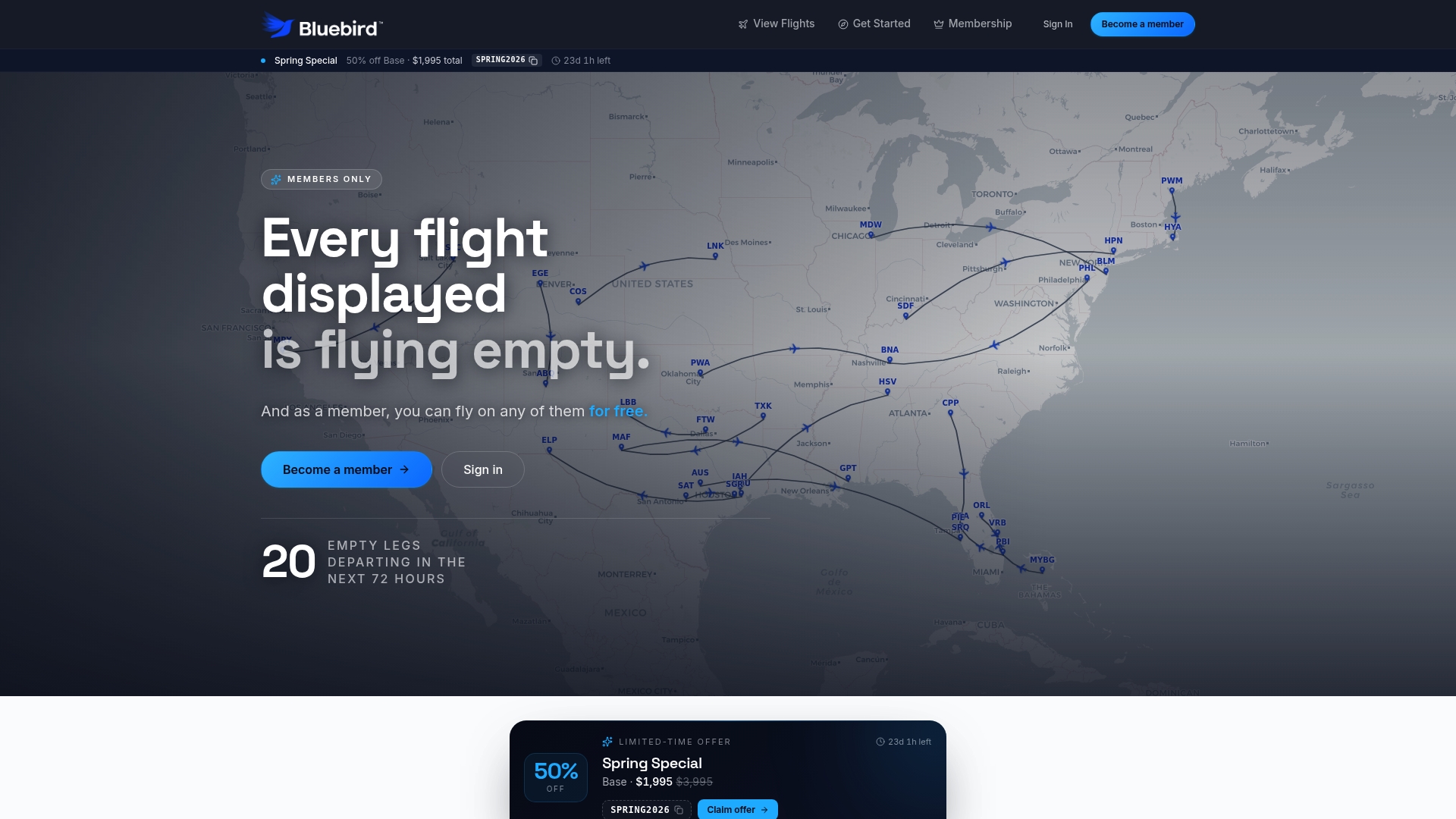
- Base and Plus membership plans include unlimited access to published empty leg flights with concierge support built in.
- The optional Skip-The-Line fee moves you up in priority booking when timing is tight.
- Live flight inventory lets you see routes and departure windows in real time, which helps when you’re planning passport or visa logistics around a specific trip.
If you’re ready to see what membership covers and what it costs, visit our get-started page to walk through the plans.
FAQ
Do you need a visa when flying on a private jet?
A visa requirement depends on your nationality and destination, not on whether you’re flying private or commercial. Check the destination country’s consulate or State Department guidance before booking, since some nationalities qualify for visa-free entry while others need a transit visa even for a short stopover.
Can I fly domestically with just a driver’s license?
Only if your license is REAL ID compliant; standard licenses issued without REAL ID certification are no longer accepted at TSA checkpoints as of May 7, 2025. A passport, passport card, or Enhanced Driver’s License works as an alternative if your state license isn’t compliant.
What documents does a private jet operator need from passengers for international flights?
Operators need each passenger’s passport information to complete the APIS manifest submission required by CBP before departure. They may also ask for visa details depending on the destination, since that information factors into CBP clearance and permission to land.
Are children required to show ID for private jet travel?
Children under 18 generally aren’t required to present ID for domestic flights, though individual operators sometimes ask for proof of age. For international trips, every traveler, regardless of age, needs a valid passport.
Does TSA PreCheck change what ID I need to bring?
No, TSA PreCheck speeds up the screening process itself but doesn’t reduce the acceptable ID requirements. You still need a REAL ID-compliant license, passport, or another accepted form of identification to board.
Sources
- REAL ID Frequently Asked Questions | Transportation Security Administration
- General Aviation Processing Frequently Asked Questions | U.S. Customs and Border Protection
- CBP Private Air Guide 3.0 (PDF)