7.5% FET: What Empty Leg Members Pay in U.S. Private Jet Taxes

7.5% FET: What Empty Leg Members Pay in U.S. Private Jet Taxes
If you fly an empty-leg or charter flight in the U.S., expect a 7.5% federal excise tax on the amount paid, plus a small per-passenger segment fee. Membership fees are a different story: whether Bluebirdjets-style access charges are taxable at all is still legally contested, and a 2026 federal appeals ruling just made the answer friendlier to members.
TL;DR:
- The 7.5% federal excise tax applies to the total amount paid for taxable domestic air transportation, including most flight-related charges unless separately stated.
- A per-passenger, per-segment fee set annually by IRS adds to the total cost, increasing the final invoice by 20% to 40% beyond the advertised price.
- Control over the aircraft, crew, and routing determines tax applicability, making FET apply when operators with Part 135 certificates perform the flight; it does not apply to aircraft owners flying under Part 91.
- Membership access fees bought as a right to book future flights are generally not taxable, especially if billed separately from per-flight costs, as upheld by the 2026 Sixth Circuit ruling.
- Always request itemized invoices that separately list the FET, segment fees, and state taxes, and keep detailed records to substantiate business or personal use for IRS compliance.
Table of Contents
- What Are the Federal Excise Taxes on Private Jet Charters?
- Why Does Part 135 vs Part 91 Status Decide What You Pay?
- Are Membership Fees for Empty-Leg Access Taxable?
- What Other Fees Show Up on an Empty-Leg Invoice?
- Does State Sales Tax Apply to Private Jet Flights?
- Who Is Responsible for Collecting and Remitting the Tax?
- What Should You Ask Before Booking an Empty-Leg Flight?
- How Does the Alternative Minimum Tax Affect Owning a Private Jet?
- What Depreciation Methods Apply to Private Jet Ownership?
- How Does Personal vs. Business Use Affect Aircraft Tax Treatment?
- What Records Should You Keep for IRS Compliance?
- Do International Charter Flights Have Different Tax Rules?
- What Are Current IRS Audit Trends for Private Jet Taxes?
- Bluebirdjets’ Approach to Tax Transparency and Member Support
- Want an Empty-Leg Membership With Invoices You Can Actually Read?
- Sources
- FAQ
What Are the Federal Excise Taxes on Private Jet Charters?
Two federal charges show up on nearly every U.S. charter or empty-leg invoice, and they work differently from each other.
The first is a straight percentage tax. IRC §4261 imposes a 7.5% federal excise tax (FET) on the amount paid for taxable domestic air transportation. That 7.5% doesn’t just apply to a clean base fare. The IRS Air Transportation Audit Techniques Guide makes clear the taxable base sweeps in most flight-related charges bundled into the total price, unless a charge is separately stated on the invoice and genuinely separable from the transportation itself under the regulations.
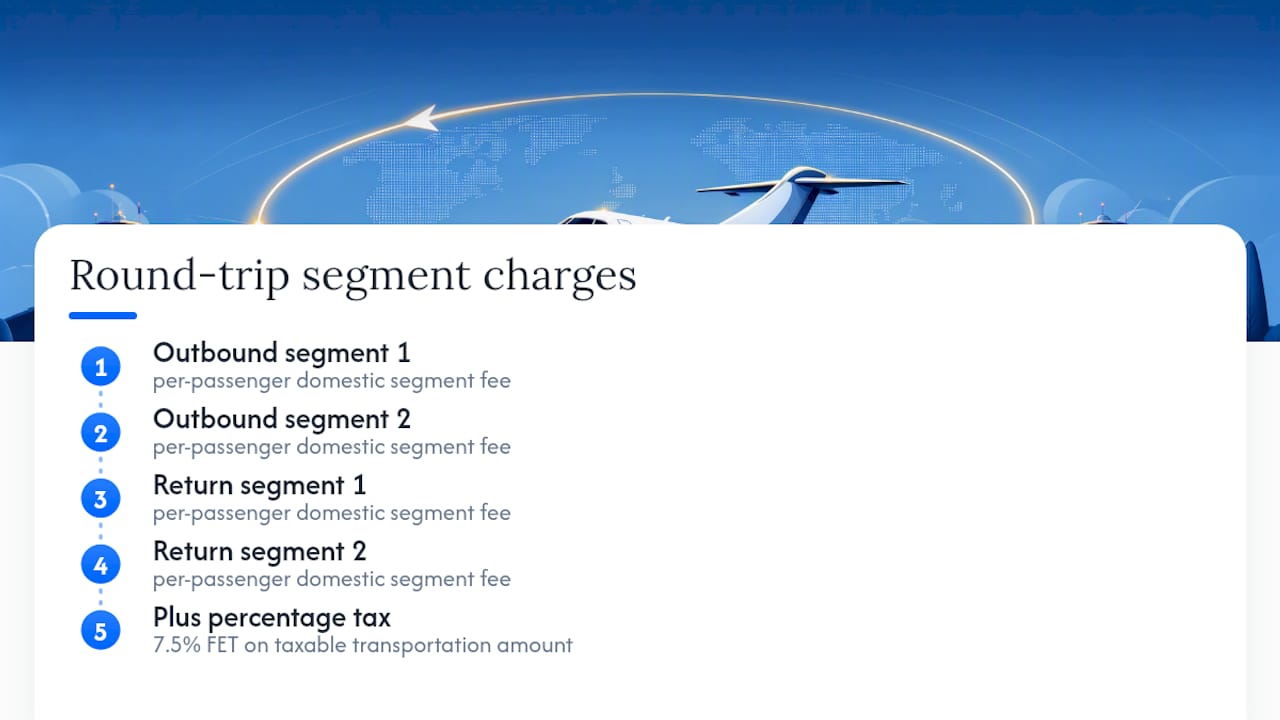
The second charge is a flat per-passenger fee tied to distance, not price. It applies to each domestic segment, defined as one takeoff and one landing. The rate adjusts for inflation every year.
By the numbers: the domestic segment fee is a set amount per passenger per segment for 2026. Confirm the current figure against the IRS revenue procedure for the tax year you’re flying in, since it changes annually.
Fly a round trip with one stop each way and you’re paying that segment fee four times, on top of the percentage tax.
Why Does Part 135 vs Part 91 Status Decide What You Pay?
Charter operators fly under Part 135 certificates, which cover on-demand commercial air transportation. Private owners and some fractional arrangements fly under Part 91, the rule set for noncommercial operations. That distinction drives the entire tax question.
The test that actually matters is possession, command, and control. Whoever holds operational authority over the flight, meaning they control the aircraft, crew, and routing decisions, determines who’s providing “transportation” in the tax sense. When Bluebirdjets members book an operator-flown empty leg, the operator holds that control, which is exactly why FET applies.
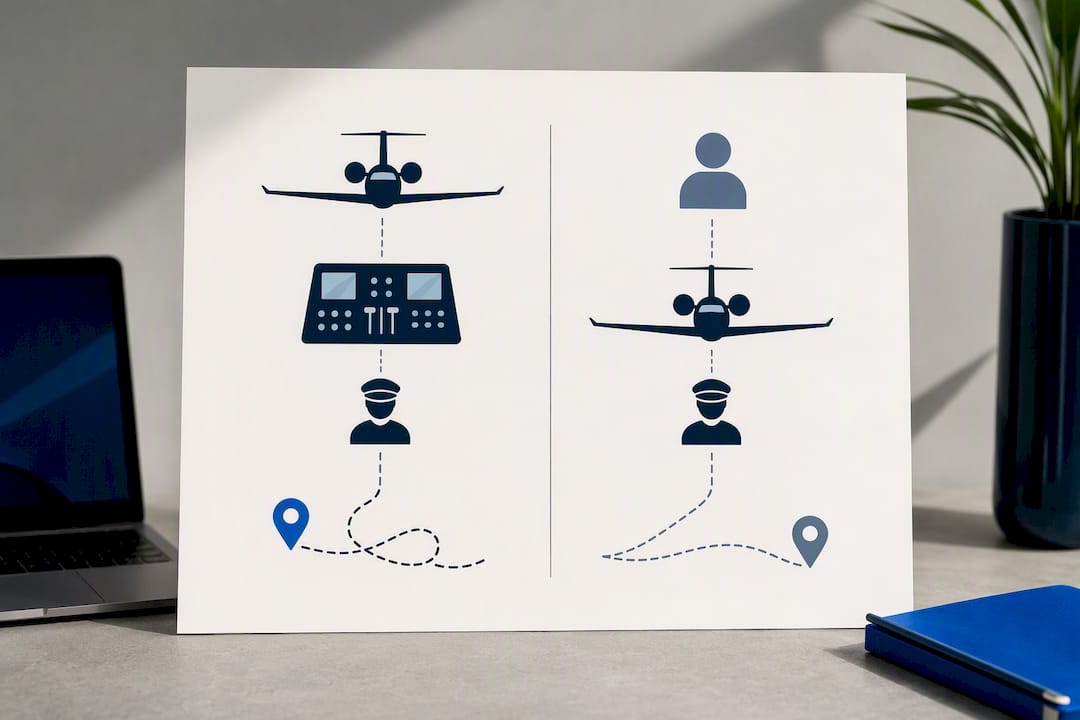
Contrast that with an owner flying their own jet under Part 91 with their own crew. No one is selling them transportation; they’re operating their own aircraft. No FET applies in that scenario, because there’s no taxable sale of air transportation happening at all. The line gets blurrier with management companies and dry leases, which is part of why membership fee taxation became such a fight.
Are Membership Fees for Empty-Leg Access Taxable?
Operators and program sponsors disagreed, arguing a flat access fee is fundamentally different from paying for a specific flight.
That fight reached a head in 2026, when the Sixth Circuit Court of Appeals reversed a roughly $39 million judgment against Flight Options. The court held that fixed management and overhead fees generally fall outside the §4261 ticket tax when they merely grant an option to purchase flight time later, rather than functioning as prepayment for an identified trip.
The distinction the court drew is the one that matters for every empty-leg member: a fee that buys the right to book flights is not automatically the same thing, in the tax code’s eyes, as a fee that buys a flight.
That doesn’t make the question settled everywhere, but it strengthens the position of programs that keep their billing structure clean.
Pro Tip: Ask any membership program, including Bluebirdjets, for invoices that separate the annual access charge from the per-flight usage cost. That separation is exactly what the Sixth Circuit found meaningful, and it protects you if the IRS ever revisits your provider’s tax treatment.
What Other Fees Show Up on an Empty-Leg Invoice?
The quoted empty-leg price is rarely the number you actually pay. Several add-ons routinely stack on top, and most of them count toward the same taxable base as the flight itself.
- Repositioning and deadhead costs: charges to fly the aircraft to your departure point are commonly treated as part of the taxable “amount paid.”
- Crew wait time and layover costs: hotel and meal reimbursements for crew tend to fall into the same taxable bucket.
- Landing and handling fees: usually taxable unless the operator states them separately and they qualify as separable under the regulations.
- Fuel surcharges: typically bundled into the taxable base.
- De-icing charges: same treatment in most cases, especially in winter months.
Add those together with the 7.5% FET and segment fees, and industry reporting shows the final invoice often lands 20% to 40% higher than the headline empty-leg price you first saw advertised.
Does State Sales Tax Apply to Private Jet Flights?
Federal excise tax is only half the picture. States vary widely on whether they add sales or use tax to charter transactions, and some carve out special treatment for fractional ownership programs while taxing straight charters normally.
Which state’s rules apply can hinge on the departure point, the operator’s home base, or the passenger’s residence, depending on how that state defines the taxable transaction, sometimes called the tax situs. Two members flying the identical route can, in theory, face different state tax exposure depending on contract terms.
The practical fix is simple: ask for state tax disclosure on your quote before you book, not after. If an operator can’t tell you which state’s tax applies and why, that’s a red flag worth pushing on.
Who Is Responsible for Collecting and Remitting the Tax?
Responsibility for excise tax collection generally follows whoever holds possession, command, and control of the flight, which usually means the operator. Brokers complicate that picture depending on their contractual role.
- Operators typically collect and remit FET directly, since they’re the ones providing the actual transportation.
- Brokers acting as principal, meaning they buy and resell the flight in their own name, may bear direct collection and remittance duties themselves.
- Brokers acting as agent on the operator’s behalf generally leave ultimate remittance responsibility with the operator, even though the broker issues your invoice.
The distinction isn’t academic. Understanding who actually controls the transaction tells you who’s liable if taxes go unpaid, and whose paperwork you’ll need if you’re ever asked to substantiate what you paid.
Pro Tip: Save every itemized invoice from every flight, not just the receipt. If your membership provider ever faces an audit, your own documentation is what protects you from getting pulled into the dispute.
What Should You Ask Before Booking an Empty-Leg Flight?
A few minutes of questions before you book can save you a confusing invoice later, or worse, a dispute over a refund.
- Request an itemized, all-in quote that separately breaks out the 7.5% FET and the per-segment fee.
- Ask exactly how membership or access fees are labeled, and whether unused-credit refunds include any excise tax you already paid on that credit.
- Get written confirmation of who collects and remits both federal and state tax on your flight.
- Keep every invoice, and ask for a written allocation if your membership bundles fixed fees with usage charges.
| What to check | Why it matters |
|---|---|
| FET shown as its own line item | Confirms the 7.5% is calculated correctly on the taxable base |
| Segment fee listed per passenger | Verifies you’re not overcharged on the flat per-passenger amount |
| State tax disclosed on the quote | Avoids surprise state charges added after booking |
| Membership vs. usage fees separated | Protects your position if fee taxability is ever challenged |
How Does the Alternative Minimum Tax Affect Owning a Private Jet?
The Alternative Minimum Tax (AMT) is a parallel tax calculation that limits how much certain deductions and preferences can reduce a taxpayer’s overall liability. It matters most to people who own aircraft outright rather than to empty-leg passengers, since AMT exposure is tied to depreciation and other ownership-level deductions, not to the taxes and fees on individual charter flights.
For an owner, large depreciation deductions taken in the early years of aircraft ownership can trigger an AMT adjustment, since some accelerated depreciation preferences get added back into the AMT calculation. That doesn’t erase the deduction. It can shift when the tax benefit actually shows up, and it can push a high-income owner’s overall tax bill higher than the regular tax calculation alone would suggest.
If you’re a Bluebirdjets member rather than an aircraft owner, this is largely academic. You’re not depreciating anything, you’re not claiming ownership deductions, and AMT exposure tied to aircraft ownership doesn’t touch your membership or your flight invoices at all. The taxes that actually affect you are the ones already covered here: the 7.5% FET and the per-segment fee. AMT becomes relevant only if you’re weighing outright aircraft ownership against membership access, in which case a tax professional familiar with aviation assets should review your specific depreciation schedule and income situation before you commit to a purchase.
What Depreciation Methods Apply to Private Jet Ownership?
Aircraft owners typically depreciate a private jet using the Modified Accelerated Cost Recovery System (MACRS), the standard federal depreciation framework for most business property, alongside bonus depreciation rules that let owners write off a large share of the purchase price in the year the aircraft is placed into service.
MACRS assigns aircraft to a specific recovery period, generally five or seven years depending on how the plane is used, and spreads the deduction across that schedule using set percentage tables. Bonus depreciation, when it applies at full or partial rates for the tax year in question, front-loads a much larger portion of that deduction into year one rather than spreading it evenly.
None of this touches Bluebirdjets members directly. Depreciation is an ownership benefit, tied to owning a depreciable asset and using it in a trade or business, not to buying access through a membership or paying for individual charter flights. A member’s invoice reflects taxes on transportation purchased, not deductions tied to owning the aircraft flying it.
Where this becomes relevant to someone weighing membership against ownership is the comparison itself: depreciation can make ownership attractive on paper, but it comes bundled with maintenance costs, crew, hangar fees, and the same excise tax exposure on any chartered use of the aircraft. Anyone actually comparing the two paths, rather than simply booking empty legs, should get a depreciation schedule modeled by a tax professional who works specifically with aviation assets, since recapture rules and business-use percentage requirements get complicated fast.
How Does Personal vs. Business Use Affect Aircraft Tax Treatment?
Whether a private jet is used for personal travel or business travel changes almost every tax outcome tied to ownership, from depreciation eligibility to expense deductibility. For owners, the IRS generally requires that an aircraft be used predominantly for qualified business purposes to claim the strongest depreciation and expense benefits. Personal flights on an owned aircraft can trigger imputed income rules, and mixed use requires allocating costs between business and personal flight hours.
That allocation question simply doesn’t exist for empty-leg membership passengers. When you book a flight through a membership like Bluebirdjets, you’re purchasing transportation as a passenger, not operating a business asset with mixed-use complications. The 7.5% FET and per-segment fee apply the same way whether you’re flying for a board meeting or a weekend trip. There’s no business-use percentage to track, no logbook allocation, and no imputed income calculation, because you never owned the aircraft in the first place.
This is worth knowing precisely because so much of the “private jet tax” conversation online is written for owners, not passengers. If your primary question is what you’ll owe as a member booking flights, personal-versus-business use of the aircraft is not your concern. Your only real allocation question is a much narrower one: for members with active businesses, keep a record of which flights served business purposes, since business travelers sometimes deduct ordinary and necessary transportation costs on their own returns, separate from anything the operator collects in excise tax.
What Records Should You Keep for IRS Compliance?
Passengers booking empty-leg or charter flights don’t file excise tax returns; operators and, in some cases, brokers handle that reporting directly with the IRS. Your documentation obligations are narrower, but they still matter, especially if you ever need to substantiate a business deduction or dispute a charge.
Keep every itemized invoice showing the flight date, route, base fare, FET line item, segment fee, and any add-on charges. If you’re deducting flight costs as a business expense, retain records tying each flight to a business purpose: meeting details, attendees, or the client relationship involved. For membership programs, keep your membership agreement and any written statement describing how fixed fees relate to flight usage, since that documentation is exactly what would matter if a provider’s fee structure were ever challenged the way Flight Options was.
None of this requires elaborate recordkeeping software. A dedicated folder, digital or physical, with invoices and your membership agreement covers most of what a tax preparer or, in a worst case, an auditor would ask to see.
Do International Charter Flights Have Different Tax Rules?
International flights fall under a different excise tax structure than domestic segments.
The practical detail for members: booking an empty leg that crosses into international territory changes which fee structure applies to your flight, and it may also raise questions about tax treaties between the U.S. and the destination country, particularly around customs and immigration-related fees rather than the transportation tax itself. Treaty provisions mostly affect income tax treatment for operators and crew, not the passenger-facing excise tax on your ticket.
If your membership program offers occasional international empty legs, ask specifically how that flight’s taxes and fees differ from a domestic segment before you book. The rate structure, the fee categories, and even which government agency collects what can all shift once you cross a border, and a domestic-flight assumption about your invoice won’t hold.
What Are Current IRS Audit Trends for Private Jet Taxes?
The Flight Options case wasn’t an isolated dispute. It reflected a broader IRS pattern of scrutinizing fixed-fee aviation programs and testing whether management fees, membership charges, and bundled service agreements should be recharacterized as taxable transportation payments. The Sixth Circuit’s 2026 reversal signals that courts are willing to push back when the IRS stretches “amount paid for transportation” too far.
That doesn’t mean audit activity is slowing down. The IRS Air Transportation Audit Techniques Guide remains the active playbook examiners use, and it specifically flags bundled hourly usage, repositioning costs, and crew expenses as line items that consistently draw scrutiny when they’re not separately stated on invoices.
The practical lesson for anyone in the empty-leg membership world is that fee structure and invoice clarity are now doing real legal work. Programs that clearly separate access fees from usage charges have a stronger factual record if the IRS comes calling, based on exactly the distinction the Sixth Circuit relied on. Programs that blur the two remain more exposed, regardless of how the flights themselves are marketed.
Bluebirdjets’ Approach to Tax Transparency and Member Support
The invoicing system is built around the same distinction the Sixth Circuit drew: membership access and per-flight usage are billed as separate line items, not folded into one number. When a tax question comes up on an invoice, our team walks members through exactly what they’re being charged and why, rather than pointing to a vague total.
That transparency isn’t a marketing line. It’s the standard we hold every itemized invoice to, because members deserve to know precisely where their money goes between access and actual flight time.
— Nick
Want an Empty-Leg Membership With Invoices You Can Actually Read?
The service is built around a simple idea most charter and jet-card programs skip: your membership fee and your flight invoice are two different things, billed separately, every time. Members get unlimited access to empty legs on an operator-owned Learjet 60 fleet, the ability to bring up to six guests per flight, and live daily-updated inventory with no broker markups hiding extra cost inside the fare.

Membership starts with the Base or Plus plans, priced at $3,995 per year and $9,995 per year respectively, with Plus giving you higher-priority queue placement. If you want to skip the wait entirely on a specific flight, the Skip-The-Line upsell runs $2,000 one time. Every invoice you receive breaks out your flight charges clearly, so you know what’s access and what’s usage. Browse live empty-leg inventory to see real routes before you commit, then head to get started when you’re ready to join.
Sources
Tax rates and per-segment fees change annually, so confirm current figures directly with these sources rather than relying on any single article, including this one.
- 26 U.S.C. § 4261 — Imposition of tax
- Air Transportation — Audit Techniques Guide (IRS)
- U.S. Court of Appeals for the Sixth Circuit opinion (Flight Options case)
- Empty leg flights cost: pricing, hidden fees, and risks - LegalClarity
FAQ
Do I Pay Federal Excise Tax on Empty-Leg Flights?
Yes. Empty-leg flights booked through an operator under Part 135 are generally subject to the 7.5% federal excise tax on the amount paid, plus the per-passenger domestic segment fee which varies annually.
Are Bluebirdjets Membership Fees Subject to Federal Excise Tax?
Membership fees that provide only the option to access future flights, rather than prepaying for a specific trip, generally sit outside the §4261 ticket tax under the reasoning the Sixth Circuit applied in 2026. Bluebirdjets bills membership access and per-flight usage as separate line items to keep that distinction clear.
Who Is Responsible for Collecting Excise Tax on My Flight?
The operator holding possession, command, and control of the aircraft is generally responsible for collecting and remitting FET. Brokers acting as an agent typically leave that responsibility with the operator, while brokers acting as principal may collect it directly.
Does State Sales Tax Apply to My Private Jet Membership or Flights?
It depends on the state, since some states tax charter transactions while others exempt them or apply special caps. Always ask for state tax disclosure on your quote before booking.
How Much Does Bluebirdjets Membership Cost?
Bluebirdjets offers a Base plan at $3,995 per year and a Plus plan at $9,995 per year, with an optional $2,000 one-time Skip-The-Line fee for priority booking on a given flight. Both plans give unlimited access to published empty-leg flights on Bluebirdjets’ Learjet 60 fleet.