What Is Sustainable Private Flying? A 2026 Guide

What Is Sustainable Private Flying? A 2026 Guide
Sustainable private flying means reducing the climate impact of private jet travel through three concrete actions: using Sustainable Aviation Fuel (SAF), cutting fuel burn through smarter operations, and purchasing verified carbon offsets for whatever emissions remain. Of the three, SAF is the most powerful near-term lever. IATA data shows SAF can reduce lifecycle carbon emissions by roughly 50–80% compared with conventional jet fuel, depending on feedstock and production pathway. For travelers using empty-leg memberships like Bluebirdjets, this framework also opens a practical, lower-cost route to greener flying.
Table of Contents
- What is sustainable private flying, and why does the order of the three pillars matter?
- How does SAF actually work on a private flight?
- What operational steps actually reduce fuel burn?
- What can carbon offsets actually do, and what are the red flags?
- How do empty-leg memberships intersect with sustainability?
- How do you verify an operator’s sustainability claims?
- What do SAF premiums and availability mean for your costs?
- Key Takeaways
- The practical path most travelers overlook
- Bluebirdjets membership: lower-cost access with sustainability in mind
- Useful sources
What is sustainable private flying, and why does the order of the three pillars matter?
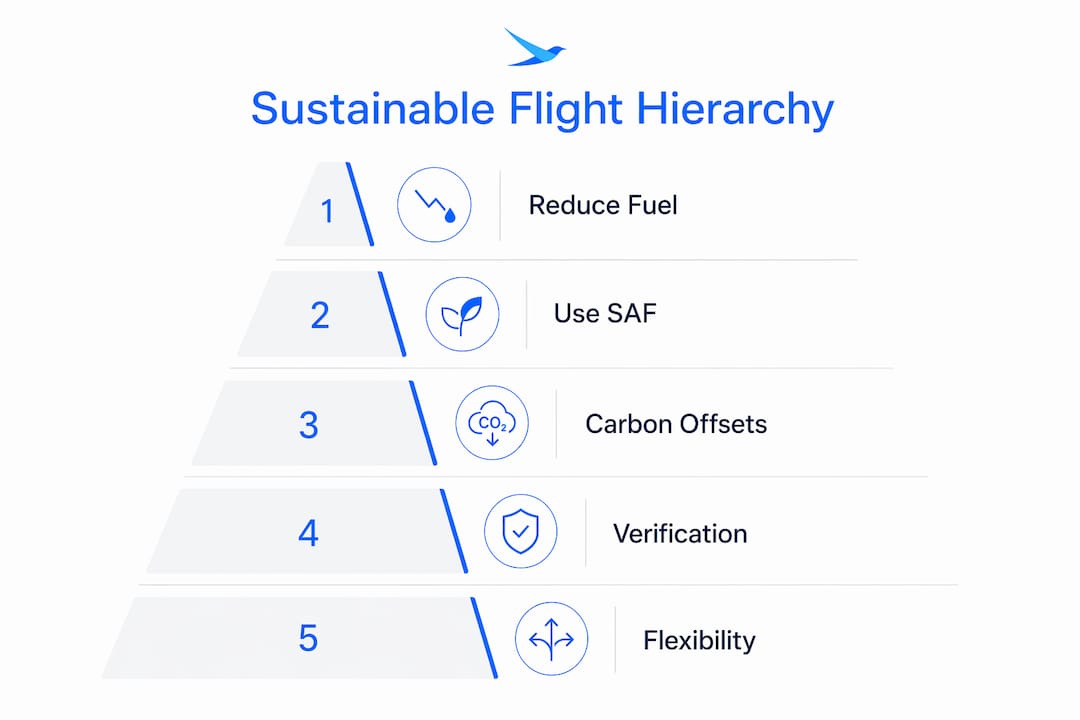
Think of the three pillars as a hierarchy, not a menu. Reducing actual fuel burn comes first. SAF comes second. Offsets handle whatever is left. Operators who skip straight to offsets and call themselves “carbon neutral” are doing the equivalent of buying gym memberships instead of exercising.
The three pillars:
- SAF: A drop-in replacement for conventional jet fuel that cuts lifecycle emissions by 50–80% without requiring aircraft modifications.
- Operational reductions: Route optimization, right-sizing aircraft for the trip, minimizing empty repositioning legs, and smarter scheduling. These reduce actual fuel burn at the aircraft level before any fuel or credit is purchased.
- Verified carbon offsets: Used last, to neutralize residual emissions that SAF and operational measures cannot yet eliminate.
The hierarchy matters because offsets are compensatory, not preventive. A flight that burns less fuel is genuinely cleaner. A flight that burns the same fuel and buys credits is less so. IATA and industry analysts consistently flag this distinction: credible sustainability strategies prioritize operational reductions and SAF before reaching for offsets.
How does SAF actually work on a private flight?
SAF is produced from feedstocks like waste cooking oil, agricultural residues, and synthetic pathways such as power-to-liquid. The Alternative Fuels Data Center confirms it blends into existing supply chains without aircraft modifications, which is why it can scale faster than electric or hydrogen alternatives.

Blending is governed by ASTM standards. Approved production pathways include HEFA (hydroprocessed esters and fatty acids) and ATJ (alcohol-to-jet), and fuels must meet ASTM D7566 or D1655 specifications. Current blends typically include varying proportions of SAF mixed with conventional jet fuel, depending on pathway and certification.
The supply chain wrinkle: SAF is rarely physically loaded onto your specific flight. Instead, operators use a book-and-claim system, where SAF is injected into the broader fuel supply and the emissions benefit is attributed to a specific flight via accounting. That attribution is legitimate when properly documented, but it requires verification.
Pro Tip: When an operator claims SAF use, ask for the blend percentage per flight, the name of the SAF supplier, and evidence that the book-and-claim certificate has been retired in a recognized registry. Vague references to “SAF partnerships” without documentation are a red flag.
What operational steps actually reduce fuel burn?
Operational measures are the unglamorous backbone of private jet sustainability. Research on private aviation emissions confirms that flight planning, aircraft selection, and scheduling strategies reduce fuel burn directly at the aircraft level, before any fuel or credit enters the picture.
The core levers:
- Right-size the aircraft. A light jet on a 400-mile trip burns far less than a large-cabin jet. Matching aircraft to mission is the single easiest operational win.
- Optimize routes and altitude. Direct routing and optimal cruise altitude cut distance and drag. Advanced flight planning software makes this routine for serious operators.
- Minimize repositioning. Empty repositioning legs are pure waste. Consolidating itineraries and using empty-leg inventory reduces these significantly.
- Reduce payload. Weight is fuel. Lighter loads on shorter trips add up.
For empty-leg travelers, schedule flexibility is the practical lever you control. Accepting a slightly different departure time or routing lets operators consolidate legs and reduce repositioning, which benefits both your cost and the flight’s emissions profile. Bluebirdjets members who stay flexible on dates can access better-routed legs that naturally align with these efficiencies.
What can carbon offsets actually do, and what are the red flags?
Offsets represent one metric ton of CO2 equivalent avoided or removed from the atmosphere. Used correctly, they neutralize residual emissions after SAF and operational reductions have done their work. Used incorrectly, they are a marketing tool.
High-integrity offsets require registry evidence and retirement in a recognized system. The credibility of an offset depends on the verification standard behind it and whether the underlying project actually delivers the claimed reduction.
Red flags to watch for:
- A “carbon neutral” claim with no breakdown of how much came from SAF or operational changes versus purchased credits.
- Offsets with no named verification standard (look for Gold Standard, Verra/VCS, or American Carbon Registry).
- Unusually cheap credits, which often signal low-quality or unverified projects.
- No retirement receipt showing the credit was permanently removed from circulation.
Questions to ask any operator about their offset program:
- Which verification standard governs the offset project?
- What type of project is it (forestry, methane capture, renewable energy)?
- Can you provide the retirement registry link or certificate number?
- What percentage of the flight’s emissions are covered by offsets versus direct reductions?
How do empty-leg memberships intersect with sustainability?
A private aviation study published in Communications Earth & Environment quantified direct private aviation emissions at 15.62 Mt CO2 in a recent multi-year analysis, with a notable share coming from short flights under 500 km. Empty repositioning legs are a significant contributor to that figure.
Empty-leg memberships like Bluebirdjets address this directly. When a jet needs to reposition anyway, filling that leg with passengers reduces the per-person emissions intensity of the flight compared with a bespoke charter that creates an additional repositioning leg. The aircraft was flying regardless; you are using capacity that would otherwise be wasted.
Sustainability pros of empty-leg memberships:
- Lower per-flight emissions intensity when using otherwise-empty repositioning legs.
- Potential for consolidated routing when members are flexible on timing.
- Lower cost frees budget to allocate toward SAF contributions or verified offsets.
Caveats to be honest about:
- Members have limited control over exact routing and SAF uplift on any given leg.
- SAF availability varies by airport and region, so not every empty leg will have SAF in the supply chain.
Pro Tip: Bluebirdjets members can ask the operator whether SAF is available at the departure airport for a given leg, and whether flexible date selection opens up legs with better consolidation. Small scheduling shifts often unlock meaningfully cleaner options.
How do you verify an operator’s sustainability claims?
| Claim to verify | Proof to request |
|---|---|
| SAF use | Fuel uplift record or supplier invoice showing blend percentage |
| Book-and-claim attribution | Retired book-and-claim certificate with registry reference |
| Fleet emissions data | Published annual emissions in metric tons per flight hour |
| Carbon offset quality | Retirement receipt with verification standard and project ID |
| Operational improvements | Documented fuel efficiency metrics or route optimization reports |
A credible operator publishes fleet SAF usage, annual emissions figures, and the split between direct reductions and offset purchases. If that data is not publicly available and the operator cannot produce it on request, the sustainability claim is marketing, not performance.
What do SAF premiums and availability mean for your costs?
SAF typically costs more than conventional jet fuel, and supply is concentrated at specific airports and regions. U.S. policy efforts, including federal SAF tax credit proposals analyzed by the Belfer Center, aim to close that cost gap, but as of 2026 the premium remains real.
For empty-leg members, the cost math works differently than for on-demand charter clients. The private aviation cost breakdown for empty legs is already lower than bespoke charter, which means the marginal cost of adding a SAF contribution is proportionally smaller. On-demand charter gives you more control over fuel choices but at a higher base price.
Practical guidance: if SAF availability at your departure airport is limited, prioritize operational measures (right-sized aircraft, direct routing) and verified offsets as the next-best alternatives. Availability is improving, but it is not yet universal.
Key Takeaways
SAF delivers the largest near-term carbon reduction in private flying, cutting lifecycle emissions by 50–80%, and should be prioritized over offsets when evaluating any operator’s sustainability claims.
| Point | Details |
|---|---|
| Prioritize the hierarchy | Reduce fuel burn first, then SAF, then verified offsets for residual emissions. |
| SAF lifecycle reduction | SAF cuts lifecycle carbon emissions by 50–80% compared with conventional jet fuel. |
| Verify before you fly | Request blend percentage, book-and-claim retirement evidence, and offset registry receipts from any operator. |
| Empty legs reduce waste | Using repositioning legs lowers per-person emissions intensity versus creating a new charter leg. |
| Bluebirdjets membership | Members can request SAF-aware legs and use schedule flexibility to access better-consolidated, lower-emission flights. |
The practical path most travelers overlook
The sustainability conversation in private aviation tends to get stuck on two extremes: either dismissing the whole effort as greenwashing or accepting vague “carbon neutral” labels at face value. Neither position serves you well.
What actually moves the needle is the hierarchy. Operators who have invested in SAF offtake agreements, published interim milestones like SAF percentage of uplifted fuel, and documented fleet emissions per flight hour are doing the real work. The ones who lead with offset purchases and bury the methodology are not.
For empty-leg travelers specifically, the leverage point is flexibility. The more rigid your schedule, the fewer options an operator has to consolidate legs, reduce repositioning, or route you through an airport with SAF supply. That flexibility is not just a cost tool. It is a sustainability tool. Members who treat their scheduling as part of the sustainability equation tend to find better options on both dimensions.
The verification checklist in this article is not bureaucratic. It is the fastest way to separate operators who have made real commitments from those who have made real brochures.
Bluebirdjets membership: lower-cost access with sustainability in mind
Private jet access without the full charter price is the core of what Bluebirdjets offers. The membership gives you unlimited access to empty-leg inventory, which means you are flying legs that would reposition anyway, at a fraction of the cost of a bespoke charter.
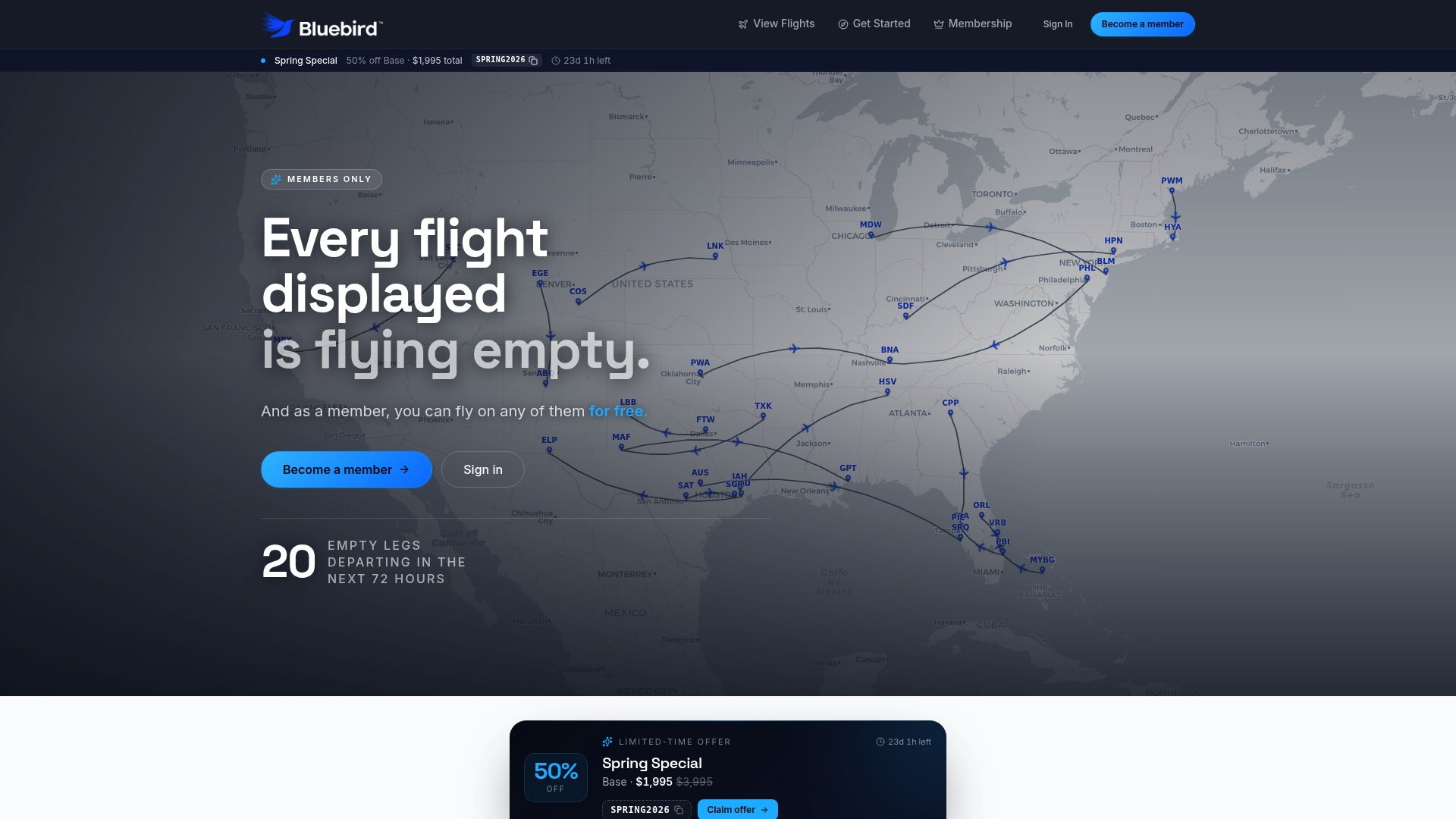
For sustainability-minded travelers, that cost advantage creates real room to act. The savings versus on-demand charter can go toward SAF contributions or verified offset programs. Members who stay flexible on dates and routes can request SAF-blended legs where available and access better-consolidated itineraries that reduce per-flight emissions intensity. Browse current empty legs to see what is available for your route, or visit the membership page to learn how access works.
Useful sources
- IATA: Sustainable Aviation Fuel — SAF lifecycle reduction figures (50–80%), industry hierarchy of reductions vs offsets, and IATA’s near-term SAF roadmap.
- Alternative Fuels Data Center: SAF — Drop-in compatibility, ASTM-approved production pathways, book-and-claim mechanics, and U.S. supply availability data.
- Belfer Center: U.S. SAF Policy Options — Federal policy analysis on SAF tax credits, the Renewable Fuel Standard, and the 3-billion-gallon 2030 target.
- Communications Earth & Environment: Private aviation emissions — Quantified private aviation CO2 at 15.62 Mt and analyzed the role of short-haul flights in emissions intensity.
- Econetix: Operational best practices — Practical breakdown of route optimization, aircraft selection, and repositioning reduction strategies.
- Bluebirdjets: Private aviation booking best practices — Scheduling and booking strategies that reduce repositioning and improve operational efficiency for members.
This article is general information about sustainable aviation practices, not professional environmental or legal advice. Verify current SAF availability, offset standards, and regulatory requirements with your operator or a qualified advisor for your specific situation.