How Event Travel Works on Private Jets in 2026

How Event Travel Works on Private Jets in 2026
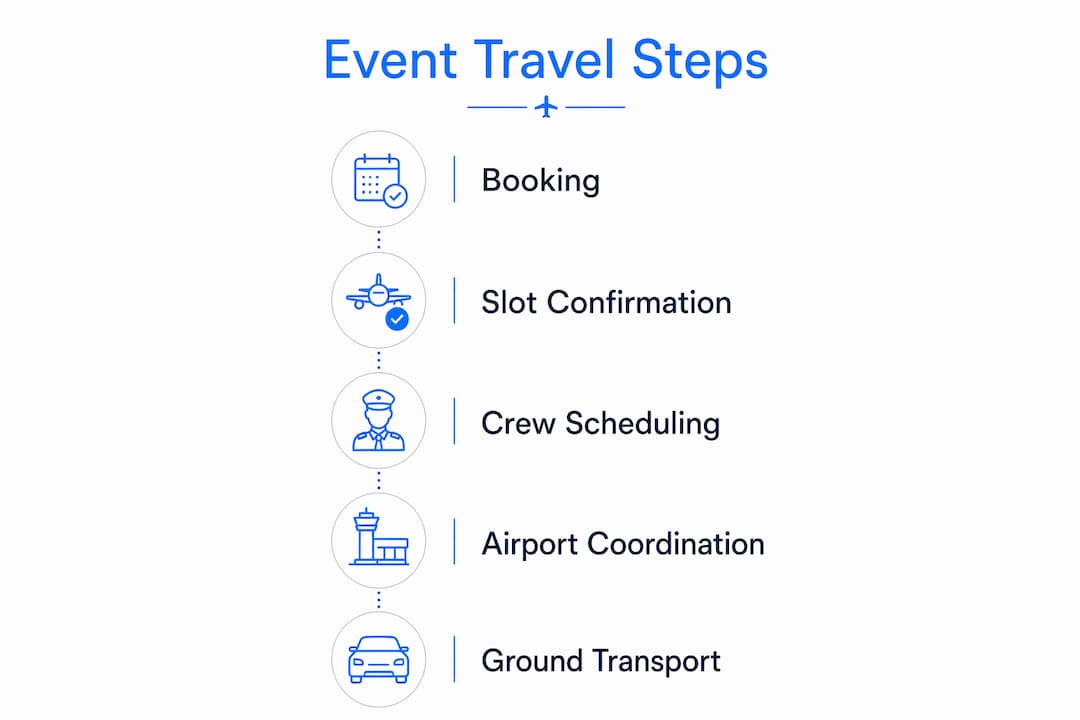
Private jet event travel works by synchronizing three interdependent elements: the aircraft, the airport slot, and the ground transportation chain. Get all three right and you arrive at the Super Bowl, Coachella, or a major corporate summit on your schedule. Miss any one of them and you’re stuck in event-week gridlock despite flying private. That’s the core insight aviation operations specialists emphasize most: the aircraft alone is never enough.
The advantages over commercial travel are real and specific:
- Punctuality: You depart when you’re ready, not when an airline decides.
- Flexibility: Schedules shift around the event, not around hub connections.
- Privacy: The entire cabin is yours, from boarding to touchdown.
- Proximity: Private jets access thousands of smaller airports closer to event venues.
- Speed through the terminal: Car to wheels-up in roughly 15 minutes at a Fixed Base Operator (FBO).
- Luggage freedom: No weight limits, no carousel, no lost bags.
Pro Tip: Aviation operations specialists stress that aircraft, airport slot, and ground transport form one logistics chain. Securing the jet without confirming the slot and the car waiting at the other end is the single most common mistake event travelers make.
Table of Contents
- What major US events make private jet travel worth it?
- What you need to confirm before booking a private jet for an event
- How to manage the full logistics chain for event travel
- The real benefits of flying private to a major event
- Bluebirdjets gives you access to event travel without the full charter price
- Key Takeaways
What major US events make private jet travel worth it?
Certain events create conditions where commercial travel essentially breaks down. Airport capacity maxes out, road closures multiply, and hotel rooms near the venue disappear. Private aviation fills that gap by giving attendees control over timing and access that commercial carriers simply cannot offer during a 48–72 hour demand spike.
The events where private jets deliver the clearest advantage:
- Major sporting championships: Super Bowl, Kentucky Derby, US Open (tennis and golf), NBA Finals, and college football playoff games draw concentrated waves of high-net-worth travelers into single metro areas over a single weekend.
- Music festivals: Coachella, Stagecoach, and Lollapalooza pull large groups who need flexible arrival and departure windows across multiple days.
- Film and cultural events: Sundance Film Festival in Park City, Utah, and major art fairs like Art Basel Miami Beach require attendees to move quickly between screenings, meetings, and private dinners.
- Fashion weeks: New York Fashion Week compresses dozens of shows into a few days, making flexible scheduling a professional necessity for buyers, editors, and executives.
- Corporate summits and conferences: Events like CES in Las Vegas or major financial conferences in New York and Chicago involve executives who cannot afford missed connections or delayed arrivals.
- Racing events: The Formula 1 Miami Grand Prix and Indianapolis 500 combine tight venue access with severe airport congestion.
Bluebirdjets operates across all of these event categories, giving members access to empty leg flights that often align with the repositioning patterns these events generate.
What you need to confirm before booking a private jet for an event
Booking a private jet for an event is categorically different from booking a standard charter. The questions multiply fast, and the answers have real cost and scheduling consequences.
Airport slots and parking come first. A confirmed aircraft does not automatically mean a confirmed airport slot. At capacity-constrained airports during major events, operators must request precise arrival and departure windows, and the final slot can differ from your preferred time. Worse, aircraft may be allowed to drop passengers but not remain parked, forcing a repositioning flight to a secondary airport. That adds cost, complexity, and uncertainty to your return leg.
Crew duty time is a hard constraint. FAA regulations cap how long a flight crew can legally work in a given period. Airport curfews during events often require overnight crew stays or repositioning, which affects both your schedule and your total cost. Verify that the crew can legally complete the return flight before you sign anything.
Event fees are mandatory and can increase after booking. FBOs impose temporary surcharges during peak demand windows to cover additional staffing, security, and ramp management. These fees are set by the FBO independently. Neither your operator nor your broker can waive them. For smaller events, fees typically run at a few thousand dollars; globally significant events at primary airports can be much higher. FBOs can also raise fees or extend the fee period after your booking if traffic exceeds their projections.
Pricing premiums are standard, not exceptional. During peak event weeks, aircraft availability drops sharply with pricing premiums rising 30–100%, quote turnaround stretches from hours to days, and booking lead times extend significantly. The travelers who manage this best accept pricing fluidity and prioritize time flexibility.
Key booking considerations to confirm before committing:
- Slot and parking status at the primary airport
- Repositioning plan if the aircraft cannot stay overnight
- Crew duty compliance for the full round trip
- Event fee exposure at the destination FBO
- Backup airport options within reasonable ground transfer distance
- Cancellation terms and event-overrun clauses in the contract
- Ground transfer coordination, including driver accreditation and road closure contingencies
For a deeper look at navigating peak booking windows, the dynamics shift significantly depending on how far in advance you move.
How to manage the full logistics chain for event travel
The logistics of private jet event travel extend well beyond the flight itself. Road closures, security zones, and event traffic can erase every minute you saved in the air. A credible plan addresses each link in the chain before departure day.
Pro Tip: Book with an advisor who has handled the specific event you’re attending, not just general charter experience. Event-specific logistics, including which secondary airports have parking, which FBOs have pre-negotiated slots, and which ground routes avoid closures, are institutional knowledge that takes years to build.
Aircraft and airport coordination
Savvy planners often book secondary airports 30–45 minutes from event sites to avoid primary field gridlock. That trade-off requires a ground transfer plan that accounts for the extra drive time, but it frequently yields better slot availability, lower event fees, and a more reliable departure window after the event ends.
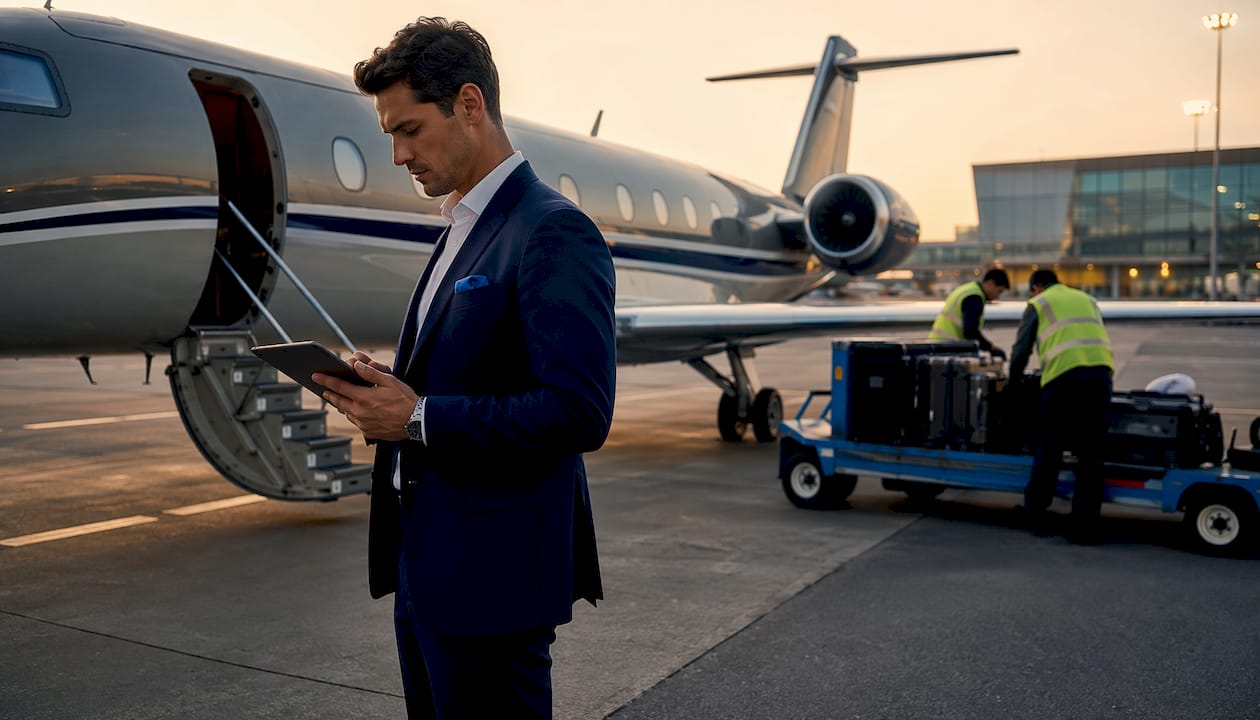
Drop-and-go scenarios are common at high-demand events. The aircraft delivers passengers, then repositions to a secondary airport to park. On the return, it flies back to pick up passengers. This arrangement increases the total cost but is often the only viable option when ramp space at the primary airport is fully committed.
Ground transportation essentials
The ground plan must cover every variable that event traffic introduces:
- Driver accreditation for restricted venue access zones
- Confirmed vehicle access routes accounting for road closures
- Backup vehicles staged in case of primary vehicle delays
- Passenger meeting points communicated clearly before departure
- A separate luggage vehicle for large groups or oversized equipment
- Helicopter transfer arrangements where road access is genuinely compromised
- Post-event pickup location and timing, with contingency for event overruns
Combining a private jet with a helicopter transfer for the final mile is a proven solution at events where road closures make ground transport unreliable. Both legs can be managed under a single contract, which simplifies communication and accountability.
Security and privacy protocols

Executive event travel requires additional security layers beyond standard FBO procedures. Identity verification and bag screening at the FBO are discreet and typically take under 10 minutes, with no public queues or TSA-style lines. For high-profile attendees, coordinating with the FBO in advance about apron access, close protection vehicle positioning, and departure timing keeps arrivals and departures controlled.
For international event travel, customs and immigration are handled at the FBO rather than a public terminal. A customs officer meets the aircraft, checks passports, and clears the flight, typically within 10–20 minutes of landing. Most passengers are off the airport property within 15 minutes.
Buffer timing and contingency planning
Resilience matters more than luxury during intense event weeks. Build realistic buffers into every segment: the ground transfer to the airport, the departure window, and especially the post-event return. Events run long. Traffic is unpredictable. Airport curfews are fixed. A plan that only works if everything goes perfectly is not a plan.
The real benefits of flying private to a major event
The practical advantages of private jet event travel compound across every stage of the trip, from the moment you leave your hotel to the moment you land at your next destination.
Timing is entirely yours. You set the departure time. The aircraft waits for you, not the other way around. For domestic flights, arriving at the FBO 15–30 minutes before departure is standard. For international, 30–45 minutes covers customs processing. Compare that to the two-hour commercial airport buffer on a good day, multiplied by event-week terminal congestion.
Airport proximity changes the math. Private jets access thousands of airports that commercial carriers cannot serve. For events in markets like Palm Beach, Napa Valley, or Park City, the closest private airport can put you 20 minutes from the venue while commercial passengers are still on a shuttle bus from a hub airport an hour away. Understanding how airport slots work at these smaller fields is part of planning a tight event itinerary.
The cabin is a working and social environment. Privacy across the full cabin means confidential conversations, deal work, and pre-event preparation happen at altitude rather than in a crowded lounge. Catering is arranged in advance to your specifications. Dietary preferences, specific wines, and timing of service are all confirmed before boarding.
Luggage travels with you, not separately. No weight limits, no checked bag fees, no carousel wait. Equipment for events, whether camera gear, golf clubs, or formal wear, loads directly onto the aircraft and comes off the same way. For a deeper look at how private aviation handles baggage, the operational difference from commercial travel is significant.
Multi-city itineraries become manageable. Attending the Kentucky Derby on Saturday and a board meeting in New York on Monday is a realistic schedule when you control the aircraft. Post-event departures flex around the actual end of the event, not a fixed commercial flight time you booked three months earlier.
Key benefits for event attendees:
- Departure on your schedule, not an airline’s
- Access to smaller airports closer to event venues
- No security queues, no connections, no baggage carousel
- Full cabin privacy for sensitive conversations
- Catering and amenities configured before boarding
- Flexible post-event departure timing
- Multi-city routing under a single logistics plan
Bluebirdjets members access these advantages through the platform’s empty leg inventory, which often aligns with the repositioning flights that major events generate. Route flexibility, covered in detail in the route flexibility guide, is one of the most underused tools for reducing cost during peak event weeks.
Bluebirdjets gives you access to event travel without the full charter price
Most of the costs and complexity in private jet event travel come from booking a full charter at peak demand pricing. Bluebirdjets takes a different approach: a membership that gives you unlimited access to empty leg flights on the platform.
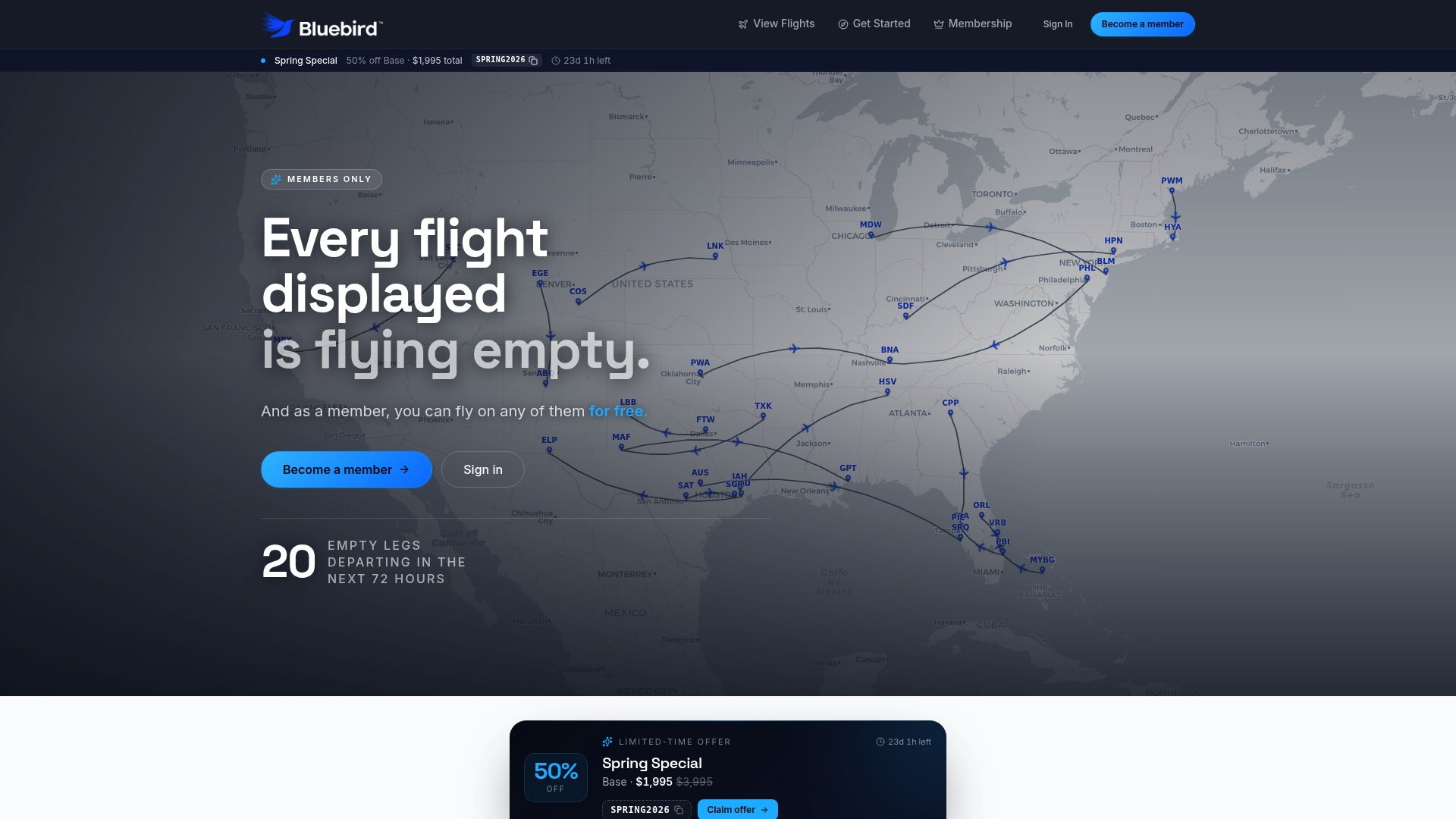
Empty legs are repositioning flights that operators need to complete regardless. During major event weeks, those repositioning flights multiply as aircraft drop passengers and reposition to secondary airports. That inventory is exactly what Bluebirdjets members tap into. Instead of paying full charter rates, which often come with substantial peak week premiums due to increased demand and limited aircraft availability, members browse real-time empty leg availability and book at a fraction of the cost.
The trade-off is timing flexibility, which is the same flexibility that aviation advisors recommend building into any event travel plan anyway. If you can depart Wednesday instead of Thursday, or return Monday morning instead of Sunday night, the Bluebirdjets membership pays for itself quickly. Check current availability or explore the membership options to see which empty legs align with your next event.
Key Takeaways
Private jet event travel succeeds when aircraft, airport slot, and ground logistics are confirmed as a single integrated plan, not three separate bookings.
| Point | Details |
|---|---|
| Logistics chain is one unit | Aircraft, airport slot, and ground transport must all be secured together to avoid delays during event weeks. |
| Pricing premiums are predictable | Pricing premiums during peak event weeks rise 30–100%, with booking lead times extending significantly. |
| Event fees are non-negotiable | FBOs set and enforce event fees independently; secondary airports and adjusted timing are the main ways to reduce exposure. |
| Resilience beats perfection | Backup airports, buffer timing, and flexible departure days protect the plan when events run long or traffic is unpredictable. |
| Bluebirdjets membership | Members access empty leg inventory generated by event repositioning flights, reducing cost without sacrificing the core private travel advantages. |