Operators Must Serve Drinks: Private Jet Alcohol Rules for Flyers
Operators Must Serve Drinks: Private Jet Alcohol Rules for Flyers
Yes, you can bring your own alcohol on almost any domestic private flight, but whether you can actually drink it is up to the operator, not you. On charter flights governed by 14 C.F.R. § 135.121, the certificate holder must serve every drink poured, and the pilot in command can refuse to fly anyone who looks intoxicated under 14 C.F.R. § 91.17. International legs add customs and declaration considerations that domestic hops don’t have.
TL;DR:
- Pilots have the final say on passenger intoxication based on appearance, with no formal testing required under federal regulations.
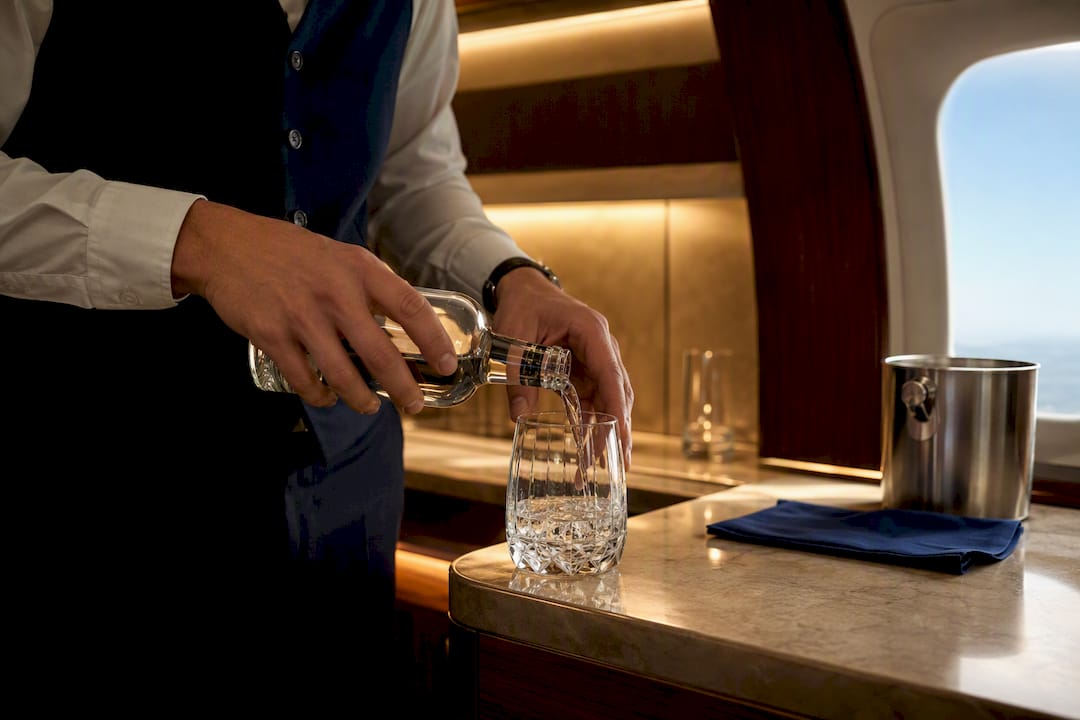
- Only the airline or operator staff can serve alcohol on a private charter; passengers cannot self-serve or pour their own drinks.
- Bringing bottles is allowed, but they must be stored and dispensed by crew, especially for high-value or specialty spirits.
- International flights require declarations and customs paperwork for alcohol over certain thresholds, with rules varying by destination country.
- Proper planning and early communication with the operator about alcohol, guest list, and special requests ensure compliance and smooth service.
Table of Contents
- Private Jet Alcohol Rules: What 14 C.F.R. § 91.17 and § 135.121 Actually Say
- BYOB vs. Operator-Served Alcohol: Who Actually Pours the Drink
- Intoxication on a Private Jet: How Crews Judge It and What Happens Next
- Packing Alcohol for a Private Flight: FBO Rules, Hazmat Limits, and Customs
- Private Jet Alcohol Etiquette: How to Drink Well Without Disrupting the Flight
- How Alcohol and Bar Service Change Your Charter Quote
- How Bluebird Jets Members Handle Alcohol and Catering Requests
- Balancing Indulgence With Responsibility in the Cabin
- Skip the Guesswork With Bluebird Jets Membership
- Sources
- FAQ
Private Jet Alcohol Rules: What 14 C.F.R. § 91.17 and § 135.121 Actually Say
Two federal regulations govern nearly every question in this article, and neither one reads the way most travelers assume. Understanding them changes how you pack, how you order, and how you behave once the cabin door closes.
14 C.F.R. § 91.17 covers every civil aircraft, private or commercial. It says that, barring an emergency, no pilot may allow a person who appears intoxicated to be carried aboard. The word “appears” matters. The regulation doesn’t require a blood alcohol test or a formal medical opinion. It gives the pilot in command a subjective, on-the-spot judgment call, and that call is final. If a pilot decides you look impaired at the FBO curb, you are not getting on the airplane, and there is no appeal process at the ramp.
14 C.F.R. § 135.121 applies specifically to Part 135 charter operations, which is how most private jet flights, including empty legs, are flown. It states that no one may drink an alcoholic beverage aboard unless the certificate holder operating the flight actually served it, and the certificate holder cannot serve anyone who already appears intoxicated. This is the rule that surprises first-time charter clients most: you cannot legally pour your own drink from a bottle you brought, even if it’s sitting six inches from your hand. Someone employed by the operator has to be the one dispensing it, per the regulation’s own text.
The enforcement stakes are real on both sides. For pilots and operators:
- FAA certificate action, including suspension, for boarding or serving an intoxicated passenger
- Civil liability exposure if an intoxicated passenger causes harm to themselves, other passengers, or property
- Insurance complications, since host liquor liability coverage varies by policy and isn’t automatic
- Diversion costs and scheduling disruption if a flight has to land early because of a passenger dispute
That last point explains why crews are trained to intervene early rather than wait for a situation to escalate. A pilot who lets a borderline call slide isn’t just being permissive. They’re accepting personal regulatory risk on your behalf.
BYOB vs. Operator-Served Alcohol: Who Actually Pours the Drink
You can absolutely stock the cabin with your favorite bourbon or a case of a specific Champagne the operator doesn’t carry. What you cannot do, legally, is treat that bottle as a self-service bar. On a Part 135 flight, the FARs require the certificate holder to control dispensing, so operators typically handle it one of three ways: a flight attendant or hostess pours from your stock, a pilot or ground crew member pours before departure and again during a stop, or the cabin bar stays secured and drinks come out only on request.
To avoid confusion at boarding, tell the operator ahead of time about:
- Specific bottles you’re bringing so the crew knows to store, chill, or open them properly
- Glassware preferences if you want something other than standard plastic or house glasses
- Whether minors will be on board, since operators commonly moderate service when younger passengers are flying
- Any dietary or allergy notes tied to mixers, garnishes, or specific spirits
A “help yourself” instruction from you to the crew doesn’t satisfy the regulation, no matter how relaxed the flight feels. Someone still has to physically hand you that drink.
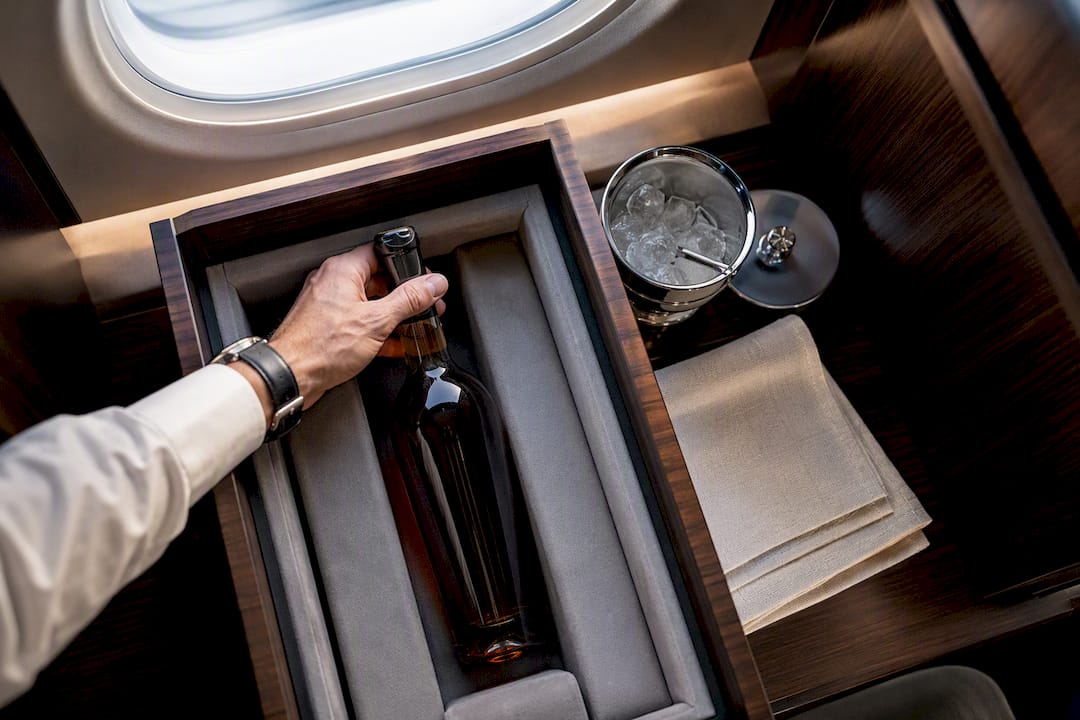
Pro Tip: If you’re bringing a bottle you care about, such as an aged single malt or a hard-to-find vintage, mention it in your booking notes days ahead, not at curbside. That gives the operator time to arrange proper storage instead of tossing it in a galley bin next to the ice.
Intoxication on a Private Jet: How Crews Judge It and What Happens Next
There’s no breathalyzer at the top of the airstairs. Crews rely on visible cues: slurred speech, unsteady balance, aggressive or erratic behavior, and slower reaction time. The pilot in command’s judgment is inherently subjective, and that’s by design. The FARs don’t ask pilots to prove impairment scientifically. They ask pilots to make a reasonable call and stand by it.
The consequences of getting flagged, or of an operator getting it wrong, run in both directions:
- Denied boarding at the FBO, sometimes with no refund depending on the operator’s terms
- Mid-flight service cutoff, where crew stops pouring even if the flight continues
- Unscheduled diversion or early landing if behavior becomes disruptive or unsafe
- FAA certificate action against the pilot or operator for either serving an intoxicated passenger or, in disputed cases, wrongly refusing one
- Civil suits, since courts have tied FAR violations to liability claims when an intoxicated passenger causes injury
Aviation Week’s coverage of enforcement actions makes a point worth sitting with: charter operators who let service run unchecked, even informally, are the ones who end up in front of the FAA explaining themselves. The safest flights are the ones where the crew cuts someone off a drink early, before things get uncomfortable for everyone else in the cabin.
Packing Alcohol for a Private Flight: FBO Rules, Hazmat Limits, and Customs
Private terminals operate differently from commercial checkpoints, and that changes what you can physically bring aboard. Departing from an FBO instead of a commercial gate typically means you skip the 3-1-1 liquids rule that limits commercial passengers to small bottles in a quart bag. Full-size bottles often travel without issue on private departures, though the operator still sets storage and handling policy.
Federal hazmat limits still apply regardless of terminal type:
- Unopened retail bottles between 24% and 70% alcohol by volume are allowed up to 5 liters per passenger
- Anything above 70% alcohol by volume is restricted under federal hazmat rules [FAA hazmat guidance].
- Standard wine, beer, and most spirits fall well under these thresholds and travel without issue
International legs add a second layer. Some countries require declaring alcohol above a duty-free threshold, and enforcement varies by destination and by how much you’re carrying. Keep receipts for higher-value bottles, and loop your operator in early so they can coordinate customs paperwork and ground handling on the arrival side. A quick note in your booking request saves a conversation on the tarmac.
Private Jet Alcohol Etiquette: How to Drink Well Without Disrupting the Flight
The best private flights feel effortless because the groundwork happened before takeoff. Coordinate your bottle list, guest count, and any dietary needs with the operator when you book, not when you arrive. This gives the crew time to chill wine properly, source the right glassware, and plan around any allergies among your guests.
A few practices separate a smooth cabin from an awkward one:
- Pace yourself relative to flight time. A three-hour transcontinental hop gives you more room than a 45-minute regional leg where the crew barely finishes the safety briefing before descent starts.
- Tip appropriately when a flight attendant or hostess is present. There’s no universal percentage, but a cash tip in a moderate range per crew member for attentive service is common on longer or more elaborate flights.
- Moderate service around minors. If children are flying with your group, expect and support a more conservative bar setup.
- Respect crew requests immediately, even if you disagree with the timing. A crew member cutting off service is protecting their certificate, not making a social judgment about you.
Pro Tip: If you’re hosting guests who don’t know private aviation etiquette, a quick heads up before boarding, something as simple as “the crew pours, we don’t self-serve,” prevents an awkward moment at 40,000 feet.
How Alcohol and Bar Service Change Your Charter Quote
Bar service is rarely a flat line item, and the details you leave off your initial request are usually the ones that show up as add-ons later. Premium or rare bottles, custom cocktails requiring specific mixers, extra crew brought on specifically to handle beverage service, and specialty glassware or bagged ice all commonly carry a charge.
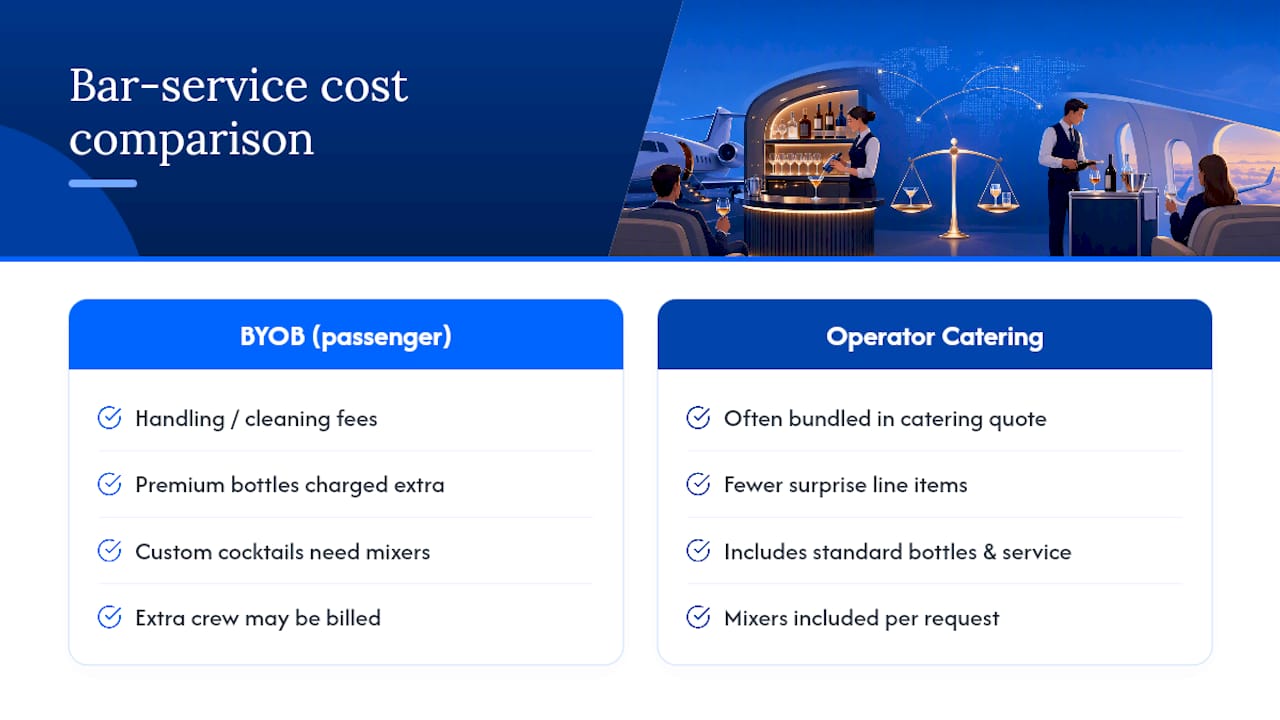
Bringing your own bottle can still cost more than it seems. Some operators add handling or cleaning fees for passenger-supplied alcohol, especially on higher-end aircraft where cabin upkeep is stricter. Compare that against operator-supplied options, which are often bundled into the catering quote with no surprise line item.
The fix is simple: list your bar and catering requests when you request the quote, not after you’ve already committed. Vague requests turn into vague charges, and vague charges turn into the kind of surprise markups that show up on the final invoice instead of the estimate.
How Bluebird Jets Members Handle Alcohol and Catering Requests
Bluebird Jets members flying on operator-owned Learjet 60 aircraft get the same regulatory framework as any Part 135 charter passenger, which means the crew still controls dispensing under § 135.121. What changes is how far ahead you can plan for it.
When you request a flight, include your guest count, any special bottles you want on board, and whether minors will be part of your group. That gives the operator lead time to coordinate ice, glassware, and any customs paperwork on international routes. Because empty legs move fast and inventory updates daily, catering logistics get tighter the closer you are to departure. A detailed booking note submitted early is the difference between a bar setup that matches what you wanted and one that’s assembled on the fly. Members bringing more than a bottle or two should also check how much cabin storage a Learjet 60 actually offers before assuming everything fits.
Balancing Indulgence With Responsibility in the Cabin
Private aviation gives you freedom most travelers never get, but that freedom runs on trust between you and the crew. The pilots and flight attendants enforcing these rules aren’t being difficult. They’re protecting a certificate that took years to earn and that one bad call could cost them. Plan your bar requests ahead of time, treat the crew’s judgment as final, and the whole experience runs the way it’s supposed to: quietly, comfortably, and without incident.
— Nick
Skip the Guesswork With Bluebird Jets Membership
Booking a one-off charter means negotiating catering, bar service, and guest logistics fresh every single time, often under time pressure when a flight comes together last minute. Bluebird Jets membership removes that friction by giving you unlimited access to published empty leg flights on operator-owned Learjet 60 aircraft, with room to bring up to six guests and the ability to submit your bottle list, guest count, and minor-passenger notes directly through your booking request.
Because inventory updates daily and priority booking is built into the membership, you’re not scrambling to coordinate a bar setup just before departure. You can browse live empty leg flights right now and see what’s departing this week, or check the membership details to see how unlimited access works before your next spontaneous trip.
This article is general information, not a substitute for advice from a qualified lawyer. Consult a qualified legal professional about your own circumstances before acting on anything here.
Sources
- FAA — Alcoholic beverages (hazmat guidance)
- 14 CFR § 135.121 - Alcoholic beverages (e-CFR / LII)
- JetLaw — Know the risks of serving alcohol on flights
- Aviation Week — Point of law: Drunk on a plane
- PrivateJetLives — Private jet liquids, food, alcohol rules (2026 guide)
FAQ
What can you not bring on a private jet?
Federal hazmat rules restrict alcohol above 70% alcohol by volume, and most operators bar firearms, certain sharp items, and undeclared hazardous materials, so check with your operator on specifics before packing anything unusual.
Do you tip a private pilot?
Pilots typically aren’t tipped the way flight attendants or hostesses are, but a cash tip in a moderate range per crew member for attentive bar or catering service is common.
Can I bring a 750ml bottle on a plane?
Yes, on a private jet departing from an FBO, full-size bottles generally travel without issue since private terminals typically bypass the commercial 3-1-1 liquids rule, though the 5-liter federal hazmat limit for beverages between 24% and 70% alcohol by volume still applies.
What are the alcohol rules for flying on airplanes?
Under 14 C.F.R. § 91.17, pilots can refuse to carry anyone who appears intoxicated, and under § 135.121, only the certificate holder operating the flight, not the passenger, may legally serve alcohol on board.