Private Jet Lounges: Get In Without Membership, Follow TSA Rules

Private Jet Lounges: Get In Without Membership, Follow TSA Rules
Private jet lounge access means entry to an FBO or private-aviation lounge controlled by the aircraft operator or FBO, not seating inside an aircraft cabin. You typically get in through an operator or FBO invitation, by paying a day-use fee, or through an approved airport or membership program. Ramp access and security checks are handled by crew or FBO staff under TSA and airport rules, so plan ahead rather than expecting walk-up entry.
TL;DR:
- Airport standards shape amenities, so one FBO may offer showers or sleep rooms while another has only a waiting area; confirm services directly.
- Before traveling, confirm your operator’s FBO arrangement, lounge hours, guest limit, escort requirements, and whether access carries a day use or fuel related fee.
- FBO staff or crew verify passengers, who need government issued identification; CMAP serves eligible crew only, and staff usually escort travelers to aircraft.
- Arrive 20 to 30 minutes before a domestic departure, bring a government issued ID and trip confirmation, and allow extra time for international customs.
- Flight memberships may offer booking priority and concierge help, but they do not own FBO lounges or guarantee access; travelers must coordinate with the FBO.
Table of Contents
- Where these lounges live and who runs them
- What to expect inside an FBO lounge
- Security rules, ramp access, and customs basics
- Arranging access: operator invites, day fees, and membership
- Your arrival and waiting checklist
- Why membership platforms change the lounge equation
- A membership built to cut trip friction
- FAQ
- Sources
Where these lounges live and who runs them
Private jet lounges almost always sit inside a fixed-base operator (FBO) facility or a dedicated private or corporate terminal, separate from the commercial concourse. An FBO is the business that fuels, parks, and services private and business aircraft at an airport, and its passenger lounge is a byproduct of that ground-handling role rather than a stand-alone amenity. The size of the airport and its own minimum standards for aeronautical businesses shape what any given FBO can offer, which is why a major business-travel hub might have several competing FBOs with full lounges while a smaller airport has one modest waiting room.
If you need to find a lounge before a trip, a few approaches work reliably:
- Check the airport’s own website, which usually lists every FBO operating there.
- Call the FBO directly to ask about lounge hours, amenities, and guest access.
- Ask your aircraft operator or charter coordinator, since they book ramp space and often know which FBO fits your schedule best.
What to expect inside an FBO lounge
Most FBO lounges share a common core: a waiting area, private meeting rooms, high-speed Wi-Fi, and complimentary refreshments. Larger or higher-traffic facilities add showers, sleep rooms, and dedicated concierge desks that can arrange ground transport or catering while you wait. Confirming Wi-Fi reliability matters if you plan to work from the lounge, and it’s worth checking what the connection can handle before a call-heavy travel day.
Premium FBOs go further, with executive parking for arriving vehicles, flight-planning rooms for crew, and conference technology for passengers who need to run a meeting between flights. According to NATA, modern FBO terminals commonly offer lounges, private meeting rooms, Wi-Fi, refreshments, and in some cases showers, sleep rooms, and concierge services that coordinate ground logistics.
At select airports, FBOs featured in industry partnership networks offer sleep rooms, conference facilities, 24-hour concierge, and on-site customs handling, according to NBAA’s FBO partnership examples. That level of service isn’t universal, so it’s worth asking specifically what a given facility includes rather than assuming every FBO matches the high end of the category.

Security rules, ramp access, and customs basics
FBOs function as both hospitality providers and security gatekeepers, which changes how lounge access actually works compared to a commercial terminal. Under TSA general aviation security guidance, FBOs follow airport security programs and typically verify passengers through aircraft crew or FBO staff rather than a centralized TSA checkpoint. Ramp access is restricted, and moving from the lounge to the aircraft generally requires an escort from crew or FBO personnel.
A few specifics worth knowing before you travel:
- FBOs must adopt a formal security program and designate a security coordinator responsible for screening and access control, per regulatory requirements for FBO security programs.
- The Crewmember Access Point (CMAP) is a voluntary biometric program limited to eligible crewmembers at participating operators, not a general passenger access route.
- For international arrivals, some FBOs maintain on-site CBP facilities, but hours can be limited and advance notice is often required.
If you’re unsure how a specific airport handles screening for private flights, our breakdown of TSA private jet screening scenarios walks through when TSA and FBO procedures actually intersect.
Arranging access: operator invites, day fees, and membership
Securing lounge time comes down to three practical routes, and most travelers use a mix of them depending on how often they fly privately.
- Contact your aircraft operator or the FBO directly before your trip. Confirm which FBO you’ll use, lounge hours, and whether your operator has a standing relationship that includes lounge privileges.
- Ask about day-use fees, guest policies, and escort requirements. Some FBOs charge a facility fee tied to fuel purchase or ramp fees waived for fuel customers, and most limit how many guests can wait in the lounge with you, so it helps to know guest policy details before arrival.
- Consider a recurring access or membership arrangement if you fly often. These typically bundle priority booking and concierge support, reducing the back-and-forth of arranging access trip by trip. Our overview of different private-aviation access models breaks down how these options compare.
Pro Tip: If your trip crosses an international border, call ahead to confirm the FBO’s customs facility hours. Some locations, like the one described in NBAA’s coverage of the Leesburg Airport customs facility, operate on limited schedules and need advance notice.
Your arrival and waiting checklist
A smooth lounge-to-aircraft transition depends on timing and having the right documents ready before you walk in.
- Arrive with buffer time. Domestic private flights generally call for arriving 20 to 30 minutes before departure; international flights need more, especially if customs clearance is involved.
- Bring identification and confirmation. A government-issued ID or passport, your operator’s trip confirmation, and any passenger manifest information the operator requests should be ready to hand over.
- Coordinate logistics in advance. Flag wheelchair needs, confirm ground transport pickup, and let your operator know if you’re arriving internationally so customs notification happens on schedule. For a full picture of what the process looks like once you’re moving toward the aircraft, see our private jet boarding guide.
Why membership platforms change the lounge equation
Owning the flight side of the equation does not replace FBO coordination, but it removes a lot of the guesswork around when and where you’ll need lounge access in the first place. When a membership gives you live visibility into available flights and priority booking, you know your FBO and timing well ahead of departure instead of scrambling the night before. Concierge support can also help confirm lounge hours or ground transport, though the lounge itself still belongs to the FBO, not the membership. The practical split is simple: the flight and the schedule are ours to simplify, the lounge and ramp access are still the FBO’s domain.
— Nick
A membership built to cut trip friction
We built Bluebirdjets around the idea that spontaneous private travel shouldn’t require constant phone calls and broker back-and-forth. Our Base and Plus membership plans give you unlimited access to live empty-leg inventory on our own Learjet 60 fleet, with priority booking and concierge support that can help coordinate FBO details and ground transport around your flight. Base membership runs $3,995 per year, and Plus membership runs $9,995 per year for travelers who want faster priority in the booking queue, with a one-time Skip-The-Line fee of $2,000 available for a single flight when you need to move to the front of the line.
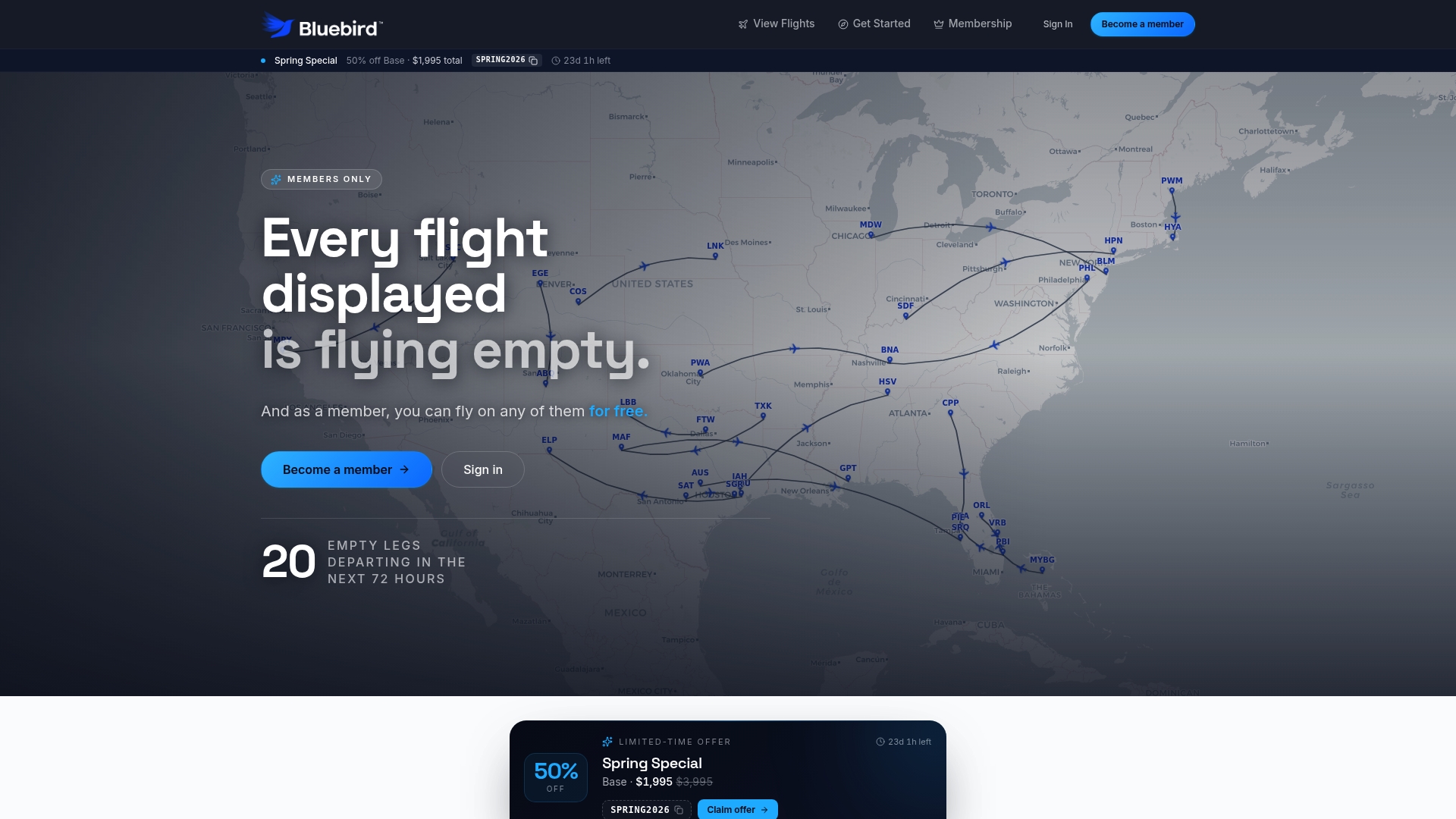
If spontaneous access to empty-leg flights fits how you travel, explore membership details and see which plan matches your schedule.
FAQ
What counts as private jet lounge access?
It refers to entry into an FBO lounge or private terminal, not seating inside the aircraft cabin itself. Access usually comes through an operator or FBO invitation, a paid day-use arrangement, or a membership program that includes lounge coordination.
Do I need ID to enter an FBO lounge?
Yes. Under TSA general aviation guidance, FBOs verify passengers through crew or FBO staff rather than a centralized checkpoint, so a government-issued ID or passport is standard.
What is the Crewmember Access Point, and does it apply to passengers?
The Crewmember Access Point (CMAP) is a voluntary biometric program limited to eligible crewmembers at participating operators. It is not a general passenger access route, so most travelers will still go through standard FBO verification.
Why do lounge amenities vary so much between airports?
Airport sponsors set their own minimum standards for aeronautical businesses under FAA advisory guidance, which shapes what services an FBO is required or able to provide. That’s why one airport’s FBO might offer showers and sleep rooms while another sticks to a basic waiting area.
Does a flight membership include lounge access?
Our Bluebirdjets membership focuses on flight booking, priority access, and concierge support rather than owning or operating lounges directly. Concierge assistance can help coordinate FBO details for your trip, but lounge access itself remains arranged through the FBO at your departure airport.
Sources
- TSA — General aviation security guidance
- TSA — Crewmember Access Point (CMAP)
- FAA AC 150/5190-8 — Minimum standards for commercial aeronautical activities
- Get to know FBOs | NATA