What Is Unlimited Flight Access? A Business Traveler's Guide

What Is Unlimited Flight Access? A Business Traveler’s Guide
What unlimited flight access actually means
Unlimited flight access is a subscription model that lets you book multiple flights within a carrier’s network for a fixed periodic fee, rather than buying individual tickets each time. The catch, and it’s a significant one, is that “unlimited” refers to how many times you can attempt to book, not guaranteed seats on every flight you want.
Programs range from annual fees of approximately $599/year to monthly memberships starting at $149/month, with small booking fees per flight. Key features of most programs include:
- Fixed subscription fee covering a defined travel period
- Seat access subject to capacity-controlled inventory, not open availability
- Booking windows that restrict how far in advance you can reserve
- Per-flight fees for extras like baggage and seat selection
- Geographic limits tied to the carrier’s network
Bluebirdjets applies this same subscription concept to private jet empty legs, giving members access to otherwise unsold private jet seats at a fraction of charter costs.
How these memberships actually work
The mechanics behind unlimited flight memberships are more layered than the marketing suggests. Operators release only a portion of seats to pass holders, keeping the bulk available for revenue passengers. Air Canada’s Unlimited Flight Passes, for example, allow bookings as late as one hour before departure, but only when eligible inventory exists.
Booking windows vary by route type:
- Domestic flights: usually require booking one day before departure
- International flights: can be booked up to 10 days in advance, with some flights offering early booking options for an extra fee
- Private jet empty legs: windows depend on when the positioning flight is confirmed, often 24–72 hours out
Cancellation and rescheduling policies tend to be strict. Miss three flights without canceling and some programs bar you entirely. Geographic coverage follows the carrier’s existing routes, so travelers near major hubs get far more usable inventory than those in smaller markets.
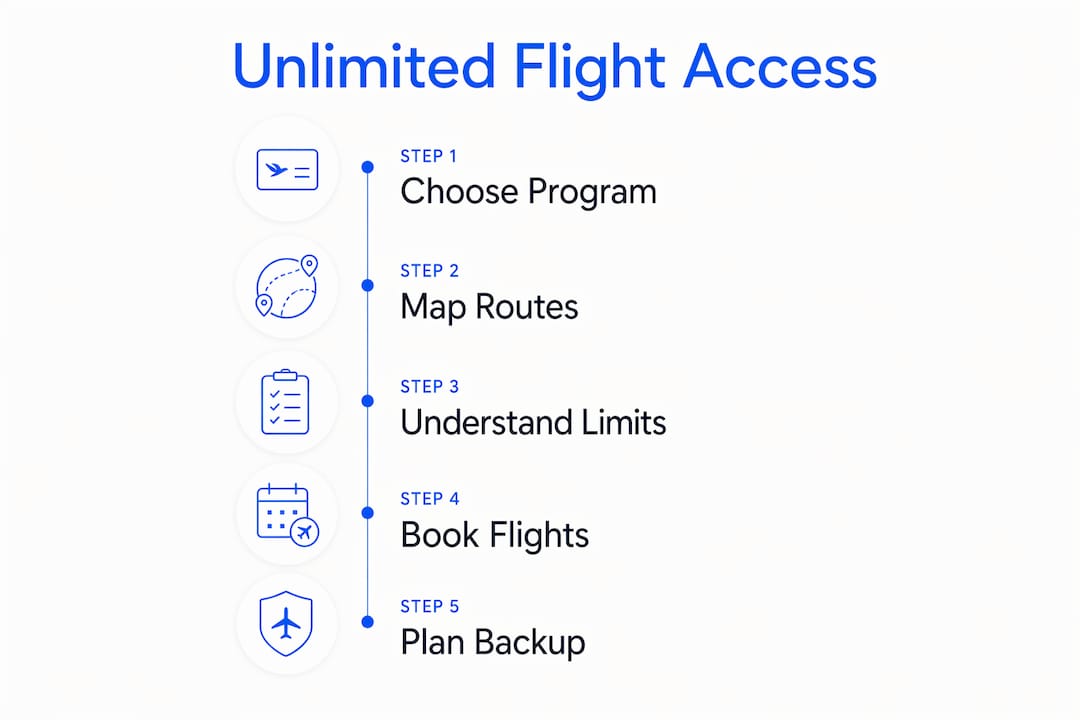
Pro Tip: Before buying any unlimited pass, map your most frequent city pairs against the carrier’s actual route map. A pass is only as good as the routes it covers from your home airport.
The real limitations you need to understand
The biggest misconception about unlimited flight access is that “unlimited” means unrestricted. It doesn’t. Airlines release only a fraction of seats to pass holders, and availability is best-effort, not guaranteed. For travelers with fixed schedules, that distinction is the whole ballgame.
Practical limitations that catch travelers off guard:
- Return legs: you can only book 72 hours ahead, so mid-trip you’re searching for a seat home with no certainty
- Ancillary costs: taxes, airport fees, and baggage charges can push total trip costs near standard fare prices
- Multi-leg trips: availability logic rarely supports connecting itineraries on a single pass
- Missed flights: if your pass seat isn’t available, you buy a standard ticket, doubling the cost of that leg
Travelers near smaller regional airports face compounding frustration. Geographic proximity to major hubs directly determines how often you’ll find usable inventory. A pass holder in a hub city and one in a secondary market are buying fundamentally different products.
Pro Tip: Treat any unlimited pass as a “best-effort” travel tool, not a scheduling guarantee. Always have a backup plan, especially for return legs on time-sensitive trips.

Why operators offer unlimited flight programs
Airlines and private jet operators don’t offer these programs out of generosity. The business logic is straightforward: an empty seat generates zero revenue, so filling it for even a small subscription fee improves load factors and cash flow simultaneously.
Membership caps limit the number of subscribers to control inventory exposure. let operators control exactly how much inventory they expose to pass holders. The subscription model also locks customers in early, securing upfront cash before a single flight is flown. Subscribers become less likely to shop competing fares because they’ve already paid for access, which is a loyalty mechanism that discourages fare comparison shopping.
For private jet operators, empty legs are a specific problem. A jet repositioning after dropping a client flies empty unless someone pays to be on it. Memberships that monetize those legs turn a cost center into a modest revenue stream while building a loyal base of flexible flyers.
Is unlimited flight access right for high-end business travelers?
Honestly, for most serious business travelers, mass-market unlimited passes fall short. Fixed schedules and premium cabin needs are incompatible with standby-style booking windows. Missing a board meeting because your pass seat wasn’t available costs far more than any subscription savings.
That said, the concept of unlimited access translates well to private aviation when the model is built around it correctly. Consider the relevant factors:
- Schedule flexibility: the more flexible your calendar, the more value you extract from availability-based access
- Route density: travelers who fly frequently between well-served city pairs get the most out of any unlimited program
- Cost comparison: traditional private jet charter rates run thousands of dollars per flight hour; empty leg access through a membership cuts that dramatically for flexible travelers
- Business travel frequency: frequent flyers who can adapt departure times by a day or two are the natural fit
For high-end business travelers, the question isn’t whether unlimited access is a good deal in theory. It’s whether the specific program’s availability model matches how you actually travel. A private jet empty leg membership built for flexibility delivers the premium experience without the charter price, but only if your schedule can bend when inventory dictates.
The private aviation market has recognized this gap. Bluebirdjets built its membership model specifically around empty leg access, targeting business travelers who want private jet quality without committing to full charter rates or fractional ownership contracts.
Key Takeaways
Unlimited flight access delivers real value for flexible travelers, but the “unlimited” label masks meaningful availability constraints that matter most to business travelers.
| Point | Details |
|---|---|
| Availability is never guaranteed | Pass holders access capacity-controlled inventory; seats go to revenue passengers first. |
| Booking windows are tight | Domestic flights book the day before departure; international up to 10 days out. |
| Hidden costs add up | Taxes, baggage fees, and backup tickets can push total costs near standard fare prices. |
| Hub proximity matters | Travelers near major hubs find far more usable inventory than those in smaller markets. |
| Bluebirdjets targets the gap | Bluebirdjets offers a private jet empty leg membership built for business travelers who need premium access without full charter commitments. |
Bluebirdjets gives you private jet access without the charter price tag
If you’ve read this far, you already know that mass-market unlimited passes weren’t built for your travel style. They’re designed for flexible leisure travelers who can absorb a missed flight. You need private jet quality, real availability, and a model that respects your time.
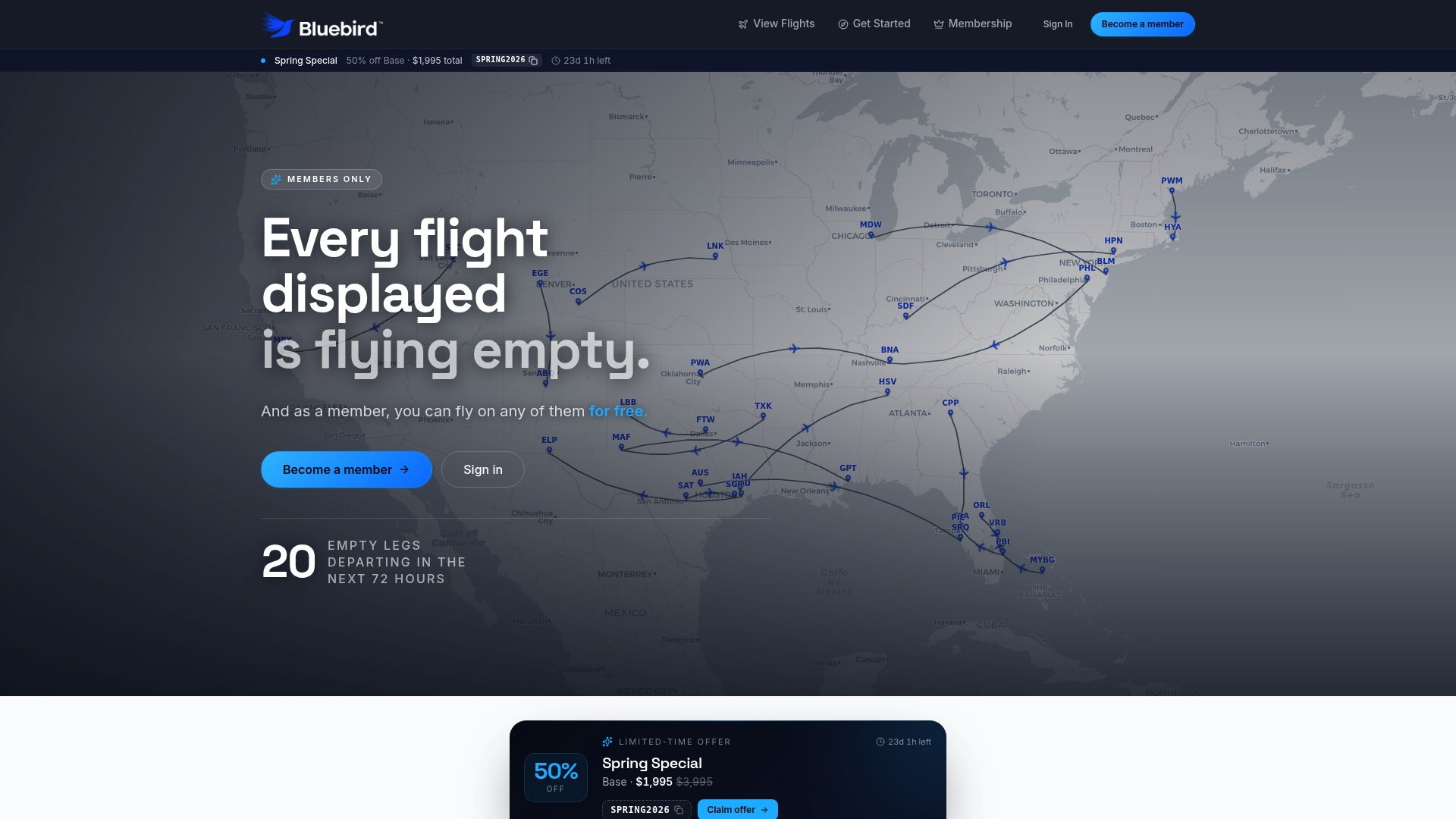
Bluebirdjets offers a membership giving you unlimited access to empty leg private jet flights across the platform. No per-charter pricing, no fractional ownership contracts, and no economy cabin compromises. You get the private terminal experience, the cabin space, and the schedule control that comes with private aviation, priced through a membership rather than a per-flight rate. Browse current available flights to see what’s flying near you, then join the membership to lock in access.